
April White (2)
Author of The Divorce Colony: How Women Revolutionized Marriage and Found Freedom on the American Frontier
For other authors named April White, see the disambiguation page.
About the Author
Image credit: April White/photo by Jason Varney
Works by April White
The Divorce Colony: How Women Revolutionized Marriage and Found Freedom on the American Frontier (2022) 158 copies, 3 reviews
Associated Works
Tagged
Common Knowledge
- Gender
- female
- Organizations
- The Food Trust
- Relationships
- The Food Trust (collaborator)
- Short biography
- April has more than a decade of experience writing about food – from recipes and restaurants, to farming and artisanal production, to food as tradition, health, business, politics and more. She has collaborated with talented chefs and artisans, including authoring Latin Evolution, the debut cookbook of Iron Chef Jose Garces. She is also the former food editor for Philadelphia magazine; has reported on food and travel trends for publications including Food & Wine, Every Day with Rachael Ray, and US Airways magazine; and has worked as a recipe developer for Philadelphia magazine and Charlotte magazine. April has appeared on many local and national radio and television networks, including the Food Network and CBS National Radio, has served as a James Beard Award judge, and received multiple awards from the City and Regional Magazine Association for her food writing.
She also collaborates with The Food Trust. - Nationality
- USA
- Associated Place (for map)
- USA
Members
Reviews
The Divorce Colony: How Women Revolutionized Marriage and Found Freedom on the American Frontier by April White
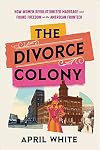
This book's title is extremely misleading. For a 20-year period in the late 19th and early 20th centuries, South Dakota hosted several thousand women who took advantage of its lax 90 day residency period to file for divorce. None of these women "revolutionized marriage" (they were following laws debated and established by men), and they were hardly pioneers "on the American frontier" (they were rich enough to afford three month stays in expensive hotels, and were often accompanied by their show more maids). Cities such as Sioux Falls benefited economically from the influx of the would-be divorcees, but eventually religious leaders guilted the local legislators into increasing the residency requirement to one year, ending the divorce colony story.
The four women profiled in the book have moderately interesting stories and varying reasons for seeking a divorce (including one whose husband murdered a rival suitor). But they certainly weren't part of a feminist sisterhood; most of them wanted nothing more than to get back to East Coast high society. Apparently either divorce wasn't as scandalous as it became later, or money rehabilitated any reputation.
YMMV if you're looking for another example of white privilege in American history. show less
The four women profiled in the book have moderately interesting stories and varying reasons for seeking a divorce (including one whose husband murdered a rival suitor). But they certainly weren't part of a feminist sisterhood; most of them wanted nothing more than to get back to East Coast high society. Apparently either divorce wasn't as scandalous as it became later, or money rehabilitated any reputation.
YMMV if you're looking for another example of white privilege in American history. show less
The Divorce Colony: How Women Revolutionized Marriage and Found Freedom on the American Frontier by April White
April White’s The Divorce Colony is set during the Gilded Age, in the America of the late 1800s. It revolves around the lax divorce rules then to be found in South Dakota.
Today, getting divorced is almost easier than getting married. But in the Gilded Age, divorces were not so easy to obtain. Divorce was viewed as a moral concern for the state, and was denounced from the pulpit for threatening the sanctity of marriage. Even President Theodore Roosevelt spoke out against it.
Laws around show more divorce tended to be most lax on the frontiers of the United States. By the 1880s the territory of Dakota gained the dubious honor of posting the largest rise in divorces in the country. At the turn of the century one city - Sioux Falls, South Dakota - gained a reputation for having the laxest divorce laws of all, and required only a three month residency in order to take advantage of them. Those who came to Sioux Falls (mostly women) seeking to escape their marriages became known as the Divorce Colony.
White takes us through the stories of four well-known women of the day in their journey seeking divorce in Sioux Falls. Because of their high social status, and their wealth (or the wealth of the family they had married into), their stories were closely followed by the press of the day. Because of that, these women stand in for us for the hundreds of other “colonists” whose stories are no longer easily uncovered.
In White’s hands the stories of these four women - Maggie, Mary, Blanche and Flora, along with that of the good Reverend Dr. Hare - come together in Sioux Falls to give us a history on the attitudes toward divorce and how they have changed.
This is a really well done narrative nonfiction. White resurrects a forgotten history as she tells the stories of the four women, and how they came to be seeking divorce. She also has uncovered and discusses their connections to one another and to other “colonists”, some of whom get shorter stories of their own in the book.
Of the four stories, I felt those of Maggie and Blanche worked best, Mary's less so, while Flora’s story seemed in comparison to be less detailed and less interesting.
This is a great summer read, as it’s a book you can easily pick up and read in sections and then come back to later without losing the thread.
NOTE: I received an advance copy of this book from NetGalley and Hachette Books. I am voluntarily providing this review. The book will be available to the public on June 14, 2022. show less
Today, getting divorced is almost easier than getting married. But in the Gilded Age, divorces were not so easy to obtain. Divorce was viewed as a moral concern for the state, and was denounced from the pulpit for threatening the sanctity of marriage. Even President Theodore Roosevelt spoke out against it.
Laws around show more divorce tended to be most lax on the frontiers of the United States. By the 1880s the territory of Dakota gained the dubious honor of posting the largest rise in divorces in the country. At the turn of the century one city - Sioux Falls, South Dakota - gained a reputation for having the laxest divorce laws of all, and required only a three month residency in order to take advantage of them. Those who came to Sioux Falls (mostly women) seeking to escape their marriages became known as the Divorce Colony.
White takes us through the stories of four well-known women of the day in their journey seeking divorce in Sioux Falls. Because of their high social status, and their wealth (or the wealth of the family they had married into), their stories were closely followed by the press of the day. Because of that, these women stand in for us for the hundreds of other “colonists” whose stories are no longer easily uncovered.
In White’s hands the stories of these four women - Maggie, Mary, Blanche and Flora, along with that of the good Reverend Dr. Hare - come together in Sioux Falls to give us a history on the attitudes toward divorce and how they have changed.
This is a really well done narrative nonfiction. White resurrects a forgotten history as she tells the stories of the four women, and how they came to be seeking divorce. She also has uncovered and discusses their connections to one another and to other “colonists”, some of whom get shorter stories of their own in the book.
Of the four stories, I felt those of Maggie and Blanche worked best, Mary's less so, while Flora’s story seemed in comparison to be less detailed and less interesting.
This is a great summer read, as it’s a book you can easily pick up and read in sections and then come back to later without losing the thread.
NOTE: I received an advance copy of this book from NetGalley and Hachette Books. I am voluntarily providing this review. The book will be available to the public on June 14, 2022. show less
The Divorce Colony: How Women Revolutionized Marriage and Found Freedom on the American Frontier by April White
A little dry but informative. Don't think I would have made my way through this if it hadn't been an audio book though.
Awards

You May Also Like
Associated Authors
Statistics
- Works
- 5
- Also by
- 3
- Members
- 206
- Popularity
- #107,331
- Rating
- 3.7
- Reviews
- 3
- ISBNs
- 54
- Languages
- 1