
Gaia Cornwall
Author of Jabari Jumps
Series
Works by Gaia Cornwall
Jabaria Tries 1 copy
Tagged
Common Knowledge
- Gender
- female
- Education
- Pratt Institute
- Occupations
- illustrator
- Nationality
- USA
- Places of residence
- Providence, Rhode Island, USA
- Map Location
- USA
Members
Reviews
Jabari Tries: (A Motivational Story of Perseverance, Determination, Problem-Solving, and Teamwork - For Preschoolers, Kindergarteners, and Kids Ages 4-8) by Gaia Cornwall
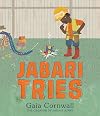
How does Cornwall make such perfect books? A follow-up to Jabari Jumps, Jabari is back, this time trying to make a flying toy. His little sister wants to help, and his father gives just enough encouragement without stepping on the process. A perfect example of the scientific method and engineering trial and error, Jabari tries over and over to perfect his design. He and his father model emotion labeling and management when the frustration sets in, and even though he didn't originally think show more his sister could help, he invites her to try without fuss after a few tries. So many good things to love about this book - not least of which is the depiction of an ordinary Black family. show less

Jabari returns in this second picture-book devoted to his adventures, following upon Jabari Jumps, this time trying to build a flying machine in his back yard. His father gardens in the background, and his sister Nika flits about in her butterfly wings, but Jabari insists he wants to work alone. Eventually Jabari lets Nika help him, but his flying machine still crashes, leading his father to step in with some words of wisdom about how to deal with frustration. Calming down and pulling show more himself together, Jabari tries again, together with Nika, and this time they are successful...
Jabari Tries is another engaging story about this young African-American boy, his loving family, and his experiences trying new things. It pairs an engaging narrative that is reminiscent of titles like Rosie Revere, Engineer, which also features a tale of a young inventor who must learn to deal with initial failure, with expressive artwork created using pencil, watercolor and collage. I particularly liked the warm family dynamic here, as Jabari's father lets him get on with it, but is available in the background when his son needs some help or advice. I also really liked the fact that Jabari eventually includes his younger sister, convinced to do so by his father's argument that most great inventors have partners or assistants.
It was a little surprising to see, in the scene where Jabari thinks of inventors and scientists who have had to use creative problem-solving, that none of the figures mentioned - Lewis Howard Latimer, Dr. Flossie Wong-Staal, Roy Allela, Dr. Shirley Ann Jackson - were familiar to me, leading me to google them. At first I really liked this, as I thought the author was trying to highlight lesser-known STEM innovators, but as I thought about it some more, I began to wonder whether a child Jabari's age would know about them, or think of them first, when trying to invent a flying machine. Wouldn't people like the Wright Brothers be more likely to pop into his head? It then occurred to me that they might have been chosen along racial lines, to deliberately exclude Europeans or Euro-Americans, which, if true, would be very unfortunate. It sends the entirely wrong messages, and, given the current zeitgeist, feels a bit like pandering. Perhaps I am doing author/illustrator Gaia Cornwall an injustice, but the toxic state of our national discussion on race lately has led me to really think about these issues, and to read recently published children' books more carefully, when it comes to the subtle messages they send. I sincerely hope the intention here was not to communicate the idea that children can only be inspired by the achievements of others if they share a racial or ethnic identity, or that there is something more admirable about STEM achievement when it comes from specific identity groups.
Leaving that aside - it is a minor scene, and while I do think it's important to consider its subtle messages, it does not effect the overall flow of the story - I would recommend this one to young would-be inventors, to picture-book readers seeking stories about loving African-American families, and to those who enjoyed Jabari Jumps. show less
Jabari Tries is another engaging story about this young African-American boy, his loving family, and his experiences trying new things. It pairs an engaging narrative that is reminiscent of titles like Rosie Revere, Engineer, which also features a tale of a young inventor who must learn to deal with initial failure, with expressive artwork created using pencil, watercolor and collage. I particularly liked the warm family dynamic here, as Jabari's father lets him get on with it, but is available in the background when his son needs some help or advice. I also really liked the fact that Jabari eventually includes his younger sister, convinced to do so by his father's argument that most great inventors have partners or assistants.
It was a little surprising to see, in the scene where Jabari thinks of inventors and scientists who have had to use creative problem-solving, that none of the figures mentioned - Lewis Howard Latimer, Dr. Flossie Wong-Staal, Roy Allela, Dr. Shirley Ann Jackson - were familiar to me, leading me to google them. At first I really liked this, as I thought the author was trying to highlight lesser-known STEM innovators, but as I thought about it some more, I began to wonder whether a child Jabari's age would know about them, or think of them first, when trying to invent a flying machine. Wouldn't people like the Wright Brothers be more likely to pop into his head? It then occurred to me that they might have been chosen along racial lines, to deliberately exclude Europeans or Euro-Americans, which, if true, would be very unfortunate. It sends the entirely wrong messages, and, given the current zeitgeist, feels a bit like pandering. Perhaps I am doing author/illustrator Gaia Cornwall an injustice, but the toxic state of our national discussion on race lately has led me to really think about these issues, and to read recently published children' books more carefully, when it comes to the subtle messages they send. I sincerely hope the intention here was not to communicate the idea that children can only be inspired by the achievements of others if they share a racial or ethnic identity, or that there is something more admirable about STEM achievement when it comes from specific identity groups.
Leaving that aside - it is a minor scene, and while I do think it's important to consider its subtle messages, it does not effect the overall flow of the story - I would recommend this one to young would-be inventors, to picture-book readers seeking stories about loving African-American families, and to those who enjoyed Jabari Jumps. show less
Jabari Tries: (A Motivational Story of Perseverance, Determination, Problem-Solving, and Teamwork - For Preschoolers, Kindergarteners, and Kids Ages 4-8) by Gaia Cornwall
Jabari works hard to build a gizmo that flies, but his best modification may be inspired by his partner.
When Jabari announces his machine will fly “all the way across” their spacious, landscaped yard, he is certain he won’t need any help. While his father gardens and his younger sister plays, Jabari builds a launch ramp, sends his machine through, and…crash! Little Nika wants in on the fun, but Jabari is “concentrating.” He takes inspiration from inventors and engineers, who use show more creativity and hard work to solve their problems. He plans, sketches, builds, and tries and tries again. He lets Nika help out, reluctantly at first, and when he gets so frustrated he wants to cry, he takes his father’s advice: gathering his patience and blowing away his “muddy feelings.” When he tries once more, with a clear head and support from his pint-sized partner, he discovers a change that makes his machine—and his confidence—soar. This generously sized picture book offers a lovely picture of mentorship and healthy relationships in the context of a thriving Black family with dark skin tones. Jabari’s emotional ups and downs will be familiar to young children, and his hard-won success feels triumphant. Cornwall’s clean, clear illustrations use patterns, green hues, and white space to deliver a variety of effective scenes.
Jabari succeeds, and so does this book. (Picture book. 3-9) show less
When Jabari announces his machine will fly “all the way across” their spacious, landscaped yard, he is certain he won’t need any help. While his father gardens and his younger sister plays, Jabari builds a launch ramp, sends his machine through, and…crash! Little Nika wants in on the fun, but Jabari is “concentrating.” He takes inspiration from inventors and engineers, who use show more creativity and hard work to solve their problems. He plans, sketches, builds, and tries and tries again. He lets Nika help out, reluctantly at first, and when he gets so frustrated he wants to cry, he takes his father’s advice: gathering his patience and blowing away his “muddy feelings.” When he tries once more, with a clear head and support from his pint-sized partner, he discovers a change that makes his machine—and his confidence—soar. This generously sized picture book offers a lovely picture of mentorship and healthy relationships in the context of a thriving Black family with dark skin tones. Jabari’s emotional ups and downs will be familiar to young children, and his hard-won success feels triumphant. Cornwall’s clean, clear illustrations use patterns, green hues, and white space to deliver a variety of effective scenes.
Jabari succeeds, and so does this book. (Picture book. 3-9) show less
Jabari works hard to build a gizmo that flies, but his best modification may be inspired by his partner.
When Jabari announces his machine will fly “all the way across” their spacious, landscaped yard, he is certain he won’t need any help. While his father gardens and his younger sister plays, Jabari builds a launch ramp, sends his machine through, and…crash! Little Nika wants in on the fun, but Jabari is “concentrating.” He takes inspiration from inventors and engineers, who use show more creativity and hard work to solve their problems. He plans, sketches, builds, and tries and tries again. He lets Nika help out, reluctantly at first, and when he gets so frustrated he wants to cry, he takes his father’s advice: gathering his patience and blowing away his “muddy feelings.” When he tries once more, with a clear head and support from his pint-sized partner, he discovers a change that makes his machine—and his confidence—soar. This generously sized picture book offers a lovely picture of mentorship and healthy relationships in the context of a thriving Black family with dark skin tones. Jabari’s emotional ups and downs will be familiar to young children, and his hard-won success feels triumphant. Cornwall’s clean, clear illustrations use patterns, green hues, and white space to deliver a variety of effective scenes.
Jabari succeeds, and so does this book. (Picture book. 3-9) show less
When Jabari announces his machine will fly “all the way across” their spacious, landscaped yard, he is certain he won’t need any help. While his father gardens and his younger sister plays, Jabari builds a launch ramp, sends his machine through, and…crash! Little Nika wants in on the fun, but Jabari is “concentrating.” He takes inspiration from inventors and engineers, who use show more creativity and hard work to solve their problems. He plans, sketches, builds, and tries and tries again. He lets Nika help out, reluctantly at first, and when he gets so frustrated he wants to cry, he takes his father’s advice: gathering his patience and blowing away his “muddy feelings.” When he tries once more, with a clear head and support from his pint-sized partner, he discovers a change that makes his machine—and his confidence—soar. This generously sized picture book offers a lovely picture of mentorship and healthy relationships in the context of a thriving Black family with dark skin tones. Jabari’s emotional ups and downs will be familiar to young children, and his hard-won success feels triumphant. Cornwall’s clean, clear illustrations use patterns, green hues, and white space to deliver a variety of effective scenes.
Jabari succeeds, and so does this book. (Picture book. 3-9) show less
Lists
Awards


You May Also Like


Statistics
- Works
- 8
- Members
- 3,075
- Popularity
- #8,305
- Rating
- 4.3
- Reviews
- 83
- ISBNs
- 40
- Languages
- 2