
Carole Pateman
Author of The Sexual Contract
About the Author
Carole Pateman is Distinguished Professor Emeritus of Political Science at the University of California, Los Angeles. She is Honorary Professor in the School of Law and Politics at Cardiff University.
Series
Works by Carole Pateman
Tagged
Common Knowledge
- Canonical name
- Pateman, Carole
- Birthdate
- 1940-12-11
- Gender
- female
- Education
- Ruskin College
University of Oxford (BA)
University of Oxford (PhD) - Occupations
- Professor of Political Science, UCLA
professor - Organizations
- University of California, Los Angeles (Distinguished Professor of Political Science)
International Political Science Association (president ∙ 1991-1994) - Awards and honors
- British Academy (Fellow ∙ 2007)
Academy of Social Sciences in Australia (Fellow ∙ 1980)
American Academy of Arts and Sciences (Fellow ∙ 1996) - Relationships
- Topper, Keith (doctoral student)
Medearis, John (doctoral student)
Goodhart, Michael (doctoral student)
Tarrant, Shira (doctoral student) - Nationality
- UK (England)
- Places of residence
- Sussex, England, UK (birthplace)
- Associated Place (for map)
- England, UK
Members
Reviews

An argument for democratization in economic enterprises. The book is basically first a literature review of selected democratic theorists who have broached the topic of workplace democracy and then an assessment of the "empirical evidence". I found the former part passable but the latter part completely pointless. The fact that a few economic enterprises have at some point been run democratically does not imply that all workplaces should be democratized. The author argues that participation show more in the workplace would promote participation in politics. Maybe so, but it did not become clear to me how that would justify a complete upheaval of industrial decision making and ownership. It's amazing how the author completely avoids the question of knowledge. Just because a decision is democratic doesn't necessarily mean it's sensible or well-informed. Limited workplace democracy might be an idea worth thinking about, but I was very disappointed with the author's superficial grasp of its benefits and her inability to see its disadvantages. show less
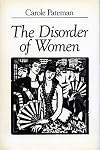
I was really disappointed in this book. It is a collection of academic papers which ordinary non-academic persons would never read. The first five papers are extremely repetitive. Again and again the author recounts what Locke, Rousseau and Mill wrote about women. People who have a professional interest in 17-19th century classics in political thought may be interested in this subject, but the implications for modern feminism are unclear because the author does not generalize. Chapter 7 is show more even more useless. The author critiques at great length a certain book called Civic Culture, but anyone who has not read the book will obviously not gain anything from this commentary.
The recurring problem with collections of academic papers is that they're written for a specialist audience, or even plural specialist audiences, so wrapping them together into one book makes little sense. A broader audience expecting to read a book-length feminist argument will be sorely disappointed when they only find eight different writings on minuscule academic topics without general relevance. To be fair, The ninth essay on "Feminism and Democracy" is a reasonably good synopsis of the arguments I was expecting to find throughout this book. Here the author actually proceeds beyond scrutinizing other people's writings, and what do you know, the text immediately becomes interesting! show less
The recurring problem with collections of academic papers is that they're written for a specialist audience, or even plural specialist audiences, so wrapping them together into one book makes little sense. A broader audience expecting to read a book-length feminist argument will be sorely disappointed when they only find eight different writings on minuscule academic topics without general relevance. To be fair, The ninth essay on "Feminism and Democracy" is a reasonably good synopsis of the arguments I was expecting to find throughout this book. Here the author actually proceeds beyond scrutinizing other people's writings, and what do you know, the text immediately becomes interesting! show less
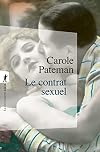
Sep 13, 2025French
Awards


You May Also Like


Associated Authors
Statistics
- Works
- 10
- Members
- 570
- Popularity
- #43,913
- Rating
- 3.9
- Reviews
- 3
- ISBNs
- 55
- Languages
- 6