
Richard L. Purtill
Author of C. S. Lewis' Case for the Christian Faith
About the Author
Image credit: Fantasy Literature
Series
Works by Richard L. Purtill
Associated Works
Isaac Asimov's Science Fiction Magazine: Vol. 9, No. 1 [January 1985] (1985) — Contributor — 15 copies
Tagged
Common Knowledge
- Legal name
- Purtill, Richard Lawrence
- Other names
- Purtill, Richard
- Birthdate
- 1931-03-13
- Gender
- male
- Occupations
- Professor of Philosopy (Emeritus)
- Organizations
- Western Washington University, Bellingham, Washington, USA (Professor Emeritus of Philosophy)
Authors Guild of America
National Writers Union
Science Fiction & Fantasy Writers of America - Nationality
- USA
- Birthplace
- Chicago, Illinois, USA
- Associated Place (for map)
- Illinois, USA
Members
Reviews
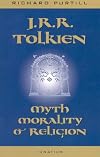
Ahh this was a fantastic book! (And I'm probably far too proud of myself for reading/finishing it, lol. I wanted to be an English major in high school/college, and decided it wasn't for me--I'm sure it had nothing to do with the C+ I got in my first college-level English class, even if I was taking the sophomore-level course as a first-quarter freshman. Ha. Unknowing mortal. :D)
So given that, it's been _really_ interesting lately to read--and _understand_!!!--books like this one with a more show more literary-analysis bent, discussion of themes, and so on, all things I shunned after that course.
Purtill does a great job at analyzing myth, morality, and religion within Tolkien's works. I appreciated the read even more now that I've read _The Silmarillion_ in addition to Hobbit/LOTR, and found my appreciation for them all deepened accordingly.
Looking forward to checking out some of Purtill's other Tolkien-themed (see what I did there? :D) works! show less
So given that, it's been _really_ interesting lately to read--and _understand_!!!--books like this one with a more show more literary-analysis bent, discussion of themes, and so on, all things I shunned after that course.
Purtill does a great job at analyzing myth, morality, and religion within Tolkien's works. I appreciated the read even more now that I've read _The Silmarillion_ in addition to Hobbit/LOTR, and found my appreciation for them all deepened accordingly.
Looking forward to checking out some of Purtill's other Tolkien-themed (see what I did there? :D) works! show less
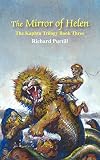
I didn't know this was the final part of a trilogy when I first read this decades ago, and in fact it works quite well as a standalone. I'm very fond of this book. Even though I'd read it so long ago, so many of it's details vividly came to mind even before looking at it again. This is a story of Helen of Troy from various first person perspectives. There's a prologue with Theseus, who takes her captive as a hostage when she's around ten years old. Book One showing her as a young woman show more choosing from her suitors is from the perspective of Alceme, a lady of Athens who leaped bulls in Crete with Theseus. Book Two shows Helen as a mature woman from the perspective of M'pha, a Cretan woman who serves her in Troy. And finally Book Three, set during and after Troy falls, is from the perspective of Menelaus, the husband she abandoned for Paris.
I loved how Purtill played with the various forms of her legend. You could call this Homer fanfic I suppose--and it's fun to get glimpses of such figures as Odysseus, Cassandra, and Achilles here. And from my memory of the bits about Helen in Homer, this sympathetic portrayal of her doesn't conflict with his works. The novel also, especially given how Theseus figures here, reminds me of Mary Renaults' novels of Theseus, The King Must Die and The Bull from the Sea. Unlike with Renault, in this novel the Greek Gods such as Aphrodite and Hera aren't just figures of worship and belief but actually exist, putting this in the fantasy rather than simply historical fiction category, although it's evident Purtill did his homework on the Late Bronze Age. Purtill isn't the amazing writer Renault is, and this book isn't as impressive as her novels, but it's a very enjoyable read and he succeeds in making Helen a lot more than a pretty face and managed a resolution speaking of love, marriage and beauty I found greatly satisfying. If you loved works such as H.R. Haggard's The World's Desire, C.S. Lewis' Till We Have Faces, Mary Renault's The King Must Die and Jo Graham's Black Ships and are pinning for more works using Greek Mythology as their basis, I think you'll enjoy this novel. show less
I loved how Purtill played with the various forms of her legend. You could call this Homer fanfic I suppose--and it's fun to get glimpses of such figures as Odysseus, Cassandra, and Achilles here. And from my memory of the bits about Helen in Homer, this sympathetic portrayal of her doesn't conflict with his works. The novel also, especially given how Theseus figures here, reminds me of Mary Renaults' novels of Theseus, The King Must Die and The Bull from the Sea. Unlike with Renault, in this novel the Greek Gods such as Aphrodite and Hera aren't just figures of worship and belief but actually exist, putting this in the fantasy rather than simply historical fiction category, although it's evident Purtill did his homework on the Late Bronze Age. Purtill isn't the amazing writer Renault is, and this book isn't as impressive as her novels, but it's a very enjoyable read and he succeeds in making Helen a lot more than a pretty face and managed a resolution speaking of love, marriage and beauty I found greatly satisfying. If you loved works such as H.R. Haggard's The World's Desire, C.S. Lewis' Till We Have Faces, Mary Renault's The King Must Die and Jo Graham's Black Ships and are pinning for more works using Greek Mythology as their basis, I think you'll enjoy this novel. show less

I've owned these in the DAW print editions from new; as I had a voucher from Ebay, I've finally purchased the last 3 in the series and re-read these to refresh my memory while waiting for them to arrive. The last 3 were self-published in the 2000s.
The Golden Gryphon Feather
The Stolen Goddess
The Mirror of Helen
Set in Bronze Age Greece, they are charming tales in much the same style as Thomas Burnett Swann. The first deals with the first tribute to Crete from Athens, and their integration into show more the Bull Dance. Britomartis called Chryseis is one of the Athenians and becomes the leader of the dance. She was chosen as part of the tribute as her father although Aegeus' brother, was on the outs with the court. She and Ariadne foil Minos' plans to pervert the Dance, and in doing do, both girls discover their true parentage.
The second tale is set some years later. Ducalion is the son of Alceme, one of Chryseis' troupe. Following the death of his father, he leaves Karia and goes to Crete. Here he gains the trust of Akama, the leader of the Dance, and replaces a dancer injured in a tavern brawl. Akama is Theseus' daughter, and is following the Cretan traditions of the Dance instead of Danaean traditions. Theseus kidnaps Akama, and Ducalion rescues her. In the course of the story, Ducalion helps Apollo discover what has happened to Persephone.
The third book is set at the end of the Trojan war. M'pha, Ducalion's and Akama's daughter is serving Helen as part of a promise made by her mother. As a former Bull Dancer, she is uniquely fitted to protect Helen while she is in Troy, and becomes her friend. Once the city has fallen, Helen returns to Menelaus, and the two end up in Egypt where they have been driven by an unnatural storm.
I've always been attached to these, as I like Thomas Burnett Swann. Although there are similarities, Swann's books tend to deal with the Wild Things giving way before the encroachment of mankind, and are set in a mythological version of our world (more like an urban fantasy). Purtill's books have a similar background but tend to deal more with mankind. Purtill's world-building is a bit more complex too - there's our world, and 'above' it is a world at a higher energy level - the Bright Land - where the Titans and Olympians live, and 'below' it is the Dark Land which is Hades realm and serves as a prison for the defeated Titans. Humanity can travel between the 3 worlds, but the Olympians can only travel to the Dark World if they are prepared not to be able to return to the Bright World.
Recommended show less
The Golden Gryphon Feather
The Stolen Goddess
The Mirror of Helen
Set in Bronze Age Greece, they are charming tales in much the same style as Thomas Burnett Swann. The first deals with the first tribute to Crete from Athens, and their integration into show more the Bull Dance. Britomartis called Chryseis is one of the Athenians and becomes the leader of the dance. She was chosen as part of the tribute as her father although Aegeus' brother, was on the outs with the court. She and Ariadne foil Minos' plans to pervert the Dance, and in doing do, both girls discover their true parentage.
The second tale is set some years later. Ducalion is the son of Alceme, one of Chryseis' troupe. Following the death of his father, he leaves Karia and goes to Crete. Here he gains the trust of Akama, the leader of the Dance, and replaces a dancer injured in a tavern brawl. Akama is Theseus' daughter, and is following the Cretan traditions of the Dance instead of Danaean traditions. Theseus kidnaps Akama, and Ducalion rescues her. In the course of the story, Ducalion helps Apollo discover what has happened to Persephone.
The third book is set at the end of the Trojan war. M'pha, Ducalion's and Akama's daughter is serving Helen as part of a promise made by her mother. As a former Bull Dancer, she is uniquely fitted to protect Helen while she is in Troy, and becomes her friend. Once the city has fallen, Helen returns to Menelaus, and the two end up in Egypt where they have been driven by an unnatural storm.
I've always been attached to these, as I like Thomas Burnett Swann. Although there are similarities, Swann's books tend to deal with the Wild Things giving way before the encroachment of mankind, and are set in a mythological version of our world (more like an urban fantasy). Purtill's books have a similar background but tend to deal more with mankind. Purtill's world-building is a bit more complex too - there's our world, and 'above' it is a world at a higher energy level - the Bright Land - where the Titans and Olympians live, and 'below' it is the Dark Land which is Hades realm and serves as a prison for the defeated Titans. Humanity can travel between the 3 worlds, but the Olympians can only travel to the Dark World if they are prepared not to be able to return to the Bright World.
Recommended show less
An in-depth analysis of Tolkien's writings, not restricted to LoTR. The author first sets out to define what is myth, fantasy and science fiction and their relation to religion, then summarizes parts of The Hobbitt, LoTR and The Silmarillion to show how the books fit that definition. It also uses letters from Tolkien to readers and friends to describe his feelings about his 'sub-creation', which is how he referred to the world he created in his books. Fascinating and insightful, though very show more scholarly at times. show less
Lists
Awards

You May Also Like


Associated Authors
Statistics
- Works
- 29
- Also by
- 3
- Members
- 890
- Popularity
- #28,790
- Rating
- 3.4
- Reviews
- 16
- ISBNs
- 38
- Languages
- 1
- Favorited
- 1