

Verlyn Flieger
Author of On Fairy-Stories
About the Author
Verlyn Flieger's books on Tolkien include Splintered Light, A Question of Time, Interrupted Music, and Green Suns and Farie (all published by The Kent State University Press). With Carl Hostetter she edited Tolkien's Legendarium and with Douglas A. Anderson edited Tolkien's essay On Fairy-stories. show more With David Bratman and Michael D. C. Drout she edits the yearly journal Tolkien Studies. She has published two fantasy novels, Pig Tale and The Inn at Corbies' Caww; an Arthurian novella, "Avilion" in The Doom of Camelot; and two short stories, "Green Hill Country," in Seekers of Dreams, and "Igraine at Tintagel," in Amazing Graces. show less
Image credit: University of Maryland
Series
Works by Verlyn Flieger
Tolkien Studies, Volume XII — Editor — 6 copies
Tolkien Studies, Volume XIII — Editor — 5 copies
Tolkien Studies: Volume XIX, Supplement — Editor — 3 copies
The Bargain 1 copy
The Arch and the Keystone 1 copy
Associated Works
The Lay of Aotrou and Itroun together with The Corrigan Poems (2016) — Editor — 446 copies, 14 reviews
Understanding The Lord of the Rings: The Best of Tolkien Criticism (2004) — Contributor — 232 copies, 2 reviews
The Tolkien Fan's Medieval Reader: Versions in Modern Prose (Cold Spring Press Fantasy) (2004) — Foreword — 91 copies
The Great Tales Never End: Essays in Memory of Christopher Tolkien (2022) — Contributor — 67 copies, 2 reviews
The Lord of the Rings 1954-2004: Scholarship in Honor of Richard E. Blackwelder (2006) — Contributor — 38 copies
Picturing Tolkien: Essays on Peter Jackson's the Lord of the Rings Film Trilogy (2011) — Contributor — 33 copies
The Hobbit in Tolkien's Mythology: Essays on Revisions and Influences (2014) — Contributor — 25 copies
Mythlore LVIII (Vol.15, No.4, Summer 1989) — Contributor — 1 copy
Tagged
Common Knowledge
- Canonical name
- Flieger, Verlyn
- Birthdate
- 1933-02-24
- Gender
- female
- Education
- George Washington University (BA | English Literature | 1955)
Catholic University (MA | English Literature | 1972)
Catholic University (Ph.D. | English Literature | 1977) - Occupations
- professor of English
- Organizations
- University of Maryland
- Awards and honors
- Tolkien Society Outstanding Contribution (2016)
- Short biography
- Website: http://www.mythus.com/
- Nationality
- USA
- Associated Place (for map)
- USA
Members
Reviews
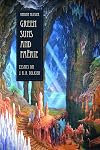
Anyone have a handbook for dealing with mad geniuses?
Verlyn Flieger is one of the most important J. R. R. Tolkien scholars out there; without question she knows more about his work than almost anyone alive. Certainly more than I do. This is a book that pokes into a lot of interesting and important nooks and crannies, and despite what follows, I would not hesitate to recommend it.
And yet, the book frequently drives me nuts with its combination of really clever ideas and blatant ignorance.
For show more instance: The essay "Tolkien and the Idea of the Book" claims that the whole idea of the Red Book of Westmarch -- the supposed source that underlay Tolkien's whole Middle-earth universe -- was inspired by the discovery of the Winchester Manuscript of Malory's Morte d'Arthur. The impression the essay gives is, "See! See! Once in a while a Really Important Manuscript is discovered. It must have inspired Tolkien."
Except -- Really Important Manuscripts turn up all the time. Let's take just the Greek Bible, and manuscripts discovered in the time Tolkien was alive. The Freer Gospel Codex, or Washington Manuscript (W) was bought in Egypt in 1906; the Freer Manuscript of Paul was acquired at the same time. The Chester Beatty Papyri (P45, P46, P47, of Gospels, Paul, and the Apocalypse; the earliest substantial manuscripts of the latter two) were bought in the 1930s. The Bodmer Papyri came a couple of decades later, after The Lord of the Rings came out, but they were revolutionary finds. Oh -- and how about the Dead Sea Scrolls?
For that matter, while Cotton Vitellius A XV (the Beowulf manuscript) and Cotton Nero A.x (the Sir Gawain and the Green Knight manuscript) had of course been in England for centuries before Tolkien's time, they had sat unnoticed for centuries before they were published. Yes, they were published before Tolkien was alive, but he knew all about the discoveries!
In my own life, the Penrose and Cambridge fragments of "The Gest of Robyn Hode" were published (they had been discovered in Tolkien's lifetime although not in mine); they showed that the "Lettersnijder" edition of the "Gest" (Advocates Library H.30.a) was reprinted, very badly, from Richard Pynson's edition found in the Penrose and Cambridge leaves. This revolutionized (or should have revolutionized, at least) our reading of the "Gest."
Tolkien himself, in working with Middle English manuscripts, discovered the so-called AB Language, a late Old English dialect survival in 1929 (see Tom Shippey's essay "Tolkien and the West Midlands").
In other words, Tolkien didn't need the Winchester Manuscript to know about the joys of manuscript discovery; he had done it himself.
Not quite as "Did you do any research?"-y, but still missing some pieces, is "The Green Knight, The Green Man, and Treebeard: Scholarship and Invention in Tolkien's Fiction." This gathers a good bit of scholarship about eotan/ents, and how the "Giant Treebeard" of Tolkien's early drafts eventually became the sentient shepherd of the trees -- but the essay ignores the English material, such as the ballad of "Hind Etin" (Child #41), which is about, obviously, an Ettin -- a troll. The word derives from the same roots as "ent" (and if Flieger knew her troll stories, and all the Germanic tales of two-headed trolls -- including Tolkien's beloved Red Fairy Book -- she would have known why, in The Hobbit, Tolkien remarks of Bert, William, and Tom, "Yes, I am afraid trolls do behave like that, even those with only one head each").
And as for green and the holly, if she had really looked at holly-and-ivy carols, and not just a single version of "The Holly and the Ivy," would have known that the holly was husband and the ivy the wife -- and that Edith Rickert printed six early holly-and-ivy pieces, including one where they vie for mastery -- just as the ents and entwives did:
Holvyr [holly] and Heyvy [ivy] mad a gret party,
Ho xuld [should] have the maystre [mastery]
In londes qwer [where] thei goo.
(from the Bodleian Library MS. Eng. poet e.1).
Flieger, in her look at the Green Knight, should surely also have looked at "The Carol of the Twelve Apostles," also known as "Green Grow the Rushes-O" -- a cumulative song. The second verse in some versions reads
I'll sing you two-o,
Green grow the rushes-o.
What is your two-o?
Two, two, the lily-white babes
Clothed all in green-o
One is one and all alone and evermore shall be so."
Green cloth and color were difficult to make in medieval times; there was no green dye, so you had to use a blue and a yellow (e.g. Woad and Weld -- google it). Green color is a very significant signal, with many folklore ties. For instance, the King of Faery, in Smith of Wooton Major, wears green when he meets Smith at the end of the story -- because green, according to Wimberly (in a book Tolkien knew well) was the color worn by fairies in the Child Ballads.
That's only two essays, and no doubt I've already bored you and demonstrated that I know too much folklore for my own good.... Few of the other essays set me off as much as those two. But a very large fraction of Flieger's work is spent digging into folklore (English, Welsh, Breton, Finnish -- she seems allergic to Scottish) -- and she consistently leaves out big parts of it. There is so much more that she's missing. There is good work here -- but it's just not finished. I suppose you could argue that that's Tolkien-esque, since he hardly ever finished anything. But at least Tolkien didn't publish until he had done all the work. show less
Verlyn Flieger is one of the most important J. R. R. Tolkien scholars out there; without question she knows more about his work than almost anyone alive. Certainly more than I do. This is a book that pokes into a lot of interesting and important nooks and crannies, and despite what follows, I would not hesitate to recommend it.
And yet, the book frequently drives me nuts with its combination of really clever ideas and blatant ignorance.
For show more instance: The essay "Tolkien and the Idea of the Book" claims that the whole idea of the Red Book of Westmarch -- the supposed source that underlay Tolkien's whole Middle-earth universe -- was inspired by the discovery of the Winchester Manuscript of Malory's Morte d'Arthur. The impression the essay gives is, "See! See! Once in a while a Really Important Manuscript is discovered. It must have inspired Tolkien."
Except -- Really Important Manuscripts turn up all the time. Let's take just the Greek Bible, and manuscripts discovered in the time Tolkien was alive. The Freer Gospel Codex, or Washington Manuscript (W) was bought in Egypt in 1906; the Freer Manuscript of Paul was acquired at the same time. The Chester Beatty Papyri (P45, P46, P47, of Gospels, Paul, and the Apocalypse; the earliest substantial manuscripts of the latter two) were bought in the 1930s. The Bodmer Papyri came a couple of decades later, after The Lord of the Rings came out, but they were revolutionary finds. Oh -- and how about the Dead Sea Scrolls?
For that matter, while Cotton Vitellius A XV (the Beowulf manuscript) and Cotton Nero A.x (the Sir Gawain and the Green Knight manuscript) had of course been in England for centuries before Tolkien's time, they had sat unnoticed for centuries before they were published. Yes, they were published before Tolkien was alive, but he knew all about the discoveries!
In my own life, the Penrose and Cambridge fragments of "The Gest of Robyn Hode" were published (they had been discovered in Tolkien's lifetime although not in mine); they showed that the "Lettersnijder" edition of the "Gest" (Advocates Library H.30.a) was reprinted, very badly, from Richard Pynson's edition found in the Penrose and Cambridge leaves. This revolutionized (or should have revolutionized, at least) our reading of the "Gest."
Tolkien himself, in working with Middle English manuscripts, discovered the so-called AB Language, a late Old English dialect survival in 1929 (see Tom Shippey's essay "Tolkien and the West Midlands").
In other words, Tolkien didn't need the Winchester Manuscript to know about the joys of manuscript discovery; he had done it himself.
Not quite as "Did you do any research?"-y, but still missing some pieces, is "The Green Knight, The Green Man, and Treebeard: Scholarship and Invention in Tolkien's Fiction." This gathers a good bit of scholarship about eotan/ents, and how the "Giant Treebeard" of Tolkien's early drafts eventually became the sentient shepherd of the trees -- but the essay ignores the English material, such as the ballad of "Hind Etin" (Child #41), which is about, obviously, an Ettin -- a troll. The word derives from the same roots as "ent" (and if Flieger knew her troll stories, and all the Germanic tales of two-headed trolls -- including Tolkien's beloved Red Fairy Book -- she would have known why, in The Hobbit, Tolkien remarks of Bert, William, and Tom, "Yes, I am afraid trolls do behave like that, even those with only one head each").
And as for green and the holly, if she had really looked at holly-and-ivy carols, and not just a single version of "The Holly and the Ivy," would have known that the holly was husband and the ivy the wife -- and that Edith Rickert printed six early holly-and-ivy pieces, including one where they vie for mastery -- just as the ents and entwives did:
Holvyr [holly] and Heyvy [ivy] mad a gret party,
Ho xuld [should] have the maystre [mastery]
In londes qwer [where] thei goo.
(from the Bodleian Library MS. Eng. poet e.1).
Flieger, in her look at the Green Knight, should surely also have looked at "The Carol of the Twelve Apostles," also known as "Green Grow the Rushes-O" -- a cumulative song. The second verse in some versions reads
I'll sing you two-o,
Green grow the rushes-o.
What is your two-o?
Two, two, the lily-white babes
Clothed all in green-o
One is one and all alone and evermore shall be so."
Green cloth and color were difficult to make in medieval times; there was no green dye, so you had to use a blue and a yellow (e.g. Woad and Weld -- google it). Green color is a very significant signal, with many folklore ties. For instance, the King of Faery, in Smith of Wooton Major, wears green when he meets Smith at the end of the story -- because green, according to Wimberly (in a book Tolkien knew well) was the color worn by fairies in the Child Ballads.
That's only two essays, and no doubt I've already bored you and demonstrated that I know too much folklore for my own good.... Few of the other essays set me off as much as those two. But a very large fraction of Flieger's work is spent digging into folklore (English, Welsh, Breton, Finnish -- she seems allergic to Scottish) -- and she consistently leaves out big parts of it. There is so much more that she's missing. There is good work here -- but it's just not finished. I suppose you could argue that that's Tolkien-esque, since he hardly ever finished anything. But at least Tolkien didn't publish until he had done all the work. show less
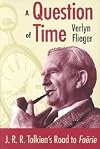
Verlyn Flieger is one of the great Tolkien scholars, with a wealth of knowledge that has enriched many students of the maker of Middle-earth. But in this one case, I think Flieger has gone somewhat astray. I don't think Flieger understands Faërie.
This is not a rare thing. Faërie is the land of folklore -- but folklore has moved away from it. Our society as a whole dropped the medieval Romance -- until Tolkien himself successfully revived the genre. These days, we don't read The Franklin's show more Tale or Sir Orfeo; we read Agatha Christie or F. Scott Fitzgerald -- novels, not romances; stories of people, not motifs. Even the ballads show this trend -- the supernatural is key to "Thomas Rymer" or "Tam Lin," very old songs indeed, or even to a murder ballad like "The Twa Sisters" (where a murdered girl's corpse becomes a musical instrument that tells the tale of her murder). But newer ballads of murder just tell of "bloody knives" or poison, or if two lovers are separated, it's not because of a Woman of the Elves, it's because one of the lovers' mothers doesn't want X, who doesn't have any money, marrying her precious child!
Flieger looks at the effects of time, but I don't think you can understand time in Faërie unless you hear of Thomas the Rhymer being taken away by the Queen of Elfland, and returned after a long stay that takes almost no time. Or of Sir Orfeo watching Heurodis being captivated (in the true sense: taken captive) by the King of Faërie beneath a "ympe tree" where worlds cross, and riding in the King's hunt until Orfeo's music wins her release. Tolkien knew. Tolkien saw the barren lands left by the ancient plagues; he dreamed of the water sweeping all before it; he knew how thin was the line between our world and... that other world. (No, that other world does not really exist, but it lives in our hearts and our folktales.)
Of course I can't prove I'm right. Flieger knows more about Tolkien's life and works than I do. But where she sees allegory, or at least "applicability," I see the themes that went into so many folktales, because they speak to some ancient yearning in us -- a yearning that Tolkien so brilliantly captured. I can't help but think that this book is too modern a take on an ancient mystery. show less
This is not a rare thing. Faërie is the land of folklore -- but folklore has moved away from it. Our society as a whole dropped the medieval Romance -- until Tolkien himself successfully revived the genre. These days, we don't read The Franklin's show more Tale or Sir Orfeo; we read Agatha Christie or F. Scott Fitzgerald -- novels, not romances; stories of people, not motifs. Even the ballads show this trend -- the supernatural is key to "Thomas Rymer" or "Tam Lin," very old songs indeed, or even to a murder ballad like "The Twa Sisters" (where a murdered girl's corpse becomes a musical instrument that tells the tale of her murder). But newer ballads of murder just tell of "bloody knives" or poison, or if two lovers are separated, it's not because of a Woman of the Elves, it's because one of the lovers' mothers doesn't want X, who doesn't have any money, marrying her precious child!
Flieger looks at the effects of time, but I don't think you can understand time in Faërie unless you hear of Thomas the Rhymer being taken away by the Queen of Elfland, and returned after a long stay that takes almost no time. Or of Sir Orfeo watching Heurodis being captivated (in the true sense: taken captive) by the King of Faërie beneath a "ympe tree" where worlds cross, and riding in the King's hunt until Orfeo's music wins her release. Tolkien knew. Tolkien saw the barren lands left by the ancient plagues; he dreamed of the water sweeping all before it; he knew how thin was the line between our world and... that other world. (No, that other world does not really exist, but it lives in our hearts and our folktales.)
Of course I can't prove I'm right. Flieger knows more about Tolkien's life and works than I do. But where she sees allegory, or at least "applicability," I see the themes that went into so many folktales, because they speak to some ancient yearning in us -- a yearning that Tolkien so brilliantly captured. I can't help but think that this book is too modern a take on an ancient mystery. show less
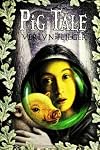
first line: "It feels like we've been here forever."
I'm not sure how well this works as a novel. The writing is simple but elegant, and the characters often sympathetic and grittily real. The book's major themes include both senses of scapegoating: the psychological tendency of people to blame outsiders for their troubles, as well as the folkloric/historical sense of ensuring the prosperity of a community through sacrifice (whether in the form of human or animal death, or simply the burning show more of the corn-god in effigy). The weightiness of these themes and the story's indeterminate conclusion make me think -- even more than the violent rape scene that takes place relatively early on in the novel -- that this isn't really a young adult novel. Rather, it's a beautifully-written fictional companion to The Golden Bough. show less
I'm not sure how well this works as a novel. The writing is simple but elegant, and the characters often sympathetic and grittily real. The book's major themes include both senses of scapegoating: the psychological tendency of people to blame outsiders for their troubles, as well as the folkloric/historical sense of ensuring the prosperity of a community through sacrifice (whether in the form of human or animal death, or simply the burning show more of the corn-god in effigy). The weightiness of these themes and the story's indeterminate conclusion make me think -- even more than the violent rape scene that takes place relatively early on in the novel -- that this isn't really a young adult novel. Rather, it's a beautifully-written fictional companion to The Golden Bough. show less
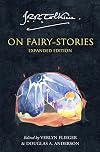
I read J.R.R. Tolkien’s essay “On Fairy-Stories” in preparation for teaching a class on Tolkien. Originally written as a lecture in 1939 and first published in 1945, this essay gives a sense for why Tolkien valued fantasy, fairy-story, myth and legend. So, if you’ve ever wondered what was behind Tolkien’s fantasy fiction, this is the book for you! In it Tolkien argues that fairy-stories and fantasy are not just for children--in fact, adults need them more, and get more out of them. show more He also objects to the notion that fairy-stories are at the bottom rung of evolution from myth to heroic legend to fairy-story. For him, the world of myth and legend and fantasy is a “cauldron” that has been bubbling for centuries, with bits added into the stew over time. He himself draws from this cauldron--and adds to it--in his own fantasy-writing. What does this type of fantasy literature have to offer? His answer is: escape from some of the ugliness and violence of this world; consolation for some of our profoundest desires, such as the desire to communicate with other living creatures, or the desire to escape death; the experience of “eucatastrophe” (“the good catastrophe”)--or “the sudden joyous ‘turn’” of events; and the resultant feelings of joy. And indeed, as I reread The Lord of the Rings, I find myself experiencing some of these very feelings. It is a great wonder to talk with trees and elves. There is a great sadness to mortality--and loss of things past. And, in the face of great threat, there is a sense of the joy of deliverance. Remember, Tolkien lived and wrote through two World Wars, and had a rightful horror of “the ugliness of our works, and of their evil” (On Fairy-Stories). His fiction is steeped in the sense of cosmic battle between forces of good and evil, forces of life and forces of destruction. His works, fantasy though they are, confront some of the most profound questions of his generation--and continue to speak to ours. show less
Lists
Awards


You May Also Like


Associated Authors
Statistics
- Works
- 31
- Also by
- 19
- Members
- 1,612
- Popularity
- #15,986
- Rating
- 4.1
- Reviews
- 17
- ISBNs
- 50
- Languages
- 2
- Favorited
- 2