
John Garth (1) (1966–)
Author of Tolkien and the Great War: The Threshold of Middle-earth
For other authors named John Garth, see the disambiguation page.
About the Author
John Garth studied English at Oxford University and has since worked as a newspaper journalist in London. A long-standing taste for the works of Tolkien, combined with an interest in the First World War, fueled the five years of research
Works by John Garth
The Worlds of J.R.R. Tolkien : The Places that Inspired the Writer's Imagination (2020) 277 copies, 7 reviews
Tolkien at Exeter College : how an Oxford undergraduate created Middle-earth (2014) — Author — 29 copies, 1 review
Associated Works
The Lord of the Rings 1954-2004: Scholarship in Honor of Richard E. Blackwelder (2006) — Contributor — 38 copies
Sub-creating Arda: World-building in J.R.R. Tolkien's Work, its Precursors and its Legacies (Cormarë) (2019) — Contributor — 29 copies
"Something Has Gone Crack": New Perspectives on J.R.R. Tolkien in the Great War (2019) — Contributor — 9 copies
Tagged
Common Knowledge
- Birthdate
- 1966-06-09
- Gender
- male
- Education
- St Anne's College, Oxford (English Language and Literature)
- Occupations
- journalist
- Awards and honors
- Tolkien Society Awards Outstanding Contribution (2017)
- Nationality
- UK
- Associated Place (for map)
- UK
Members
Reviews
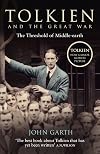
Often dry but richly rewarding, John Garth's biography tells the story of J. R. R. Tolkien's war years, and how the experiences of those years influenced and developed his famous mythology. I must admit that I expected more dedicated discussion of specific war events and circumstances which impacted The Hobbit and The Lord of the Rings, but aside from a few examples given in Garth's Postscript – Tolkien's experience of the Battle of the Somme influencing the Dead Marshes being the most show more evocative – there was very little of this.
Instead, Garth traces Tolkien's development of his ideas, the world of Middle-earth he built on throughout his life and the stories and backstories he wrote before, and around, The Hobbit. The best of this backstory was later compiled into The Silmarillion, and the greatest strength of Garth's book is in analysing the true depth and literary ambition of Tolkien's ideas. When I read The Silmarillion a couple of years ago, I was struck by how Tolkien was creating a meta-myth in which his Middle-earth was our own world in an earlier cycle, with echoes that endured into our own world via language and legend. By knitting together our many disparate Western legends into a single origin, I remarked that Tolkien created arguably the most ambitious fictional contribution to Western mythology since Paradise Lost. Garth also makes the comparison to Milton's work (pg. 261), and to see him delve into this is very absorbing.
But where Garth really excels is in expanding the implications of Tolkien's ambition, Tolkien's achievement. Throughout most of the book, Garth is painstakingly delivering the narrative of how Tolkien developed his imagined world in response to the world at war around him, but towards the end he makes some rather bracing arguments that do the book great credit. Garth contrasts Tolkien's experiences of the war, and his literary creativity in response, to those of the more commonly-cited war artists: the disenchanted and demoralised poets who wrote of trenches and terror and held that the ideals that came before the war were a lie: "the old Lie", as Wilfred Owen put it. By writing his heroic myths, Garth argues that Tolkien expressed "aspects of the war experience neglected by his contemporaries", and his Middle-earth contradicts the orthodox view that "the Great War finished off the epic and heroic traditions [in literature] in any serious form" (pg. 287).
It's a compelling, refreshing, revisionist argument; recasting Tolkien from the fusty, aged, pipe-smoking Oxford don of popular memory into a genuine literary figure; a man who, when faced with the holocaust of the trenches, did not declare virtue and honour meaningless but instead sought to conserve – a true conservative – the values that came before and revitalise them in response. Nor is this sleight-of-hand; Garth makes his argument compellingly and lucidly, and his account of the first day of the Somme, when one of Tolkien's close friends was cut down (as were many thousands of others), is sickening in its brutal waste of life. Considering that there were surely many at the time who disagreed with the "disenchanted view of the war", which "stripped meaning from what many soldiers saw as the defining experience of their lives" (pg. 303), it is gratifying to see an argument made so completely that Tolkien was the literary figure par excellence for this perspective; one who sought not to discard or denounce as meaningless, but rebuild and revitalise – often in honour of the men who were lost. In one of the most affecting passages of the book, one of Tolkien's closest friends – who would soon die in the mud of the Somme – expresses his excitement at being sent one of Tolkien's poems, saying that the reason he fights and endures is so that people can still write and appreciate such fine art (pg. 117).
I picked up this book not because I am a big Lord of the Rings fan (though I am); instead, my interest was piqued by Tolkien's connection to my hometown of Salford. I bought the book at the Imperial War Museum North on Salford Quays, which also displays some of Tolkien's battlefield effects, including his service revolver. I had previously been ignorant of the connection; the battalion in which Tolkien served as a lieutenant was the Salford Pals, made up of hardy Northern men of "Eccles, Swinton and Salford" (pg. 68) and a few Oxford-bred officers like Tolkien. Garth makes the argument that Tolkien's experience of their courage and sacrifice not only inspired certain scenes from Middle-earth (such as how in 'The Fall of Gondolin', a battalion of "smiths and craftsmen" are "the first to meet the enemy onslaught" in a crucial battle and, in traumatic echoes of the Pals on the Somme, never "fared away from that field" (pg. 294)), but also steeled Tolkien's conviction, later expressed through the feats of the Hobbits, that it is the character of the smallfolk, not the great names, who decide the course of history in its most desperate moments. I would have been thrilled for such a crucial local connection to Tolkien's world when I was merely a fan of The Lord of the Rings as entertainment. To have such a connection when, as Garth demonstrates, Tolkien's achievement was an act of remarkable literary ambition done in preservation of the finest ideals, it proves to be a great honour. show less
Instead, Garth traces Tolkien's development of his ideas, the world of Middle-earth he built on throughout his life and the stories and backstories he wrote before, and around, The Hobbit. The best of this backstory was later compiled into The Silmarillion, and the greatest strength of Garth's book is in analysing the true depth and literary ambition of Tolkien's ideas. When I read The Silmarillion a couple of years ago, I was struck by how Tolkien was creating a meta-myth in which his Middle-earth was our own world in an earlier cycle, with echoes that endured into our own world via language and legend. By knitting together our many disparate Western legends into a single origin, I remarked that Tolkien created arguably the most ambitious fictional contribution to Western mythology since Paradise Lost. Garth also makes the comparison to Milton's work (pg. 261), and to see him delve into this is very absorbing.
But where Garth really excels is in expanding the implications of Tolkien's ambition, Tolkien's achievement. Throughout most of the book, Garth is painstakingly delivering the narrative of how Tolkien developed his imagined world in response to the world at war around him, but towards the end he makes some rather bracing arguments that do the book great credit. Garth contrasts Tolkien's experiences of the war, and his literary creativity in response, to those of the more commonly-cited war artists: the disenchanted and demoralised poets who wrote of trenches and terror and held that the ideals that came before the war were a lie: "the old Lie", as Wilfred Owen put it. By writing his heroic myths, Garth argues that Tolkien expressed "aspects of the war experience neglected by his contemporaries", and his Middle-earth contradicts the orthodox view that "the Great War finished off the epic and heroic traditions [in literature] in any serious form" (pg. 287).
It's a compelling, refreshing, revisionist argument; recasting Tolkien from the fusty, aged, pipe-smoking Oxford don of popular memory into a genuine literary figure; a man who, when faced with the holocaust of the trenches, did not declare virtue and honour meaningless but instead sought to conserve – a true conservative – the values that came before and revitalise them in response. Nor is this sleight-of-hand; Garth makes his argument compellingly and lucidly, and his account of the first day of the Somme, when one of Tolkien's close friends was cut down (as were many thousands of others), is sickening in its brutal waste of life. Considering that there were surely many at the time who disagreed with the "disenchanted view of the war", which "stripped meaning from what many soldiers saw as the defining experience of their lives" (pg. 303), it is gratifying to see an argument made so completely that Tolkien was the literary figure par excellence for this perspective; one who sought not to discard or denounce as meaningless, but rebuild and revitalise – often in honour of the men who were lost. In one of the most affecting passages of the book, one of Tolkien's closest friends – who would soon die in the mud of the Somme – expresses his excitement at being sent one of Tolkien's poems, saying that the reason he fights and endures is so that people can still write and appreciate such fine art (pg. 117).
I picked up this book not because I am a big Lord of the Rings fan (though I am); instead, my interest was piqued by Tolkien's connection to my hometown of Salford. I bought the book at the Imperial War Museum North on Salford Quays, which also displays some of Tolkien's battlefield effects, including his service revolver. I had previously been ignorant of the connection; the battalion in which Tolkien served as a lieutenant was the Salford Pals, made up of hardy Northern men of "Eccles, Swinton and Salford" (pg. 68) and a few Oxford-bred officers like Tolkien. Garth makes the argument that Tolkien's experience of their courage and sacrifice not only inspired certain scenes from Middle-earth (such as how in 'The Fall of Gondolin', a battalion of "smiths and craftsmen" are "the first to meet the enemy onslaught" in a crucial battle and, in traumatic echoes of the Pals on the Somme, never "fared away from that field" (pg. 294)), but also steeled Tolkien's conviction, later expressed through the feats of the Hobbits, that it is the character of the smallfolk, not the great names, who decide the course of history in its most desperate moments. I would have been thrilled for such a crucial local connection to Tolkien's world when I was merely a fan of The Lord of the Rings as entertainment. To have such a connection when, as Garth demonstrates, Tolkien's achievement was an act of remarkable literary ambition done in preservation of the finest ideals, it proves to be a great honour. show less
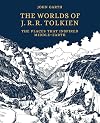
For me, having only read (and reread) The Lord of the Rings and The Hobbit, with a single reading of The Silmarillion many years ago, this is an occasionally fascinating, but often too detailed, book for the general reader of Tolkien.
Beautifully illustrated with photos, paintings, posters and some relevant maps, these eased the tedium of the esoteric references to Tolkien’s lesser known books and poetry. Although there are some very interesting insights into places that inspired The Lord show more of the Rings and The Hobbit, this is a book for the enthusiast of all Tolkien’s work, rather than just his famous ones. show less
Beautifully illustrated with photos, paintings, posters and some relevant maps, these eased the tedium of the esoteric references to Tolkien’s lesser known books and poetry. Although there are some very interesting insights into places that inspired The Lord show more of the Rings and The Hobbit, this is a book for the enthusiast of all Tolkien’s work, rather than just his famous ones. show less
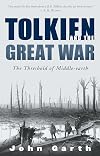
This was recommended to me by Dave Llewellyn-Dodds, one of the small community of regular commenters on Brenton Dickieson’s blog, A Pilgrim in Narnia. It is an excellent and well written analysis of how Tolkien’s experiences just prior to, and during, the First World War, fed into his creative process. It does not try to claim that there is any direct allegory (as any serious fan of Tolkien knows, he hated allegory) but rather explores how his vision of Middle-Earth was deepened and show more expanded by his experiences of suffering and loss, and his encounters with new types of people. It definitely offers a new perspective on Tolkien’s legendarium, and will be an excellent complement to the film that is coming out soon, which also explores that period of his life.
This book will also make you realize what a senseless waste of lives the First World War was. Garth notes that A A Milne became a signaller because the chances of survival were higher. I can’t say I blame him. A similar (but less baldly stated) instinct underlay Tolkien’s choice of signalling as his contribution to the war effort. It’s chilling to think that Winnie-the-Pooh and The Lord of the Rings might not have existed if they had been killed. I also wonder what else Saki (H H Munro) and Wilfred Owen might have written, had they survived WW1. And what other geniuses were lost in that slaughter. Certainly Tolkien's friends Rob Q Gilson and Geoffrey Bache Smith. show less
This book will also make you realize what a senseless waste of lives the First World War was. Garth notes that A A Milne became a signaller because the chances of survival were higher. I can’t say I blame him. A similar (but less baldly stated) instinct underlay Tolkien’s choice of signalling as his contribution to the war effort. It’s chilling to think that Winnie-the-Pooh and The Lord of the Rings might not have existed if they had been killed. I also wonder what else Saki (H H Munro) and Wilfred Owen might have written, had they survived WW1. And what other geniuses were lost in that slaughter. Certainly Tolkien's friends Rob Q Gilson and Geoffrey Bache Smith. show less
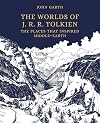
I've been meaning to read John Garth's "Tolkien and the Great War" for ages now, but have never gotten around to it, so I picked up this work sort of as a way to ease in to that endeavor. As for this book, it's basically a gazetteer of all the places in real life, and literature, that Tolkien mentally assimilated in his effort to create a mythology that he considered worthy of England, and it's a very cool book; if only for all of Tolkien's own art that went into it. In the end, Garth show more concludes that Tolkien did better than create a mythos for one land, he created a mythos for all those who would wish to preserve the land, and a certain sort of basic humanity, from the depredations of modernity at its most corrosive. show less
Lists
Awards

You May Also Like


Associated Authors
Statistics
- Works
- 3
- Also by
- 5
- Members
- 1,103
- Popularity
- #23,300
- Rating
- 4.2
- Reviews
- 22
- ISBNs
- 38
- Languages
- 10
- Favorited
- 1