

Louise Dickinson Rich (1903–1991)
Author of We Took to the Woods
About the Author
Works by Louise Dickinson Rich
Associated Works
Friends to Man: The Wonderful World of Animals — Contributor — 2 copies
Tagged
Common Knowledge
- Legal name
- Rich, Sarah Louise Dickinson (Bacon, first husband)
- Birthdate
- 1903-06-14
- Date of death
- 1991-04-09
- Gender
- female
- Education
- Framingham State University
- Cause of death
- congestive heart failure
- Nationality
- USA
- Birthplace
- Huntington, Massachusetts, USA
- Places of residence
- Bridgewater, Massachusetts, USA
Maine, USA - Place of death
- Mattapoiset, Massachusetts, USA
- Associated Place (for map)
- Massachusetts, USA
Members
Reviews
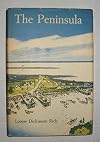
This 1958 gem describes the author's life on Cranberry Point, Corea, Downeast Maine. Better known from her memoir We Took To The Woods, Dickinson is now a widow who is fortunate enough to be invited, by a reader she'd never met, to stay for the summer at their rough cabin with no electricity or running water in the small lobstering village. Neighbors are wary of her reputation as a reporter of the eccentric ways of rural folk, and warn her: "We ain't QUAINT! We don't want no book written show more about us." But she does, and it is a fitting tribute to the lives lived as they were one hundred years earlier, back in the days of sail and horse-drawn wagons. Gasoline engines and electric motors for lobster boats, and cars and electricity seem to be the main differences between 1858 and 1958, and the reader can only wonder how the advent of cellphones and internet have generated another wave sweeping over these formerly isolated, working class locales, off the beaten tourist trail of Route 1. Dickinson smoothly blends anthropology, sociology, and humor to pay homage to this hard, rocky coast, and her chapters on the likelihood of death on the water for the men, and the rituals of commemorating the losses, are most heartfelt and lovely.
Quote: "Fast-gathering clouds indicate a quick-breaking spell of weather, but if the clouds crawl slowly over the horizon there is yet time to do a day's work before running for shelter. "Short warning, soon past. Long foretelling, long last." Upon such lore depend their livelihoods and sometimes their very lives." show less
Quote: "Fast-gathering clouds indicate a quick-breaking spell of weather, but if the clouds crawl slowly over the horizon there is yet time to do a day's work before running for shelter. "Short warning, soon past. Long foretelling, long last." Upon such lore depend their livelihoods and sometimes their very lives." show less

Originally published in 1942. "Discontent is only the fear of missing something. Content is the knowledge that you aren't missing a thing worth-while." (p. 322) I guess that depends on how you've lived your life according to YOUR own standards.
This is my first read of 2019, and I can tell you now that it will be one of my top reads of the year. Louise Dickinson Rich is a very visual writer, and she can sure tell some stories. I love her sense of humor. Not once did I get bored, nor did I show more begin to count the pages.
On page 142, she wrote something here that caught my attention and just might explain the attitude of so many unhappy youths, even adults, of today, speaking of her son: "I want him to know what he's fighting for-and Freedom and Democracy won't mean a thing to him, unless they are all tied up with memories of things that he has loved..." Today's youth do not have exciting, fond memories of adventure or memories of things that they loved. Their heads are down and distracted by rotten politics and electronics, meanwhile, the beautiful day outside is passing them by. I love how she describes all the distractions around us as "static". That was back in 1942. Today, with cell phones, Internet, Facebook, Instagram, Snapchat, and electronic games, and even today's politics, all vying up most our time on this earth, we have created a level of "static" in our lives that is uncomprehensible, and it’s making people mentally unstable. This includes adults as well. I get it! I'm part of this group so distracted by all the "static" around.
Documenting every aspect of our lives, prevents our minds from taking in all the fine beautiful things taking place all around us, and just creates a sense of selfishness. We snap that picture so we can instantly share to everyone and to say, “Hey, look at me! Look what I am doing!” Our memories are now in the memory card of our cameras. They weren't captured fully with our minds and our soul because we had a motive for taking that picture...to show the world how important we are. No deep memorable moment to sustain us like Louise's memory and full description of that one beautiful morning seeing the sun behind a blackbird that lighted on the water just in front of her:
"We sat down on the shore to assemble our tackle, and a shelldrake came flying in from the east, not seeing us at all. The sun was behind it, and as it spread its wings and tail to break for a three point landing almost in our laps, the delicate rib of every feather was silhouetted black and single, and the down along the ribs was gold and translucent. We could see how wonderfully and intricately it was made. Spray flew up like a fountain of jewels as it plowed the water. It was a bird of fire, coming to rest among diamonds and emeralds." (p. 284)
That one day on B Pond was anything but miraculous. It was an experience that could only be captured in one’s own eyes and sealed in their soul, not in a camera. Sure, today, we would have snapped a picture of a black bird that landed in the water in front of us, but missing all the little fine details of that landing because we were busy snapping that picture to show everybody on Facebook.
There are a couple of recipes I am interested in trying, just to see how they really ate out there in the woods, and to get the full experience out of reading her story. Instructions for her Baked Beans are on page 113-4, which require all day, slow cooking in the oven, with water added about every 30 minutes. And her Raspberry Shortcake Recipe with full instructions can be found on page 162. show less
This is my first read of 2019, and I can tell you now that it will be one of my top reads of the year. Louise Dickinson Rich is a very visual writer, and she can sure tell some stories. I love her sense of humor. Not once did I get bored, nor did I show more begin to count the pages.
On page 142, she wrote something here that caught my attention and just might explain the attitude of so many unhappy youths, even adults, of today, speaking of her son: "I want him to know what he's fighting for-and Freedom and Democracy won't mean a thing to him, unless they are all tied up with memories of things that he has loved..." Today's youth do not have exciting, fond memories of adventure or memories of things that they loved. Their heads are down and distracted by rotten politics and electronics, meanwhile, the beautiful day outside is passing them by. I love how she describes all the distractions around us as "static". That was back in 1942. Today, with cell phones, Internet, Facebook, Instagram, Snapchat, and electronic games, and even today's politics, all vying up most our time on this earth, we have created a level of "static" in our lives that is uncomprehensible, and it’s making people mentally unstable. This includes adults as well. I get it! I'm part of this group so distracted by all the "static" around.
Documenting every aspect of our lives, prevents our minds from taking in all the fine beautiful things taking place all around us, and just creates a sense of selfishness. We snap that picture so we can instantly share to everyone and to say, “Hey, look at me! Look what I am doing!” Our memories are now in the memory card of our cameras. They weren't captured fully with our minds and our soul because we had a motive for taking that picture...to show the world how important we are. No deep memorable moment to sustain us like Louise's memory and full description of that one beautiful morning seeing the sun behind a blackbird that lighted on the water just in front of her:
"We sat down on the shore to assemble our tackle, and a shelldrake came flying in from the east, not seeing us at all. The sun was behind it, and as it spread its wings and tail to break for a three point landing almost in our laps, the delicate rib of every feather was silhouetted black and single, and the down along the ribs was gold and translucent. We could see how wonderfully and intricately it was made. Spray flew up like a fountain of jewels as it plowed the water. It was a bird of fire, coming to rest among diamonds and emeralds." (p. 284)
That one day on B Pond was anything but miraculous. It was an experience that could only be captured in one’s own eyes and sealed in their soul, not in a camera. Sure, today, we would have snapped a picture of a black bird that landed in the water in front of us, but missing all the little fine details of that landing because we were busy snapping that picture to show everybody on Facebook.
There are a couple of recipes I am interested in trying, just to see how they really ate out there in the woods, and to get the full experience out of reading her story. Instructions for her Baked Beans are on page 113-4, which require all day, slow cooking in the oven, with water added about every 30 minutes. And her Raspberry Shortcake Recipe with full instructions can be found on page 162. show less

The quirkiest and most charming history/guide to Maine that I have ever encountered! I adore my home, the whole of Maine, and I discovered so many bits of history and places that I haven't yet explored. The author has clarity, instinct and some fair amount of opinionated sass. Here's a quote (from section on Bath) to make you want to go out and find this book (somewhat challenging, I found my copy at Merrill's locals): "Nowadays the ships are usually christened with a bottle of champagne. In show more the early days it was rum, the common beverage on all social levels, distilled locally on Winnegance Creek. Rum continued to be customary until the dreary days of national prohibition, when the distraught builders had to look for a suitable substitute. They hit upon Poland Spring Water, as at least being of Maine origin. This strikes me as a sorry and emasculate travesty of a once robust and symbolic ceremony. Poland Spring Water indeed! Some day when I have nothing better to do, I'm going to check on the records of some of the ships launched under this feeble auspice. I'll bet none of them ever amounted to much." I wonder if she ever did pursue this idea...Anyway, if you love Maine seek this one out! show less

I love it when a book is so fun to read you don't notice the time. You simply start reading and suddenly it's three hours later and you are practically finished with the entire thing. Such is the case with We Took to the Woods. Rich is a fantastic storyteller. What makes her story even more appealing is the fact it's a true story (complete with photographs) and Rich has a great sense of humor. Maine humor, if you will. It's a great combination.
Probably the most fascinating element to We Took show more to the Woods is how current it is 70 years later. You can read about living in a cabin deep in the woods of Maine today and find it eerily similar to how Rich described it back then. A simple way of life is a simple way of life. I guess you could say simplicity barely changes. Rich divides her chapters into the most frequently asked questions she has had to answer over the years: "But how do you make a living?" "Aren't you ever frightened?" and "Do you get out very often?" to name a few. It's as if she wrote the book to shut people up about her unique lifestyle, living in the far Northern section of Maine in the middle of nowhere. show less
Probably the most fascinating element to We Took show more to the Woods is how current it is 70 years later. You can read about living in a cabin deep in the woods of Maine today and find it eerily similar to how Rich described it back then. A simple way of life is a simple way of life. I guess you could say simplicity barely changes. Rich divides her chapters into the most frequently asked questions she has had to answer over the years: "But how do you make a living?" "Aren't you ever frightened?" and "Do you get out very often?" to name a few. It's as if she wrote the book to shut people up about her unique lifestyle, living in the far Northern section of Maine in the middle of nowhere. show less
Lists
Awards


You May Also Like


Associated Authors
Statistics
- Works
- 31
- Also by
- 2
- Members
- 1,438
- Popularity
- #17,882
- Rating
- 4.3
- Reviews
- 22
- ISBNs
- 36
- Favorited
- 6