
Henry Beston (1888–1968)
Author of The Outermost House: A Year of Life on the Great Beach of Cape Cod
About the Author
Henry Beston (1888-1968) was the author of many books, including White Pine and Blue Water, Northern Farm, and The St. Lawrence. His Cape Cod house was proclaimed a National Literary Landmark in 1964. It was destroyed by a massive winter storm in 1978
Works by Henry Beston
Associated Works
The Concord and the Merrimack; excerpts from A week on the Concord and Merrimack Rivers (1954) — Introduction — 45 copies
Fairies, Pookas, and Changelings: A Complete Guide to the Wild and Wicked Enchanted Realm (2017) — Contributor — 34 copies
The Tavern Lamps Are Burning: Literary Journeys through Six Regions and Four Centuries of New York State (1964) — Contributor — 24 copies
Tagged
Common Knowledge
- Legal name
- Sheahan, Henry Beston
- Birthdate
- 1888-06-01
- Date of death
- 1968-04-15
- Gender
- male
- Education
- Harvard University
- Occupations
- naturalist
- Awards and honors
- Emerson-Thoreau Medal (1960)
- Relationships
- Coatsworth, Elizabeth (wife)
- Nationality
- USA
- Birthplace
- Boston, Massachusetts, USA
- Places of residence
- Quincy, Massachusetts, USA
Eastham, Massachusetts, USA
Nobleboro, Maine, USA - Place of death
- Nobleboro, Maine, USA
- Associated Place (for map)
- Massachusetts, USA
Members
Reviews

In this gem of a book, Beston calls for a return to nature, an escape from a world “sick to its thin blood for lack of elemental things.” After experiencing civilization at its worst as an ambulance driver in World War One, he returns to Massachusetts and buys property on the eastern shore of Cape Cod, the upper arm bent at the elbow, bravely flexed to face the Atlantic Ocean. He has a two-room house built intended for vacation use. Then, when it is finished, he decides to experience all show more four seasons. This is a record of that year.
Like his spiritual precursor, Thoreau, Beston carefully observes nature. He names plants, insects, fish, and other aquatic life. He is particularly attentive to birds, noting their comings and goings. There are summer and winter species. Some hover close to shore, and others venture far out to sea.
His closest human companions are those who man the Coast Guard station at the Nauset light. He details their night watches and efforts to save storm-wrecked ship crews.
One of my favorite passages begins the next-to-last chapter of the book, in which Beston laments our neglect of the sense of smell and describes the fragrances of sand and surf in the changing seasons and weather.
Nearly a century on, the world Beston describes has continued to change. Much of what he lived among is now endangered; his call for “another and a wiser and perhaps a more mystical concept of animals” has gone unheeded, except for by the few. The house, named a national literary landmark, only stood for a half-century before being rent asunder in a fierce winter storm. But that loss, of a mark of civilization, is minor compared to that of the wildlife he lovingly observes. Seeing this passing world through Beston’s eyes, whether through the ten windows of his Fo’castle (as he named his house) or outdoors at all hours of the day and night, whether on the beach, dune, or at the salt marsh, tinged the pleasure of my reading with an elegiac sadness. show less
Like his spiritual precursor, Thoreau, Beston carefully observes nature. He names plants, insects, fish, and other aquatic life. He is particularly attentive to birds, noting their comings and goings. There are summer and winter species. Some hover close to shore, and others venture far out to sea.
His closest human companions are those who man the Coast Guard station at the Nauset light. He details their night watches and efforts to save storm-wrecked ship crews.
One of my favorite passages begins the next-to-last chapter of the book, in which Beston laments our neglect of the sense of smell and describes the fragrances of sand and surf in the changing seasons and weather.
Nearly a century on, the world Beston describes has continued to change. Much of what he lived among is now endangered; his call for “another and a wiser and perhaps a more mystical concept of animals” has gone unheeded, except for by the few. The house, named a national literary landmark, only stood for a half-century before being rent asunder in a fierce winter storm. But that loss, of a mark of civilization, is minor compared to that of the wildlife he lovingly observes. Seeing this passing world through Beston’s eyes, whether through the ten windows of his Fo’castle (as he named his house) or outdoors at all hours of the day and night, whether on the beach, dune, or at the salt marsh, tinged the pleasure of my reading with an elegiac sadness. show less

Henry Beston delivers a prescient message in this 1948 naturalist's memoir, Northern Farm. Within the exquisite pastoral prose detailing the ebb and flow of a simple life on a farm in northern Maine over the course of a year, there is a cautionary message reminding us that "we have a duty to the earth" and that to be human we must stay connected to the natural world. Beston famously eschewed industrialization and believed that left unchecked it would break our ties to the natural world and show more leave man "soulless."
"It is enough to say that prophets of expediency who are careless of the means they use and who work outside the human and moral values, have never been able to build anything humanly worthwhile."
Beston was an environmentalist before most people understood the impacts of "progress," and along with his earlier work, "The Outermost House," "Northern Farm" delivers a timely and important message for all. show less
"It is enough to say that prophets of expediency who are careless of the means they use and who work outside the human and moral values, have never been able to build anything humanly worthwhile."
Beston was an environmentalist before most people understood the impacts of "progress," and along with his earlier work, "The Outermost House," "Northern Farm" delivers a timely and important message for all. show less
First published in 1928, the beauty of the language is timeless. Who knew someone could describe the sand and sea in so many ways? Beston's book is a poetic gift and left me with an even greater appreciation of the Cape and our natural world in general.
Excerpt:
"Touch the earth, love the earth, honour the earth, her plains, her valleys, her hills, and her seas; rest your spirit in her solitary places."
(Personally, I recommend skipping the introduction by Robert Flinch. Seems to me he's in show more love with his own writing. Go back and read it at the end if you like.) show less
Excerpt:
"Touch the earth, love the earth, honour the earth, her plains, her valleys, her hills, and her seas; rest your spirit in her solitary places."
(Personally, I recommend skipping the introduction by Robert Flinch. Seems to me he's in show more love with his own writing. Go back and read it at the end if you like.) show less

One hundred years ago Cape Cod was a very different place than the busy area it is today. In 1924, when Henry Beston first saw the ocean side of the peninsula wrapping Cape Cod Bay, it was a wild and uninhabited place. As Beston described it For twenty miles this last and outer earth faces the ever hostile ocean in the form of a great eroded cliff of earth and clay, the undulations and levels of whose rim now stand a hundred, now a hundred and fifty feet above the tides. Worn by the breakers show more and the waves, it still stands bold."
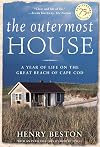
The immediate attraction and pull of the shoreline was such that the next year he bought fifty acres of dunes, and built himself the Fo'castle, a 20' x 16' two room cottage. There was no road in, only a trail. The closest neighbours were the coast guards at the Nauset station two miles away. In September 1926, Beston went to his cottage for a couple of weeks. Somehow, without any real plan, the two weeks lengthened into a year. As Beston put it, "... as the year lengthened into autumn, the beauty and mystery of this earth and outer sea so possessed and held me that I could not go ... The flux and reflux of ocean, the incomings of waves, the gatherings of birds, the pilgrimages of the peoples of the sea, winter and storm, the splendour of autumn and the holiness of the spring - all these were part of the great beach. The longer I stayed the more eager I was to know this coast and to share its mysterious and elemental life."
So began a remarkable immersion year in the natural world. Beston's observations and writing are such that the reader hears the sea, smells the salt, feels the wind the sun and the rain. Bird populations change with the season, so prevalent in spring and fall, almost absent in winter apart from the eternal gulls. Beaton is able to put all these natural phenomena into words. Speaking of the ocean, he said "The sea has many voices. Listen to the surf, really lend it your ears, and you will hear in it a world of sounds: hollow boomings and heavy roarings, great watery tumblings and tramplings, long hissing seethes, sharp, rifle-shot reports, splashes, whispers, the grinding undertone of stones, and sometimes vocal sounds that might be the voices of people in the sea. And not only is the great sound varied in the manner of its making, it is also constantly changing its tempo, its pitch, its accent and its rhythm, being now loud and thundering, now almost placid, now furious, now grave and solemn-slow, now a simple measure, now a rhythm monstrous and with a sense of elemental will. "
This will is dangerous at times. Fishing schooners wash ashore. That winter even a Coast Guard vessel was destroyed. Wreckage from previous disasters lies entombed in the constantly shifting sand. "Eighteenth century pirates, stately British merchantmen of the mid-Victorian years, whaling brigs, Salem East India traders, Gloucester fishermen, and a whole host of forgotten Nineteenth Century schooners -- all these have strewn this beach with broken spars and dead. "
Although this book covers only the one year, there is a remarkable sense of the eternal cycle of the seasons, of the paradox of repeating patterns coupled with constant change. There is a reassurance in these rituals, something that those who live by the ocean recognize, if only subconsciously, something that keeps bringing them back.
Beston's writing is still as fresh today as when his book was first published in 1928. This edition was a 75th anniversary publication. As for the Fo'castle, Beston donated it to the Massachusetts Audubon Society in 1960. It was swept out to sea in February 1978 in a huge storm. Beston's dunes survive, however, in the Cape Cod National Seashore, the creation of which was partly inspired by his writing. show less
The immediate attraction and pull of the shoreline was such that the next year he bought fifty acres of dunes, and built himself the Fo'castle, a 20' x 16' two room cottage. There was no road in, only a trail. The closest neighbours were the coast guards at the Nauset station two miles away. In September 1926, Beston went to his cottage for a couple of weeks. Somehow, without any real plan, the two weeks lengthened into a year. As Beston put it, "... as the year lengthened into autumn, the beauty and mystery of this earth and outer sea so possessed and held me that I could not go ... The flux and reflux of ocean, the incomings of waves, the gatherings of birds, the pilgrimages of the peoples of the sea, winter and storm, the splendour of autumn and the holiness of the spring - all these were part of the great beach. The longer I stayed the more eager I was to know this coast and to share its mysterious and elemental life."
So began a remarkable immersion year in the natural world. Beston's observations and writing are such that the reader hears the sea, smells the salt, feels the wind the sun and the rain. Bird populations change with the season, so prevalent in spring and fall, almost absent in winter apart from the eternal gulls. Beaton is able to put all these natural phenomena into words. Speaking of the ocean, he said "The sea has many voices. Listen to the surf, really lend it your ears, and you will hear in it a world of sounds: hollow boomings and heavy roarings, great watery tumblings and tramplings, long hissing seethes, sharp, rifle-shot reports, splashes, whispers, the grinding undertone of stones, and sometimes vocal sounds that might be the voices of people in the sea. And not only is the great sound varied in the manner of its making, it is also constantly changing its tempo, its pitch, its accent and its rhythm, being now loud and thundering, now almost placid, now furious, now grave and solemn-slow, now a simple measure, now a rhythm monstrous and with a sense of elemental will. "
This will is dangerous at times. Fishing schooners wash ashore. That winter even a Coast Guard vessel was destroyed. Wreckage from previous disasters lies entombed in the constantly shifting sand. "Eighteenth century pirates, stately British merchantmen of the mid-Victorian years, whaling brigs, Salem East India traders, Gloucester fishermen, and a whole host of forgotten Nineteenth Century schooners -- all these have strewn this beach with broken spars and dead. "
Although this book covers only the one year, there is a remarkable sense of the eternal cycle of the seasons, of the paradox of repeating patterns coupled with constant change. There is a reassurance in these rituals, something that those who live by the ocean recognize, if only subconsciously, something that keeps bringing them back.
Beston's writing is still as fresh today as when his book was first published in 1928. This edition was a 75th anniversary publication. As for the Fo'castle, Beston donated it to the Massachusetts Audubon Society in 1960. It was swept out to sea in February 1978 in a huge storm. Beston's dunes survive, however, in the Cape Cod National Seashore, the creation of which was partly inspired by his writing. show less
Lists
Awards

You May Also Like


Associated Authors
Statistics
- Works
- 19
- Also by
- 11
- Members
- 1,653
- Popularity
- #15,542
- Rating
- 4.0
- Reviews
- 40
- ISBNs
- 76
- Languages
- 4
- Favorited
- 2