
Luke Williams (1) (1977–)
Author of The Echo Chamber
For other authors named Luke Williams, see the disambiguation page.
Works by Luke Williams
Tagged
Common Knowledge
- Birthdate
- 1977
- Gender
- male
- Nationality
- United Kingdom
- Birthplace
- Fife, Scotland, UK
Members
Reviews
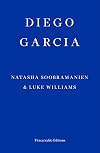
This cowritten novel is both a story of literary collaboration and social commentary on a lesser-known episode of history. The two protagonists, Damaris and Oliver, are writers living in Edinburgh in 2014. They meet Diego Garcia, who has named himself after a (real) island in the Chagos Archipelago. Diego tells the pair of his Mauritian mother’s forced expulsion from her home in 1973. She and the other residents of Diego Garcia were deported to Mauritius and the Seychelles so that a joint show more US/UK military base could be built on the island. In conjunction with Diego’s story, we also learn of Oliver’s brother’s suicide after a stay in a mental health facility.
I appreciated learning more about the history of Diego Garcia. It inspired me to go looking for more information. However, the structure of this book is a hot mess. The narrative is presented in a combination of formats, including interviews, emails, diary entries, and what appear to be Wikipedia excerpts. The styles are also mixed, expressed in lengthy run-on sentences, dual columns on a single page, and short choppy fragments. It is filled with obscure (to me) cultural references.
I found the varieties in formats distracting. Other than being “artsy” there seemed to be little point. I can appreciate the desire to bring to light a lesser-known example of colonialism at a time when these types of takeovers were supposedly in the distant past, but it is told in such a disjointed way that it was difficult to enjoy the reading experience. show less
I appreciated learning more about the history of Diego Garcia. It inspired me to go looking for more information. However, the structure of this book is a hot mess. The narrative is presented in a combination of formats, including interviews, emails, diary entries, and what appear to be Wikipedia excerpts. The styles are also mixed, expressed in lengthy run-on sentences, dual columns on a single page, and short choppy fragments. It is filled with obscure (to me) cultural references.
I found the varieties in formats distracting. Other than being “artsy” there seemed to be little point. I can appreciate the desire to bring to light a lesser-known example of colonialism at a time when these types of takeovers were supposedly in the distant past, but it is told in such a disjointed way that it was difficult to enjoy the reading experience. show less
I initially found this quite confusing to read, its a joint project between 2 authors and this means the use of tenses and pronouns can be a bit chaotic. Also when the 2 authors/protagonists separate so does the text, so you get 2 columns on the page. But I soon got the hang of it and enjoyed the style. I knew nothing of this ongoing situation where people were forcibly removed from their homes on the Chagos Islands so the US government could set up a military base, and this book covered show more that history along with giving many sources for further investigation. It also gave a human story about the act of writing it and the unusual collborative methods of the authors. show less
A few short passages from Diego Garcia:
*
Colette said that writers should look closely at what pleases them, and closer still at what gives them pain.
*
Are you still not writing? I feel now that you refusing to write felt like you refusing whiteness.
Daniel’s refusing to live feels now like Daniel refusing whiteness.
Q: What does it say about extreme depression that it engenders a kind of ‘feminized’ behaviour – passiveness, quietness, etc and what does that say about patriarchy.
A: show more nothing we didn’t know.
*
Writing is a practical skill, writing is the most practical thing I can do.
But what to do with it?
How to use it?
What I call writing is me trying to grab the questions that come at me. And when I can’t do anything with them I can’t do anything.
*
I don’t care how much fuckin ‘magic’ is in a book, if it doesn’t attempt to reimagine the structures of our world but with every word enforces them, it’s about as magic as a breezeblock.
*
How as a writer do you tell a story that needs to be shared, if it is not your story?
*
[For me, this was one of the best books I've read in a very long time.] show less
*
Colette said that writers should look closely at what pleases them, and closer still at what gives them pain.
*
Are you still not writing? I feel now that you refusing to write felt like you refusing whiteness.
Daniel’s refusing to live feels now like Daniel refusing whiteness.
Q: What does it say about extreme depression that it engenders a kind of ‘feminized’ behaviour – passiveness, quietness, etc and what does that say about patriarchy.
A: show more nothing we didn’t know.
*
Writing is a practical skill, writing is the most practical thing I can do.
But what to do with it?
How to use it?
What I call writing is me trying to grab the questions that come at me. And when I can’t do anything with them I can’t do anything.
*
I don’t care how much fuckin ‘magic’ is in a book, if it doesn’t attempt to reimagine the structures of our world but with every word enforces them, it’s about as magic as a breezeblock.
*
How as a writer do you tell a story that needs to be shared, if it is not your story?
*
[For me, this was one of the best books I've read in a very long time.] show less

Another unstarred tome.
This was a mixed bag for me. I get where Williams was going but there was something bloodless about the whole enterprise. Evie lives in Scotland, alone in her attic, and endeavors to write about her life- from pre-gestation through her childhood in Lagos to her exile in the early 60s. Gifted with exceptional hearing, she is ultra sensitive to the world of sound and becomes obsessed with recording ambient noises.
The novel is made up of journal entries, lists, letters show more and memories.
The most interesting section - and the one that gives the novel it's emotional weight - are two chapters worth of diary entries made by Evie's lover. These were actually written by Natasha Soobramanien. Without these, the novel wouldhave been much slighter but with them, many things about the plot, such as it is, fall into place. show less
This was a mixed bag for me. I get where Williams was going but there was something bloodless about the whole enterprise. Evie lives in Scotland, alone in her attic, and endeavors to write about her life- from pre-gestation through her childhood in Lagos to her exile in the early 60s. Gifted with exceptional hearing, she is ultra sensitive to the world of sound and becomes obsessed with recording ambient noises.
The novel is made up of journal entries, lists, letters show more and memories.
The most interesting section - and the one that gives the novel it's emotional weight - are two chapters worth of diary entries made by Evie's lover. These were actually written by Natasha Soobramanien. Without these, the novel wouldhave been much slighter but with them, many things about the plot, such as it is, fall into place. show less
Awards


Statistics
- Works
- 2
- Members
- 102
- Popularity
- #187,250
- Rating
- 3.4
- Reviews
- 5
- ISBNs
- 44
- Languages
- 1