

Tish Harrison Warren
Author of Liturgy of the Ordinary: Sacred Practices in Everyday Life
About the Author
Tish Harrison Warren writes regularly for The Well, Her.meneutics, and Christianity Today. She is a priest in the Anglican Church in North America, serving at Resurrection South Austin. After seven years of campus ministry with InterVarsity at Vanderbilt and the University of Texas at Austin, she show more now works with InterVarsity Women in the Academy Professions. show less
Works by Tish Harrison Warren
Associated Works
Tagged
Common Knowledge
- Birthdate
- 20th century
- Gender
- female
- Nationality
- USA
- Places of residence
- Austin, Texas, USA
- Map Location
- USA
Members
Reviews
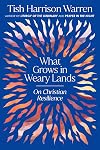
Summary: Lessons for the weary from the desert fathers and mothers on practices that cultivate resilience and renewal.
One of the hard things I’ve seen in my Christian journey are others with whom I travelled give up, often in mid-life. While some have been because of “church hurt,” others are just tired. The demands of life combined with their own waning energies are part of it. Another part is that the faith of their twenties isn’t working anymore. The God who once seemed so real is show more distant. Some, out of habit, keep showing up, perhaps with a faint glimmer of hope that something will break through. Others just walk away. Sunday brunch is so much more inviting.
To look at her from the outside, Tish Harrison Warren was the model of the vibrant Christian. A gifted writer, she had reached the rarefied air of writing a weekly op-ed for The New York Times after a string of well-received books and articles. She was also an Anglican priest, who had returned to her home town of Austin, and the mom of three children. But her life mirrored that of many in mid-life: in the “sandwich,” harried, distracted. In reality, she felt like she was in a desert–weary and parched.
In this book, she describes turning to a weird bunch of saints from 1700 years ago, the desert fathers and mothers, the progenitors of monasticism. Yes, they did some strange things lie sit on pillars. But they also understood that the desert is part of the spiritual journey. They named the condition and the tendencies to “flame out” or “numb out.” Instead, they wrestled what it meant to go on with God through the desert times.
After this introduction, Warren, in a series of pithily titled chapters reflects upon and passes along their wisdom. “Stay in Your Cell” focuses on the temptation of acedia, to flee to ease or new distractions, and the wisdom of stability, of staying true to one’s people and one’s spiritual practices. We meet John of the Cross, who learns to set aside the longing for feeling or insight to simply be with God in his cell, even when there is no sense of his presence. “Pledge Your Body to the Walls” draws on Benedicts insights about gyrovagues who moved from one monastery to another. Warren explores all the ways we are gyrovagues from relentless moves to church switches and the challenge of letting our roots sink deep in a place.
“Wait in the Womb” explores how stability that waits and perseveres becomes a place where God develops and transforms us. She quotes C.S. Lewis’s counsel to ” ‘continue seeking with cheerful seriousness,’ knowing that unless God ‘wanted you, you would not be wanting Him.’ ” Then, “Relax the Bow” draws on a story of Antony with a hunter, asking him to draw a bow more and more until the hunter protests that it will snap. So it is, Antony says with God’s work. Warren writes about learning the gift of days of delight and sabbath and the grace of confession as ways to relax the bow. Likewise, “Let the Silt Settle” invites us to silence and solitude.
Throughout the book, Warren is both hopeful and yet honest. There are no quick fixes or shortcuts out of the desert. This is a book about going through desert lands, about how to keep going, cultivating resilience. “Brace the Wall” addresses the realities of doubt and disorientation in our desert journeys. We have questions and don’t see clearly the way forward. And sometimes we doubt that God can be trusted. She writes of working through the Psalms and how “yelling at God about our anger, our doubt, and our complaints is perhaps one of the most faithful moves we can make.”
Finally, “All Smoke, All Flame” speaks to “the culmination of Christian resilience.” The title comes from the counsel of Abba Joseph to Abba Lot, who recites his practices and asks “what else can I do?” Abba Joseph “stretched his hands toward heaven. His fingers became like ten lamps of fire and he said to him, ‘If you will, you can become all flame.” We cannot force fire by our efforts, which are just smoke. But by grace through our stumbling practices of faithfulness, we slowly progress. And one day God will set us ablaze in glory.
There is a lot of wisdom as well as earthy humor in Warren’s rich prose. The gist of it all is to not give up, flaming out or numbing out. It is not to chase after spiritual quick fixes. It is to stay put and keep going deeper in the inexhaustible world of prayer and scripture, of sacrament and community. I’m past those perilous middle years. But Warren speaks to my senior years as well. It’s so easy to settle in. I need her call to persevere all the more. And, I’m compelled by the vision to become all flame. By grace, may it be so!
_____________
Disclosure of Material Connection: I received a complimentary copy of this book from the publisher for review. show less
One of the hard things I’ve seen in my Christian journey are others with whom I travelled give up, often in mid-life. While some have been because of “church hurt,” others are just tired. The demands of life combined with their own waning energies are part of it. Another part is that the faith of their twenties isn’t working anymore. The God who once seemed so real is show more distant. Some, out of habit, keep showing up, perhaps with a faint glimmer of hope that something will break through. Others just walk away. Sunday brunch is so much more inviting.
To look at her from the outside, Tish Harrison Warren was the model of the vibrant Christian. A gifted writer, she had reached the rarefied air of writing a weekly op-ed for The New York Times after a string of well-received books and articles. She was also an Anglican priest, who had returned to her home town of Austin, and the mom of three children. But her life mirrored that of many in mid-life: in the “sandwich,” harried, distracted. In reality, she felt like she was in a desert–weary and parched.
In this book, she describes turning to a weird bunch of saints from 1700 years ago, the desert fathers and mothers, the progenitors of monasticism. Yes, they did some strange things lie sit on pillars. But they also understood that the desert is part of the spiritual journey. They named the condition and the tendencies to “flame out” or “numb out.” Instead, they wrestled what it meant to go on with God through the desert times.
After this introduction, Warren, in a series of pithily titled chapters reflects upon and passes along their wisdom. “Stay in Your Cell” focuses on the temptation of acedia, to flee to ease or new distractions, and the wisdom of stability, of staying true to one’s people and one’s spiritual practices. We meet John of the Cross, who learns to set aside the longing for feeling or insight to simply be with God in his cell, even when there is no sense of his presence. “Pledge Your Body to the Walls” draws on Benedicts insights about gyrovagues who moved from one monastery to another. Warren explores all the ways we are gyrovagues from relentless moves to church switches and the challenge of letting our roots sink deep in a place.
“Wait in the Womb” explores how stability that waits and perseveres becomes a place where God develops and transforms us. She quotes C.S. Lewis’s counsel to ” ‘continue seeking with cheerful seriousness,’ knowing that unless God ‘wanted you, you would not be wanting Him.’ ” Then, “Relax the Bow” draws on a story of Antony with a hunter, asking him to draw a bow more and more until the hunter protests that it will snap. So it is, Antony says with God’s work. Warren writes about learning the gift of days of delight and sabbath and the grace of confession as ways to relax the bow. Likewise, “Let the Silt Settle” invites us to silence and solitude.
Throughout the book, Warren is both hopeful and yet honest. There are no quick fixes or shortcuts out of the desert. This is a book about going through desert lands, about how to keep going, cultivating resilience. “Brace the Wall” addresses the realities of doubt and disorientation in our desert journeys. We have questions and don’t see clearly the way forward. And sometimes we doubt that God can be trusted. She writes of working through the Psalms and how “yelling at God about our anger, our doubt, and our complaints is perhaps one of the most faithful moves we can make.”
Finally, “All Smoke, All Flame” speaks to “the culmination of Christian resilience.” The title comes from the counsel of Abba Joseph to Abba Lot, who recites his practices and asks “what else can I do?” Abba Joseph “stretched his hands toward heaven. His fingers became like ten lamps of fire and he said to him, ‘If you will, you can become all flame.” We cannot force fire by our efforts, which are just smoke. But by grace through our stumbling practices of faithfulness, we slowly progress. And one day God will set us ablaze in glory.
There is a lot of wisdom as well as earthy humor in Warren’s rich prose. The gist of it all is to not give up, flaming out or numbing out. It is not to chase after spiritual quick fixes. It is to stay put and keep going deeper in the inexhaustible world of prayer and scripture, of sacrament and community. I’m past those perilous middle years. But Warren speaks to my senior years as well. It’s so easy to settle in. I need her call to persevere all the more. And, I’m compelled by the vision to become all flame. By grace, may it be so!
_____________
Disclosure of Material Connection: I received a complimentary copy of this book from the publisher for review. show less
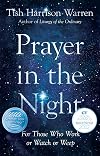
Organized around and explaining why an ancient nighttime prayer can be so effective in our lives, this book speaks powerfully to every reader. Because every reader has been or is currently weeping, waiting, watching, suffering, afflicted, joyful, sick, and weary. And one day we will all die. Tish Warren, displaying an impressive breadth of literacy, quotes everyone from church fathers to modern poets as she describes the common bonds shared by humanity—needs and situations so great that show more only the love of God can meet them. She dares to answer the question "why does evil exist?" and constantly points to the "speed of light" universal constant: Jesus Christ.
I don't often weep through books but in every chapter something got stuck in my eye. Tish offers excellent theology wrapped in personal stories of suffering and joy—ones that helped forge her faith in such a way that she is now equipped to share with us. Get this book and savor it slowly. show less
I don't often weep through books but in every chapter something got stuck in my eye. Tish offers excellent theology wrapped in personal stories of suffering and joy—ones that helped forge her faith in such a way that she is now equipped to share with us. Get this book and savor it slowly. show less
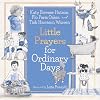
Summary: Twenty-eight prayers, with illustrations, written for children covering the events of the day from getting up to going to bed and all the ordinary and not-so-ordinary things that can happen in a day.
A few years ago, Tish Harrison Warren introduced us, in The Liturgy of the Ordinary to the idea of encountering God and being aware of God’s presence throughout the ordinary events of our days, from getting up, to making our beds, searching for our keys, brushing our teeth, and ending show more the day. In this children’s book, Warren is joined by Katy Bowser Hutson and Flo Paris Oakes and illustrator Liita Forsyth in a very different looking book that helps children (and parents) develop the same awareness that our days are filled with moments where we may connect with God.
At the beginning, they assure us that:
"God always listens. God always loves you.
You can tell God anything."
This is followed by twenty eight “little prayers” of five to thirteen lines, most of which may be read aloud in twenty seconds or less. They cover these topics:
For waking up
For looking in a mirror
For the start of/for the end of a school day
For reading a book/for listening to music
For making something/trying something new
For rest time
For waiting
For when I break something/when I have lost something
For seeing a friend/leaving a friend
For doing chores
For when I do what I shouldn’t
For being outside
For play time
For petting an animal/for when I see a bird
For meal time/for when I have to eat something I don’t like
For taking a bath/for brushing my teeth
For an everyday day/a hard day/a really great day
For when I look at the stars
For bedtime
Some things I really liked include thanking God for our bodies when we look in the mirror and take baths, for all the things that are wondrous about books, and asking God for help when it is hard to wait, or we do things we know we shouldn’t or have to eat food we don’t like. I need the prayers about losing things and breaking things. Then there are the wonders of a pet’s soft fur and the wonderful variety of birds outside our windows. In brushing our teeth, there is a reminder of all the things we do with our mouths. In the prayer about hard days I love the line “Thank you that I don’t have to pretend that things are okay.” And in our days of school shootings and lockdown drills there is the prayer “And please keep everyone safe all day long.”
What a wonderful way to teach children that God is not just present at church, but in all the ordinary things of our days, even when we are not at our best, or the day has not been. These prayers convey that there is no time or place or occurrence in our days where God is not present. They are prayers that spoke powerfully to me. I am not too old to delight in books or music or stars or the fur of an animal. Even with the effects of age, I still marvel at the gift of my body, especially when I luxuriate in a shower. I still have good and bad day.
What a wonderful gift this is for any young parents! You might want to buy one for them and one for you, particularly if you are a grandparent! There is so much rich theology packed into these little prayers. While you read them in twenty seconds, you will ponder them far longer.
____________________________
Disclosure of Material Connection: I received a complimentary review copy of this book from the publisher in exchange for an honest review. The opinions I have expressed are my own. show less
A few years ago, Tish Harrison Warren introduced us, in The Liturgy of the Ordinary to the idea of encountering God and being aware of God’s presence throughout the ordinary events of our days, from getting up, to making our beds, searching for our keys, brushing our teeth, and ending show more the day. In this children’s book, Warren is joined by Katy Bowser Hutson and Flo Paris Oakes and illustrator Liita Forsyth in a very different looking book that helps children (and parents) develop the same awareness that our days are filled with moments where we may connect with God.
At the beginning, they assure us that:
"God always listens. God always loves you.
You can tell God anything."
This is followed by twenty eight “little prayers” of five to thirteen lines, most of which may be read aloud in twenty seconds or less. They cover these topics:
For waking up
For looking in a mirror
For the start of/for the end of a school day
For reading a book/for listening to music
For making something/trying something new
For rest time
For waiting
For when I break something/when I have lost something
For seeing a friend/leaving a friend
For doing chores
For when I do what I shouldn’t
For being outside
For play time
For petting an animal/for when I see a bird
For meal time/for when I have to eat something I don’t like
For taking a bath/for brushing my teeth
For an everyday day/a hard day/a really great day
For when I look at the stars
For bedtime
Some things I really liked include thanking God for our bodies when we look in the mirror and take baths, for all the things that are wondrous about books, and asking God for help when it is hard to wait, or we do things we know we shouldn’t or have to eat food we don’t like. I need the prayers about losing things and breaking things. Then there are the wonders of a pet’s soft fur and the wonderful variety of birds outside our windows. In brushing our teeth, there is a reminder of all the things we do with our mouths. In the prayer about hard days I love the line “Thank you that I don’t have to pretend that things are okay.” And in our days of school shootings and lockdown drills there is the prayer “And please keep everyone safe all day long.”
What a wonderful way to teach children that God is not just present at church, but in all the ordinary things of our days, even when we are not at our best, or the day has not been. These prayers convey that there is no time or place or occurrence in our days where God is not present. They are prayers that spoke powerfully to me. I am not too old to delight in books or music or stars or the fur of an animal. Even with the effects of age, I still marvel at the gift of my body, especially when I luxuriate in a shower. I still have good and bad day.
What a wonderful gift this is for any young parents! You might want to buy one for them and one for you, particularly if you are a grandparent! There is so much rich theology packed into these little prayers. While you read them in twenty seconds, you will ponder them far longer.
____________________________
Disclosure of Material Connection: I received a complimentary review copy of this book from the publisher in exchange for an honest review. The opinions I have expressed are my own. show less
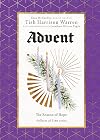
Summary: Explores how we may wait with hope around the three advents of Christ, offering themes, prayers, and helpful practices.
I grew up in a tradition that didn’t focus on Advent. At all. Getting ready for Christmas was about presents, decorating, family plans, Christmas music and going to the Christmas Eve candlelight service at my church where we sang “Silent Night” by the light of hand held candles. That was it.
Only in recent years have I learned about the rhythm of the Christian show more year that begins with the season of Advent. Or come to appreciate the focus on the comings of Jesus, of his Incarnation and return. As I’ve done so, I find myself longing for a third coming–in my life as I encounter Jesus afresh. I want to meet Jesus afresh as I begin this new year in the life of his people!
I was delighted to find these same yearnings in Tish Harrison Warren’s thoughtfully written little book on Advent. This is where she begins–with our yearnings for the three Advents of Jesus. She describes her own awakening understanding of this season with “its quiet beauty and doleful hymns” that reflects our waiting in “darkness before we celebrate the dawn.”
Then in a chapter on longing, she centers on four themes of Advent: waiting and hope, darkness and light, repentance and rest, and emptiness and filling. Following this, she discusses two prophets of Advent who prepared the way of the Lord–Isaiah and John the Baptist. Scripture readings from these two prophets are a focus of the lectionary readings for this season. Warren focuses on cosmic rescue in Isaiah and cosmic justice in the prophecy of John.
In the fourth chapter, titled “Stirrings,” Warren reflects on four collects, or short prayers from the Book of Common Prayer, used during Advent. Particularly illuminating for me was the fourth, a prayer that God would “stir up his power.” She links it to Mary and the Magnificat, a focus of the scripture readings, with her being overshadowed by the power of the Most High. Mary willingly yielded her self to that power, to be the instrument of God’s deliverance, through her son.
The fifth chapter is on “Approaching,” which offers eight practices for Advent. However, Warren doesn’t legislate these but relates her own practice. Rather than rules, these are invitations. Nor does she have rules about when to decorate or when it’s OK to play Christmas music.
Warren writes, “Part of why we observe Advent is to make Christmas weird again, to allow the shock of the incarnation to take us aback once more.” “The most wonderful time of the year” can only really make sense when we emerge from the darkness. Only in longing for deliverance can the wonder of the babe who is the world’s deliverer make sense.
Summing it all up, Warren offers a thoughtfully written guide to our own Advent journey. So, I will be reading the book again with several friends as I wait with longing and hope.
_______________________
Disclosure of Material Connection: I received a complimentary copy of this book from the publisher for review. show less
I grew up in a tradition that didn’t focus on Advent. At all. Getting ready for Christmas was about presents, decorating, family plans, Christmas music and going to the Christmas Eve candlelight service at my church where we sang “Silent Night” by the light of hand held candles. That was it.
Only in recent years have I learned about the rhythm of the Christian show more year that begins with the season of Advent. Or come to appreciate the focus on the comings of Jesus, of his Incarnation and return. As I’ve done so, I find myself longing for a third coming–in my life as I encounter Jesus afresh. I want to meet Jesus afresh as I begin this new year in the life of his people!
I was delighted to find these same yearnings in Tish Harrison Warren’s thoughtfully written little book on Advent. This is where she begins–with our yearnings for the three Advents of Jesus. She describes her own awakening understanding of this season with “its quiet beauty and doleful hymns” that reflects our waiting in “darkness before we celebrate the dawn.”
Then in a chapter on longing, she centers on four themes of Advent: waiting and hope, darkness and light, repentance and rest, and emptiness and filling. Following this, she discusses two prophets of Advent who prepared the way of the Lord–Isaiah and John the Baptist. Scripture readings from these two prophets are a focus of the lectionary readings for this season. Warren focuses on cosmic rescue in Isaiah and cosmic justice in the prophecy of John.
In the fourth chapter, titled “Stirrings,” Warren reflects on four collects, or short prayers from the Book of Common Prayer, used during Advent. Particularly illuminating for me was the fourth, a prayer that God would “stir up his power.” She links it to Mary and the Magnificat, a focus of the scripture readings, with her being overshadowed by the power of the Most High. Mary willingly yielded her self to that power, to be the instrument of God’s deliverance, through her son.
The fifth chapter is on “Approaching,” which offers eight practices for Advent. However, Warren doesn’t legislate these but relates her own practice. Rather than rules, these are invitations. Nor does she have rules about when to decorate or when it’s OK to play Christmas music.
Warren writes, “Part of why we observe Advent is to make Christmas weird again, to allow the shock of the incarnation to take us aback once more.” “The most wonderful time of the year” can only really make sense when we emerge from the darkness. Only in longing for deliverance can the wonder of the babe who is the world’s deliverer make sense.
Summing it all up, Warren offers a thoughtfully written guide to our own Advent journey. So, I will be reading the book again with several friends as I wait with longing and hope.
_______________________
Disclosure of Material Connection: I received a complimentary copy of this book from the publisher for review. show less
Awards


You May Also Like


Associated Authors
Statistics
- Works
- 7
- Also by
- 1
- Members
- 1,734
- Popularity
- #14,822
- Rating
- 4.4
- Reviews
- 26
- ISBNs
- 26
- Languages
- 5
- Favorited
- 2