
Grace Livingston Hill (1865–1947)
Author of Marcia Schuyler
About the Author
Grace Livingston Hill was born on April 16, 1865 in Wellsville, New York. In 1886, she moved with her family to Winter Park, Florida, where she got a job teaching gymnastics at a local college. She wrote her first book there, in an effort to raise money for a family vacation to Chautauqua Lake. The show more book was called Chatauqua Idyl and was published in 1887. She eventually married and began a family, but lost her husband to appendicitis. At this point in her life, her writing was the only way she could support her family. During her lifetime, she wrote over 100 novels and numerous short stories of religious and Christian fiction including Blue Ruin and Mary Arden. She died in 1947 at the age of 82. (Bowker Author Biography) show less
Disambiguation Notice:
Grace Livingston Hill also wrote under the pen name Marcia MacDonald.
Series
Works by Grace Livingston Hill
Grace Livingston Hill collection no. 1 : four complete novels, updated for today's readers (1900) 114 copies, 1 review
Grace Livingston Hill collection no. 2 : four complete novels, updated for today's reader (1999) 110 copies
Grace Livingston Hill collection no. 3 : four complete novels, updated for today's reader (1999) 64 copies
The Treasured Brides Collection: Three Timeless Romances from a Beloved Author (Love Endures) (2014) 54 copies, 1 review
Grace Livingston Hill collection no. 6 : four complete novels, updated for today's reader (2000) 49 copies
Grace Livingston Hill collection no. 8 : four complete novels, updated for today's reader (2000) 45 copies
Grace Livingston Hill collection no. 5 : four complete novels, updated for today's reader (2000) 42 copies, 1 review
Grace Livingston Hill Collection #1 According to the pattern ; An unwilling guest ; The Esselstynes (1994) 34 copies
Grace Livingston Hill: Aunt Crete's Emancipation: The Girl from Montana: The Story of a Whim (1989) 34 copies
Grace Livingston Hill collection no. 7 : four complete stories updated for today's reader (2000) 32 copies
Grace Livingston Hill collection no. 4 : four complete novels, updated for today's reader (1999) 31 copies
Grace Livingston Hill: According to the Pattern: An Unwilling Guest: Two complete and unabridged novels in one volume (1989) 25 copies
Grace Livingston Hill Collection #3-Lo, Michael, The Story of A Whim, The Finding of Jasper Holt (1995) 24 copies
Grace Livingston Hill Collection #6 The Esselstynes ; In the way ; A little servant (1990) 21 copies
The Wedding Garment 5 copies
Beggarman 3 copies
The Story of puff 2 copies
My Brother's Keeper 2 copies
Through These Fires, A Girl to Come Home To, All Through the Night,Time of the Singing Birds,More Than A Conqueror, and the Sound of the Trumpet (1943) 2 copies
The Strange God 2 copies
Under the Window 2 copies
The Unknown God 2 copies
The Minister's Son 2 copies
The Divided Battle 2 copies
Gracene 1 copy
The Grace Livingston Hill : Wedding Treasury - Exit Betty, the Beloved Stranger, Maris (1994) 1 copy
Collection No. 8 1 copy
This Side Of Tomorrow 1 copy
The Governor's Son 1 copy
Best Birthday 1 copy
An Excuse for Christ 1 copy
Out of The Storm 1 copy
Living Epistles 1 copy
Where The Wilderness Ends 1 copy
Quiet Hands 1 copy
A Fair Foreclosure 1 copy
Majority's Hearth 1 copy
The Call 1 copy
A King to Rule 1 copy
Christian Endeavor Stories, 2 volume set Reprint edition by Hill, Grace Livingston published by Amereon Ltd Hardcover (2012) 1 copy
A Journey of Discovery 1 copy
Safety First 1 copy
Star of Wonder 1 copy
A Government Position 1 copy
April Gold/Kerry/Ladybird 1 copy
Something Quite Forgotten 1 copy
The Praise of Men 1 copy
Some Carols for the Lord 1 copy
A Missionary Meeting 1 copy
The Pledge 1 copy
A Voice Unheard 1 copy
Días de prueba 1 copy
Associated Works
Tagged
Common Knowledge
- Other names
- MacDonald, Marcia
Lutz, Grace Livingston Hill - Birthdate
- 1865-04-16
- Date of death
- 1947-02-23
- Gender
- female
- Occupations
- novelist
short story writer - Relationships
- Alden, Isabella (aunt)
- Short biography
- Grace Livingston Hill wrote under both her real name and the pseudonym Marcia Macdonald. The death of her first husband left her with two small children and no income to support them other than that from her writing. She produced more than 100 novels and numerous short stories. Her characters were most often young female Christian women or those who become Christians in the course of the story. Her publishers used to remove the overt references to religious themes until they realized the popularity of these books. Grace's maternal aunt was Isabella Macdonald Alden, who was another prolific writer under the pseudonym Pansy. Grace finished her aunt's autobiographical last book, and the final Grace Livingston Hill book, Mary Arden (1947), was finished in turn by her daughter Ruth Livingston Hill.
- Nationality
- USA
- Birthplace
- Wellsville, New York, USA
- Places of residence
- New York, USA
Florida, USA
Swarthmore, Pennsylvania, USA - Place of death
- Swarthmore, Pennsylvania, USA
- Burial location
- Johnstown, New York, USA
- Disambiguation notice
- Grace Livingston Hill also wrote under the pen name Marcia MacDonald.
- Associated Place (for map)
- USA
Members
Discussions
Found: Early 1900's melodrama in Name that Book (December 2025)
Reviews
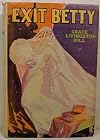
The plot of this one, as others have pointed out, is simple. But if you place this story in the context of the historical time in which it was written, things become more interesting.
These days, it’s hard not to be put off by the character of Betty, our poor little rich girl, as dewily beautiful as a Earl Christy magazine cover but too stupid to realize that maybe her stepmother is lying to her about her father's legacy and too helpless to save herself from an outrageously preposterous show more plan to force her to marry her stepmother's evil son before she reaches her age of majority. Her only coping mechanism appears to be fainting, which she does on a regular basis.
Betty’s only redeeming grace – besides, apparently, beauty (because physical beauty automatically signifies innocence and spiritual purity at this time, if GLH is to be believed) - is that she's very humble and grateful, especially after she is schooled in good ol’ Christian values by the poor but proud family that takes her in.
Consider, however, that this was published in 1920s, the era of flappers, female dorms in colleges, female office workers/aviators/detectives (Nancy Drew!) and the 19th amendment. Women were seeking out higher education, drinking, dating, smoking.
It’s hard not to infer that the author, Grace Livingstone Hill (GLH), had more in mind than just telling a story. In this context, Exit Betty starts reading more like propaganda, an appeal for the return to an age of Christian values. Our Betty may have engaged in one spontaneous, terrified act of rebellion, but by the end of the novel she has docily given herself up to marriage to “a good man” and a life of quiet, Christian good works. Similarly, the rough factory girl who has helped her achieve her freedom is married off to a law clerk who “doesn’t like the idea of her working.” If GLH had been put in charge of writing Nancy Drew mysteries, Nancy would undoubtedly have married Ned after the first volume, devoting her life thereafter to the care of her father and a nursery full of promptly baptized babies.
One wonders the extent to which books like this continued to lull women into remaining subservient to men in the decades to come? Because – besides forays into factories during the world wars – the fact is that the women’s movement *did* take a step backwards after the 1920s … one could argue that it wasn’t until the 1960s that young women rebelled against GLH’s Christian ethic a second time, this time taking on the name “hippies” rather than “flappers.”
As a female, all I can say is that I'm grateful to be living in a world shaped by Nancy Drew rather than insipid Betty! show less
These days, it’s hard not to be put off by the character of Betty, our poor little rich girl, as dewily beautiful as a Earl Christy magazine cover but too stupid to realize that maybe her stepmother is lying to her about her father's legacy and too helpless to save herself from an outrageously preposterous show more plan to force her to marry her stepmother's evil son before she reaches her age of majority. Her only coping mechanism appears to be fainting, which she does on a regular basis.
Betty’s only redeeming grace – besides, apparently, beauty (because physical beauty automatically signifies innocence and spiritual purity at this time, if GLH is to be believed) - is that she's very humble and grateful, especially after she is schooled in good ol’ Christian values by the poor but proud family that takes her in.
Consider, however, that this was published in 1920s, the era of flappers, female dorms in colleges, female office workers/aviators/detectives (Nancy Drew!) and the 19th amendment. Women were seeking out higher education, drinking, dating, smoking.
It’s hard not to infer that the author, Grace Livingstone Hill (GLH), had more in mind than just telling a story. In this context, Exit Betty starts reading more like propaganda, an appeal for the return to an age of Christian values. Our Betty may have engaged in one spontaneous, terrified act of rebellion, but by the end of the novel she has docily given herself up to marriage to “a good man” and a life of quiet, Christian good works. Similarly, the rough factory girl who has helped her achieve her freedom is married off to a law clerk who “doesn’t like the idea of her working.” If GLH had been put in charge of writing Nancy Drew mysteries, Nancy would undoubtedly have married Ned after the first volume, devoting her life thereafter to the care of her father and a nursery full of promptly baptized babies.
One wonders the extent to which books like this continued to lull women into remaining subservient to men in the decades to come? Because – besides forays into factories during the world wars – the fact is that the women’s movement *did* take a step backwards after the 1920s … one could argue that it wasn’t until the 1960s that young women rebelled against GLH’s Christian ethic a second time, this time taking on the name “hippies” rather than “flappers.”
As a female, all I can say is that I'm grateful to be living in a world shaped by Nancy Drew rather than insipid Betty! show less

Well, Miranda gets her happily-ever-after, after all! ♥
This story opens with Miranda being approached by across-the-street neighbor Nathan Whitney, one of the wealthiest men in town (albeit a seemingly emotionless one), who solemnly asks for her hand in marriage. Miranda laughs at him, and continues to laugh for the next five years as he approaches her annually to repeat his proposal. He does not love Miranda, or even particularly like her, but he has seen what she's done as the Spaffords' show more housekeeper and considers that she could take over his house in the same mien, and bring up the youngest of his seven kids running about.
Whitney finally gives up and tries on with the local schoolteacher instead, who happily takes him up on his offer, much to the collective horror of his children. No one knew of Whitney's annual sojourns to Miranda's doorstep except for the Spaffords, so she alone gets to enjoy the wedding knowing what a bullet she dodged by saying no. Later that day, she finds ten-year-old Nathan Jr crying in the pieplants behind the Spafford house, and takes pity on him. Nathan Jr has a terrible reputation already as a horrible little boy; Nathan Sr has already given up on him and no one in town expects anything decent of him.
Miranda sympathizes, understanding all too well what its like to be ostracized by their village society. She herself was given to her grandmother as a baby after her mother died and her father took off. Grandmother Heath disliked her immensely and treated her coldly her entire life, obviously favoring her beautiful cousin Hannah. Miranda didn't let the lack of empathy get her down. She trudged through life and made her own way, escaping to the Spaffords in Book #1 of the trilogy and continuing to forge her own path in Book #2. The only people who know what a kind and loyal person she is is basically the Spafford family, but she could give two hoots that the rest of town thought her among the lowest of the low.
Turns out Miranda kept turning down Nathan Whitney's proposals for more than the obvious reasons - she'd once helped his eldest son, Allan, escape from jail after he was arrested for murder! This is detailed in the first couple of chapters, and it's easy to understand why a misfit like Miranda became enamored of the town Bad Boy (and why she empathized with Nathan Jr so much). Allan was one of the few who was kind to her, and they had something of a kinship as outsiders. Allan was sixteen when he was accused of murder; Grandpa Heath was the local constable and would keep prisoners in his old, unused smokehouse overnight. 13-year-old Miranda snuck out of the house and let Allan go, as she knew that he was not malicious or evil. Allan was so grateful to her that he kissed her, and memories of these events are something Miranda holds close to her heart. It was very sweet to read about this softer side of our plucky Mirandy.
Miranda keeps on believing in Allan's innocence and eventually tricks the real killer into confessing. She crosses paths with Dr. Marcus Whitman (a real life historical figure) and learns that Allan is probably living in Oregon Country. She writes a letter to him letting him know that his name has been cleared; a couple of years later, he shows up, dressed to the nines in the latest cut of fashion from New York, and tells her that he loves her and wants to marry her.
Allan reconciles with his family (sort of), but he and Miranda agree to keep their relationship a secret from most of the town, due to the way both were treated as children. When their engagement is announced in church one Sunday, it makes quite the splash around town! The two are married and travel along the Oregon Trail, only to return after the Whitman massacre. By the end of the novel, Nathan Sr is dead, Allan has inherited the big house across the street from the Spaffords, and Miranda is queen of her castle, a place she never thought she'd be after turning down Whitney Sr's proposals all those years ago.
This is a very sweet story, unfortunately bogged down by a lot of hokum-cum-history about the Oregon territory. It was so obvious to me that Marcus Whitman was either a real person or was supposed to represent a real person that I did a bit of research. Turns out that, after his death, his story became legendary, and he's credited with all of the political work that Jason Lee actually did to get the US to take over the Oregon territory (instead of the British). Turns out the Methodists of the day had a strong presence in Oregon territory with their various missions, which was an interesting intersection for me.
Of course, this also raises the specter of white settlers encroaching on Indian lands, and the author of course considers this to have been a good thing, with every white American who went West doing so out of the love of their own hearts and a desire to convert the native heathens to Christianity. According to this novel, it was their own ignorance that caused the savages to murder Whitman and his family; little credence is given to the fact that the white settlers brought deadly disease to the Indian people and wiped out most of them. Marcus Whitman is considered a martyr to his cause, and that was just completely gross to read about.
All of this nonsense was known in 1915 when this novel was first written, so it's also kinda gross that the author decided to perpetuate historical lies and set her otherwise-unrelated story among them.
All in all, though, this novel represents a great ending for the character of Miranda, who gets the happily-ever-after she scarcely dreamed was possible. The romance is pretty much plowed under by the history in the second half, but it's easily skippable if you want to concentrate on the characters. This is definitely the best book of the bunch, and if I was going to purchase one, it'd be this one. Miranda is such a great character, and so different from the author's other heroines. show less
This story opens with Miranda being approached by across-the-street neighbor Nathan Whitney, one of the wealthiest men in town (albeit a seemingly emotionless one), who solemnly asks for her hand in marriage. Miranda laughs at him, and continues to laugh for the next five years as he approaches her annually to repeat his proposal. He does not love Miranda, or even particularly like her, but he has seen what she's done as the Spaffords' show more housekeeper and considers that she could take over his house in the same mien, and bring up the youngest of his seven kids running about.
Whitney finally gives up and tries on with the local schoolteacher instead, who happily takes him up on his offer, much to the collective horror of his children. No one knew of Whitney's annual sojourns to Miranda's doorstep except for the Spaffords, so she alone gets to enjoy the wedding knowing what a bullet she dodged by saying no. Later that day, she finds ten-year-old Nathan Jr crying in the pieplants behind the Spafford house, and takes pity on him. Nathan Jr has a terrible reputation already as a horrible little boy; Nathan Sr has already given up on him and no one in town expects anything decent of him.
Miranda sympathizes, understanding all too well what its like to be ostracized by their village society. She herself was given to her grandmother as a baby after her mother died and her father took off. Grandmother Heath disliked her immensely and treated her coldly her entire life, obviously favoring her beautiful cousin Hannah. Miranda didn't let the lack of empathy get her down. She trudged through life and made her own way, escaping to the Spaffords in Book #1 of the trilogy and continuing to forge her own path in Book #2. The only people who know what a kind and loyal person she is is basically the Spafford family, but she could give two hoots that the rest of town thought her among the lowest of the low.
Turns out Miranda kept turning down Nathan Whitney's proposals for more than the obvious reasons - she'd once helped his eldest son, Allan, escape from jail after he was arrested for murder! This is detailed in the first couple of chapters, and it's easy to understand why a misfit like Miranda became enamored of the town Bad Boy (and why she empathized with Nathan Jr so much). Allan was one of the few who was kind to her, and they had something of a kinship as outsiders. Allan was sixteen when he was accused of murder; Grandpa Heath was the local constable and would keep prisoners in his old, unused smokehouse overnight. 13-year-old Miranda snuck out of the house and let Allan go, as she knew that he was not malicious or evil. Allan was so grateful to her that he kissed her, and memories of these events are something Miranda holds close to her heart. It was very sweet to read about this softer side of our plucky Mirandy.
Miranda keeps on believing in Allan's innocence and eventually tricks the real killer into confessing. She crosses paths with Dr. Marcus Whitman (a real life historical figure) and learns that Allan is probably living in Oregon Country. She writes a letter to him letting him know that his name has been cleared; a couple of years later, he shows up, dressed to the nines in the latest cut of fashion from New York, and tells her that he loves her and wants to marry her.
Allan reconciles with his family (sort of), but he and Miranda agree to keep their relationship a secret from most of the town, due to the way both were treated as children. When their engagement is announced in church one Sunday, it makes quite the splash around town! The two are married and travel along the Oregon Trail, only to return after the Whitman massacre. By the end of the novel, Nathan Sr is dead, Allan has inherited the big house across the street from the Spaffords, and Miranda is queen of her castle, a place she never thought she'd be after turning down Whitney Sr's proposals all those years ago.
This is a very sweet story, unfortunately bogged down by a lot of hokum-cum-history about the Oregon territory. It was so obvious to me that Marcus Whitman was either a real person or was supposed to represent a real person that I did a bit of research. Turns out that, after his death, his story became legendary, and he's credited with all of the political work that Jason Lee actually did to get the US to take over the Oregon territory (instead of the British). Turns out the Methodists of the day had a strong presence in Oregon territory with their various missions, which was an interesting intersection for me.
Of course, this also raises the specter of white settlers encroaching on Indian lands, and the author of course considers this to have been a good thing, with every white American who went West doing so out of the love of their own hearts and a desire to convert the native heathens to Christianity. According to this novel, it was their own ignorance that caused the savages to murder Whitman and his family; little credence is given to the fact that the white settlers brought deadly disease to the Indian people and wiped out most of them. Marcus Whitman is considered a martyr to his cause, and that was just completely gross to read about.
All of this nonsense was known in 1915 when this novel was first written, so it's also kinda gross that the author decided to perpetuate historical lies and set her otherwise-unrelated story among them.
All in all, though, this novel represents a great ending for the character of Miranda, who gets the happily-ever-after she scarcely dreamed was possible. The romance is pretty much plowed under by the history in the second half, but it's easily skippable if you want to concentrate on the characters. This is definitely the best book of the bunch, and if I was going to purchase one, it'd be this one. Miranda is such a great character, and so different from the author's other heroines. show less

Or, the one in which pride goes before the fall.
As the book opens, Christopher Walton Jr is sitting in church with his mother, looking for all the world as if he is concentrating and attending to the pastor's sermon, when in reality he is daydreaming about the new car his father has promised to buy him, for his upcoming senior year at college. He's actually picturing it zooming up and down the aisles of the church. He's also thinking about how content he is with his life: son of a local show more banker, all-around athlete, heading back to college with a brand new roadster. When the words of the sermon do pierce his consciousness, he is surprised to hear about how people should thank God for all the bad things that happen in life. Where is the use in that, Chris thinks.
So we all know what that means, LOL.
The next week, Chris's idyllic life is shattered. It's pre-FDIC, and there's a run on his father's bank. There is actual violence at the bank building itself, which Chris tumbles headlong into. He can't believe it when his father tells him what's happened, and that he holds himself personally responsible for the depositors' losses. Though proud to stand by his father in that moment, when he vows to repay his loyal customers every penny they've lost, it doesn't quite hit him just how far they've fallen until that evening. The family is having to give up their home and sell their land to make the first repayment. The new car was totaled during the visit to the bank. Chris won't be able to return to college.
That night, someone shoots Chris Walton Senior at his home and nearly kills him. During the convalescence period, Chris Junior is surprised and perplexed about how calmly his parents are taking their shocking reversal in personal fortune. His parents are fervent (if quiet) Christians, and seem to be leaning on God in this, their time of need. The words of the minister's sermon come back to Chris Junior, and he's as confused as ever about "thanking" God for hard times.
Chris doesn't wallow in misery for long, especially after his father is shot. He is determined to get a job and contribute to his family's wellbeing, if not their reparations to depositors. He is not prepared for how hard it is to find a job - his father's name isn't opening any of the doors he expected that it would. The family moves to a small house on the shabby side of town, and Chris is desperate to find paying work. He's sent to the local grocery to pick up some bread, and runs into his old classmate, Natalie Halsey, who is the cashier at the store.
Natalie's family has always been poor. Her father died years ago, and her mother is very sick. Her mother and her sister take in sewing when they can. They are literally squeezing every penny they can earn, so Natalie's full-time position at the store is welcome news, as is her employee discount. Natalie was so busy scraping together money during her school years that she barely had a presence in the social scene. Chris recognizes her all these years later, and when he rues the fact that he can't find work, she tells him there is an opening at the store.
Chris jumps at the chance to be an errand boy at the store. Work is work, and every little bit helps. He works hard to impress the manager long enough to be taken on permanently. He suffers humiliations, as friends from his previous social set visit him while he's working and make a big scene, but he endures as best he can. He spends his free time getting to know Natalie and wondering at the fact that he never noticed her in high school. She eventually invites him to a Bible study meeting, and his mind is blown. Words he had to memorize as a child are suddenly explained to him, in plain language, and he begins to understand the sort of faith that has carried his parents through this sea change.
The flavor of Christianity is born-again, which I have little tolerance for, and it's slathered on fairly thickly in the last third of the book. Natalie is eager for him to convert because he's already a kind soul, and if he gives his life to the Lord he'd be even better. Chris is hesitant, at first, until Natalie is held up one night at the store and it's up to him to save her. He starts praying as he lobs apples at the burglar, trying to disarm him, and realizes that yes, Virginia, he does believe in God after all.
Chris and Natalie are hailed as heroes for saving the store's funds; both receive promotions in title and salary. They confess their love to each other, and Chris vows to work hard and advance at the store so that Natalie won't have to work if she agrees to marry him. There is a deux es machina bit of an ending, as one year after their fall from grace, several prominent friends return from Europe and restore the bank (and the Walton family social standing along with it), but Chris has decided that he wants to manage the grocery store instead of going into banking like his father. He and Natalie marry at the end and bring their families together on the little street on the shabby side of town, and two members of his formal social set spend the last few pages all agog at the fact that they didn't immediately move back to the good side of town and take up their former lives.
This is a simple, quiet little book. Though I did not care for the proselytizing, it was a lovely little read and just the bit of calm I needed. I got what I came for, even if I wasn't bowled over. show less
As the book opens, Christopher Walton Jr is sitting in church with his mother, looking for all the world as if he is concentrating and attending to the pastor's sermon, when in reality he is daydreaming about the new car his father has promised to buy him, for his upcoming senior year at college. He's actually picturing it zooming up and down the aisles of the church. He's also thinking about how content he is with his life: son of a local show more banker, all-around athlete, heading back to college with a brand new roadster. When the words of the sermon do pierce his consciousness, he is surprised to hear about how people should thank God for all the bad things that happen in life. Where is the use in that, Chris thinks.
So we all know what that means, LOL.
The next week, Chris's idyllic life is shattered. It's pre-FDIC, and there's a run on his father's bank. There is actual violence at the bank building itself, which Chris tumbles headlong into. He can't believe it when his father tells him what's happened, and that he holds himself personally responsible for the depositors' losses. Though proud to stand by his father in that moment, when he vows to repay his loyal customers every penny they've lost, it doesn't quite hit him just how far they've fallen until that evening. The family is having to give up their home and sell their land to make the first repayment. The new car was totaled during the visit to the bank. Chris won't be able to return to college.
That night, someone shoots Chris Walton Senior at his home and nearly kills him. During the convalescence period, Chris Junior is surprised and perplexed about how calmly his parents are taking their shocking reversal in personal fortune. His parents are fervent (if quiet) Christians, and seem to be leaning on God in this, their time of need. The words of the minister's sermon come back to Chris Junior, and he's as confused as ever about "thanking" God for hard times.
Chris doesn't wallow in misery for long, especially after his father is shot. He is determined to get a job and contribute to his family's wellbeing, if not their reparations to depositors. He is not prepared for how hard it is to find a job - his father's name isn't opening any of the doors he expected that it would. The family moves to a small house on the shabby side of town, and Chris is desperate to find paying work. He's sent to the local grocery to pick up some bread, and runs into his old classmate, Natalie Halsey, who is the cashier at the store.
Natalie's family has always been poor. Her father died years ago, and her mother is very sick. Her mother and her sister take in sewing when they can. They are literally squeezing every penny they can earn, so Natalie's full-time position at the store is welcome news, as is her employee discount. Natalie was so busy scraping together money during her school years that she barely had a presence in the social scene. Chris recognizes her all these years later, and when he rues the fact that he can't find work, she tells him there is an opening at the store.
Chris jumps at the chance to be an errand boy at the store. Work is work, and every little bit helps. He works hard to impress the manager long enough to be taken on permanently. He suffers humiliations, as friends from his previous social set visit him while he's working and make a big scene, but he endures as best he can. He spends his free time getting to know Natalie and wondering at the fact that he never noticed her in high school. She eventually invites him to a Bible study meeting, and his mind is blown. Words he had to memorize as a child are suddenly explained to him, in plain language, and he begins to understand the sort of faith that has carried his parents through this sea change.
The flavor of Christianity is born-again, which I have little tolerance for, and it's slathered on fairly thickly in the last third of the book. Natalie is eager for him to convert because he's already a kind soul, and if he gives his life to the Lord he'd be even better. Chris is hesitant, at first, until Natalie is held up one night at the store and it's up to him to save her. He starts praying as he lobs apples at the burglar, trying to disarm him, and realizes that yes, Virginia, he does believe in God after all.
Chris and Natalie are hailed as heroes for saving the store's funds; both receive promotions in title and salary. They confess their love to each other, and Chris vows to work hard and advance at the store so that Natalie won't have to work if she agrees to marry him. There is a deux es machina bit of an ending, as one year after their fall from grace, several prominent friends return from Europe and restore the bank (and the Walton family social standing along with it), but Chris has decided that he wants to manage the grocery store instead of going into banking like his father. He and Natalie marry at the end and bring their families together on the little street on the shabby side of town, and two members of his formal social set spend the last few pages all agog at the fact that they didn't immediately move back to the good side of town and take up their former lives.
This is a simple, quiet little book. Though I did not care for the proselytizing, it was a lovely little read and just the bit of calm I needed. I got what I came for, even if I wasn't bowled over. show less

Phoebe Deane is the martyred half-sister of Albert Deane, who was sent to live with her much older half-sibling when her mother died. She is treated as the Cinderella servant of the household, and denied anything approaching decency by her jealous sister in law Emmeline. On the occasion of her 18th birthday (which of course isn't celebrated by the family) she runs off into the woods with a letter from her long-dead mother and has a nice long cry about how awful her life is. Here she meets show more (by chance) the lovely Nathaniel Graham, a young lawyer visiting his uncle, the local Judge Bristol. Phoebe and Nathaniel keep running into each other and develop a friendship, especially when Phoebe falls ill with a fever and is taken to stay with David and Marcia Spafford (the hero/heroine of the first book in this trilogy).
Unfortunately for Phoebe, her odious neighbor Hiram Green has set his sights on her as his next wife, having more or less crushed the life out of his first wife. He's an awful person with a brood of equally awful children, and when Phoebe rebuffs his offers of marriage (even against the strong wishes of her family), he vows revenge on her. He spreads a bunch of lies about her around town, ruining her reputation, and then offers to marry her to save her family's good name. Mercifully, Miranda Griscom hears what's going on and sets out to trap the snake before he can strike.
I actually enjoyed this book more than the first novel, even though Phoebe is even more passive than Marcia. The only fight she has in her is to tell Hiram no, again and again; for everything else, she's literally willing to lay down and die rather than face it. She's a total Mary Sue - absolutely perfect and beautiful, engendering either love or hate in everyone she meets - and it gets wearisome reading about how everyone else has to save her because she's not willing to stand up for herself. Bleh!
The story is saved by plucky Miranda, who takes Phoebe under her wing as she did with Marcia in the previous book. Miranda feels that she's ugly and outcast (and indeed, no one but her friends think well of her) and thus she can do whatever she needs to do to Get Things Done. I just adore her! I hope she doesn't become a passive waif in her own book, #3 in this trilogy.
There is a lot to be said for these novels as statements about class in 1830s America. Social class plays a HUGE role in thoughts and deeds. For instance, Emmeline hate Phoebe for daring to want to better herself, because Emmeline herself never had the chance. She's raising a hellion of a daughter who feels the same way and slags off Phoebe right to her face. Albert is no help in this regard, and is quick to believe the load of crap that Hiram serves up in his bid to trap Phoebe into marrying him. That was extremely disappointing to see. There is discussion of slavery and abolition in the background here, and some eye-opening sentiments abound.
All told, Miranda is the only reason these stories are worth reading, IMO. Give me Avonlea any day over this absolute nest of vipers. show less
Unfortunately for Phoebe, her odious neighbor Hiram Green has set his sights on her as his next wife, having more or less crushed the life out of his first wife. He's an awful person with a brood of equally awful children, and when Phoebe rebuffs his offers of marriage (even against the strong wishes of her family), he vows revenge on her. He spreads a bunch of lies about her around town, ruining her reputation, and then offers to marry her to save her family's good name. Mercifully, Miranda Griscom hears what's going on and sets out to trap the snake before he can strike.
I actually enjoyed this book more than the first novel, even though Phoebe is even more passive than Marcia. The only fight she has in her is to tell Hiram no, again and again; for everything else, she's literally willing to lay down and die rather than face it. She's a total Mary Sue - absolutely perfect and beautiful, engendering either love or hate in everyone she meets - and it gets wearisome reading about how everyone else has to save her because she's not willing to stand up for herself. Bleh!
The story is saved by plucky Miranda, who takes Phoebe under her wing as she did with Marcia in the previous book. Miranda feels that she's ugly and outcast (and indeed, no one but her friends think well of her) and thus she can do whatever she needs to do to Get Things Done. I just adore her! I hope she doesn't become a passive waif in her own book, #3 in this trilogy.
There is a lot to be said for these novels as statements about class in 1830s America. Social class plays a HUGE role in thoughts and deeds. For instance, Emmeline hate Phoebe for daring to want to better herself, because Emmeline herself never had the chance. She's raising a hellion of a daughter who feels the same way and slags off Phoebe right to her face. Albert is no help in this regard, and is quick to believe the load of crap that Hiram serves up in his bid to trap Phoebe into marrying him. That was extremely disappointing to see. There is discussion of slavery and abolition in the background here, and some eye-opening sentiments abound.
All told, Miranda is the only reason these stories are worth reading, IMO. Give me Avonlea any day over this absolute nest of vipers. show less
Lists
You May Also Like


Associated Authors
Statistics
- Works
- 227
- Also by
- 4
- Members
- 16,232
- Popularity
- #1,398
- Rating
- 3.7
- Reviews
- 224
- ISBNs
- 1,352
- Languages
- 6
- Favorited
- 13