
Edward Castronova
Author of Synthetic Worlds: The Business and Culture of Online Games
About the Author
Edward Castronova is Professor of Media at Indiana University, USA. He is the author of Synthetic Worlds: The Business and Culture of Online Games (2006), Exodus to the Virtual World (2008), and Wildcat Currency: The. Virtual Transformation of the Economy (2014). He specializes in Games, show more Technology, and Society, and has served in the past as Director of the BS degree program in Game Design, and Chair of the Department of Media Arts and Production. show less
Works by Edward Castronova
Wildcat Currency: How the Virtual Money Revolution Is Transforming the Economy (2014) 17 copies, 1 review
Tagged
Common Knowledge
Members
Reviews
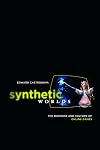
Were this book explicitly a marketing tool for virtual worlds, I would say job well done. But as a work of scholarship, it is downright embarrassing. The only thing I have to say for it is that the economic analysis in part II does not seem patently ridiculous, but the same cannot be said about the political analysis, and both are predicated on the validity of part I's predictions of the growth and impact of virtual worlds. His logic explaining this predicted growth can only be referred to show more as spurious.
Published in 2006, this book is already dated, and in ways relevant to the author's predictions. His prediction that passive TV watching will decline in favor of virtual worlds is only half-true: instead, we have a flourishing YouTube where people interact with passive media by creating more passive media. The niche of on-line communication medium has been filled by social networking sites. The author predicts that people who grow up with technology will be drawn to virtual worlds, but this has not been the case. The adoption rate of virtual worlds among teenagers pales in comparison to the use of text messaging, social network sites, and other available technologies. This comes as a surprise given how inherently compelling he portrays these virtual worlds.
Castronova does not seem to take into consideration the reality of differing preferences. He claims the "natural" place for getting together is cyberspace, and there's no reason to type when you can talk. This kind of thinking permeates his discussion of the future growth of synthetic worlds. Because they can offer, for a certain value of "offer", interaction with a potentially more pleasant world, this does not mean that everyone down on their luck will flock to them-- regardless of how realistic the worlds may get. I think it would be difficult to argue that even enough of a critical mass for the phenomena he describes in part II has the right kind of inclinations to "live" completely in virtual worlds.
Castronova frequently employs the rhetorical device of referring to these worlds and everything about them as "real". Certainly, they are "real" in the sense that they are something that people occupy their actual time with, but this does not make them "real" in the sense of an equal alternative to actual life. Throughout the book he uses terminology to blur the line between the two meanings of "real", presumably with the goal of validating his claims about the importance of virtual worlds. He talks about it as a "way of life", about the players as "migrants", and that they have the "potential to become permanent homes for the conscious self" (p. 238). He claims game makers should allow avatars to have all the same human rights in-game as their players do in the real world. It's an argument that only makes sense if you accept that there's no fundamental difference between virtual worlds and the real worlds, and that's a claim that has a much higher burden of proof than his tricky rhetoric can meet.
Virtual worlds are a hot topic, and the buzz surrounding them has allowed a scholar to put out absolute crap, assured that the audience will call it "stimulating", "important" and "insightful". If you're going to read this book, cut through the hype and read with an eye towards the logic of his argument. But other than as a first-hand view of the type of faulty reasoning used to convince people that virtual worlds are the Next Big Thing, it's not worth the read.
(Q) show less
Published in 2006, this book is already dated, and in ways relevant to the author's predictions. His prediction that passive TV watching will decline in favor of virtual worlds is only half-true: instead, we have a flourishing YouTube where people interact with passive media by creating more passive media. The niche of on-line communication medium has been filled by social networking sites. The author predicts that people who grow up with technology will be drawn to virtual worlds, but this has not been the case. The adoption rate of virtual worlds among teenagers pales in comparison to the use of text messaging, social network sites, and other available technologies. This comes as a surprise given how inherently compelling he portrays these virtual worlds.
Castronova does not seem to take into consideration the reality of differing preferences. He claims the "natural" place for getting together is cyberspace, and there's no reason to type when you can talk. This kind of thinking permeates his discussion of the future growth of synthetic worlds. Because they can offer, for a certain value of "offer", interaction with a potentially more pleasant world, this does not mean that everyone down on their luck will flock to them-- regardless of how realistic the worlds may get. I think it would be difficult to argue that even enough of a critical mass for the phenomena he describes in part II has the right kind of inclinations to "live" completely in virtual worlds.
Castronova frequently employs the rhetorical device of referring to these worlds and everything about them as "real". Certainly, they are "real" in the sense that they are something that people occupy their actual time with, but this does not make them "real" in the sense of an equal alternative to actual life. Throughout the book he uses terminology to blur the line between the two meanings of "real", presumably with the goal of validating his claims about the importance of virtual worlds. He talks about it as a "way of life", about the players as "migrants", and that they have the "potential to become permanent homes for the conscious self" (p. 238). He claims game makers should allow avatars to have all the same human rights in-game as their players do in the real world. It's an argument that only makes sense if you accept that there's no fundamental difference between virtual worlds and the real worlds, and that's a claim that has a much higher burden of proof than his tricky rhetoric can meet.
Virtual worlds are a hot topic, and the buzz surrounding them has allowed a scholar to put out absolute crap, assured that the audience will call it "stimulating", "important" and "insightful". If you're going to read this book, cut through the hype and read with an eye towards the logic of his argument. But other than as a first-hand view of the type of faulty reasoning used to convince people that virtual worlds are the Next Big Thing, it's not worth the read.
(Q) show less
In many ways this book came as a relief. It is written by someone who actually has lengthy experience with the subject, and it applies an uncommonly deep level of examination to the problem of how MMORPGs interact with our daily lives. There is quite a bit of quality material here, anchored by detailed but readable economic analysis.
On the bad side, Castronova's writing style is unpleasant to read: a lot of failed humor, and far more personal anecdote than is desired. The structure of the show more book is also a mess: the core of the book (the economic analysis) is sandwiched between a lengthy introduction to the subject of online games and a series of hastily sketched policy problems. The former is at least accurate and will be useful to many readers. By the end of the book, Castronova has taken to pontificating on the distant future instead of engaging in the sober analysis that is his greatest strength.
Overall, this is a frustrating read on many fronts, but one of the more substantial and worthwhile entries in the literature on virtual worlds. show less
On the bad side, Castronova's writing style is unpleasant to read: a lot of failed humor, and far more personal anecdote than is desired. The structure of the show more book is also a mess: the core of the book (the economic analysis) is sandwiched between a lengthy introduction to the subject of online games and a series of hastily sketched policy problems. The former is at least accurate and will be useful to many readers. By the end of the book, Castronova has taken to pontificating on the distant future instead of engaging in the sober analysis that is his greatest strength.
Overall, this is a frustrating read on many fronts, but one of the more substantial and worthwhile entries in the literature on virtual worlds. show less
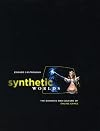
An excellent reference book on the theory and practice of MMORPGs. It is not nearly as fun to read as other books covering the topic, but it is deeper and looks more at the theory. The book, however, is largely pre-World of Warcraft, so it is in need of an update. Some of its theory, for example, on how to combat inflation in game economies does not mention how WoW attempts to do that. Still, I consider this book to be currently the definitive resource on persistent state online games.
http://blogs.msdn.com/bobreb/archive/2007/04/15/as-the-nose-on-your-face.aspx
Best book discussing online worlds that I've read.
The author's background in economics makes for an interesting perspective. He goes to great lengths to point out where and how virtual worlds cross over into the "real" world.
He doesn't, however, take things quite as far as I expected. For instance, he doesn't suggest that any interaction, social or otherwise, if conducted online might well be considered as having show more occurred in a virtual world. And he doesn't spend any effort exploring online to offline gestural equivalence.
But I don't think he can be faulted. There's enough material in this area to fill several volumes. What he does cover, he makes accessible, interesting, and relevant.
If you're interested in online experience, it's a must read. I have some additional comments here: http://blogs.msdn.com/bobreb/archive/2007/04/15/as-the-nose-on-your-face.aspx show less
Best book discussing online worlds that I've read.
The author's background in economics makes for an interesting perspective. He goes to great lengths to point out where and how virtual worlds cross over into the "real" world.
He doesn't, however, take things quite as far as I expected. For instance, he doesn't suggest that any interaction, social or otherwise, if conducted online might well be considered as having show more occurred in a virtual world. And he doesn't spend any effort exploring online to offline gestural equivalence.
But I don't think he can be faulted. There's enough material in this area to fill several volumes. What he does cover, he makes accessible, interesting, and relevant.
If you're interested in online experience, it's a must read. I have some additional comments here: http://blogs.msdn.com/bobreb/archive/2007/04/15/as-the-nose-on-your-face.aspx show less
You May Also Like


Statistics
- Works
- 8
- Members
- 380
- Popularity
- #63,550
- Rating
- 3.5
- Reviews
- 8
- ISBNs
- 17
- Languages
- 2
- Favorited
- 1