
Travis M. Riddle
Author of Balam, Spring (Ustlian Tales)
Works by Travis M. Riddle
Balam, Spring (Ustlian Tales #1) 2 copies
The Cloud Roost (Jekua, #5) 2 copies
Makanuele Rumble (Jekua, #3) 2 copies
Spireheart (Jekua, #6) 1 copy
Tagged
Common Knowledge
Members
Reviews
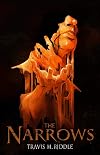
I have no words to describe how much I love this book, but I have so much to love so I'll try. I really felt some connection to every character introduced, and Oliver's emotional introspection never felt voyeuristic, despite that being the point of fiction. Oliver trying to make sense of Noah's suicide while being unable to communicate with the one person that would have had any explanation is excruciating to watch, and the hope that the knave gives him is so intoxicating my most cynical show more instincts (admittedly not any, I didn't lose hope until the very last minute) believed Oliver would find the gem, I even kind of hoped Eric could be brought back. Flashes of domesticity and nostalgia break up the pain of reality, and I found myself holding out for those scenes, apparently for myself and Oliver, as he is always just as uncomfortable with confronting his pain and confusion. The slice of life character development made the horrors that much more effective, I had real concerns for the characters, sharing Oliver's mistrust of the knave the whole time. Every mishandled interaction had me screaming at him (sometimes out loud but that's fine) and I haven't had such a visceral reaction to literature in a long time. The LGBT characters are so well handled, although I was on edge the entire time that they would have a bad run in, or one of the memories would include one. Aside from those memories, no one misgenders or deadnames Sophia, even when they're obviously making an effort, but at least they make an effort. Oliver never makes a gross comment about Ashley's ambiguous sexuality, and a formal coming out is never prompted for his or the audience's benefit. As a visually inclined person, I appreciate the vivid imagery, especially in the Narrows. Mainly I loved the small details, apparently insignificant things that a person wouldn't normally dial in on, are sprinkled in while characters are processing trauma. A glass sweating during a tense conversation, an off-hand comment about Sophia being a light sleeper becoming a key to their mission. Nothing feels like a plot device somehow, just a minor observation that proves Oliver cares about the friends he does have. I already know I have to read this again to catch all of the links between chapters. The care put into making this story so real is evident in every moment, down to page breaks not bringing you further than the next instant, just clearly transitioning from action to the moment of clarity when Oliver realizes what he's doing again, is something that I've noticed other authors miss. I could re-read this for years to come and I'm sure have noticed something new to gush over, however unsatisfying the results of their endeavors are. show less

I’ve seen Balam, Spring described several times as a cozy story about solving a mystery in a small town. That description makes me think it’s light and low-stakes, a casual read to meander through and then on from. But that is not the case here. Balam, Spring made me feel things; it got me invested in this tiny town’s mystery and its people. What started out as a simple, slice-of-life, enjoyable read ended up as a desperate marathon to finish the book and see the mystery solved. The show more writing is very polished and the style is immersive. The book is a standalone, tying everything up nicely in the one volume. The world is presented as-is, with no history lessons given to the reader. We really only see the small town of Balam in any detail, only seeing flashes of other towns and cities in characters’ reflections or histories. And those are more focused on the characters than the locales. The characters are where this book really shines; I found them to be just so well-done. It really was a joy to read. show less
A unique and satisfying contemporary fantasy story
The Narrows is a quick, fairly short standalone that tells the story of a group of friends returning to the small town they grew up in for a funeral. The writing is fairly polished, aside from the occasional odd phrasing. I have only a mild complaint about how many plates of food were described in these 200 pages. Nitpicks aside, the writing was very smooth and successfully sets the tone for the story. The mystery of The Narrows is introduced show more fairly early, and yet no real action on that front happens until after the halfway point of the book. Though it seems like that would make for a rather slow start, I was actually surprised to discover I was that far along. The characters were so real and engaging to me that I didn’t mind that so much of the story was unrelated to the supernatural events.
The Narrows takes place in a small town in Texas where our main characters grew up together. The town is cozy and presented with lots of nostalgia from our characters, noting the park where they used to hang out and the neighborhoods where friends lived, as well as new additions that feel out-of-place and foreign. The author does an excellent job of conveying these feelings through the characters, making them very relatable. It’s easy to parallel one’s own hometown nostalgia with the characters’ simple observations. However, this small town also hides an alternate reality of sorts, which our main character discovers quite accidentally. This alternate reality is called The Narrows, and is home to strange and frightening creatures. This is where the horror elements are born.
Oliver is our main character, and we follow his perspective as he and his two friends, Davontae and Sophia, return to their hometown to bury their childhood friend, Noah. All three friends are very different people, who have gone their own ways in life but remained close friends. This story leads the reader to explore many ideas about what it means and what it takes to remain friends with one’s childhood group into adulthood. It is the characterization of these three friends, as well as supporting characters in the story, that really were this book’s highlight for me.
This would best be categorized as small scale story, I think, and I would recommend it to those looking foremost for a story about characters. Though it has some horror elements, I would only categorize a few scenes as explicitly “horror”, while the rest is more of an atmospheric feeling of eeriness. Ultimately, this book is a story about its characters, their friendship, and dealing with the loss of one of their own. If you're looking for a unique contemporary fantasy story about some characters that you'll feel you know personally, check out The Narrows. show less
The Narrows is a quick, fairly short standalone that tells the story of a group of friends returning to the small town they grew up in for a funeral. The writing is fairly polished, aside from the occasional odd phrasing. I have only a mild complaint about how many plates of food were described in these 200 pages. Nitpicks aside, the writing was very smooth and successfully sets the tone for the story. The mystery of The Narrows is introduced show more fairly early, and yet no real action on that front happens until after the halfway point of the book. Though it seems like that would make for a rather slow start, I was actually surprised to discover I was that far along. The characters were so real and engaging to me that I didn’t mind that so much of the story was unrelated to the supernatural events.
The Narrows takes place in a small town in Texas where our main characters grew up together. The town is cozy and presented with lots of nostalgia from our characters, noting the park where they used to hang out and the neighborhoods where friends lived, as well as new additions that feel out-of-place and foreign. The author does an excellent job of conveying these feelings through the characters, making them very relatable. It’s easy to parallel one’s own hometown nostalgia with the characters’ simple observations. However, this small town also hides an alternate reality of sorts, which our main character discovers quite accidentally. This alternate reality is called The Narrows, and is home to strange and frightening creatures. This is where the horror elements are born.
Oliver is our main character, and we follow his perspective as he and his two friends, Davontae and Sophia, return to their hometown to bury their childhood friend, Noah. All three friends are very different people, who have gone their own ways in life but remained close friends. This story leads the reader to explore many ideas about what it means and what it takes to remain friends with one’s childhood group into adulthood. It is the characterization of these three friends, as well as supporting characters in the story, that really were this book’s highlight for me.
This would best be categorized as small scale story, I think, and I would recommend it to those looking foremost for a story about characters. Though it has some horror elements, I would only categorize a few scenes as explicitly “horror”, while the rest is more of an atmospheric feeling of eeriness. Ultimately, this book is a story about its characters, their friendship, and dealing with the loss of one of their own. If you're looking for a unique contemporary fantasy story about some characters that you'll feel you know personally, check out The Narrows. show less
(Originally reviewed at thelibraryladies.com.)
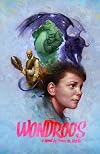
I received an ARC for this book from the author, and after checking out the plot synopsis, it sounded like a book that might be up my alley! I always love an “other world” story where our hero is plopped down with as much confusion as we the readers have, and I was intrigued by the idea of the protagonist being such a young boy.
The story doesn’t waste any time getting started. I was a bit concerned after reading the first chapter and having show more Miles so suddenly transported to this new land with very little explanation for how/why he was transported and no backstory to support the reader’s interest in Miles story. While I still wish there had been a bit more set up to Miles’ trip to this new world, I was pleased to discover the clever way the author provided this backstory and connected Miles’ real life problems to his own burgeoning powers in this new world.
The magic system was rather simple, but the way Riddle connected the use of the power to Miles’ memories of his home life and the emotions that these memories inspired was an interesting take. I appreciated the inclusion of these aspects of Miles’ life. It would have been all too easy to simply write a fun, adventurous romp for this character. But instead, through Miles, Riddle addresses many aspects of childhood that are challenging, such as parental conflict, the death of aged relatives, and struggles with school.
I wavered back and forth with regards to my opinion of Miles himself. In many ways, he was a very likeable, young boy. But at other times, perhaps realistically, he came off as a spoiled brat and it became hard to understand the patience with which the adult beings in this new world had for him when they were in the midst of a very trying war. My other struggle with Miles was his age. Nine years old is very young, and at times it was hard to buy-in to Miles’ inner voice and thought process that sometimes verged into what felt like an older child’s range, perhaps 12 or so. Ultimately, I still did enjoy Miles when I could get past these few distractions.
As for these side character, they also had varying mileage. The species we meet are creative, but there were a few stylistic choices that sat oddly, like a frog-like species called Rompun speaking French. But these choices may work better for young readers.
Speaking of young readers, some of these concerns, simple world-building, a lack of depth to certain narrative choices like Miles trip to this land and the relationships between the different species that make up this world, could be explained by the target audience of this book. Though it isn’t explicitly stated anywhere in the book description, I’m guessing that this book is aimed towards middle grade readers. In this case, some of these choices make more sense (in particular, in the end there were a few rather implausible, narrow escapes for our supporting cast) if Riddle was wanting to keep the tone of the book more light. However, I would also suggest that middle grade fiction should still be held to a similar high standard with regards to some of these choices. It is possible to add depth to a fantasy world and create positive, but more believable, outcomes to dangerous situations that is still approachable to middle grade readers.
All in all, I had a fun time reading this book, but feel that it is an example of middle grade fiction that might be received better by its intended age range, rather than adult readers. If you have a middle grader who likes escapists fantasy, this might be the book for them! show less
I received an ARC for this book from the author, and after checking out the plot synopsis, it sounded like a book that might be up my alley! I always love an “other world” story where our hero is plopped down with as much confusion as we the readers have, and I was intrigued by the idea of the protagonist being such a young boy.
The story doesn’t waste any time getting started. I was a bit concerned after reading the first chapter and having show more Miles so suddenly transported to this new land with very little explanation for how/why he was transported and no backstory to support the reader’s interest in Miles story. While I still wish there had been a bit more set up to Miles’ trip to this new world, I was pleased to discover the clever way the author provided this backstory and connected Miles’ real life problems to his own burgeoning powers in this new world.
The magic system was rather simple, but the way Riddle connected the use of the power to Miles’ memories of his home life and the emotions that these memories inspired was an interesting take. I appreciated the inclusion of these aspects of Miles’ life. It would have been all too easy to simply write a fun, adventurous romp for this character. But instead, through Miles, Riddle addresses many aspects of childhood that are challenging, such as parental conflict, the death of aged relatives, and struggles with school.
I wavered back and forth with regards to my opinion of Miles himself. In many ways, he was a very likeable, young boy. But at other times, perhaps realistically, he came off as a spoiled brat and it became hard to understand the patience with which the adult beings in this new world had for him when they were in the midst of a very trying war. My other struggle with Miles was his age. Nine years old is very young, and at times it was hard to buy-in to Miles’ inner voice and thought process that sometimes verged into what felt like an older child’s range, perhaps 12 or so. Ultimately, I still did enjoy Miles when I could get past these few distractions.
As for these side character, they also had varying mileage. The species we meet are creative, but there were a few stylistic choices that sat oddly, like a frog-like species called Rompun speaking French. But these choices may work better for young readers.
Speaking of young readers, some of these concerns, simple world-building, a lack of depth to certain narrative choices like Miles trip to this land and the relationships between the different species that make up this world, could be explained by the target audience of this book. Though it isn’t explicitly stated anywhere in the book description, I’m guessing that this book is aimed towards middle grade readers. In this case, some of these choices make more sense (in particular, in the end there were a few rather implausible, narrow escapes for our supporting cast) if Riddle was wanting to keep the tone of the book more light. However, I would also suggest that middle grade fiction should still be held to a similar high standard with regards to some of these choices. It is possible to add depth to a fantasy world and create positive, but more believable, outcomes to dangerous situations that is still approachable to middle grade readers.
All in all, I had a fun time reading this book, but feel that it is an example of middle grade fiction that might be received better by its intended age range, rather than adult readers. If you have a middle grader who likes escapists fantasy, this might be the book for them! show less
Awards

Statistics
- Works
- 15
- Members
- 96
- Popularity
- #196,088
- Rating
- 3.9
- Reviews
- 7
- ISBNs
- 5