

Kathryn H. Kidd (1950–2015)
Author of Lovelock
About the Author
Works by Kathryn H. Kidd
A Convert's Guide to Mormon Life: A Guidebook for New Members of the Church of Jesus Christ of Latter-day Saints (1998) — Author — 23 copies
Associated Works
Saints Well Seasoned: Musings on How Food Nourishes Us-- Body, Heart, and Soul (1998) — Contributor — 9 copies
Tagged
Common Knowledge
- Other names
- Kerr, Kathryn
Kidd, Patricia Kathryn Helms
Kidd, Kathryn Helms
Kidd, P. Kathryn
Helms, Kathryn
Kidd, Kathy H. - Birthdate
- 1950-04-03
- Date of death
- 2015-12-14
- Gender
- female
- Education
- Brigham Young University (BA|Journalism)
- Occupations
- writer
blogger
author
journalist - Organizations
- The Church of Jesus Christ of Latter-day Saints
Deseret News - Relationships
- Kidd, Clark L. (husband)
- Nationality
- USA
- Birthplace
- New Orleans, Louisiana, USA
- Places of residence
- Mandeville, Louisiana, USA
New Orleans, Louisiana, USA
Salt Lake City, Utah, USA
Potomac Falls, Virginia, USA - Place of death
- Potomac Falls, Virginia, USA
- Associated Place (for map)
- USA
Members
Reviews

I bought Kathryn Kidd's The Alphabet Year at the BYU Bookstore's progressive book sale on the "75% off" day. This book was published by Orson Scott Card's Hatrack River Publications.
The Alphabet Year is not a book I could see Deseret Book publishing, since there's a fair amount of discussion of body parts and functions, most of it coming from the mouths of the children in the book. As a single person with no children, I have the luxury of delicacy that my married friends with children do show more not, and I think the PG-rated items in this book that I found mildly offensive are mostly an accurate reflection of family life. One thread which does strike me as implausible is the three year old boy Boffo who goes almost everywhere nekkid as a jaybird. Around the house, I can buy; in the neighborhood is not out of the question; but in the stores and public places of Salt Lake City? Give me a break. Is a fire station really going to let a little boy "burn his private parts by sliding down the fireman's pole naked"? I don't think so.
There is a touch of iconoclasm in this book that I don't care for. The seemingly perfect Relief Society president and her seemingly perfect son are, near the end of the book, revealed to be quite imperfect. I wouldn't mind this if it weren't so cliche, and if there were more redemption for them in the book. show less
The Alphabet Year is not a book I could see Deseret Book publishing, since there's a fair amount of discussion of body parts and functions, most of it coming from the mouths of the children in the book. As a single person with no children, I have the luxury of delicacy that my married friends with children do show more not, and I think the PG-rated items in this book that I found mildly offensive are mostly an accurate reflection of family life. One thread which does strike me as implausible is the three year old boy Boffo who goes almost everywhere nekkid as a jaybird. Around the house, I can buy; in the neighborhood is not out of the question; but in the stores and public places of Salt Lake City? Give me a break. Is a fire station really going to let a little boy "burn his private parts by sliding down the fireman's pole naked"? I don't think so.
There is a touch of iconoclasm in this book that I don't care for. The seemingly perfect Relief Society president and her seemingly perfect son are, near the end of the book, revealed to be quite imperfect. I wouldn't mind this if it weren't so cliche, and if there were more redemption for them in the book. show less
On the Ark, a colonyship bound outward across the stars, not everyone is a volunteer - or even human. Lovelock is a capuchin monkey engineered from conception to be the perfect servant: intelligent, agile, and devoted to his owner. He is a "witness", privileged to spend his days and nights recording the life of one of Earth’s most brilliant scientists via digital devices implanted behind his eyes.
But Lovelock is something special among witnesses. He’s a little smarter than most humans: show more smart enough to break through some of his conditioning, smart enough to feel the bonds of slavery - and want freedom. show less
But Lovelock is something special among witnesses. He’s a little smarter than most humans: show more smart enough to break through some of his conditioning, smart enough to feel the bonds of slavery - and want freedom. show less
SIX REASONS WHY YOU’LL LOVE ‘LOVELOCK’!
I must read and re-read it:
Lovelock is a book that I read many years ago, in its hardback version, and these last weeks, I’ve re-read it, in its eBook version (I lost the printed book during a move).
I had felt a lot of pleasure reading it in the past, but during my last read, this pleasure was really exacerbated! Is it because, reaching an age of half a century, I’ve read it with a more experienced, mature mind? One thing is sure for me: the show more author wrote a text with a great depth, about the main character of the novel.
Not an ordinary protagonist:
And really, what a character…
A capuchin monkey flying toward the stars!
Well, not an ordinary male capuchin monkey, no… an “enhanced” one, genetically engineered by humans of the future. He is intelligent, efficient… but all these improvements have not been made to give to this capuchin monkey called Lovelock any personal advantage.
Lovelock is what is called a Witness, an animal which must follow a human being everywhere, in the case of the story a female celebrated Scientist, Carole Jeanne. But in fact, Lovelock is more a slave, a possession, like a personal toaster. His goal, for which he has been conditioned, is to please the Gaialogist (a Scientist seeing the ecology of a planet as a unique living being), and to notably record her life. That’s why micro cameras have been inserted behind the retinas of the monkey, recording her life in a memory bank, and the transfer of the data accumulated on external memories and TV screens, via a computer cable extending out of Lovelock’s head.
In this far future ear, it is customary for humans to have their witness with them, and when Carole Jeanne decides to help terraform a far distant planet, she is part of the interstellar journey going there, with her witness, her husband, their children, and her stepfather and stepmother.
Watching ourselves another way:
What is most interesting is that we discover the story through the personal and secret diary of Lovelock. This way of narrating the story using the first person instead of the third, and especially through the observations of an animal, is original, and very profound.
Like a nod to an old text of French literature:
His analysis of our human society, his observations and remarks, have a special connotation for me, a French reader and writer. I have a double French and English-American culture, and the text remembers me vaguely about, in my French part, a story written and published by Montesquieu in 1721, “Les Lettres Persanes”, “The Persian letters”. In it, two Persian noblemen travel through the France of the 18th century, and watch it through their foreign eyes and culture.
This more than an animal, which has been given by humans a higher consciousness, nevertheless judges us, humans, and our society. It’s interesting too, here, to see how its view of us through the filter of its mind can tell us many things about ourselves.
A fight for freedom:
The capuchin monkey gets progressively aware of his slave’s condition, and progressively fights against all his conditionings. He will work for his freedom aboard the interstellar Ark which is preparing for its fantastic journey, preparing his own future.
A change of perspective
I encourage everyone to read this memorable novel… after having read it, you will no more see your life and the world the same way!
Humanly, a rewarding experience…
Post scriptum:
This story was previewed to be the first book of the Mayflower trilogy, but the second and, foremost, the third one, were never written!
I loved so much Lovelock that, for me, it’s kind of dramatic…
Please, Mister Card, write the two next books, complete the trilogy!
Post scriptum 2 : Kathryn H. Kidd cowrote the book with him, sorry it I forgot that. show less
I must read and re-read it:
Lovelock is a book that I read many years ago, in its hardback version, and these last weeks, I’ve re-read it, in its eBook version (I lost the printed book during a move).
I had felt a lot of pleasure reading it in the past, but during my last read, this pleasure was really exacerbated! Is it because, reaching an age of half a century, I’ve read it with a more experienced, mature mind? One thing is sure for me: the show more author wrote a text with a great depth, about the main character of the novel.
Not an ordinary protagonist:
And really, what a character…
A capuchin monkey flying toward the stars!
Well, not an ordinary male capuchin monkey, no… an “enhanced” one, genetically engineered by humans of the future. He is intelligent, efficient… but all these improvements have not been made to give to this capuchin monkey called Lovelock any personal advantage.
Lovelock is what is called a Witness, an animal which must follow a human being everywhere, in the case of the story a female celebrated Scientist, Carole Jeanne. But in fact, Lovelock is more a slave, a possession, like a personal toaster. His goal, for which he has been conditioned, is to please the Gaialogist (a Scientist seeing the ecology of a planet as a unique living being), and to notably record her life. That’s why micro cameras have been inserted behind the retinas of the monkey, recording her life in a memory bank, and the transfer of the data accumulated on external memories and TV screens, via a computer cable extending out of Lovelock’s head.
In this far future ear, it is customary for humans to have their witness with them, and when Carole Jeanne decides to help terraform a far distant planet, she is part of the interstellar journey going there, with her witness, her husband, their children, and her stepfather and stepmother.
Watching ourselves another way:
What is most interesting is that we discover the story through the personal and secret diary of Lovelock. This way of narrating the story using the first person instead of the third, and especially through the observations of an animal, is original, and very profound.
Like a nod to an old text of French literature:
His analysis of our human society, his observations and remarks, have a special connotation for me, a French reader and writer. I have a double French and English-American culture, and the text remembers me vaguely about, in my French part, a story written and published by Montesquieu in 1721, “Les Lettres Persanes”, “The Persian letters”. In it, two Persian noblemen travel through the France of the 18th century, and watch it through their foreign eyes and culture.
This more than an animal, which has been given by humans a higher consciousness, nevertheless judges us, humans, and our society. It’s interesting too, here, to see how its view of us through the filter of its mind can tell us many things about ourselves.
A fight for freedom:
The capuchin monkey gets progressively aware of his slave’s condition, and progressively fights against all his conditionings. He will work for his freedom aboard the interstellar Ark which is preparing for its fantastic journey, preparing his own future.
A change of perspective
I encourage everyone to read this memorable novel… after having read it, you will no more see your life and the world the same way!
Humanly, a rewarding experience…
Post scriptum:
This story was previewed to be the first book of the Mayflower trilogy, but the second and, foremost, the third one, were never written!
I loved so much Lovelock that, for me, it’s kind of dramatic…
Please, Mister Card, write the two next books, complete the trilogy!
Post scriptum 2 : Kathryn H. Kidd cowrote the book with him, sorry it I forgot that. show less
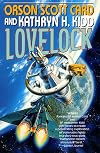
Hmmmm. Orson starts this with what I take to be a concern about the reduced quality that can arise from some collaborations. How appropriate this turns out to be. I've not read any of Kathryn Kidd's work that I can recall but this is definitely well below what I expect of Orson Scott Card on his own. i seriously doubt the subsequent two books in the series will ever be written and I suspect that might well be for the best as it will allow both authors to get on with something worthwhile. I show more can only hope that this paid some bills. and yet... I think I would read the sequels if they came out.
The biggest hurdle with these books is that the main protagonist and narrator is so completely unsympathetic. Critical and hate-filled how could you feel any sympathy?
I suspect this was meant to be an introduction to the evils of slavery and the mistreatment of animals as servants of people but ... Lovelock is so scathing even of other animals in his position that it seems the be a perpetuation of the evil.... and perhaps that is meant to be part of the point - but it just doesn't work. and yet I will probably look up other works by Kathryn Kidd and I know I will keep a sympathetic eye out for work by Orson. Perhaps this really is only as variable as many other works by Orson. show less
The biggest hurdle with these books is that the main protagonist and narrator is so completely unsympathetic. Critical and hate-filled how could you feel any sympathy?
I suspect this was meant to be an introduction to the evils of slavery and the mistreatment of animals as servants of people but ... Lovelock is so scathing even of other animals in his position that it seems the be a perpetuation of the evil.... and perhaps that is meant to be part of the point - but it just doesn't work. and yet I will probably look up other works by Kathryn Kidd and I know I will keep a sympathetic eye out for work by Orson. Perhaps this really is only as variable as many other works by Orson. show less
Lists
Awards


You May Also Like
Associated Authors
Statistics
- Works
- 11
- Also by
- 4
- Members
- 906
- Popularity
- #28,310
- Rating
- 3.4
- Reviews
- 15
- ISBNs
- 26
- Languages
- 2