
David Enrich
Author of Dark Towers: Deutsche Bank, Donald Trump, and an Epic Trail of Destruction
About the Author
David Enrich is the business investigations editor at the New York Times. At the Wall Street Journal, he won the Gerald Loeb Award for feature writing. His prior book, The Spider Network, was short-listed for the Financial Times Best Book of the Year award.
Works by David Enrich
Dark Towers: Deutsche Bank, Donald Trump, and an Epic Trail of Destruction (2020) 350 copies, 17 reviews
The Spider Network: The Wild Story of a Math Genius, a Gang of Backstabbing Bankers, and One of the Greatest Scams in Financial History (2017) 283 copies, 5 reviews
Servants of the Damned: Giant Law Firms, Donald Trump, and the Corruption of Justice (2022) 90 copies
Murder the Truth: Fear, the First Amendment, and a Secret Campaign to Protect the Powerful (2025) 67 copies, 4 reviews
Tagged
Common Knowledge
- Birthdate
- 1979-07-03
- Gender
- male
- Education
- Claremont McKenna College (BA)
- Occupations
- journalist
non-fiction author - Organizations
- The Nation
U.S. News & World Report
State News Service
Dow Jones Newswire
Wall Street Journal
Citizens for a True Democracy (show all 7)
The New York Times - Nationality
- USA
- Birthplace
- Lexington, Massachusetts, USA
- Associated Place (for map)
- Massachusetts, USA
Members
Reviews
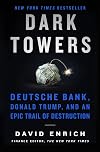
Greed, fueled by corrupt practices and cover-ups, was the main motivation behind Deutsche Bank’s success. Enrich’s thorough accounting of this history leaves one wondering how this could have continued throughout the latter part of the 20th and the early 21st Centuries despite being bookended by two of the most egregious financial decisions of the period—to fund the concentration camp at Auschwitz and to act as a conduit for the Russian funding of Donald Trump.
For those without a show more background in finance, the book can be a little dense. Often it seems like these convoluted practices are intentionally obscure to hide their true motivations—to create wealth out of whole cloth and to reward the wealthy at the expense of everyone else. There are no heroes in these dark tales. Instead we are introduced to people who will do just about anything to climb the corporate ladder, as well as to accrue more wealth and power for themselves and DB. None seem to have any remorse for their behavior. Indeed, even the suicides are unaccompanied by clear admissions of guilt or remorse. Instead one is left with the unsettling thought that they may have actually been cover-up conspiracies. In the final analysis, the book leaves one with the disturbing realization that this kind of thing continues unabated today. show less
For those without a show more background in finance, the book can be a little dense. Often it seems like these convoluted practices are intentionally obscure to hide their true motivations—to create wealth out of whole cloth and to reward the wealthy at the expense of everyone else. There are no heroes in these dark tales. Instead we are introduced to people who will do just about anything to climb the corporate ladder, as well as to accrue more wealth and power for themselves and DB. None seem to have any remorse for their behavior. Indeed, even the suicides are unaccompanied by clear admissions of guilt or remorse. Instead one is left with the unsettling thought that they may have actually been cover-up conspiracies. In the final analysis, the book leaves one with the disturbing realization that this kind of thing continues unabated today. show less
The Spider Network: The Wild Story of a Math Genius, a Gang of Backstabbing Bankers, and One of the Greatest Scams in Financial History by David Enrich
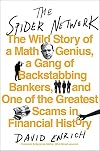
Very interesting read to see how the whole Libor thing unfolded and more interesting to see how the whole banking industry is built on greed and people who shouldn't be allowed anywhere near money. Sad part is that in the end the people who enabled the whole mess, the senior bank officers, all go free and prosper. I really shouldn't be surprised by that.
Murder the Truth: Fear, the First Amendment, and a Secret Campaign to Protect the Powerful by David Enrich
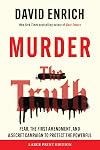
Excellent overview of the very real threats to freedom of the press resulting from right wing jurists, courts, and politicians, specifically the potential overturning of the Supreme Court's long-standing NYT vs Sullivan decision of 1964. If "Sullivan" falls it will pave the way for anyone to sue any media outlet, large or small, for any inaccuracy, no matter how minor. Sullivan requires the plaintiff to prove malice or reckless disregard for the truth. If it's overturned that standard gets show more turned on its head, and the defendant has the burden of proof. This book does a great job sounding the alarm. show less
Of all the tell-all Trump books, this one gets closest to revealing the details of his habit of borrowing from and stiffing lenders. The author shows how a mid-level German institution, the very same one that funded the building of Auschwitz and other Nazi horrors, gets seduced by the massive profits of the warped destructos on Wall Street and tries to emulate them. Caught up in the frenzy is a well-meaning internal regulator, Bill Broeksmit, who fails to put a stop to the Libor rate setting show more scandal of 2005-2009 that netted the mastermind a cool $100 million bonus (and five years in jail plus permanent banishment from banking). After Broeksmit's suicide, his n'er-do-well son Val tries to find out why his stepfather kept leaving and returning to Deutsche in various audit roles despite his fear of investigation and prosecution and his troubled conscience. Val contacts author Enrich (what an ironic name) and shares the information he finds, including the suicide notes. Enrich, in his role as Finance Editor for the New York Times, had already been looking into Deutsche's singular role as the ONLY bank that would lend to Donald Trump. Enrich also shares some details on the connection between the timing of the resignation of former SCOTUS Justice Anthony Kennedy, his longtime Deutsche executive son Justin Kennedy, Ivanka Trump, and Brett Kavanaugh, but this depths of this travesty remains unrevealed. And so do Trump's tax returns, no thanks to Deutsche lying about whether or not they had them, which they certainly would have in order to have loaned him $300 million. Other travesties include Trump's evil influence over all the departments in the government that are supposed to monitor financial institutions, including the CFPB and the Justice Department, where two prosecutors were previously employed by Deutsche are charged with investigating that same bank.
All in all, there's a lot of information shared in a very readable fashion, but Enrich does not scream loud enough for me. show less
All in all, there's a lot of information shared in a very readable fashion, but Enrich does not scream loud enough for me. show less
Lists
Awards


You May Also Like


Statistics
- Works
- 5
- Members
- 791
- Popularity
- #32,199
- Rating
- 3.9
- Reviews
- 26
- ISBNs
- 51
- Languages
- 2