
Pat Harris (1)
Author of Mistrial: An Inside Look at How the Criminal Justice System Works...and Sometimes Doesn't
For other authors named Pat Harris, see the disambiguation page.
Works by Pat Harris
Mistrial: An Inside Look at How the Criminal Justice System Works...and Sometimes Doesn't (2013) 60 copies, 21 reviews
Associated Works
The Woman Who Wouldn't Talk: Why I Refused to Testify Against the Clintons and What I Learned in Jail (2003) 59 copies, 2 reviews
Tagged
Common Knowledge
- Legal name
- Harris, Eugene Patterson
- Gender
- male
- Education
- University of Arkansas (B.A.)
University of Michigan Law School (Juris Doctorate) - Occupations
- legislative assistant
lawyer - Organizations
- Geragos and Geragos
- Agent
- Deborah Grosvenor
- Short biography
- Eugene Patterson Harris, more commonly known as Pat Harris, is a leading American criminal defense attorney and author. He has represented high-profile clients such as Michael Jackson and Greg Anderson and regularly provides commentary on legal issues for shows on Fox and CNN, such as Larry King Live. He coauthored, along with Susan McDougal, her autobiography entitled Susan McDougal: The Woman Who Wouldn't Talk, which was on the New York Times' bestseller list for four weeks. He was recently named as one of the top 100 trial lawyers in America and is a partner at Geragos & Geragos. He speaks regularly at law schools across the country. [from Mistrial (2013)]
- Nationality
- USA
- Places of residence
- Clarkesville, Arkansas, USA
Little Rock, Arkansas, USA
Nashville, Tennessee, USA
Los Angeles, California, USA - Associated Place (for map)
- USA
Members
Reviews
Mistrial: An Inside Look at How the Criminal Justice System Works...and Sometimes Doesn't by Mark Geragos
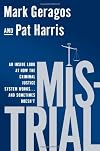
The cover blurb proclaims this book to be “a searing manifesto on the ills of the criminal justice system.” That’s rather excessive as a description. I’d call the book an even- tempered complaint about flaws in the system (in the USA), as told through the anecdotes of the authors’ experiences. Geragos and Harris have had a number of high profile clients including Michael Jackson, Susan MacDougal (the heroine who refused to cooperate with Ken Starr’s witch hunt against then- show more President Bill Clinton), and convicted murderer Scott Peterson.
The book focuses successively on the following aspects of the system: (a) the strong role that politics plays in criminal trials, especially given the impact of television; (b) the much- misunderstood role of defense attorneys; (c) clients the authors have had; (d) prosecutors they have known, including the unethical and incompetent; (e) judges, likewise unethical and incompetent; (f) police officers; (g) the news media; and (h) flaws in the system and how they should be fixed. Chapter titles give a sense of the tone and perspective: on judges -- “At Least Get it Wrong for Both Sides;” on police officers: “To Preserve, to Protect, and to Lie;” on news outlets: “The Media: Shame on You for Believing What We Say”; on reform: “The Best System in the World?”
The authors have many complaints to level, and present their arguments in the form of scattered anecdotes (rather than statistics), many of which deal in the sort of gossip and innuendo criticized elsewhere in the book. They also have scores to settle, as in their disappointment that their client Scott Peterson was convicted of murder (the authors aver that he “may” have been innocent). Consequently, the book comes off as somewhat self- serving. Nevertheless, I believe the authors have hit upon serious flaws in the criminal justice system. Of particular note is the chapter on the important roles of defense attorneys – roles that are widely misunderstood by the general public. (The misconception that accused defendants must be guilty and do not deserve a strong defense is perplexing, foolish, and downright dangerous). Also of note is a chapter on recommendations for reform, however unrealistic such reform may be at present. In sum, this is a worthy book, one written from a particular viewpoint that is seldom heard above the din of our degraded political discourse. show less
The book focuses successively on the following aspects of the system: (a) the strong role that politics plays in criminal trials, especially given the impact of television; (b) the much- misunderstood role of defense attorneys; (c) clients the authors have had; (d) prosecutors they have known, including the unethical and incompetent; (e) judges, likewise unethical and incompetent; (f) police officers; (g) the news media; and (h) flaws in the system and how they should be fixed. Chapter titles give a sense of the tone and perspective: on judges -- “At Least Get it Wrong for Both Sides;” on police officers: “To Preserve, to Protect, and to Lie;” on news outlets: “The Media: Shame on You for Believing What We Say”; on reform: “The Best System in the World?”
The authors have many complaints to level, and present their arguments in the form of scattered anecdotes (rather than statistics), many of which deal in the sort of gossip and innuendo criticized elsewhere in the book. They also have scores to settle, as in their disappointment that their client Scott Peterson was convicted of murder (the authors aver that he “may” have been innocent). Consequently, the book comes off as somewhat self- serving. Nevertheless, I believe the authors have hit upon serious flaws in the criminal justice system. Of particular note is the chapter on the important roles of defense attorneys – roles that are widely misunderstood by the general public. (The misconception that accused defendants must be guilty and do not deserve a strong defense is perplexing, foolish, and downright dangerous). Also of note is a chapter on recommendations for reform, however unrealistic such reform may be at present. In sum, this is a worthy book, one written from a particular viewpoint that is seldom heard above the din of our degraded political discourse. show less
Mistrial: An Inside Look at How the Criminal Justice System Works...and Sometimes Doesn't by Mark Geragos
Well, well, well...where to begin. First the positive: I shocked myself when I actually enjoyed reading this book. It's undeniably entertaining with its anecdotes and thoughts about their cases and high-profile clients. They display a good sense of wit and humor, sometimes directed at themselves that makes this more entertaining to read than I had anticipated.
Now the negatives: Geragos and Harris have the right to use their book to (attempt to) sell any and all of their personal agendas show more while being paid for it...that's the name of the game...it's what they do for a living for goodness sake, so we can hardly fault them for being themselves. But Oh my word!! In their world, there is no such thing as a guilty person--well, at least there's no such thing as a guilty person whom they are being paid to represent. They don't have a lot of issues with gloating over someone else going to prison for something their client is accused of...that just shows their superior defense-attorney talent, don't ya know. No mention of whether that guy going to prison might have been railroaded or poorly represented and might be innocent too...as long as it ain't their guy going to jail, life is beautiful.
They have a looonnnggg laundry list of groups who apparently dedicate their existence to waking up in the morning and saying "How can we ruin a defense attorney's day today?" Many of these groups are given their own chapters to illustrate how unfair it is that they have the nerve to stand between Geragos/Harris and their unobstructed stroll to a "not guilty" verdict. We've got chapters for--Angry Blond White Women; Prosecutors, Judges, Police Officers, Jurors, Media, and people who wonder how they can sleep at night after defending scumbags. In a nutshell, these groups all lie, lie, lie for personal or professional gain. Except for Jurors and people who wonder how they can sleep at night, who are just congenitally stupid.
This is a book that no one should take as gospel...it's a soapbox that Geragos/Harris use to promote their personal opinions (and I haven't even mentioned the Armenian genocide angle). Not a shock, since that's what they DO! It's how their minds function. Their entire (successful, apparently) enterprise is built on pointing the finger at someone else, distraction, misdirection, and throwing in some objections when someone disagrees. It's how they sell "reasonable doubt"...this is an extension of their daily work. So read it for entertainment and try not to cringe and feel a little awkward watching them rant and rave, whimper and wail, about how unfair the world is to them.
Four stars because it's an entertaining easy read even if you don't buy into their agenda. show less
Now the negatives: Geragos and Harris have the right to use their book to (attempt to) sell any and all of their personal agendas show more while being paid for it...that's the name of the game...it's what they do for a living for goodness sake, so we can hardly fault them for being themselves. But Oh my word!! In their world, there is no such thing as a guilty person--well, at least there's no such thing as a guilty person whom they are being paid to represent. They don't have a lot of issues with gloating over someone else going to prison for something their client is accused of...that just shows their superior defense-attorney talent, don't ya know. No mention of whether that guy going to prison might have been railroaded or poorly represented and might be innocent too...as long as it ain't their guy going to jail, life is beautiful.
They have a looonnnggg laundry list of groups who apparently dedicate their existence to waking up in the morning and saying "How can we ruin a defense attorney's day today?" Many of these groups are given their own chapters to illustrate how unfair it is that they have the nerve to stand between Geragos/Harris and their unobstructed stroll to a "not guilty" verdict. We've got chapters for--Angry Blond White Women; Prosecutors, Judges, Police Officers, Jurors, Media, and people who wonder how they can sleep at night after defending scumbags. In a nutshell, these groups all lie, lie, lie for personal or professional gain. Except for Jurors and people who wonder how they can sleep at night, who are just congenitally stupid.
This is a book that no one should take as gospel...it's a soapbox that Geragos/Harris use to promote their personal opinions (and I haven't even mentioned the Armenian genocide angle). Not a shock, since that's what they DO! It's how their minds function. Their entire (successful, apparently) enterprise is built on pointing the finger at someone else, distraction, misdirection, and throwing in some objections when someone disagrees. It's how they sell "reasonable doubt"...this is an extension of their daily work. So read it for entertainment and try not to cringe and feel a little awkward watching them rant and rave, whimper and wail, about how unfair the world is to them.
Four stars because it's an entertaining easy read even if you don't buy into their agenda. show less
 This review was written for LibraryThing Early Reviewers.
Mistrial: An Inside Look at How the Criminal Justice System Works...and Sometimes Doesn't by Mark Geragos
In "Mistrial, an inside look at how the criminal justice system works...and sometimes doesn't," the basic thrust is that things have gotten so out of hand in America's criminal justice system that the prosecution has a vastly greater chance of winning cases than does the defense, so much so that many innocent people end up in prison, even more so than in the past. This book is a must-read for any thinking person in the USA., though one would probably be wise not to blindly believe everything show more in this book.
The authors are long-time defense lawyers who have represented both ordinary people and a number of famous people: Michael Jackson, Winona Ryder, Scott Peterson, Greg Anderson, Susan MacDougal, and Gary Condi. If even half of what the authors write is true, our justice system is really being abused. Some of their contentions are that: cops often lie in court--not because they are bad, but they really want to get the bad guys, at least those people whom the cops believe are the bad guys, so the ends justify the means--, prosecutors have way more money to work with than do defense lawyers--all that money from our taxes--, and innocent people often plea bargain because they have little chance to win their cases. In Arizona, where I live, two people have been released from prison recently, one a man and one a woman in unrelated cases, because it became clear that they probably were not guilty and certainly did not have a fair trial.
Numerous anecdotes in the book are interesting and often funny. My main quibble is that the writing, though not bad for lawyers, is often awkward. show less
The authors are long-time defense lawyers who have represented both ordinary people and a number of famous people: Michael Jackson, Winona Ryder, Scott Peterson, Greg Anderson, Susan MacDougal, and Gary Condi. If even half of what the authors write is true, our justice system is really being abused. Some of their contentions are that: cops often lie in court--not because they are bad, but they really want to get the bad guys, at least those people whom the cops believe are the bad guys, so the ends justify the means--, prosecutors have way more money to work with than do defense lawyers--all that money from our taxes--, and innocent people often plea bargain because they have little chance to win their cases. In Arizona, where I live, two people have been released from prison recently, one a man and one a woman in unrelated cases, because it became clear that they probably were not guilty and certainly did not have a fair trial.
Numerous anecdotes in the book are interesting and often funny. My main quibble is that the writing, though not bad for lawyers, is often awkward. show less
This review was written for LibraryThing Early Reviewers.Mistrial: An Inside Look at How the Criminal Justice System Works...and Sometimes Doesn't by Mark Geragos
I received an advanced uncorrected proof of this book before it went on sale several weeks ago, but it took me a long time to get through it, for a couple of reasons. First, the hold-in-your-hands books are wonderful in so many ways, but the convenience of my Kindle means I often read my e-books first. Second, I found this book to be very readable, but also filled with a lot of great stories and points of view that I had not considered before -- and I wanted to savor every bit of it. Authors show more Mark Geragos and Pat Harris point out, early on, that we typically think of a slippery weasel like Johnny Cochran (although I am sure he is a fine and upstanding person in other regards) when we hear "criminal defense trial attorney", rather than a figure of justice, like Atticus Finch. There are funny side stories, like this one from my home state: "Judge 'Deacon' Jones of Nebraska was removed from the bench for throwing firecrackers into a colleague's office and for signing court orders with names like Adolf Hitler and Snow White. He was also alleged to have set bail for defendants at amounts like thirteen cents or a zillion penegots. This is why we love being trial lawyers - you just can't make this stuff up." I couldn't rate this a five because, although I loved it through and through, there are many points where the authors sound masochistic, and places where they just can't contain their snarkiness. I have a feeling I would not like them personally, although, as I said before, the book is well-written, entertaining and presents some important facts about our justice system in a way that might have you considering....the other side. ;0) show less
This review was written for LibraryThing Early Reviewers.You May Also Like
Associated Authors
Statistics
- Works
- 1
- Also by
- 1
- Members
- 60
- Popularity
- #277,519
- Rating
- 3.6
- Reviews
- 21
- ISBNs
- 9
