
Adam Scovell
Author of Folk Horror: Hours Dreadful and Things Strange
About the Author
Adam Scovell is a writer and filmmaker from The Wirral, now based in London. He has produced film and art criticism for a variety of digital and print publications, including The Times, the British Film Institute, Caught by the River, The Quietus and The Guardian. He runs the Blog North show more Awards-nominated website Celluloid Wicker Man, and has had film work screened at such venues as FACT, The Everyman Playhouse, Hackney Picturehouse, The British Museum and Manchester Art Gallery. Folk Horror: Hours Dreadful and Things Strange is his first book. show less
Works by Adam Scovell
Associated Works
Tagged
Common Knowledge
- Birthdate
- c.1989
- Gender
- male
- Nationality
- United Kingdom
- Map Location
- United Kingdom
Members
Reviews
Haunted Strasbourg
Review of the Influx Press paperback edition (Feb. 2020)
I don't know if there are enough examples yet existing for this type of book to be grouped into a genre. If there were, then the category title could be something like the "fictional memoir" or perhaps the "fictional travelogue." Maybe there are only a few of these a year that are published. "Lost Children Archive" (2019) by Valeria Liuselli and "War and Turpentine" (2013/ English Translation 2016) by Stefan Hertmans show more and "Sudden Death" (2013 / English Translation 2016) by Alvaro Enrigue are three other recent examples of the genre that I've also enjoyed in recent years.
The main hallmark of the genre is an outer framework (which can be fictional or non-fictional) inside which an examination or investigation of mixed fictional and non-fictional people or events is reported on. An especial quirk that is used is the use of archival photographs or documents that are inserted into the text as if to provide photographic proof of the true nature of the story, even if the photos are perhaps fake and actually are just "found" objects that are being used to lend an extra faux layer of reality to the text. Liuselli's "Lost Children Archive" tells the story of her marriage break-up with Álvaro Enrigue as if it is a cross-country trip with their children, with one of the children taking Polaroid photos to document the journey. Hertmans "War and Turpentine" reconstructs his grandfather's life as a painter and soldier from the old man's diary. Enrique's "Sudden Death" covers everything from the painter Caravaggio, the conquistador Cortés, archaic tennis rules & the designs of Aztec featherwork. In all of these cases you're not sure how much of the stories are true or not.
Adam Scovell's How Pale the Winter Has Made Us goes even deeper into the genre as he adds layers of historical non-fiction and elements of supernatural fiction to the mix. The lead character Isabelle is avoiding her real-world responsibilities to her family, partner and job by hiding away in Strasbourg, France where she is haunted by memories of her dead-by-suicide father combined with "sightings" of the death-snatching King of the Fairies called the Erl-King (or the Erlkönig as he is named in Goethe's famous poem set to music by Schubert).
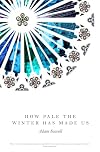
While in Strasbourg she gradually investigates various famous former residents of the city. Most of these can also be viewed as characters inserted into the panes of glass in the picture of Strasbourg Cathedral's Rose Window used as the cover image in this Influx Press edition. Poet Johann Wolfgang von Goethe stands out with his prominent nose at 7 o'clock, dadaist Jean Hans Arp at 4 o'clock, Johannes Gutenberg at 11 o'clock (back cover view only), Gustave Doré and others. The historical investigations (which do all appear to be from true facts) are guided by encounters with fictional characters such as a street vendor, a street beggar, a university professor, etc. that Isabelle meets in her wanderings.
All of this lends itself to her reconstructing the history of Strasbourg while simultaneously repairing the gaps in her persona that had led her previously to disassociate from life and her role in it. In the end she (small spoiler)emerges from the cloistered world of bookshops, libraries and cathedrals as if newborn into the world and looks at herself in amazement at "how pale the winter had made her."
I thoroughly enjoyed this book and already feel that it is one of my top reads for 2020.
I read How Pale the Winter Has Made Us as the February 2020 book perk from my support of The Republic of Consciousness Prize for small independent publishers. show less
Review of the Influx Press paperback edition (Feb. 2020)
I don't know if there are enough examples yet existing for this type of book to be grouped into a genre. If there were, then the category title could be something like the "fictional memoir" or perhaps the "fictional travelogue." Maybe there are only a few of these a year that are published. "Lost Children Archive" (2019) by Valeria Liuselli and "War and Turpentine" (2013/ English Translation 2016) by Stefan Hertmans show more and "Sudden Death" (2013 / English Translation 2016) by Alvaro Enrigue are three other recent examples of the genre that I've also enjoyed in recent years.
The main hallmark of the genre is an outer framework (which can be fictional or non-fictional) inside which an examination or investigation of mixed fictional and non-fictional people or events is reported on. An especial quirk that is used is the use of archival photographs or documents that are inserted into the text as if to provide photographic proof of the true nature of the story, even if the photos are perhaps fake and actually are just "found" objects that are being used to lend an extra faux layer of reality to the text. Liuselli's "Lost Children Archive" tells the story of her marriage break-up with Álvaro Enrigue as if it is a cross-country trip with their children, with one of the children taking Polaroid photos to document the journey. Hertmans "War and Turpentine" reconstructs his grandfather's life as a painter and soldier from the old man's diary. Enrique's "Sudden Death" covers everything from the painter Caravaggio, the conquistador Cortés, archaic tennis rules & the designs of Aztec featherwork. In all of these cases you're not sure how much of the stories are true or not.
Adam Scovell's How Pale the Winter Has Made Us goes even deeper into the genre as he adds layers of historical non-fiction and elements of supernatural fiction to the mix. The lead character Isabelle is avoiding her real-world responsibilities to her family, partner and job by hiding away in Strasbourg, France where she is haunted by memories of her dead-by-suicide father combined with "sightings" of the death-snatching King of the Fairies called the Erl-King (or the Erlkönig as he is named in Goethe's famous poem set to music by Schubert).
While in Strasbourg she gradually investigates various famous former residents of the city. Most of these can also be viewed as characters inserted into the panes of glass in the picture of Strasbourg Cathedral's Rose Window used as the cover image in this Influx Press edition. Poet Johann Wolfgang von Goethe stands out with his prominent nose at 7 o'clock, dadaist Jean Hans Arp at 4 o'clock, Johannes Gutenberg at 11 o'clock (back cover view only), Gustave Doré and others. The historical investigations (which do all appear to be from true facts) are guided by encounters with fictional characters such as a street vendor, a street beggar, a university professor, etc. that Isabelle meets in her wanderings.
All of this lends itself to her reconstructing the history of Strasbourg while simultaneously repairing the gaps in her persona that had led her previously to disassociate from life and her role in it. In the end she (small spoiler)
I thoroughly enjoyed this book and already feel that it is one of my top reads for 2020.
I read How Pale the Winter Has Made Us as the February 2020 book perk from my support of The Republic of Consciousness Prize for small independent publishers. show less
If it’s possible to be compelled and repelled by a book while reading it, I’d say that’s how I felt reading this. Not a lot happens and the story being told is quite basic, but it’s the excellent writing and many subtle nuances blending death, gruesomeness, obsession, and various kinds of haunting that make this book. I felt myself reluctantly warming to the characters, occasionally bored, sometimes repulsed. I found it difficult to care for people capturing poor innocent creatures, show more be they moths, to stick pinned in frames on the wall, although clearly this is part of being a Lepidopterist — one element of the book I didn’t realise was in the book before I began reading. Expertly composed, still the big reveal isn’t so big — indeed, some elements remain deliberately vague — and I can’t say I enjoyed the read. The best I can say is that the story lingers, which is down to the writer’s skill. show less
Adam Scovell presents an interesting case for folk horror as a sub-genre within cinema and television at least (he barely scratches the surface of literature) but not an entirely plausible one. Part of the problem is experiential. He is looking at 'texts' through theory and backwards in time.
At times, I suspect, he is writing to justify an artistic movement's cultural appropriation of the (in fact, my) past - something that one suspects his ilk would be horrified to do if it was the show more appropriation of the culture of some far away indigenous tribespeople.
But I have to say that, while I personally consider all cultural appropriation to be legitimate so long as the source is not destroyed, the past is also another country. The appropriation of my past might be looked at askance by me as much as any native person might do in similar circumstances.
I have to start by forcibly shunting aside his now obligatory rant about Brexit (the book was published in 2017) which shows the entitled (some might say parasitical) intellectual class in full panic, still unable to assess what happened except in terms of stereotypes.
The grieving process for the losers is painful. I don't want to make it worse but the world seen through the universities and intense private screenings of favourite movies, filtered through liberal theory, is not actually the world that most 'folk' lived through then and live through today.
I do not accept the anxiety or the panic. We got (at the time) a frisson from the new and transgression rather than any sense that our kind was capable (which we all are in a crisis) of any serious existential violence if faced by urban middle class interlopers in our brute 'idyll'.
The author seems to be around 30 according to his Twitter account but, even if older, he seems not to have been an adolescent or child in the 1970s when the popular culture of which he writes was a lived experience rather than something to be 'haunted' after the event.
Perhaps I am wrong but he seems to be determined to see the golden age of folk horror through certain assumptions about the era that emphasise its dark side rather than its complexity and even 'joy'. We were both more free and more restricted then - just in different ways than today.
The dark side was definitely there - in fact, I grew up in a classically abusive family with a downright psychopath of a father - but I also saw the complexity. I know that the very process of struggle created by that culture also created strength and realism.
In my case, it created a determination never to allow what happened in my adolescent world happen to the next generation. I am very proud of my own children's strength and resilience but I also see a generation that, frankly, elsewhere, tends to whining, fear and a useless utopianism.
We seem to have swung violently from one partial dystopia to another, from the thuggish world of 'The Sweeney' to the intellectually lightweight cultural engineering of BBC Drama. If the Marxists are right, I can only hope for the thesis and antithesis to create some new workable synthesis.
Scovell does not seem to understand that, because we were not shielded, we were strengthened. The dark public information films, for example, were right for that time as modernisation did create immediate new dangers. He forgets the death rates of children from car use in the 1950s.
There was a desperation amongst authority to stop street urchins from snuffing it because of their liberatory urge for exploration. There were few means of mass communication that children saw. A short sharp shock was probably appreciated by both sides at the time.
Similarly, the tolerance of horror tropes in children's television was actually life-enhancing. Our fears were given narrative coherence. We were respected. We were not assumed to be 'snowflakes' or 'victims' to be protected by no-platforming or trigger warnings.
Ideas that were otherwise only to be found in pulp horror could be introduced to adolescents. We hid behind the sofa and had the odd nightmare but we also were imaginatively 'alive'. We could process the horror and it would make us resilient. Some of the writing in this area was superb.
Yes, Jimmy Saville and Gary Glitter were monsters and child protection was at a level that was not acceptable. We must give credit to Esther Rantzen for first opening up that debate but the dark side was not unique to the 1970s but residual from a nation that had seen stress and poverty as normal.
There is a danger in thinking that the whole of society was rotten to the core but the real problem was silence in conditions of limited communications still beholden to Christian moralism and 'taste'. The point was that evil was not exposed because the mechanisms were not there.
Any twenty-first century observer has the opposite issues to deal with - almost too much information, a lot of noise masking signal, mob hysteria about allegations, manipulation by activists of narratives - but it was very different then.
From this perspective, popular culture was not a matter of streaming and social media chatter but a very few opportunities to see in very particular contexts - the cinema, particular set times for children and families to sit down and watch, books available only if collected and sought or ordered.
Folk horror must be seen in these different sociological contexts - the adult thrill in a darkened room with a hundred strangers, sitting watching with siblings or alone after school and before homework or as adults in a couple with the children in bed after the 9PM threshold.
And each watching was both unique (not catch-up) yet shared with millions of others for discussion later if so minded the next day - no instant tweets but a commitment to watch something and then discuss what it may mean later, having slept on it.
We gained a great deal by the subsequent liberal-left revolution that brought us the best of feminism and child protection (class concerns had long predated Scovell's analysis) but the worst of the liberal-left has also ironically infantilised us as adults in the meantime.
Worse, we have seen a steady infantilising of children, protecting not only them but even university students from difficult ideas or images and coating everything in a standard liberal political rhetoric requiring anti-imperialism, anti-nationalism, feminism, LGBTQ sensitivity and so on.
It is not that any of these ideas are bad (not at all) but they are presented in a totalitarian way without questioning or struggle. The child or adolescent finds a ready-made ideology much like the 1950s Christian conformism from which the folk horror era was revolting.
Folk horror was a reflection of a particular social and cultural reality, a working out psycho-therapeutically of a time delimited market-driven Sturm und Drang in a society under severe economic pressure and it died when it did for a reason.
It took a relatively young population through a period of turmoil, expressing anxieties and fears and even offering appropriate moral warnings that were pertinent to that time. It could not do the twenty-first century's job for it and it is wrong to imply that it should have done.
The hauntological nostalgic theory-driven intellectual rediscovery of the genre and the era is interesting and has opportunities for the expression of genius (I greatly admire Ben Whateley, for example) but it is also in danger of epitomising the inauthenticity of the intellectual observer.
The book and the current movement tells us far more about the plight of the twenty-first century creative artist and university intellectual than it does about the era in question. It is psychotherapy still but for people not even born when Vincent Price strutted his stuff in 'Witchfinder General'.
The book remains, however, an excellent compendium of the films and television series that can be said to represent folk horror. Many of Scovell's particular arguments have merit even if he seems to evade what he is doing -applying a 21st century liberal sensibility to past experience.
The Brexit stuff is no better or worse than any other of the nonsense on the subject coming out of our frightened creative class - a perfect example of that class digging its own grave - but the post facto feminism and redrafting of history is both tiresome and typical of our time.
The honest truth is that the vast majority of these films were produced by people under pressure in a competitive market under difficult economic conditions. They produced what would sell and what would be interesting to that market.
Many 'auteurs' are troubling for modern intellectuals because they were often simultaneously social democratic (Enlightenment believers in improvement) and culturally very conservative. You had to be there to truly understand what drove Shaffer and Kneale.
It is no accident that Nigel Kneale was continually frustrated (latterly) by the BBC and found his voice as much with commercial operations like Euston Films and Hammer. Kneale was resonating with his public because he was providing 'ideas' about the situation of the people at that time.
That situation was one of first cultural (1960s) and then socio-economic (1970s) uncertainty. The folk horror writers were offering coded opportunities for catharsis during times of national breakdown, inflation and generational conflict as well as thwarted desire.
If I have a theory of popular 'folk' horror in the 1960s and 1970s, it centres on something that does have resonance with Brexit - an urban middle class projecting its own anxieties and neuroses on to the rural and urban working class who then watched it all for its transgressional frisson.
Plus ca change! An intelligentsia ducking and diving to survive economically, with a righteous view of what the population should be yet terrified of what it thinks it actually is, and expressing their anxieties through an Art that sells as Entertainment. Plus ca change!
I can certainly recommend the book for his facts and its enthusiasms as well as its introduction of the reader to the rediscovery of folk horror as 'hauntology' in both film and music (as well as in the brilliantly ironical Scarfolk invention) but I cannot entirely be impressed with the analysis.
I suggest the reader enjoy working through the films and TV series that make up the Selected Filmography (a lot of which is easily available on the internet) but try to wipe away any impulse to post-modern theorising or nostalgia, ironical or not. Read some history of the period instead!
Treat the actual lived experience of the period between from the 1950s to 1970s as one historical event and the twenty-first 'romantic' rediscovery of it as an entirely different and creative event that says more about a depressed (not unjustifiably) post-2008 generation than anything else.
The earlier period is not usefully viewed through the moral evaluation of twenty-first century creative artists except as an insight into their own anxieties and, frankly, weaknesses. Those who lived through it need no theory to know what it meant.
Oh, and if I see the word 'diagesis' used once more by Scovell (it is like a tic), I might throw his book at him. That would be a shame because I still want to keep it in my library!
For the record, the authors web site is at https://celluloidwickerman.com and, if you are a cinephile, that is a lot of good stuff to be found on it. show less
At times, I suspect, he is writing to justify an artistic movement's cultural appropriation of the (in fact, my) past - something that one suspects his ilk would be horrified to do if it was the show more appropriation of the culture of some far away indigenous tribespeople.
But I have to say that, while I personally consider all cultural appropriation to be legitimate so long as the source is not destroyed, the past is also another country. The appropriation of my past might be looked at askance by me as much as any native person might do in similar circumstances.
I have to start by forcibly shunting aside his now obligatory rant about Brexit (the book was published in 2017) which shows the entitled (some might say parasitical) intellectual class in full panic, still unable to assess what happened except in terms of stereotypes.
The grieving process for the losers is painful. I don't want to make it worse but the world seen through the universities and intense private screenings of favourite movies, filtered through liberal theory, is not actually the world that most 'folk' lived through then and live through today.
I do not accept the anxiety or the panic. We got (at the time) a frisson from the new and transgression rather than any sense that our kind was capable (which we all are in a crisis) of any serious existential violence if faced by urban middle class interlopers in our brute 'idyll'.
The author seems to be around 30 according to his Twitter account but, even if older, he seems not to have been an adolescent or child in the 1970s when the popular culture of which he writes was a lived experience rather than something to be 'haunted' after the event.
Perhaps I am wrong but he seems to be determined to see the golden age of folk horror through certain assumptions about the era that emphasise its dark side rather than its complexity and even 'joy'. We were both more free and more restricted then - just in different ways than today.
The dark side was definitely there - in fact, I grew up in a classically abusive family with a downright psychopath of a father - but I also saw the complexity. I know that the very process of struggle created by that culture also created strength and realism.
In my case, it created a determination never to allow what happened in my adolescent world happen to the next generation. I am very proud of my own children's strength and resilience but I also see a generation that, frankly, elsewhere, tends to whining, fear and a useless utopianism.
We seem to have swung violently from one partial dystopia to another, from the thuggish world of 'The Sweeney' to the intellectually lightweight cultural engineering of BBC Drama. If the Marxists are right, I can only hope for the thesis and antithesis to create some new workable synthesis.
Scovell does not seem to understand that, because we were not shielded, we were strengthened. The dark public information films, for example, were right for that time as modernisation did create immediate new dangers. He forgets the death rates of children from car use in the 1950s.
There was a desperation amongst authority to stop street urchins from snuffing it because of their liberatory urge for exploration. There were few means of mass communication that children saw. A short sharp shock was probably appreciated by both sides at the time.
Similarly, the tolerance of horror tropes in children's television was actually life-enhancing. Our fears were given narrative coherence. We were respected. We were not assumed to be 'snowflakes' or 'victims' to be protected by no-platforming or trigger warnings.
Ideas that were otherwise only to be found in pulp horror could be introduced to adolescents. We hid behind the sofa and had the odd nightmare but we also were imaginatively 'alive'. We could process the horror and it would make us resilient. Some of the writing in this area was superb.
Yes, Jimmy Saville and Gary Glitter were monsters and child protection was at a level that was not acceptable. We must give credit to Esther Rantzen for first opening up that debate but the dark side was not unique to the 1970s but residual from a nation that had seen stress and poverty as normal.
There is a danger in thinking that the whole of society was rotten to the core but the real problem was silence in conditions of limited communications still beholden to Christian moralism and 'taste'. The point was that evil was not exposed because the mechanisms were not there.
Any twenty-first century observer has the opposite issues to deal with - almost too much information, a lot of noise masking signal, mob hysteria about allegations, manipulation by activists of narratives - but it was very different then.
From this perspective, popular culture was not a matter of streaming and social media chatter but a very few opportunities to see in very particular contexts - the cinema, particular set times for children and families to sit down and watch, books available only if collected and sought or ordered.
Folk horror must be seen in these different sociological contexts - the adult thrill in a darkened room with a hundred strangers, sitting watching with siblings or alone after school and before homework or as adults in a couple with the children in bed after the 9PM threshold.
And each watching was both unique (not catch-up) yet shared with millions of others for discussion later if so minded the next day - no instant tweets but a commitment to watch something and then discuss what it may mean later, having slept on it.
We gained a great deal by the subsequent liberal-left revolution that brought us the best of feminism and child protection (class concerns had long predated Scovell's analysis) but the worst of the liberal-left has also ironically infantilised us as adults in the meantime.
Worse, we have seen a steady infantilising of children, protecting not only them but even university students from difficult ideas or images and coating everything in a standard liberal political rhetoric requiring anti-imperialism, anti-nationalism, feminism, LGBTQ sensitivity and so on.
It is not that any of these ideas are bad (not at all) but they are presented in a totalitarian way without questioning or struggle. The child or adolescent finds a ready-made ideology much like the 1950s Christian conformism from which the folk horror era was revolting.
Folk horror was a reflection of a particular social and cultural reality, a working out psycho-therapeutically of a time delimited market-driven Sturm und Drang in a society under severe economic pressure and it died when it did for a reason.
It took a relatively young population through a period of turmoil, expressing anxieties and fears and even offering appropriate moral warnings that were pertinent to that time. It could not do the twenty-first century's job for it and it is wrong to imply that it should have done.
The hauntological nostalgic theory-driven intellectual rediscovery of the genre and the era is interesting and has opportunities for the expression of genius (I greatly admire Ben Whateley, for example) but it is also in danger of epitomising the inauthenticity of the intellectual observer.
The book and the current movement tells us far more about the plight of the twenty-first century creative artist and university intellectual than it does about the era in question. It is psychotherapy still but for people not even born when Vincent Price strutted his stuff in 'Witchfinder General'.
The book remains, however, an excellent compendium of the films and television series that can be said to represent folk horror. Many of Scovell's particular arguments have merit even if he seems to evade what he is doing -applying a 21st century liberal sensibility to past experience.
The Brexit stuff is no better or worse than any other of the nonsense on the subject coming out of our frightened creative class - a perfect example of that class digging its own grave - but the post facto feminism and redrafting of history is both tiresome and typical of our time.
The honest truth is that the vast majority of these films were produced by people under pressure in a competitive market under difficult economic conditions. They produced what would sell and what would be interesting to that market.
Many 'auteurs' are troubling for modern intellectuals because they were often simultaneously social democratic (Enlightenment believers in improvement) and culturally very conservative. You had to be there to truly understand what drove Shaffer and Kneale.
It is no accident that Nigel Kneale was continually frustrated (latterly) by the BBC and found his voice as much with commercial operations like Euston Films and Hammer. Kneale was resonating with his public because he was providing 'ideas' about the situation of the people at that time.
That situation was one of first cultural (1960s) and then socio-economic (1970s) uncertainty. The folk horror writers were offering coded opportunities for catharsis during times of national breakdown, inflation and generational conflict as well as thwarted desire.
If I have a theory of popular 'folk' horror in the 1960s and 1970s, it centres on something that does have resonance with Brexit - an urban middle class projecting its own anxieties and neuroses on to the rural and urban working class who then watched it all for its transgressional frisson.
Plus ca change! An intelligentsia ducking and diving to survive economically, with a righteous view of what the population should be yet terrified of what it thinks it actually is, and expressing their anxieties through an Art that sells as Entertainment. Plus ca change!
I can certainly recommend the book for his facts and its enthusiasms as well as its introduction of the reader to the rediscovery of folk horror as 'hauntology' in both film and music (as well as in the brilliantly ironical Scarfolk invention) but I cannot entirely be impressed with the analysis.
I suggest the reader enjoy working through the films and TV series that make up the Selected Filmography (a lot of which is easily available on the internet) but try to wipe away any impulse to post-modern theorising or nostalgia, ironical or not. Read some history of the period instead!
Treat the actual lived experience of the period between from the 1950s to 1970s as one historical event and the twenty-first 'romantic' rediscovery of it as an entirely different and creative event that says more about a depressed (not unjustifiably) post-2008 generation than anything else.
The earlier period is not usefully viewed through the moral evaluation of twenty-first century creative artists except as an insight into their own anxieties and, frankly, weaknesses. Those who lived through it need no theory to know what it meant.
Oh, and if I see the word 'diagesis' used once more by Scovell (it is like a tic), I might throw his book at him. That would be a shame because I still want to keep it in my library!
For the record, the authors web site is at https://celluloidwickerman.com and, if you are a cinephile, that is a lot of good stuff to be found on it. show less
This was really bad, sorry.
Not even offensively awful, just bland. Uninteresting characters, a plot that meanders and yet goes nowhere. Actions that feel inconsequential, and a mystery that really just is not compelling. It doesn't go for horror, and doesn't really have any emotional impact of which to speak, and so the narrative crux of the whole thing lacks any sort of depth or intrigue.
I only finished it because it was short.
Not even offensively awful, just bland. Uninteresting characters, a plot that meanders and yet goes nowhere. Actions that feel inconsequential, and a mystery that really just is not compelling. It doesn't go for horror, and doesn't really have any emotional impact of which to speak, and so the narrative crux of the whole thing lacks any sort of depth or intrigue.
I only finished it because it was short.
You May Also Like
Associated Authors
Statistics
- Works
- 5
- Also by
- 2
- Members
- 124
- Popularity
- #161,164
- Rating
- 3.6
- Reviews
- 4
- ISBNs
- 13