
Lisa Page (2)
Author of We Wear the Mask: 15 True Stories of Passing in America
For other authors named Lisa Page, see the disambiguation page.
Works by Lisa Page
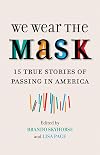
We Wear the Mask: 15 True Stories of Passing in America (2017) — Editor; Contributor — 93 copies, 23 reviews
Associated Works
Tagged
Common Knowledge
There is no Common Knowledge data for this author yet. You can help.
Members
Reviews
I meant to read one essay only. So I did, and then I turned the page. And another, another.
I read until my eyes burned and the hour was late, captivated by the wry, painful, humorous, thoughtful voices in this collection. When at last I turned off the light, I dreamt of being in Bronzeville in Chicago, with a childhood friend whose work is contained in this book.
“What are you?” So many of the essayists were confronted by that intrusive question throughout their lives—especially in show more childhood and adolescence. More than a question, it was a rude demand—explain to me why you look/sound/act the way you do. Just as often, presumptions were made (“you must be Puerto Rican/white/black/fill in the blank) and stereotypes confirmed.
“Many times, people told me to figure out who I was. But first, I passed. I did it consciously. That was my job: to figure out just exactly who you wanted me to be.”-- Lisa Page
This book arrives at an urgent juncture in American life: when others judge vociferously and mercilessly and, at the same time, so many of us are claiming our own identity in new and nuanced ways.
“I own this story. I don’t want it told uncharitably by an outsider,” writes M.G. Lord. In each of the fifteen pieces, the writer owns their story and tells it: charitably, boldly, baldly, courageously.
“I’m fifty-three years old, have been writing and thinking about race and race identity for over thirty years, and only now do I find out I have been passing all my life.” --Trey Ellis
Some of the writers passed (or were passed) as a different race, ethnicity or nationality; others were thought to be straight, goy, or a gender other than their own. And as Rafia Zakaria observes, “The burden of passing, its central fault, lies…in the requirement of deception that it imposes…the clear message of inadequacy, of falling short, of being less than an ideal, inferior to an original.”
These are essays that demand return visits because each contains rich memories and realizations. The title comes from Laurence Dunbar’s agonized poem of the same name but these authors have moved from agony to more nuanced perspectives. Get a copy; read it; give one to someone else who may need to learn from it—and that means all of us.
“And how I felt so happy, finally, when I realized that he wanted me simply for me, not for a version of me that passed, how I felt like a queen stretched out on my bed with him atop me, a queen who was being treated like royalty by this gentle giant of a man, regardless of what genitalia she had or did not.” --Gabrielle Bellot show less
I read until my eyes burned and the hour was late, captivated by the wry, painful, humorous, thoughtful voices in this collection. When at last I turned off the light, I dreamt of being in Bronzeville in Chicago, with a childhood friend whose work is contained in this book.
“What are you?” So many of the essayists were confronted by that intrusive question throughout their lives—especially in show more childhood and adolescence. More than a question, it was a rude demand—explain to me why you look/sound/act the way you do. Just as often, presumptions were made (“you must be Puerto Rican/white/black/fill in the blank) and stereotypes confirmed.
“Many times, people told me to figure out who I was. But first, I passed. I did it consciously. That was my job: to figure out just exactly who you wanted me to be.”-- Lisa Page
This book arrives at an urgent juncture in American life: when others judge vociferously and mercilessly and, at the same time, so many of us are claiming our own identity in new and nuanced ways.
“I own this story. I don’t want it told uncharitably by an outsider,” writes M.G. Lord. In each of the fifteen pieces, the writer owns their story and tells it: charitably, boldly, baldly, courageously.
“I’m fifty-three years old, have been writing and thinking about race and race identity for over thirty years, and only now do I find out I have been passing all my life.” --Trey Ellis
Some of the writers passed (or were passed) as a different race, ethnicity or nationality; others were thought to be straight, goy, or a gender other than their own. And as Rafia Zakaria observes, “The burden of passing, its central fault, lies…in the requirement of deception that it imposes…the clear message of inadequacy, of falling short, of being less than an ideal, inferior to an original.”
These are essays that demand return visits because each contains rich memories and realizations. The title comes from Laurence Dunbar’s agonized poem of the same name but these authors have moved from agony to more nuanced perspectives. Get a copy; read it; give one to someone else who may need to learn from it—and that means all of us.
“And how I felt so happy, finally, when I realized that he wanted me simply for me, not for a version of me that passed, how I felt like a queen stretched out on my bed with him atop me, a queen who was being treated like royalty by this gentle giant of a man, regardless of what genitalia she had or did not.” --Gabrielle Bellot show less
3 1/2 stars: Good.
---------
From the back cover: For some, "passing" means opportunity, access, or safety. Others don't willingly pass but are "passed" in specific situations by someone else. This is an illuminating and timely anthology that examines the complex reality of "passing" in America. Skyhorse, a Mexican American, writes about how his mother passed him as an American Indian before he learned who he really is. Page shares how her white mother didn't tell friends about her black show more ex-husband or that her kids were iun fact, biracial.
The anthology includes writing from Gabrielle Bellot, who shares the disquieting truths of passing as a woman after coming out as trans, and MG Lord who, after the murder of her female lover, embraced heterosexuality. [ MG is a friend of mine]. Patrick Rosal writes of how he "accidentally" passes as a waiter at the National Book Awards ceremony, and Rafia Zakaria agonizes over her Muslim American identiy while traveling through domestic and international airports.
---------
Another book which I read because my friend MG Lord wrote one of the essays in this. All the essays are quite good, with naturally some resonating more than others to my own personal journey. I only wished they had chosen a broader range of "passing" scenarios-- virtually all of them were about race, with one on religion and two on sexuality. Of course, race is a vital area in the US and much "passing" undoubtedly occurs there. Overall, a solid "good" rating for this important book. I will pass it on to another who can certainly relate to "passing" and race issues.
----------
Some quotes which struck me:
By denying my authentic self I staggered into depression and came out holding a shitload of Depeche Mode, Cure and Morrissey albums.
At recess, right in front of me, they would matter of factly talk about Puerto Ricans, and say, "You know, like Teresa." I have no idea what they were talking about in such a matter of fact way... I didn't correct them. I didn't know how. I wasn't trying to perpetuate a fraud. I wasn't trying to pass. I just didn't have the words.
Thirty years later, I am just now coming not to care how I am judged, not because of some inner strength, but the realization of the futility of caring about it. We're all judged by such complex matrices that it is impossible to anticipate them all.
My female friends had told me stories of being catcalled and stalked before, but I had never understood them until now. Soon, it was just a normal facet of my life, this harassment for being seen as a woman: sometimes comical, sometimes annoying, always a bit unnerving, sometimes terrifying. It became common for men I did not know to speak down to me, often so subtley that I doubted they were aware of doing it. What had seemed so large at first now had become a new norm, yet I still worried each time a man catcalled or propositioned me that I might face violence if he realized I was trans; after all, it is not uncommon for trans women to be assaulted or even killed by someone who reacts in fury to finding out the woman he was flirting with is not cisgender.
It can be a sudden shock to realize that you have accepted yourself as you. That you have come to love yourself. That you have come to learn you would let yourself into your own home if you opened your door at a knock, and found yourself standing before you, a woman without reservations.
Ultimately, humanity is complex, Sphinxian, strange. And I like it being complex. I like people living their lives as whatever makes them feel happiest, if it does not harm anyone else. I do not wish to hate, even if I too must remind myself of it when faced with people who seem disgusted by me simply being me. Hatred, after all, is not so much a failure to love as a failure to try to understand complexity or difference. And we can all be better, in a small yet big way, by understanding that.
My mother told me, on the verge of tears, that I no longer looked or sounded like the child she raised. Acceptance, like rejection, is not always absolute. But we grow as we learn more. We become bigger as our capacity for love does, even if our steps are small.
For me, this was an early lesson in the value of passing. Each of us has two identities: the one that we know ourselves to be and the one that others see when they interact with us. "Passing" is the label that we give to the practice of changing our public identity without, one hopes, losing track of who we truly are.
What I learned is that even if you reach the goal you want--the self you want--you still have to interrogate yourself if that goal is a worthy one, if the self you have achieved is what you thought it would be before you achieved it. If it isn't, then you need to give yourself the space and time to work out who you want to be. you always owe yourself that self-respect. show less
---------
From the back cover: For some, "passing" means opportunity, access, or safety. Others don't willingly pass but are "passed" in specific situations by someone else. This is an illuminating and timely anthology that examines the complex reality of "passing" in America. Skyhorse, a Mexican American, writes about how his mother passed him as an American Indian before he learned who he really is. Page shares how her white mother didn't tell friends about her black show more ex-husband or that her kids were iun fact, biracial.
The anthology includes writing from Gabrielle Bellot, who shares the disquieting truths of passing as a woman after coming out as trans, and MG Lord who, after the murder of her female lover, embraced heterosexuality. [ MG is a friend of mine]. Patrick Rosal writes of how he "accidentally" passes as a waiter at the National Book Awards ceremony, and Rafia Zakaria agonizes over her Muslim American identiy while traveling through domestic and international airports.
---------
Another book which I read because my friend MG Lord wrote one of the essays in this. All the essays are quite good, with naturally some resonating more than others to my own personal journey. I only wished they had chosen a broader range of "passing" scenarios-- virtually all of them were about race, with one on religion and two on sexuality. Of course, race is a vital area in the US and much "passing" undoubtedly occurs there. Overall, a solid "good" rating for this important book. I will pass it on to another who can certainly relate to "passing" and race issues.
----------
Some quotes which struck me:
By denying my authentic self I staggered into depression and came out holding a shitload of Depeche Mode, Cure and Morrissey albums.
At recess, right in front of me, they would matter of factly talk about Puerto Ricans, and say, "You know, like Teresa." I have no idea what they were talking about in such a matter of fact way... I didn't correct them. I didn't know how. I wasn't trying to perpetuate a fraud. I wasn't trying to pass. I just didn't have the words.
Thirty years later, I am just now coming not to care how I am judged, not because of some inner strength, but the realization of the futility of caring about it. We're all judged by such complex matrices that it is impossible to anticipate them all.
My female friends had told me stories of being catcalled and stalked before, but I had never understood them until now. Soon, it was just a normal facet of my life, this harassment for being seen as a woman: sometimes comical, sometimes annoying, always a bit unnerving, sometimes terrifying. It became common for men I did not know to speak down to me, often so subtley that I doubted they were aware of doing it. What had seemed so large at first now had become a new norm, yet I still worried each time a man catcalled or propositioned me that I might face violence if he realized I was trans; after all, it is not uncommon for trans women to be assaulted or even killed by someone who reacts in fury to finding out the woman he was flirting with is not cisgender.
It can be a sudden shock to realize that you have accepted yourself as you. That you have come to love yourself. That you have come to learn you would let yourself into your own home if you opened your door at a knock, and found yourself standing before you, a woman without reservations.
Ultimately, humanity is complex, Sphinxian, strange. And I like it being complex. I like people living their lives as whatever makes them feel happiest, if it does not harm anyone else. I do not wish to hate, even if I too must remind myself of it when faced with people who seem disgusted by me simply being me. Hatred, after all, is not so much a failure to love as a failure to try to understand complexity or difference. And we can all be better, in a small yet big way, by understanding that.
My mother told me, on the verge of tears, that I no longer looked or sounded like the child she raised. Acceptance, like rejection, is not always absolute. But we grow as we learn more. We become bigger as our capacity for love does, even if our steps are small.
For me, this was an early lesson in the value of passing. Each of us has two identities: the one that we know ourselves to be and the one that others see when they interact with us. "Passing" is the label that we give to the practice of changing our public identity without, one hopes, losing track of who we truly are.
What I learned is that even if you reach the goal you want--the self you want--you still have to interrogate yourself if that goal is a worthy one, if the self you have achieved is what you thought it would be before you achieved it. If it isn't, then you need to give yourself the space and time to work out who you want to be. you always owe yourself that self-respect. show less
The truth that emerges from the excellently crafted essays in WE WEAR THE MASK is that all of us, at some time or other, passes for something that we are not. The first situation that might come to mind when one hears of "passing" is a light-skinned African-American passing for white in an attempt for a better life or lifestyle. Think the classic Nella Larsen book whose title is the same: PASSING. It was written in 1929 and has pretty much set the standard for our understanding of what show more "passing" really was/is. In WE WEAR THE MASK, editors Brando Skyhorse ad Lisa Page have been able to allow readers to think more broadly about the term and to dwell a bit on what it really means - to all of us.
Some of the essays in the book are truly eye opening. Consider Skyhorse's own essay which is about his Mexican mother bringing him up as Native American despite the fact that she knew the family's roots were Latino. What a different situation this is! Usually an adult chooses to "pass," yet here is the true story of a mother who raised her son to be something he wasn't, leaving him as an adult, wandering between two communities and wondering how truthful he should be. After all, these days, Native Americans are what many want to be, the original Americans, the ones who really belong to the country and the earth. Brando Skyhorse addreses this complex issue with grace, and is a better person and writer because of his decisions.
Marc Fitten's essay about his Chinese-Jamaican great-grandfather brings to mind Kerry Young's excellent novel PAO which introduced many to the history of Chinese in Jamaica. Teresa Wiltz's essay shows us how geography has a great deal to do with how one is perceived or how one "passes." One's skin tone or facial features might be interpreted totally differently in various areas of the United States. We are caught up abruptly by Lisa Page's engaging essay which, shockingly, tells of a mother - her own mother - who was a white woman married to a black man and had two children with him only to basically deny their existence when she went to live in Mexico as a white woman unencumbered by any previous racial intermingling.
We read essays about economic "passing," pretending one is of a higher status (or perhaps, when advantageous, pretending one has less money than is actually the case). We read essays about transgender invididuals who are living under a different gender. We think about bisexuals who pass - sometimes easily and sometimes with difficulty - from one identity to the other: straight with their straight friends, family members, or acquaintances and gay with their gay friends and lovers. We read about American Muslims who have to make tough decisions about whether to pass as non-Muslim in order to be safe or to be who they are so as to stay true to themselves.
Skyhorse and Page get high scores for editing this timely collection of essays. The essays are diverse enough and present a variety of scenarios, so there is no boredom or repetition as one moves from one essay to the next. They are all relevant. They are all true. And they should all be widely read. But will there be a large audience for this book? There should be, especially in these political times, but somehow it seems that many Americans don't want to be bothered by having to think of how life would be if one HAD to "pass" for a different race, gender, or religion. It seems that many Americans don't want to address the subject at all despite the fact that it is a CRUCIAL part of understanding who we are as Americans today.
In a country where more and more people are having their DNA done, it is curious that passing and identity are not hotter topics. Individuals seem to want DNA to prove that what they always knew was true: parents, grandparents, and ancestors further back really came from where they said they came from. Most people don't want surprises. But when a surprise arrives (think of the news in the last year about the avid Ku Klux Klansman who found out through DNA that he had a great deal of Sub-Saharan African blood), it is usually hidden, treated as an entertaining human-interest story, and then left. There is never another discourse behind these events. Passing is something that should be spoken about more often - and in more and newer ways.
Think of someone who was adopted, for instance. WE WEAR THE MASK did not feature any in-depth essay on this subject. But what kind of life does an adopted person have but one of passing? Every day they are living with a family who may love them with all the love in the world, but to whom they are not biologically related. They may be asked where their ancestors came from, and most just parrot whatever their adoptive parents tell them even though their ethnicity might be totally different. No wonder there is such a push now for open adoption records and individuals studying their DNA and looking for matches. Some choose to pass, but for an adoptee, there is no choice but to pass.
In the final analysis, what one brings away after reading WE WEAR THE MASK is that we all pass for something. Think about teenagers passing as older to get admitted to a movie or a nightclub. Think about individuals who lie about their age and make themselves older or younger, perhaps to better fit their partner in a new relationship. And who hasn't pretended to agree with an old aunty about politics while knowing that her views are the total opposite of ours? Don't rock the boat. People pretend to be religious even though they haven't been to church in years and may not even believe in a God, but it makes it easier to be around relatives and it keeps the family peace. Yes, we have all passed for something that we were not, at some time. Passing is a complex issue that takes many forms, but it is as much a part of American life as the proverbial apple pie. show less
Some of the essays in the book are truly eye opening. Consider Skyhorse's own essay which is about his Mexican mother bringing him up as Native American despite the fact that she knew the family's roots were Latino. What a different situation this is! Usually an adult chooses to "pass," yet here is the true story of a mother who raised her son to be something he wasn't, leaving him as an adult, wandering between two communities and wondering how truthful he should be. After all, these days, Native Americans are what many want to be, the original Americans, the ones who really belong to the country and the earth. Brando Skyhorse addreses this complex issue with grace, and is a better person and writer because of his decisions.
Marc Fitten's essay about his Chinese-Jamaican great-grandfather brings to mind Kerry Young's excellent novel PAO which introduced many to the history of Chinese in Jamaica. Teresa Wiltz's essay shows us how geography has a great deal to do with how one is perceived or how one "passes." One's skin tone or facial features might be interpreted totally differently in various areas of the United States. We are caught up abruptly by Lisa Page's engaging essay which, shockingly, tells of a mother - her own mother - who was a white woman married to a black man and had two children with him only to basically deny their existence when she went to live in Mexico as a white woman unencumbered by any previous racial intermingling.
We read essays about economic "passing," pretending one is of a higher status (or perhaps, when advantageous, pretending one has less money than is actually the case). We read essays about transgender invididuals who are living under a different gender. We think about bisexuals who pass - sometimes easily and sometimes with difficulty - from one identity to the other: straight with their straight friends, family members, or acquaintances and gay with their gay friends and lovers. We read about American Muslims who have to make tough decisions about whether to pass as non-Muslim in order to be safe or to be who they are so as to stay true to themselves.
Skyhorse and Page get high scores for editing this timely collection of essays. The essays are diverse enough and present a variety of scenarios, so there is no boredom or repetition as one moves from one essay to the next. They are all relevant. They are all true. And they should all be widely read. But will there be a large audience for this book? There should be, especially in these political times, but somehow it seems that many Americans don't want to be bothered by having to think of how life would be if one HAD to "pass" for a different race, gender, or religion. It seems that many Americans don't want to address the subject at all despite the fact that it is a CRUCIAL part of understanding who we are as Americans today.
In a country where more and more people are having their DNA done, it is curious that passing and identity are not hotter topics. Individuals seem to want DNA to prove that what they always knew was true: parents, grandparents, and ancestors further back really came from where they said they came from. Most people don't want surprises. But when a surprise arrives (think of the news in the last year about the avid Ku Klux Klansman who found out through DNA that he had a great deal of Sub-Saharan African blood), it is usually hidden, treated as an entertaining human-interest story, and then left. There is never another discourse behind these events. Passing is something that should be spoken about more often - and in more and newer ways.
Think of someone who was adopted, for instance. WE WEAR THE MASK did not feature any in-depth essay on this subject. But what kind of life does an adopted person have but one of passing? Every day they are living with a family who may love them with all the love in the world, but to whom they are not biologically related. They may be asked where their ancestors came from, and most just parrot whatever their adoptive parents tell them even though their ethnicity might be totally different. No wonder there is such a push now for open adoption records and individuals studying their DNA and looking for matches. Some choose to pass, but for an adoptee, there is no choice but to pass.
In the final analysis, what one brings away after reading WE WEAR THE MASK is that we all pass for something. Think about teenagers passing as older to get admitted to a movie or a nightclub. Think about individuals who lie about their age and make themselves older or younger, perhaps to better fit their partner in a new relationship. And who hasn't pretended to agree with an old aunty about politics while knowing that her views are the total opposite of ours? Don't rock the boat. People pretend to be religious even though they haven't been to church in years and may not even believe in a God, but it makes it easier to be around relatives and it keeps the family peace. Yes, we have all passed for something that we were not, at some time. Passing is a complex issue that takes many forms, but it is as much a part of American life as the proverbial apple pie. show less
 This review was written for LibraryThing Early Reviewers.
15 writers have chosen to reveal to us the stories of how they (or a close relative) have intentionally or unintentionally "passed" as someone they were not. "Passing" is defined as being accepted by others as a member of a race, sex or other group to which they would not otherwise regard one as belonging. Mostly, this usage of the verb refers to light-skinned Black people being accepted as white, but other types of passing such as for a gay person to be accepted as straight, are represented show more here. In fact, it seems the authors have been very diligent in being representational, and have put together a very diverse collection.
Being a straight, white, cis-gendered, middle-class individual in Minnesota, I have probably never been assumed to be anything other than who I am; I have very little idea of what these people have had to deal with in their lived experiences, so I feel extremely grateful to them for opening up and sharing these experiences.
I found it heartbreaking to read about people who were 'forced' into passing by the actions of a parent, and can't imagine how hard it must be to live an authentic life when the choice is between being yourself or exposing your mom as a liar.
It's also interesting to reflect on what "black" really means. One author tells of getting his genetic profile done and finding himself to be 51% white, higher than his lighter-skinned sister's percentage. There was a time in our country's history when "even one drop" legally made you a person of color, regardless of your skin tone. Several authors of mixed heritage write about how they felt out of place with both (or more) groups, which highlights how obsessed our society still is with labeling and putting people in a box for easy categorization.
Self-identity is difficult to determine, even when nothing about your appearance or status is ambiguous, so how much more difficult is it to find your authentic self, when people want to put you in a box you don't belong in or you can't find a box in which you want to belong? show less
Being a straight, white, cis-gendered, middle-class individual in Minnesota, I have probably never been assumed to be anything other than who I am; I have very little idea of what these people have had to deal with in their lived experiences, so I feel extremely grateful to them for opening up and sharing these experiences.
I found it heartbreaking to read about people who were 'forced' into passing by the actions of a parent, and can't imagine how hard it must be to live an authentic life when the choice is between being yourself or exposing your mom as a liar.
It's also interesting to reflect on what "black" really means. One author tells of getting his genetic profile done and finding himself to be 51% white, higher than his lighter-skinned sister's percentage. There was a time in our country's history when "even one drop" legally made you a person of color, regardless of your skin tone. Several authors of mixed heritage write about how they felt out of place with both (or more) groups, which highlights how obsessed our society still is with labeling and putting people in a box for easy categorization.
Self-identity is difficult to determine, even when nothing about your appearance or status is ambiguous, so how much more difficult is it to find your authentic self, when people want to put you in a box you don't belong in or you can't find a box in which you want to belong? show less
This review was written for LibraryThing Early Reviewers.You May Also Like
Associated Authors
Statistics
- Works
- 1
- Also by
- 3
- Members
- 93
- Popularity
- #200,858
- Rating
- 3.8
- Reviews
- 23
- ISBNs
- 3
