
Taisia Kitaiskaia
Author of Literary Witches: A Celebration of Magical Women Writers
Works by Taisia Kitaiskaia
Associated Works
Tagged
Common Knowledge
- Birthdate
- unknown
- Gender
- female
- Relationships
- Flores, Fernando A. (husband)
- Nationality
- Russia (birth)
USA - Places of residence
- Austin, Texas, USA
- Map Location
- Russia
Members
Reviews
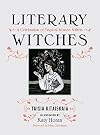
This combination of fantastical prose-poems and art is a tribute to women writers from all time periods and all parts of the world. Each writer is depicted as a witch, but "witch," as the introduction says, is not a hag or devil's consort, but rather "a woman who stands entirely on her own. She is more often than not an outsider, and her gift is transformation. She is a change agent, and her work is sparked by speech: an incantation, a naming, a blessing, a curse."
So each writer is given a show more title. Octavia Butler is "sower of strange seeds, species, and the future." Emily Dickinson is "specter of windows, flies, and the unexpected." Mary Shelley is "alchymist of monsters, children, the living and the dead." Following her title is a prose-poem that delves into the essential nature of the woman and her writing, depicting her perhaps as a spirit or an immortal or a prophetess. The writing is tinged with darkness, a little creepy, but in a good way--the seductiveness of danger. On the opposite page is a portrait of the writer by Katy Horan, again using symbology and sometimes-disturbing images to get at the essence of her. There is also a short biography and suggested readings, and the whole encourages the reader to seek out these women--some very famous, some quite unknown (at least, to me)--and experience their work for yourself.
I also have a Literary Witches deck of cards, which can be used like an oracle or fortune-telling deck: pull cards and find answers to questions or simply what is influencing you today. The cards include all of the witches as well as their materials, symbols such as bees, a ghost, a spider, or a teacup. I was drawn to both the book and cards by the art (and by my interest in owning unusual card decks), but I found the writing to be enchanting, which I'd like to dip into again and again. show less
So each writer is given a show more title. Octavia Butler is "sower of strange seeds, species, and the future." Emily Dickinson is "specter of windows, flies, and the unexpected." Mary Shelley is "alchymist of monsters, children, the living and the dead." Following her title is a prose-poem that delves into the essential nature of the woman and her writing, depicting her perhaps as a spirit or an immortal or a prophetess. The writing is tinged with darkness, a little creepy, but in a good way--the seductiveness of danger. On the opposite page is a portrait of the writer by Katy Horan, again using symbology and sometimes-disturbing images to get at the essence of her. There is also a short biography and suggested readings, and the whole encourages the reader to seek out these women--some very famous, some quite unknown (at least, to me)--and experience their work for yourself.
I also have a Literary Witches deck of cards, which can be used like an oracle or fortune-telling deck: pull cards and find answers to questions or simply what is influencing you today. The cards include all of the witches as well as their materials, symbols such as bees, a ghost, a spider, or a teacup. I was drawn to both the book and cards by the art (and by my interest in owning unusual card decks), but I found the writing to be enchanting, which I'd like to dip into again and again. show less
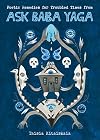
A quirky and charming little book of advice in letter format. Given that I read the newspaper advice column daily (shout out Dear Amy), this was right up my alley. But it definitely isn't your typical newspaper fare. Yes, some of the problems are the same - and don't they all stem from how we get along (or don't) with others? But the voice of Baba Yaga, the wise witch of Slavic folklore, "speaks in the language of trees and ponds and fairy tales, an immortal witness to our folly and show more suffering." Her answers are definitely circuitous and seem not like an answer at all, until it sinks in a bit and then it seems profound. Mostly Baba Yaga prompts the asker to find the answer within themself. The first section is called "Love Cauldrons" and deals with how to love others; the second section is "Good in Your Bones" and deals with how to love yourself; the third section is "The Forest Path" and deals with how to love the world - natural & human-made. That's an oversimplification, but it's the gist. Here's an example of her folksy wisdom regarding leaving mistakes behind: "your errors are like little foxes that paw at my hut" and then goes on to tell the asker to welcome them rather than let them claw their way in. Obscure, but not wrong. Kudos to the author to create such an authentic persona and for her poetic musings. Also, stunning folk drawings by Katy Horan add to the allure and the authenticity. And this is the second Baba Yaga book - need to backtrack to the first, but looking forward to it. show less
‘’Why would we dare call someone a Literary Witch? Because all artists are magicians, and Witches wield a special magic. Witches and women writers alike dwell in creativity, mystery and other worlds. They aren’t afraid to be alone in the woods of their imaginations or to live in huts of their own making. They’re not afraid of the dark.’’ *
If we come to think of it, Literature is a form of magic witnessed everywhere. We often say that books transport us into a universe of their show more own, into places and worlds we may never visit in person. Writers use ‘’spells’’ made of words to reach our minds, our hearts and souls. To help us ‘’see’’ and understand. Now, let us turn our attention to women who chose to dwell on the paths of the literary world. Why were ‘’witches’’ called thus? Because they ‘’dared’’ decide their own fate, refusing to let men and society dictate their lives. Because they wanted a voice of their own and ‘’dared’’ to express it. This is what women writers achieved. They went against the current of their era, against prejudices, notions of propriety and any form of ‘’must’’ and ‘’must not’’. They used fables, Folklore, poetry, allegorical imagery to make their presence known. They showed that women have voices that can be heard far and wide, no matter how much certain people would like them to be silenced. They became the figures that turned dry literature into a mystical, haunting world.
‘’A bird of blue bones drops a piece of paper into your hand. The paper unfolds into a palace. You step in through the door. A cold wind blows through the hall, and you hear faint music. Each chord sounds a different note of silence. You keep going.’’
Enriched with beautiful, gothic-influenced portraits of each woman created by Katy Horan, whose work is simply marvelous, Taisia Kitaiskaia imagines the vastness of these women’s minds and the ‘’spells’’ they cast to revive and transform Literature forever, Well-known writers and quite a few obscure ones. It’s an immense pleasure to discover new women writers who delved into the realms of myths, feminism and short stories like Yumiko Kurahashi whose work I can’t wait to visit. The literary sceneries created by Kitaiskaia are powerful, haunting, terrifying in their directness and clarity. I was astonished by Horan’s illustrations. They embody the atmosphere and style of each writer in a way that no biography will ever be able to.
‘’At night, no matter what she does. Mary’s laboratory becomes a cemetary. Lantern becomes moon, instruments become shovels, tables turn to coffins. Mary sighs. She places her hand into the enormous, awkward paw of the waiting Creature, and they walk together among the graves.’’
What was lurking inside Emily Brontë’s mind as she conceived Heathcliff, one of the greatest characters in Literature? The haunting call for a love that anyone could defeat. How did Shirley Jackson achieve such amounts of horror in the heart of ordinary communities? When Eileen Chung created bitter tales of doomed love? Before Sylvia Plath chose an end that made Literature poorer and a little more mundane? When Anna Akhmatova gathered her pieces to attack one of the creators of Terror in the European continent? Joy Harjo wrote hymns to the wild nature that nurtured her ancestors. Sappho became the Tenth Muse. Emily Dickinson created elegies, wondering in the Amherst woods, Audre Lorde wrote about womanhood, sexuality and a haunting female universe. Angela Carter created violent masterpieces out of our favourite childhood fairytales. Zora Neale Hurston delved in strange ceremonies, created dark stories and became one of the most prominent figures of the Harlem Renaissance. Agatha Christie’s mind gave birth to exciting mysteries and wonderful, immortal characters.
These are but a few of the Literary enchantresses that grace the pages of this beautiful book. The haunting, eerily moving writing by Kitaiskaia, the incredible artwork, the Recommended Reading sections will definitely please every lover of Literature, every reader who sees the literary world as a mystical, dark, soulful, ever-changing spell...Like female nature.
‘’And I’ve come to realize that the Witch is arguably the only female archetype that has power on its own terms. She is not defined by anyone else. Wife, sister, mother, virgin, whore - these archetypes draw meaning based on relationships with others. The Witch, however, is a woman who stands entirely on her own. She is more often than not an outsider and her gift is transformation. She is a change agent, and her work is sparked by speech, an incantation, a naming, a blessing, a curse…’’
* Forwarded by Pam Grossman *
My reviews can also be found on https://theopinionatedreaderblog.wordpress.com show less
If we come to think of it, Literature is a form of magic witnessed everywhere. We often say that books transport us into a universe of their show more own, into places and worlds we may never visit in person. Writers use ‘’spells’’ made of words to reach our minds, our hearts and souls. To help us ‘’see’’ and understand. Now, let us turn our attention to women who chose to dwell on the paths of the literary world. Why were ‘’witches’’ called thus? Because they ‘’dared’’ decide their own fate, refusing to let men and society dictate their lives. Because they wanted a voice of their own and ‘’dared’’ to express it. This is what women writers achieved. They went against the current of their era, against prejudices, notions of propriety and any form of ‘’must’’ and ‘’must not’’. They used fables, Folklore, poetry, allegorical imagery to make their presence known. They showed that women have voices that can be heard far and wide, no matter how much certain people would like them to be silenced. They became the figures that turned dry literature into a mystical, haunting world.
‘’A bird of blue bones drops a piece of paper into your hand. The paper unfolds into a palace. You step in through the door. A cold wind blows through the hall, and you hear faint music. Each chord sounds a different note of silence. You keep going.’’
Enriched with beautiful, gothic-influenced portraits of each woman created by Katy Horan, whose work is simply marvelous, Taisia Kitaiskaia imagines the vastness of these women’s minds and the ‘’spells’’ they cast to revive and transform Literature forever, Well-known writers and quite a few obscure ones. It’s an immense pleasure to discover new women writers who delved into the realms of myths, feminism and short stories like Yumiko Kurahashi whose work I can’t wait to visit. The literary sceneries created by Kitaiskaia are powerful, haunting, terrifying in their directness and clarity. I was astonished by Horan’s illustrations. They embody the atmosphere and style of each writer in a way that no biography will ever be able to.
‘’At night, no matter what she does. Mary’s laboratory becomes a cemetary. Lantern becomes moon, instruments become shovels, tables turn to coffins. Mary sighs. She places her hand into the enormous, awkward paw of the waiting Creature, and they walk together among the graves.’’
What was lurking inside Emily Brontë’s mind as she conceived Heathcliff, one of the greatest characters in Literature? The haunting call for a love that anyone could defeat. How did Shirley Jackson achieve such amounts of horror in the heart of ordinary communities? When Eileen Chung created bitter tales of doomed love? Before Sylvia Plath chose an end that made Literature poorer and a little more mundane? When Anna Akhmatova gathered her pieces to attack one of the creators of Terror in the European continent? Joy Harjo wrote hymns to the wild nature that nurtured her ancestors. Sappho became the Tenth Muse. Emily Dickinson created elegies, wondering in the Amherst woods, Audre Lorde wrote about womanhood, sexuality and a haunting female universe. Angela Carter created violent masterpieces out of our favourite childhood fairytales. Zora Neale Hurston delved in strange ceremonies, created dark stories and became one of the most prominent figures of the Harlem Renaissance. Agatha Christie’s mind gave birth to exciting mysteries and wonderful, immortal characters.
These are but a few of the Literary enchantresses that grace the pages of this beautiful book. The haunting, eerily moving writing by Kitaiskaia, the incredible artwork, the Recommended Reading sections will definitely please every lover of Literature, every reader who sees the literary world as a mystical, dark, soulful, ever-changing spell...Like female nature.
‘’And I’ve come to realize that the Witch is arguably the only female archetype that has power on its own terms. She is not defined by anyone else. Wife, sister, mother, virgin, whore - these archetypes draw meaning based on relationships with others. The Witch, however, is a woman who stands entirely on her own. She is more often than not an outsider and her gift is transformation. She is a change agent, and her work is sparked by speech, an incantation, a naming, a blessing, a curse…’’
* Forwarded by Pam Grossman *
My reviews can also be found on https://theopinionatedreaderblog.wordpress.com show less
Ask Baba Yaga is a distillation of an advice column that appeared on the defunct website The Hairpin. Baba Yaga is an Eastern European witch who dispenses otherworldly, cryptic advice that one must think about. The old hag is pretty darn astute. I’m gone to sew mirrors on my clothes and visualize my enemies at the bottom of the sea.
Lists
Awards


You May Also Like


Associated Authors
Statistics
- Works
- 7
- Also by
- 2
- Members
- 648
- Popularity
- #38,951
- Rating
- 4.1
- Reviews
- 14
- ISBNs
- 19
- Languages
- 3