
Rosemary Wells (1) (1943–)
Author of Bunny Cakes
For other authors named Rosemary Wells, see the disambiguation page.
About the Author
Rosemary Wells was born in New York City on January 29, 1943. She studied at the Museum School in Boston. Without her degree, she left school at the age of 19 to get married. She began her career in publishing, working as an art editor and designer first at Allyn and Bacon and later at Macmillan show more Publishing. She is an author and illustrator of over 60 books for children and young adults. Her first book was an illustrated edition of Gilbert and Sullivan's I Have a Song to Sing-O. Her other works include Martha's Birthday, The Fog Comes on Little Pig Feet, Unfortunately Harriet, Mary on Horseback, and Timothy Goes to School. She also created the characters of Max and Ruby, Noisy Nora, and Yoko, which are featured in some of her books. She has won numerous awards including a Children's Book Council Award for Noisy Nora in 1974, the Edgar Allan Poe award for two young adult books, Through the Looking Glass and When No One Was Looking, and the Boston Globe-Horn Book Award for Shy Charles. (Bowker Author Biography) show less
Image credit: Rosemary Wells at the Javits Center on May 27, 2015 in New York City
Series
Works by Rosemary Wells
Yoko & Friends: School Days #2: The School Play Yoko & Friends School Days: The School Play - Book #2 (2001) 175 copies, 2 reviews
Letters and Sounds: Timothy Goes to School Learning Book #1 (Get Set for Kindergarten) (2001) 136 copies
Yoko & Friends School Days: The Germ Busters - Book #6 (Yoko and Friends--School Days) (2002) 55 copies, 6 reviews
Discover and Explore: Get Set for Kindergarten : Science (Get Set for Kindergarten!) (2001) 55 copies, 2 reviews
Big Bad Ben 8 copies
Fred's Red Hat 5 copies
A song to sing, O!, 3 copies
John and the Rarey 2 copies
Wicked Uncle 1 copy
NOISY NORA FAMILIES 1 copy
Associated Works
The 20th-Century Children's Book Treasury: Picture Books and Stories to Read Aloud (1998) — Contributor — 1,836 copies, 14 reviews
Humpty Dumpty: and Other Rhymes (My Very First Mother Goose) (1997) — Illustrator — 186 copies, 1 review
Little Boy Blue: and Other Rhymes (My Very First Mother Goose) (1997) — Illustrator — 121 copies, 3 reviews
Wee Willie Winkie: and Other Rhymes (My Very First Mother Goose) (1997) — Illustrator — 112 copies, 1 review
Worlds of Childhood: The Art and Craft of Writing for Children (1990) — Contributor — 98 copies, 1 review
Mother Goose's Little Treasures (My Very First Mother Goose) (2007) — Illustrator — 71 copies, 4 reviews
One, Two, Three, Mother Goose (My Very First Mother Goose) (2016) — Illustrator, some editions — 19 copies, 1 review
Tagged
Common Knowledge
- Birthdate
- 1943-01-29
- Gender
- female
- Education
- School of the Museum of Fine Arts, Boston
- Occupations
- children's book author
illustrator - Nationality
- USA
- Birthplace
- New York, New York, USA
- Places of residence
- Red Bank, New Jersey, USA
- Associated Place (for map)
- USA
Members
Discussions
YA/Children's Pygmy Village Boarding School Cobra in Name that Book (February 2012)
Reviews
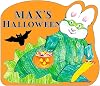
Max and Ruby go trick or treating. To stop Max from eating all the candy as they walk around the neighborhood, Ruby takes charge of the jack-o'-lanterns they're using to gather candy. But like Wile E. Coyote vs. the Roadrunner, Ruby's attempt to curb Max is doomed to fail.
I love Max's gentle mischief. I've enjoyed reading this book to my daughter since she was four, and she enjoyed listening to it even more.
And that cartoon theme song! "Max and Ruby! Ruby and Max!" It's one of my go-to show more earworms. My family has had to endure countless renditions of that catchy composition whenever it comes up in the jukebox buried deep in my brain.
FOR REFERENCE:
Rated "Indifferent" in our old book database by Rod; rated "Good" by Adelia. show less
I love Max's gentle mischief. I've enjoyed reading this book to my daughter since she was four, and she enjoyed listening to it even more.
And that cartoon theme song! "Max and Ruby! Ruby and Max!" It's one of my go-to show more earworms. My family has had to endure countless renditions of that catchy composition whenever it comes up in the jukebox buried deep in my brain.
FOR REFERENCE:
Rated "Indifferent" in our old book database by Rod; rated "Good" by Adelia. show less
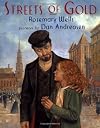
Streets of Gold is a lengthier picture book than most that we see. There is so much detail about Masha's (Mary's) experience and feelings about her original home in Russia and her made home in Boston, USA. Wells is clearly passionate about this story and pulls text from Mary Antin's own book The Promised Land to pair with her description of her physical and emotional voyage. Wells is careful to not over glorify the US. She mentions from Antin's perspective that although she is fascinated show more with and grateful for her new American life, it is not simply a walk in the park. She is working at a grocery while attending school, their home is in a rougher part of town with lots of garbage and opium dens, and that a pair of shoes for her brother are a weeks pay for her father. But equal with these hardships there is opportunity and definitely no secret police. Although this story is set in the 1890s, it is a story of emigration that applies throughout time. Antin's 5,000 mile journey of trains and boats still occur today for people to come to America and I am sure they are frequently treated poorly along the way. The illustrations do a good job giving imagery to the text but is clearly there to illustrate what the touching prose is attempting to give rather than be its own part of the book. As a book about a girl who is a writer, the words are the important part rather than the imagery. show less

"Jack had dinner early, Father played with Kate, Jack needed burping, so Nora had to wait. First she banged the window, Then she slammed the door, Then she dropped her sister's marbles on the kitchen floor." And so begins this amusing tale, told with a rollicking rhythm and rhyme, of a middle child who begins to feel a bit neglected, as her mother concentrates on her baby brother, and her father on her older sister, and who decides that the best way to get attention is to make a lot of show more noise. Nothing she does seems to work, however, until 'Noisy Nora' decides to try something a little different: silence...
Originally published in 1973, with simple artwork in two or three colors, and then reprinted in this 1997 edition, with new, all-color illustrations, Noisy Nora is an immensely engaging, thoroughly readable picture-book, one that would make a fabulous story-hour selection! Middle children will identify with Nora's feeling of neglect - as will most children, really - and sympathize with her determined efforts to gain attention. The ending, in which her family is revealed to be very aware of her after all, is both amusing and reassuring. Thanks, Miriam, for pointing me toward this one! show less
Originally published in 1973, with simple artwork in two or three colors, and then reprinted in this 1997 edition, with new, all-color illustrations, Noisy Nora is an immensely engaging, thoroughly readable picture-book, one that would make a fabulous story-hour selection! Middle children will identify with Nora's feeling of neglect - as will most children, really - and sympathize with her determined efforts to gain attention. The ending, in which her family is revealed to be very aware of her after all, is both amusing and reassuring. Thanks, Miriam, for pointing me toward this one! show less

Much to the disappointment of his parents, Charles Mouse doesn’t like to talk. He doesn’t say, “Thank you” or “Good-bye.” He avoids the phone and he’s perfectly happy playing all by himself. He sleeps through ballet class and isn’t any better at football. Will Charles ever learn to speak up for himself?
Written in rhyme, “Shy Charles” is an interesting look at a very shy, introverted child and his way of coping with the world. Like many parents, Charles’s mother and show more father do not seem to understand that his silence is because of his shyness; they worry that he has no manners [and they are, perhaps, a bit embarrassed]. They worry about how he will get along in the world if he cannot speak up for himself.
But Charles understands much more than his parents realize and when there’s an emergency with the babysitter, he knows exactly what to do. And he does it without hesitation.
Here, in Charles, young readers see that everyone is different and that that’s okay. Young readers who share Charles’s shyness see that there’s nothing wrong with being shy and quiet. And Charles accepts that his parents want him to be involved in things, so he willingly tries whatever they suggest, even ballet and football. But they can’t change his shyness.
Here, young readers see that parents aren’t perfect, they sometimes react badly, they sometimes make mistakes and speak harshly. And the way they speak to their child in this story is terribly upsetting . . . and difficult to defend. But there’s no doubt that they love Charles . . . in their own way, they’re trying to help him fit into the world. When Charles cries, it’s not clear if it’s because of the words his father has spoken or because he feels sad that his father is disappointed in him. There’s a lesson here for parents: perhaps they don’t quite understand their child, but harsh words won’t change anything and, like sticks and stones, they hurt.
Charmingly illustrated, this is a book for young readers and parents to read together and discuss. The message here is that what you say [and how you say it] is important and there’s absolutely nothing wrong with shyness or being different from others. Being yourself is perfectly fine . . . . show less
Written in rhyme, “Shy Charles” is an interesting look at a very shy, introverted child and his way of coping with the world. Like many parents, Charles’s mother and show more father do not seem to understand that his silence is because of his shyness; they worry that he has no manners [and they are, perhaps, a bit embarrassed]. They worry about how he will get along in the world if he cannot speak up for himself.
But Charles understands much more than his parents realize and when there’s an emergency with the babysitter, he knows exactly what to do. And he does it without hesitation.
Here, in Charles, young readers see that everyone is different and that that’s okay. Young readers who share Charles’s shyness see that there’s nothing wrong with being shy and quiet. And Charles accepts that his parents want him to be involved in things, so he willingly tries whatever they suggest, even ballet and football. But they can’t change his shyness.
Here, young readers see that parents aren’t perfect, they sometimes react badly, they sometimes make mistakes and speak harshly. And the way they speak to their child in this story is terribly upsetting . . . and difficult to defend. But there’s no doubt that they love Charles . . . in their own way, they’re trying to help him fit into the world. When Charles cries, it’s not clear if it’s because of the words his father has spoken or because he feels sad that his father is disappointed in him. There’s a lesson here for parents: perhaps they don’t quite understand their child, but harsh words won’t change anything and, like sticks and stones, they hurt.
Charmingly illustrated, this is a book for young readers and parents to read together and discuss. The message here is that what you say [and how you say it] is important and there’s absolutely nothing wrong with shyness or being different from others. Being yourself is perfectly fine . . . . show less
Lists
Five star books (1)
FAB Pilot Books (1)
Five in a Row (1)
1980s (1)
Sonlight Books (2)
Christmas Books (3)
Best Dog Stories (2)
Five in a Row (1)
Letters (1)
Female Author (1)
Awards


You May Also Like


Associated Authors
Statistics
- Works
- 264
- Also by
- 20
- Members
- 36,467
- Popularity
- #504
- Rating
- 3.8
- Reviews
- 929
- ISBNs
- 1,499
- Languages
- 15
- Favorited
- 2
