

Jørgen Engebretsen Moe (1813–1882)
Author of East of the Sun and West of the Moon: Old Tales from the North
About the Author
Image credit: Portrait of Jørgen Moe. Woodcut print made by Adolf Closs, Stuttgart after a photo by Fr. Klem, Christiania (Oslo). From Norske folke og huldre-eventyr i udvalg ved P. Chr. Asbjørnsen. Andet oplag 1896. Gyldendalske Boghandels Forlag, Kjøbenhavn / Wikimedia Commons
Works by Jørgen Engebretsen Moe
East of the Sun and West of the Moon: Old Tales from the North (1977) — Author — 880 copies, 7 reviews
The Complete and Original Norwegian Folktales of Asbjørnsen and Moe (2019) — Author — 89 copies, 1 review
Dikt og prosa 2 copies
Why the Bear Is Stumpy-Tailed 2 copies
The Fox as Herdsman 1 copy
Damms leseunivers 2 Nivå 6 Opplevelse Høna som skulle til Dovrefjell for at ikke all verden skulle forgå (2008) 1 copy
Sange, Folkeviser og Stev 1 copy
Fiabe norvegesi 1 copy
Associated Works
Beauty and the Beast: Classic Tales About Animal Brides and Grooms from Around the World (2017) — Contributor — 133 copies, 2 reviews
A Very Scandinavian Christmas: The Greatest Nordic Holiday Stories of All Time (2019) — Contributor — 25 copies, 1 review
Tagged
Common Knowledge
- Canonical name
- Moe, Jørgen Engebretsen
- Legal name
- Moe, Jørgen Engebretsen
- Birthdate
- 1813-04-22
- Date of death
- 1882-03-27
- Gender
- male
- Education
- Artiumsfagene, Norderhov, Norway
Det norske militære Institutt, Christiania, Norway - Occupations
- bishop
fairytale collector
poet - Awards and honors
- Knight of the Order of St. Olav (1873)
Commander of the 1st cross class (1881) - Relationships
- Asbjørnsen, Peter Christen (collaborator)
Moe, Moltke (Son) - Nationality
- Norway
- Birthplace
- Mo, Hole, Ringerike, Norway
- Places of residence
- Mo, Hole, Ringerike, Norway
Krødsherad, Norway
Bragernes, Drammen, Norway
Christiania, Norway
Kristiansand, Norway - Place of death
- Kristiansand, Norway
- Burial location
- Vestre Aker kirkegård, Oslo, Norway
- Associated Place (for map)
- Norway
Members
Reviews

Originally published in Asbjørnsen and Moe's nineteenth century collection of Norwegian folktales, this humorous story - Mannen som skulle stelle hjemme in the original - follows the trials and tribulations of a bad-tempered husband, whose criticism of his wife's housekeeping results in a day of swapped duties. Convinced that he can get more work done in the house, the husband stays home for the day, letting his wife take over his job in the fields. But a series of hilarious mistakes - each show more one compounding the previous - leads him into a very sticky mess. Luckily, his wife comes home in time to set things to rights...
I have always enjoyed this gender-bender folktale from Norway, appreciating its affirmation of the worth - and difficulty - of women's work, and its cautionary lesson about criticizing others. I imagine that some might read it as a reinforcement of traditional gender roles, with the woman belonging in the home, and the man out in the world, but I myself am always struck by the fact that although the husband has such difficulties performing his wife's tasks, she encounters none in doing his. That fact gives this tale a particularly subversive quality, in my eyes, turning it into a fascinating social commentary, not only on the devaluing of "women's" work, but on the very real difficulties that can emerge, if men are ignorant of how that work is done.
Young readers, of course, will probably not be interested in the social ramifications of The Man Who Kept House, and in a culture in which many domestic duties are now shared (to a greater or lesser extent), one wonders how this tale would be perceived. Still, the humor of this story shines through, and the illustrations by Svend Otto S. are quite appealing. Norwegian folklore enthusiasts will surely want to take a look at this one! show less
I have always enjoyed this gender-bender folktale from Norway, appreciating its affirmation of the worth - and difficulty - of women's work, and its cautionary lesson about criticizing others. I imagine that some might read it as a reinforcement of traditional gender roles, with the woman belonging in the home, and the man out in the world, but I myself am always struck by the fact that although the husband has such difficulties performing his wife's tasks, she encounters none in doing his. That fact gives this tale a particularly subversive quality, in my eyes, turning it into a fascinating social commentary, not only on the devaluing of "women's" work, but on the very real difficulties that can emerge, if men are ignorant of how that work is done.
Young readers, of course, will probably not be interested in the social ramifications of The Man Who Kept House, and in a culture in which many domestic duties are now shared (to a greater or lesser extent), one wonders how this tale would be perceived. Still, the humor of this story shines through, and the illustrations by Svend Otto S. are quite appealing. Norwegian folklore enthusiasts will surely want to take a look at this one! show less
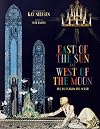
This gorgeous edition of Norwegian folktales as illustrated by Kay Nielsen might be an absolute shoe in for my top books of the year list. Taschen’s art publications are always of high quality, but they surpassed themselves with this lush reprint. Nielsen’s illustrations are showcased alongside their accompanying stories wonderfully and the introductory essays provide some much appreciated context on the importance of Asbjørnsen and Moe’s work to collect and chronicle the folktales of show more Norway, so it is easy to see how this book was a smash hit when it was first published and why Taschen chose to reimagine it for the modern market. What I liked most about this book (besides the illustrations and quality of publication, of course) is the fact that the stories are actually readable. Many collections of this sort either cater to a child audience or become too academic in their transcription, in addition to collecting too many stories of the same sort which quickly becomes tedious to read in any attempt to read the collection cover to cover, but each story stands well alone and is easily accessible by readers of any age. My only small complaint is that Taschen chose to have captions for the images taken straight from the text of the stories, which I felt was alternatingly pointless (readers can either easily identify the match between image and text, or the specific image can apply to many parts of the story) and a wasted opportunity to provide more context and commentary extraneous to the text of the stories. show less

It does always annoy me when storytellers don't highlight how clever the goats are being when they convince the troll to let the first two goats pass over the bridge. This retelling says the little and middle goats are afraid and basically beg the troll to eat their big brother. No honor among goats, I guess. The story is so much more fun when you realize they're tricking the troll into facing the one opponent who can beat him. Bah.

A pancake jumps out of the pan and rolls away in order to escape being eaten in this traditional Norwegian tale, collected by Peter Christen Asbjørnsen and Jørgen Engebretsen Moe—the Brothers Grimm of Norway. Encountering any number of creatures along the way, each of which wish him to stop and allow them to eat him, the pancake trundles on, until it meets a very clever pig...
The tale type in which a runaway pastry eludes many would-be pursuers, only to fall victim to a clever foe in the show more end, is quite widespread. In Russia and other Slavic countries there is the story of Kolobok, a little bun that runs aways from its creators, and is eventually eaten by a fox. Retold by Marcia Brown in her The Bun: A Tale from Russia, the story can also be found in Irina Zheleznova's Ukrainian Folk Tales, where it is known as The Little Round Bun. A German variant can be found in Carl and Theodor Colshorn's Märchen und Sagen aus Hannover, while the Euro-American version from New England, perhaps best known to American children, is The Gingerbread Man.
In any case, this Norwegian variant, originally known as Pannekaken, was collected by Asbjørnsen and Moe in their 1871 Norske Folke-Eventyr. Ny Samling ("Norwegian Folktales. New Collection"). The story is humorous and enjoyable, making good use of it repetitive structure and expanding refrain, both in the growing list of compliments paid to the mother by her hungry children, as she is making the pancake, and by the pancake itself as it refuses each animal's request that he stop and allow himself to be eaten. This presentation of the tale, illustrated by Svend Otto S., who also illustrated Asbjørnsen and Moe's The Man Who Kept House, was originally published in Denmark in 1980. Recommended to young folklore enthusiasts, particularly those familiar with other variants of this tale type. show less
The tale type in which a runaway pastry eludes many would-be pursuers, only to fall victim to a clever foe in the show more end, is quite widespread. In Russia and other Slavic countries there is the story of Kolobok, a little bun that runs aways from its creators, and is eventually eaten by a fox. Retold by Marcia Brown in her The Bun: A Tale from Russia, the story can also be found in Irina Zheleznova's Ukrainian Folk Tales, where it is known as The Little Round Bun. A German variant can be found in Carl and Theodor Colshorn's Märchen und Sagen aus Hannover, while the Euro-American version from New England, perhaps best known to American children, is The Gingerbread Man.
In any case, this Norwegian variant, originally known as Pannekaken, was collected by Asbjørnsen and Moe in their 1871 Norske Folke-Eventyr. Ny Samling ("Norwegian Folktales. New Collection"). The story is humorous and enjoyable, making good use of it repetitive structure and expanding refrain, both in the growing list of compliments paid to the mother by her hungry children, as she is making the pancake, and by the pancake itself as it refuses each animal's request that he stop and allow himself to be eaten. This presentation of the tale, illustrated by Svend Otto S., who also illustrated Asbjørnsen and Moe's The Man Who Kept House, was originally published in Denmark in 1980. Recommended to young folklore enthusiasts, particularly those familiar with other variants of this tale type. show less
Lists
Awards

You May Also Like
Associated Authors
Statistics
- Works
- 39
- Also by
- 16
- Members
- 2,811
- Popularity
- #9,133
- Rating
- 4.0
- Reviews
- 28
- ISBNs
- 158
- Languages
- 13