
Robert Dawson (1) (1950–)
Author of The Public Library: A Photographic Essay
For other authors named Robert Dawson, see the disambiguation page.
Works by Robert Dawson
Tagged
Common Knowledge
- Birthdate
- 1950
- Gender
- male
- Education
- University of California, Santa Cruz (BA)
San Francisco State University (MA) - Birthplace
- Sacramento, California, USA
- Associated Place (for map)
- California, USA
Members
Reviews
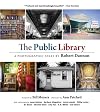
This book was aiming high and I loved the general scope it presented, as well as the message it is putting out about the importance of the public library as a national institution. As a Library & Information Science student and lifelong patron of my local libraries, the premise and ideals of this book speak to me greatly.
However, there are a few things that I don't think this book does well. For one, there is a glaring point I saw within the author's introduction that I found rather show more unsettling as far as the linguistic presentation. The author mentions some of the difficulties faced during the journey to complete this book, listing some confrontations he has faced:
As a literature degree holder, a writer and an educated Southwesterner, I can't help but say something about this, due to my knowledge of the region I live in: its history and people.
The author lists bad experiences he has had, then immediately brings up that he still believes in "basic decency of most Americans", thereby implying that the previously mentioned situations were examples of indecency, due to their juxtaposition. I can agree with that for being punched and yelled at, but then he includes an experience on a reservation. I am by no means a Native American, and I will never pretend to be, and never will be unless I do genealogy tests (which reveal the necessary genealogical percentage of blood relevance) and go through any process of tribe acceptance/incorporation, as is required to be considered Native American. However, being a young curious person who lives in the Southwest and being fascinated by all the history and varied culture around me, I made it a point in my undergraduate career to take anthropology courses. This included a course of Native Americans of the Southwest, in which we learned about some of the history, rituals, culture, and social challenges being faced by some tribes. During this course we learned about the Tarahumara, the Apache, and several others. Distinctly I remember learning how different some tribes' interaction and socialization beliefs and customs are from the standard American's approach. It is often the case that materials, even of a research nature done by anthropologists, MUST be reviewed and approved by official leaders of certain tribes. Certain recording methods are simply NOT allowed and sometimes certain rituals or customs cannot be documented. Sometimes you can take field notes, AFTER rituals but not during, and other times you cannot make any notations at all. Sometimes you can take photographs, sometimes there are limitations to what you can photograph, and sometimes you CANNOT take photographs at all. This varies by tribe and circumstance, to my current understanding. Was it indecent of the tribe to possibly disallow photography on their reservation for this project? NO. For all the photographer knew, the library could have some holy elements that should not be photographed, or have a holy site too near in view that is not allowed to be photographed, or it could be about how such materials would portray the tribe itself, amongst any other possible reasons I do not currently know of. It is highly selfish and awful for the author to have mentioned this particular episode in this way, comparing it to indecent behavior and "basic decency". If you're interacting with tribes and reservations you need to know THEIR rules and THEIR customs at least a little, or be willing to learn as you go, very openly and respectfully, accepting that the outcome may not be the one you desired going in. The author's son does a MUCH better job of discussing what happened in this scenario in his conclusion at the back, but to partially open up the book this way is just sad and disheartening. Just because you believe your mission and purpose of a project is noble, does not mean you can impose that desire upon other people who have different rules in place and who should be properly respected. Additionally, just because you lose a little bit of film for one collective area, or for any reservation, doesn't mean you're suffering that large of a loss. Having film confiscated that is focused on the reservation, would not have meant the END of the project or a failure to show America's libraries. It is one set out of many and would that have been the outcome, the tribe and their rights should be respected nonetheless, even if you disagree. They have the right to make that call regardless of what your mission or purpose is, no matter how important or righteous.
I had no other societal indignation issues with this book apart from the detail elaborately discussed above. I do think that some of these communities should have been represented better, since some of these cities have other facilities that are doing well even though all that is shown within the book for them are closed libraries or ones in disrepair. It provides a good comparison to more elaborate and established libraries, but overall ends up painting only HALF of the picture. My community was well represented, which I was very happy to see, but at the same time, general demographic tidbits do not truly show the heart of what libraries are. The essays do an amazing job of providing this component, but a lot of the images fail to truly show the magic of libraries. I enjoyed the variety, but can think of some examples or approaches that may have been more beneficial and fulfilling. I know it takes time and resources, but I do think more could have been done here. I think more varied interiors of spaces would've been better, but filled with the daily exchange of ideas within libraries, not just artwork/architecture only shots or well lit designated spaces (like a coffee shop with a solitary person). While this tells the story of some libraries, what about showing actual librarians at work with their permission? Or showcasing some of the archives or children's areas at some libraries? These are some of the most used, imaginative, and purposeful spaces in libraries, and we only really get a bunch of exteriors, and sometimes not even the most intriguing parts of them. We get backs that make them look lifeless and rundown, instead of the spark of life fighting within it.
This is just my two cents. I still loved the passion behind the book and a lot of the shots, but I think there was room for more to be said and depicted here. Also, in a book that highlights diversity, you should take extra note to be sure the populations you are presenting are being treated with appropriate literary representation and respect, not being treated as examples of indecency due to a lack of cultural awareness and empathy on your own part. show less
However, there are a few things that I don't think this book does well. For one, there is a glaring point I saw within the author's introduction that I found rather show more unsettling as far as the linguistic presentation. The author mentions some of the difficulties faced during the journey to complete this book, listing some confrontations he has faced:
Over the course of this project, I have been socked in the jaw by a crazed man in Braddock, Pennsylvania; screamed at by a homeless woman in Duluth, Minnesota; almost had my film confiscated on an Indian reservation in Colorado; and eyed suspiciously throughout the country. Despite all, this project has only reinforced my belief in the basic decency of most Americans. p. 11
As a literature degree holder, a writer and an educated Southwesterner, I can't help but say something about this, due to my knowledge of the region I live in: its history and people.
The author lists bad experiences he has had, then immediately brings up that he still believes in "basic decency of most Americans", thereby implying that the previously mentioned situations were examples of indecency, due to their juxtaposition. I can agree with that for being punched and yelled at, but then he includes an experience on a reservation. I am by no means a Native American, and I will never pretend to be, and never will be unless I do genealogy tests (which reveal the necessary genealogical percentage of blood relevance) and go through any process of tribe acceptance/incorporation, as is required to be considered Native American. However, being a young curious person who lives in the Southwest and being fascinated by all the history and varied culture around me, I made it a point in my undergraduate career to take anthropology courses. This included a course of Native Americans of the Southwest, in which we learned about some of the history, rituals, culture, and social challenges being faced by some tribes. During this course we learned about the Tarahumara, the Apache, and several others. Distinctly I remember learning how different some tribes' interaction and socialization beliefs and customs are from the standard American's approach. It is often the case that materials, even of a research nature done by anthropologists, MUST be reviewed and approved by official leaders of certain tribes. Certain recording methods are simply NOT allowed and sometimes certain rituals or customs cannot be documented. Sometimes you can take field notes, AFTER rituals but not during, and other times you cannot make any notations at all. Sometimes you can take photographs, sometimes there are limitations to what you can photograph, and sometimes you CANNOT take photographs at all. This varies by tribe and circumstance, to my current understanding. Was it indecent of the tribe to possibly disallow photography on their reservation for this project? NO. For all the photographer knew, the library could have some holy elements that should not be photographed, or have a holy site too near in view that is not allowed to be photographed, or it could be about how such materials would portray the tribe itself, amongst any other possible reasons I do not currently know of. It is highly selfish and awful for the author to have mentioned this particular episode in this way, comparing it to indecent behavior and "basic decency". If you're interacting with tribes and reservations you need to know THEIR rules and THEIR customs at least a little, or be willing to learn as you go, very openly and respectfully, accepting that the outcome may not be the one you desired going in. The author's son does a MUCH better job of discussing what happened in this scenario in his conclusion at the back, but to partially open up the book this way is just sad and disheartening. Just because you believe your mission and purpose of a project is noble, does not mean you can impose that desire upon other people who have different rules in place and who should be properly respected. Additionally, just because you lose a little bit of film for one collective area, or for any reservation, doesn't mean you're suffering that large of a loss. Having film confiscated that is focused on the reservation, would not have meant the END of the project or a failure to show America's libraries. It is one set out of many and would that have been the outcome, the tribe and their rights should be respected nonetheless, even if you disagree. They have the right to make that call regardless of what your mission or purpose is, no matter how important or righteous.
I had no other societal indignation issues with this book apart from the detail elaborately discussed above. I do think that some of these communities should have been represented better, since some of these cities have other facilities that are doing well even though all that is shown within the book for them are closed libraries or ones in disrepair. It provides a good comparison to more elaborate and established libraries, but overall ends up painting only HALF of the picture. My community was well represented, which I was very happy to see, but at the same time, general demographic tidbits do not truly show the heart of what libraries are. The essays do an amazing job of providing this component, but a lot of the images fail to truly show the magic of libraries. I enjoyed the variety, but can think of some examples or approaches that may have been more beneficial and fulfilling. I know it takes time and resources, but I do think more could have been done here. I think more varied interiors of spaces would've been better, but filled with the daily exchange of ideas within libraries, not just artwork/architecture only shots or well lit designated spaces (like a coffee shop with a solitary person). While this tells the story of some libraries, what about showing actual librarians at work with their permission? Or showcasing some of the archives or children's areas at some libraries? These are some of the most used, imaginative, and purposeful spaces in libraries, and we only really get a bunch of exteriors, and sometimes not even the most intriguing parts of them. We get backs that make them look lifeless and rundown, instead of the spark of life fighting within it.
This is just my two cents. I still loved the passion behind the book and a lot of the shots, but I think there was room for more to be said and depicted here. Also, in a book that highlights diversity, you should take extra note to be sure the populations you are presenting are being treated with appropriate literary representation and respect, not being treated as examples of indecency due to a lack of cultural awareness and empathy on your own part. show less
I readily admit that I’m a library geek. When I go on vacation I visit libraries. I also collect books about libraries, primarily photo essays. So, of course I’d end up reading The Public Library: A Photographic Essay by Robert Dawson. Over a decade in the making, this book has photos of public libraries, big and small, fancy and plain. Some are Carnegie libraries. Some are shopping mall libraries. Some libraries were once gas stations or prisons or churches. One was even a bank and in show more the vault they show movies. Some are log cabins. There’s a seed library and a tool library. Some had air conditioning and some didn’t. Not every library is as well stocked as the suburban libraries that we’re familiar with. One library was founded by a widow, using the books her husband had.
This is an eye-opening and moving book. The captions explain the libraries, and mention those that have closed after having been photographed. There are way too many of these. There are essays by writers such as Barbara Kingsolver, Amy Tan and Ann Patchett examining what libraries mean to them and what the closing of libraries means, as well. There’s an essay from a Bookomobile driver explaining the satisfaction he gets from putting books in the hands of children and adults alike.
I remember going to Freeport, Maine one year to go to L.L. Bean. Walking down the main street I noticed that what once was the local public library was currently an Ann Taylor store. How disappointing!!!
In this economic climate, many libraries are shortening hours and are on the brink of closing. I marveled at the citizens who banded together to make sure their public libraries remain open.
The Public Library: A Photographic Essay is a marvelous book and I highly recommend it to library lovers and book lovers. show less
This is an eye-opening and moving book. The captions explain the libraries, and mention those that have closed after having been photographed. There are way too many of these. There are essays by writers such as Barbara Kingsolver, Amy Tan and Ann Patchett examining what libraries mean to them and what the closing of libraries means, as well. There’s an essay from a Bookomobile driver explaining the satisfaction he gets from putting books in the hands of children and adults alike.
I remember going to Freeport, Maine one year to go to L.L. Bean. Walking down the main street I noticed that what once was the local public library was currently an Ann Taylor store. How disappointing!!!
In this economic climate, many libraries are shortening hours and are on the brink of closing. I marveled at the citizens who banded together to make sure their public libraries remain open.
The Public Library: A Photographic Essay is a marvelous book and I highly recommend it to library lovers and book lovers. show less
Rural Nevada (I live in Carson City, part of the rural NV consortium) well-represented... because ordinary successful libraries don't interest Dawson. He focused on the under-funded, the tiny, the closed... and I came away from this book so depressed. Then I went online and plugged in a bunch of random small towns and found a bunch of happy libraries.
Yes, do pay attention. Do make sure that you do your bit to save your local library. But don't cry wolf just because the library in a boomtown show more that went bust is closed - if there are no patrons, there need not be a library! (Jeffrey City Wyoming).
I didn't find the pictures all that meaningful, either. Again, Dawson went out of his way to make the struggling libraries look bleak, and the city libraries look like they're filled with obsolete art treasures and homeless patrons but never mind ordinary people choosing books.
I'm sorry, but it's pretty sad when a book like this fails in preaching to the converted.
I am glad to see the note Isaac Asimov sent in response to a grand-opening request:
"Dear Boys and Girls,
Congratulations on the new library, because it isn't just a library. It is a space ship that will take you to the farthest reaches of the Universe, a time machine that will take you to the far past and the far future, a teacher that knows more than any human being, a friend that will amuse you and console you... and most of all, a gateway to a better and happier and more useful life." show less
Yes, do pay attention. Do make sure that you do your bit to save your local library. But don't cry wolf just because the library in a boomtown show more that went bust is closed - if there are no patrons, there need not be a library! (Jeffrey City Wyoming).
I didn't find the pictures all that meaningful, either. Again, Dawson went out of his way to make the struggling libraries look bleak, and the city libraries look like they're filled with obsolete art treasures and homeless patrons but never mind ordinary people choosing books.
I'm sorry, but it's pretty sad when a book like this fails in preaching to the converted.
I am glad to see the note Isaac Asimov sent in response to a grand-opening request:
"Dear Boys and Girls,
Congratulations on the new library, because it isn't just a library. It is a space ship that will take you to the farthest reaches of the Universe, a time machine that will take you to the far past and the far future, a teacher that knows more than any human being, a friend that will amuse you and console you... and most of all, a gateway to a better and happier and more useful life." show less
3.5 stars. I was expecting a glossy, glamorous coffee-table type of book. There are some pretty photos here but this is more of a social-issue book, eulogizing shuttered libraries and foregrounding the danger to the remaining ones. It’s good, just different from what I expected.
You May Also Like


Statistics
- Works
- 6
- Members
- 417
- Popularity
- #58,442
- Rating
- 4.2
- Reviews
- 14
- ISBNs
- 28