
Christoph Wolff
Author of Johann Sebastian Bach: The Learned Musician
About the Author
He is a William Powell Mason Professor of Music at Harvard University, is coauthor of the Bach Compendium. (Bowker Author Biography)
Works by Christoph Wolff
The New Bach Reader: A Life of Johann Sebastian Bach in Letters and Documents (1998) — Editor — 172 copies
Mozart's Requiem : Historical and Analytical Studies : Documents : Score (1991) — Author — 36 copies
The String Quartets of Haydn, Mozart, and Beethoven: Studies of the Autograph Manuscripts (Isham Library Papers) (1981) 9 copies
Die Welt der Bach-Kantaten, 3 Bde., Bd.1, Johann Sebastian Bachs geistliche Kantaten von Arnstadt bis Köthen (1996) 4 copies
Associated Works
Mozart : Requiem in D minor, K.626 {Süßmayr completion} [score : vocal] (1965) — Foreword, some editions — 43 copies
Tagged
Common Knowledge
- Canonical name
- Wolff, Christoph
- Birthdate
- 1940-05-24
- Gender
- male
- Occupations
- Musikwissenschaftler
- Nationality
- Germany
- Birthplace
- Solingen, Nordrhein-Westfalen, Deutschland
- Associated Place (for map)
- Germany
Members
Reviews
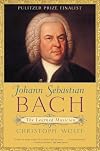
A magnificent biography of one of the towering figures in classical music. Bach inspires me as he does so many and this biography is inspirational in its own way. It provides details that challenge the reader and yet, heeding this challenge pays off through the intensity of those details and the resulting increase in one's knowledge of Bach's life and music and its influence on subsequent musical development.
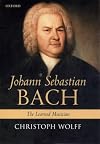
Eminently readable and undeniably authoritative biography of an incredible musician.
Wolff makes it clear from the outset that the sources for Bach's life are far for complete, but he manages to create a detailed view of the life and times of Bach and his (enormous) family.
The book is very well written and I enjoyed the insights that it provides.
Wolff makes it clear from the outset that the sources for Bach's life are far for complete, but he manages to create a detailed view of the life and times of Bach and his (enormous) family.
The book is very well written and I enjoyed the insights that it provides.
As Shakespeare was to literature or Newton was to Physics, Bach was to music - all three were figures of the 17th century who redefined and transcended the bounds of their contemporaries, and set up foundations on which so much is based. Although some of things they use have fallen out of practice, their contribution cannot be denied or erased.
And like Shakespeare, we don't know very much about the man himself. Of course there are libraries filled with their works and analyses of them alone, show more but only a few bare facts which leave us to speculate on the origins of genius. The largest extant contemporary source we have on Bach's life was his obituary, written by his son.
Wolff does his best to fill in the missing details, with information on the towns he stayed, his pay, the history of German states, and - the best part - musical analysis. I recommend sitting next to your computer with Youtube and listening along to the relevant parts.
http://www.youtube.com/watch?v=1atQFLYbzuk
For example, the Passacaglia and Fugue. This is 20 variations of the same theme seen in the first few measures. Try and pick them out, it's fun!
In several fields, Bach expanded and completely transformed what came before him. He studied contemporary music exhaustively - Monteverdi, Pachelbel, Lully, Buxteheude - and outshone them all. Chorales, suites, organ works, Masses, the Passions of St. Matthew and St. John, Oratorios for Christmas and Easter. The Art of Fugue, an enormously complex and self-referencing work, used in the modern mathematics text Godel, Escher, Bach, was done in his spare time.
He made counterpoint and harmony and voice interact in ways which none had before, and few have since.
And yet he was only human. He ran several businesses and taught, and when we worked as a church organist for a time, he composed a chorale -EVERY WEEK- for the Sunday services. It is assumed that he wrote several cycles of these, a portion of which are lost. One of his few surviving letters is an angry complaint for a man to return his rented harpsichord, and a line from a secular Cantata that reads, "Without my coffee, I am a goat." But he was intensely religious, and there was something of the divine in him. Music is the highest form of worship, says he. His religious works make one believe in the beauty and form of the world and nature, if but for a moment.
Of the man, we can barely know anything. Of the works, we will never know everything. show less
And like Shakespeare, we don't know very much about the man himself. Of course there are libraries filled with their works and analyses of them alone, show more but only a few bare facts which leave us to speculate on the origins of genius. The largest extant contemporary source we have on Bach's life was his obituary, written by his son.
Wolff does his best to fill in the missing details, with information on the towns he stayed, his pay, the history of German states, and - the best part - musical analysis. I recommend sitting next to your computer with Youtube and listening along to the relevant parts.
http://www.youtube.com/watch?v=1atQFLYbzuk
For example, the Passacaglia and Fugue. This is 20 variations of the same theme seen in the first few measures. Try and pick them out, it's fun!
In several fields, Bach expanded and completely transformed what came before him. He studied contemporary music exhaustively - Monteverdi, Pachelbel, Lully, Buxteheude - and outshone them all. Chorales, suites, organ works, Masses, the Passions of St. Matthew and St. John, Oratorios for Christmas and Easter. The Art of Fugue, an enormously complex and self-referencing work, used in the modern mathematics text Godel, Escher, Bach, was done in his spare time.
He made counterpoint and harmony and voice interact in ways which none had before, and few have since.
And yet he was only human. He ran several businesses and taught, and when we worked as a church organist for a time, he composed a chorale -EVERY WEEK- for the Sunday services. It is assumed that he wrote several cycles of these, a portion of which are lost. One of his few surviving letters is an angry complaint for a man to return his rented harpsichord, and a line from a secular Cantata that reads, "Without my coffee, I am a goat." But he was intensely religious, and there was something of the divine in him. Music is the highest form of worship, says he. His religious works make one believe in the beauty and form of the world and nature, if but for a moment.
Of the man, we can barely know anything. Of the works, we will never know everything. show less
The aim and final end of all music should be none other than the glory of God and the refreshment of the soul.
-- Johann Sebastian Bach
Writing about Russian icons, Leonid Ouspensky observed evocatively that “Byzantium was preeminent in giving the world theology expressed in words [and] theology expressed in the image was given preeminently by Russia.” Whether or not one agrees with this view, the idea that Christian theology found perfect pictorial expression in one form of painting show more leads one naturally to consider music. In what music does theology find unsurpassed expression? For many Christian listeners, the answer to this question must be Johann Sebastian Bach (1685-1750).
While Christoph Wolff in no way attempts to deemphasize the role of faith in Bach’s work, he clearly views Bach the composer as being also a scientist and even metaphysician. For Wolff, Bach is most usefully compared with Isaac Newton (1643-1710). Wolff does not belabor the point, but emphasizes that the work of both Newton and Bach was ultimately a search for truth, for the “operations of God.”
Wolff is perhaps the greatest living authority on the music of Bach, so his full length biography of the composer was greatly anticipated by musicologists and music lovers. Johann Sebastian Bach: The Learned Musician is a demanding work because Wolff explicates Bach’s life and his music, on the musicological, theological, and philosophical levels. Wolff, who published his first book on Bach in 1968, clearly reveres his subject and writes movingly about the details of Bach’s life. Wolff describes a devoted husband and father directly involved in his children’s upbringing. Music was the Bach family business, and all of Bach’s pedagogical works (e.g. the keyboard Inventions and Symphonias) were first written for the instruction of his children in playing and composition.
In his analyses of the church music, Wolff can be illuminating about the theology that underpins Bach’s musical thought. For example in the chapter on the St. Matthew Passion, Wolff shows how in the opening chorus, “Come, you daughters, help me lament,” music and text are perfectly united to connect the Passion of Christ with the vision in the Apocalypse of the of the eternal Jerusalem, whose ruler is the Lamb, evoked in the chorus by words “O innocent Lamb of God.”
Despite Wolff’s appreciation for the theological content in Bach’s music, his primary interest is in Bach’s contributions in the science and art of learned music. In the book’s prologue, Wolff lists some of Bach’s achievements along with a representative composition:
Fugue and canon (The Art of Fugue)
Major-minor tonality (The Well-Tempered Clavier)
Harmonic Expansion (the Chromatic Fantasy and Fugue)
Extended polyphony (the unaccompanied violin, cello, and flute pieces)
Instrumentation (the Brandenburg Concertos)
Small-scale form (the Orgel-Büchlein) and large-scale forms (the St. Matthew Passion)
Style and compositional technique, from retrospective to modern (the B-minor Mass)
Musical affect and meaning (the church cantatas)
Since the central argument of Wolff’s book is that Bach cannot be fully appreciated as merely a composer, but must also be understood as a scientist or philosopher (in the pre-Enlightenment meaning of those words), it is curious to me that he does not place Bach in the context of Medieval and Renaissance composers for whom it was understood that music is a form of mathematics. The idea that musical composition and science are related would certainly not have been new to the composers of the Notre Dame School, Ockeghem, or Josquin Desprez. Bach himself owned editions of Palestrina (c. 1525-1594), probably the earliest composer to whose music Bach would have had access. He also composed a set of unaccompanied sacred choral works to which he assigned the archaic nomenclature motets. Even more important in this regard is Bach’s interest in his late years in strict canon (e.g. the Goldberg Variations, the Musical Offering, The Art of Fugue). Bach must have understood himself (as no doubt Wolff does as well) as being part of a very old tradition of musical-mathematical investigation, but Wolff does inquire into this area.
The contribution of Bach to music and Western culture is of course too huge to be covered in a single volume (Philipp Spitta, writing in the nineteenth century, required three volumes to tell Bach’s story), so any biographer not wishing to produce an encyclopedia-length work is faced with the agony of selection. In Wolff’s biography, we are fortunate to have the selections of one of the greatest scholars of the most learned musician.
Published in Regent University Library Link, March 2008 (http://www.regent.edu/lib/news-archives/2008_03.cfm#6) show less
-- Johann Sebastian Bach
Writing about Russian icons, Leonid Ouspensky observed evocatively that “Byzantium was preeminent in giving the world theology expressed in words [and] theology expressed in the image was given preeminently by Russia.” Whether or not one agrees with this view, the idea that Christian theology found perfect pictorial expression in one form of painting show more leads one naturally to consider music. In what music does theology find unsurpassed expression? For many Christian listeners, the answer to this question must be Johann Sebastian Bach (1685-1750).
While Christoph Wolff in no way attempts to deemphasize the role of faith in Bach’s work, he clearly views Bach the composer as being also a scientist and even metaphysician. For Wolff, Bach is most usefully compared with Isaac Newton (1643-1710). Wolff does not belabor the point, but emphasizes that the work of both Newton and Bach was ultimately a search for truth, for the “operations of God.”
Wolff is perhaps the greatest living authority on the music of Bach, so his full length biography of the composer was greatly anticipated by musicologists and music lovers. Johann Sebastian Bach: The Learned Musician is a demanding work because Wolff explicates Bach’s life and his music, on the musicological, theological, and philosophical levels. Wolff, who published his first book on Bach in 1968, clearly reveres his subject and writes movingly about the details of Bach’s life. Wolff describes a devoted husband and father directly involved in his children’s upbringing. Music was the Bach family business, and all of Bach’s pedagogical works (e.g. the keyboard Inventions and Symphonias) were first written for the instruction of his children in playing and composition.
In his analyses of the church music, Wolff can be illuminating about the theology that underpins Bach’s musical thought. For example in the chapter on the St. Matthew Passion, Wolff shows how in the opening chorus, “Come, you daughters, help me lament,” music and text are perfectly united to connect the Passion of Christ with the vision in the Apocalypse of the of the eternal Jerusalem, whose ruler is the Lamb, evoked in the chorus by words “O innocent Lamb of God.”
Despite Wolff’s appreciation for the theological content in Bach’s music, his primary interest is in Bach’s contributions in the science and art of learned music. In the book’s prologue, Wolff lists some of Bach’s achievements along with a representative composition:
Fugue and canon (The Art of Fugue)
Major-minor tonality (The Well-Tempered Clavier)
Harmonic Expansion (the Chromatic Fantasy and Fugue)
Extended polyphony (the unaccompanied violin, cello, and flute pieces)
Instrumentation (the Brandenburg Concertos)
Small-scale form (the Orgel-Büchlein) and large-scale forms (the St. Matthew Passion)
Style and compositional technique, from retrospective to modern (the B-minor Mass)
Musical affect and meaning (the church cantatas)
Since the central argument of Wolff’s book is that Bach cannot be fully appreciated as merely a composer, but must also be understood as a scientist or philosopher (in the pre-Enlightenment meaning of those words), it is curious to me that he does not place Bach in the context of Medieval and Renaissance composers for whom it was understood that music is a form of mathematics. The idea that musical composition and science are related would certainly not have been new to the composers of the Notre Dame School, Ockeghem, or Josquin Desprez. Bach himself owned editions of Palestrina (c. 1525-1594), probably the earliest composer to whose music Bach would have had access. He also composed a set of unaccompanied sacred choral works to which he assigned the archaic nomenclature motets. Even more important in this regard is Bach’s interest in his late years in strict canon (e.g. the Goldberg Variations, the Musical Offering, The Art of Fugue). Bach must have understood himself (as no doubt Wolff does as well) as being part of a very old tradition of musical-mathematical investigation, but Wolff does inquire into this area.
The contribution of Bach to music and Western culture is of course too huge to be covered in a single volume (Philipp Spitta, writing in the nineteenth century, required three volumes to tell Bach’s story), so any biographer not wishing to produce an encyclopedia-length work is faced with the agony of selection. In Wolff’s biography, we are fortunate to have the selections of one of the greatest scholars of the most learned musician.
Published in Regent University Library Link, March 2008 (http://www.regent.edu/lib/news-archives/2008_03.cfm#6) show less
Lists
Awards


You May Also Like


Associated Authors
Statistics
- Works
- 28
- Also by
- 3
- Members
- 1,247
- Popularity
- #20,576
- Rating
- 4.3
- Reviews
- 12
- ISBNs
- 68
- Languages
- 6
- Favorited
- 1