
Joseph Kerman (1924–2014)
Author of Listen
About the Author
Joseph Kerman (1924-2014) was Professor at the University of California, Berkeley, author of Concerto Conversations, Write All these Down, and Opera as Drama among others books. He was a founding editor of the journal 19th-Century Music and a regular contributor to the New York Review.
Works by Joseph Kerman
Opera As Art 1 copy
Beethoven Quartets 1 copy
Les quatuors de Beethoven 1 copy
Listen, brief edition 1 copy
Tagged
Common Knowledge
- Canonical name
- Kerman, Joseph
- Legal name
- Kerman, Joseph Wilfrid
- Birthdate
- 1924-04-03
- Date of death
- 2014-03-17
- Gender
- male
- Education
- Princeton University (PhD|1950)
New York University - Occupations
- musicologist
music critic
professor emeritus (Musicology) - Organizations
- University of California, Berkeley
- Awards and honors
- American Academy of Arts and Letters Academy Award (Literature ∙ 1956)
Guggenheim Fellowship
Fulbright Fellowship - Nationality
- USA
- Birthplace
- London, England, UK
- Place of death
- Berkeley, California, USA
- Associated Place (for map)
- USA
Members
Reviews

Opera and the Morbidity of Music, although immensely interesting, was a bit of a letdown insofar as I felt as though it was badly mistitled. Opera, a subject on which Joseph Kerman is incredibly well-versed, is tangential at best to the bulk of the essays, and the "morbidity" of concert music is only dealt with in the first two, and never touched upon again. The vast majority of the book deals with composers long dead, usually an invitation for me to avoid a book altogether, but Kerman show more manages to make each essay engrossing (or, in a few instances, at least skimmable). One can't help, however, but draw the parallel between this book and the concert music world in general - it's hardly any wonder that orchestras etc are struggling, and no longer vital cultural institutions, when new music and living composers (Kerman mentions only six living composers by name, and spends 20 of 355 pages on music written after 1900) are given such short shrift in favor of endlessly beating out the works of composers long dead. The endless discussion and worship of dead guys - there's the morbidity! show less
 This review was written for LibraryThing Early Reviewers.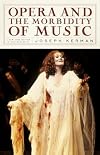
Joseph Kerman changed the way I thought about opera almost four decades ago with his brilliant Opera As Drama, and I have been a fan of his ever since, always looking forward to his articles in the New York Review of Books. Now many of them have been collected, along with some from other periodicals, in Opera and the Morbidity of Music, and I'm happily absorbed in them, both those I had seen and those I hadn't -- he's one of those authors who bears rereading.
His main theme is that the show more reports of the death of what is unfortunately called "classical music" are greatly exaggerated. In the title essay, he says "to the most damaging charge that the culture levels at classical music, its inability to renew itself, opera gives the lie. Music must generate an expanded repertory that will arouse critics and attract audiences; opera is doing this." Anyone who cares about music should read this book (and anything else Kerman writes -- long may he be productive!). show less
His main theme is that the show more reports of the death of what is unfortunately called "classical music" are greatly exaggerated. In the title essay, he says "to the most damaging charge that the culture levels at classical music, its inability to renew itself, opera gives the lie. Music must generate an expanded repertory that will arouse critics and attract audiences; opera is doing this." Anyone who cares about music should read this book (and anything else Kerman writes -- long may he be productive!). show less
This review was written for LibraryThing Early Reviewers.This is a zesty, occasionally very funny, thematically wide-ranging collection of, mainly, book and performance reviews, with some formal articles and CD recensions. It is aimed at a general readership with at least amateur knowledge of classical music (not that long ago this would describe most of the population). If you don't know the structure of a classical sonata, Kerman's discussion of sonata forms won't enlighten you on these "first things"; on the other hand, the many pieces in the show more collection dealing with musicians' biographies, reception, operatic libretti etc. are indeed accessible "to all" and place one nearer the music if not at its heart. Kerman touches several times upon the problem of writing about music (just like dancing about architecture), even when one uses musical examples (which he does here very sparingly). His own approach and style are refreshingly simple and free of what he calls "musicological boilerplate", intellectually suspect purple-prosing over the ultimately ineffable effect of music on the senses. I thought the two reviews of opera performances (of Monteverdi's "L'incoronazione di Poppea" and Wagner's Ring) the least interesting, since they of necessity centred on specific events, impossible to imagine and judge second-hand--naturally, readers who attended them may find precisely those the most interesting. The essays on Wagner collectively puzzled me, I wish I knew what Kerman thought of his music (or whether the fact that I can't tell speaks for itself). Sublime art, or embarrassingly silly pap? He won't tell. His strange reserve in regard to Wagner, perhaps reflecting a desire for objectivity, seems to cause some confusion even concerning Wagner's grandson Wieland, whose "repudiation of [...] Hitler" gets labelled a "negativity".
Anyone interested in classical music may profit and enjoy this impressively varied and hefty collection, but do remember Kerman's own words: " The reader is invited to LISTEN." show less
Anyone interested in classical music may profit and enjoy this impressively varied and hefty collection, but do remember Kerman's own words: " The reader is invited to LISTEN." show less
This review was written for LibraryThing Early Reviewers.In spite of the title of this retrospective collection of essays, Opera and the Morbidity of Music by Joseph Kerman, the author presents a forceful and eloquent argument that opera and classical music in general is neither morbid nor moribund. He is successful through nuanced and informed writing and the use of a structure in which a group of musical themes is highlighted much like those of a Bach fugue. Kerman quotes Charles Rosen, " It is never the theme that is the central interest but show more the way the theme is embedded in the polyphonic structure" (p. 81). Thus the essays take on this aspect of music and in doing so become more than their individual essayistic parts. There is an ebb and flow to the collection that charmed this reader with references to musical memories and suggestions for future listening and reading. The breadth of the essays spans centuries of music and multiplicities of musical form while frequently narrowing the focus to specific composers. Over the course of thirty essays covering both the familiar (Bach, Beethoven, Mozart, Wagner) and the unfamiliar (Byrd, Monteverdi and program notes), the life of music is reviewed from baroque to the present. The whole is lively and intelligent, both informative and accessible for the general reader. show less
This review was written for LibraryThing Early Reviewers.Awards


You May Also Like


Associated Authors
Statistics
- Works
- 28
- Members
- 1,330
- Popularity
- #19,351
- Rating
- 3.7
- Reviews
- 24
- ISBNs
- 107
- Languages
- 10

