
Charles Rosen (1) (1927–2012)
Author of The Classical Style: Haydn, Mozart, Beethoven
For other authors named Charles Rosen, see the disambiguation page.
About the Author
Charles Rosen is an internationally respected pianist. A pupil of Moriz Rosenthal, he has performed and recorded a wide repertoire from Bach to Pierre Boulez. (Bowker Author Biography)
Image credit: Courtesy of Indiana University
Works by Charles Rosen
Arnold Schonberg 1 copy
Il pensiero della musica 1 copy
Associated Works
Chopin : Piano concerto no.1 in E minor, Op.11 + Liszt : Piano concerto no.1 in E-flat major, S.124 [sound recording] (1990) — Piano, some editions — 3 copies
Tagged
Common Knowledge
- Canonical name
- Rosen, Charles
- Legal name
- Rosen, Charles Welles
- Birthdate
- 1927-05-05
- Date of death
- 2012-12-09
- Gender
- male
- Education
- Princeton University (BA, MA, PhD - French literature)
- Occupations
- pianist
music theorist - Organizations
- State University of New York, Stony Brook
University of Chicago - Awards and honors
- American Academy of Arts and Letters Academy Award (Literature ∙ 1974)
National Humanities Medal (2011)
Fulbright Fellowship
Charles Eliot Norton Professorship of Poetry (1980-81) - Relationships
- Steinberg, Michael (#1, roommate)
- Nationality
- USA
- Birthplace
- Manhattan, New York, USA
- Places of residence
- Manhattan, New York, USA
- Place of death
- Manhattan, New York, USA
- Associated Place (for map)
- Manhattan, New York, USA
Members
Reviews
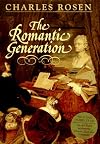
This book was a stretch. To fully keep up with Rosen’s analyses would require a more solid grounding in theory and more facility in sight-reading a score than I possess. But even the amount I understood was enlightening. I often stopped to listen to the works he discusses, which also made progress through the book slow (but enjoyable).
Rosen situates Chopin, Schumann, and the other composers he discusses in the context of literature and philosophy of the time, about which he offers show more judgments and opinions as solidly grounded as those he offers on music.
I particularly enjoyed the charity in his remarks, whether pointing out the shortcomings of the greats or the strengths of flawed composers. I was also impressed with his scholarly investigation of editions and their variants, some from the composer and some from mistakes in the engravings. Interestingly, some of the printer errors continue to appear. Now I’m especially curious about performances of Schumann’s piano works. Do they use the composer’s revisions or return to the first editions (to Rosen, clearly superior)?
I borrowed this from the library, but this is a book I wouldn’t mind having on my shelf to refer to again and again. I withheld the fifth star only because the difficulty might challenge many readers. But any music lover would agree that this is an outstanding achievement. show less
Rosen situates Chopin, Schumann, and the other composers he discusses in the context of literature and philosophy of the time, about which he offers show more judgments and opinions as solidly grounded as those he offers on music.
I particularly enjoyed the charity in his remarks, whether pointing out the shortcomings of the greats or the strengths of flawed composers. I was also impressed with his scholarly investigation of editions and their variants, some from the composer and some from mistakes in the engravings. Interestingly, some of the printer errors continue to appear. Now I’m especially curious about performances of Schumann’s piano works. Do they use the composer’s revisions or return to the first editions (to Rosen, clearly superior)?
I borrowed this from the library, but this is a book I wouldn’t mind having on my shelf to refer to again and again. I withheld the fifth star only because the difficulty might challenge many readers. But any music lover would agree that this is an outstanding achievement. show less
This is one of those books that stretched me. Much of it was beyond me, but what I understood informed me and made me a better listener. Both aspects made it a slow read. In addition, I often stopped to listen to the pieces that Rosen analyzed. Some were familiar, others I can’t recall having previously heard.
My big takeaway is that what I learned about the sonata form in music appreciation and what I still hear repeated in commentaries during the breaks in concert broadcasts is wrong. The show more sonata was not a set of rules. Rosen writes: “There are no fixed ‘rules,’ although there are successful patterns imitated and even aped, and unconscious habits.” Or, as he also puts it, “the sonata form could not be defined until it was dead.”
Rosen lays out the origins of the classical style in the increasingly strong polarity of tonic and dominant. Other steps in the chromatic scale could increase or relax tension, depending on their similarity or difference from the two poles. Skillful employment of this could satisfy the need for dramatic events balanced by proportion. The language employed by Haydn, Mozart, and Beethoven was not a definite form but a way of writing, a feeling for proportion, direction, and texture rather than pattern.
There are many good insights into performance practice. Rosen’s reaction to “authentic” performance is reticent: “A performance is not an archaeological dig.”
From start to finish, this reader felt he was in the hands of a gifted teacher who knew and understood the pieces he discussed, as well as what came before and after in music history. He also situates his discussion in the broader context of movements in the arts and literature of the time.
One thing only holds me back from awarding the fifth star: I like to reserve that for books that are so good that everyone should read them. However, because of the necessary time investment, this excellent book might not be for everyone. show less
My big takeaway is that what I learned about the sonata form in music appreciation and what I still hear repeated in commentaries during the breaks in concert broadcasts is wrong. The show more sonata was not a set of rules. Rosen writes: “There are no fixed ‘rules,’ although there are successful patterns imitated and even aped, and unconscious habits.” Or, as he also puts it, “the sonata form could not be defined until it was dead.”
Rosen lays out the origins of the classical style in the increasingly strong polarity of tonic and dominant. Other steps in the chromatic scale could increase or relax tension, depending on their similarity or difference from the two poles. Skillful employment of this could satisfy the need for dramatic events balanced by proportion. The language employed by Haydn, Mozart, and Beethoven was not a definite form but a way of writing, a feeling for proportion, direction, and texture rather than pattern.
There are many good insights into performance practice. Rosen’s reaction to “authentic” performance is reticent: “A performance is not an archaeological dig.”
From start to finish, this reader felt he was in the hands of a gifted teacher who knew and understood the pieces he discussed, as well as what came before and after in music history. He also situates his discussion in the broader context of movements in the arts and literature of the time.
One thing only holds me back from awarding the fifth star: I like to reserve that for books that are so good that everyone should read them. However, because of the necessary time investment, this excellent book might not be for everyone. show less
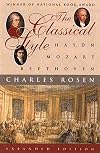
The issue of why Mozart is a stranger in our messed-up, impatient, overstimulated world, and why we need to approach him on different (musical) terms than the armour-plated ones we use to navigate our daily lives today if we are to appreciate what makes him so special. For me, the works which garner most unanimous appreciation have perhaps been the tougher, more dramatic ones: Beethoven 5 over Beethoven 4 or 6; Brahms 4 over Brahms 2 or 3; Verdi Requiem over Don Carlos, Othello or Falstaff; show more Stravinsky Rite of Spring over Petrouchka, Agon or Symphony in C; Mahler 2 over Das Lied Von Der Erde or Kindertotenlieder. This muscular power we seem as a society to tend to prioritise is not Mozart's way. All of those works, whilst supreme masterpieces, deal with extremes above all. Nothing in Mahler 2 or The Rite of Spring is moderate. We are a society of extremes, too. Pieces which operate at a more human scale can be lost in this. But Mozart always operates at this scale, even in his mightiest works. Mozart is not a composer of extremes. He is a composer of the middle. His music, like most Enlightenment music, but more so simply by dint of its extraordinary quality, traverses those subtle, intimate regions where small shades of meaning can mean so much, like furtive glances across a room. The reason we love his operas is because they are so full of complex humanity; the reason we particularly love his wind music so much, and also his piano concerti, is because they replicate this vocal dialogue in an instrumental form. The patient unfolding of, say, the Oboe Quartet - in which everything happens twice, question-answer, unfolding gracefully, calmly, every part seeming to listen to every other, to support, discuss, move forwards, but always constructively, with every small detail mattering, as do small details in civilised speech - is one example of countless others in which Mozart does this. To appreciate Mozart we need the patience to follow its logical, balanced unfolding and the concentration to follow the rhetorical inflections and subtleties of its melodic and harmonic details.
We are very fortunate that the genres the two greatest composers of the classical period - Haydn & Mozart - excel in are exactly complementary. While Haydn excels in the symphony, string quartets, piano sonatas & religious music, Mozart's greatest achievements are the operas & piano concertos.
To avoid the obvious, I'd recommend the following groups of works:
Divertimento K563, Piano Trio K564, Piano Concerto K595, String Quartet K590 - During this period Mozart wrote in a particular simplicity & transparency of style, with a distinctive directness & delicacy of expression and melodic shaping. What exactly binds these pieces together, besides the main subject in the finale of K563 & 595 being very similar, is hard to define. Sonata for 2 Pianos K448, Piano Sonata K330, Sonata for Piano Duet K521 - Likewise the first subject in the finale of K330 & K521 are very similar, but more than that these pieces show Mozart at his best using common material & the commonplace keys of C major & D major and producing some of his most memorable works. show less
We are very fortunate that the genres the two greatest composers of the classical period - Haydn & Mozart - excel in are exactly complementary. While Haydn excels in the symphony, string quartets, piano sonatas & religious music, Mozart's greatest achievements are the operas & piano concertos.
To avoid the obvious, I'd recommend the following groups of works:
Divertimento K563, Piano Trio K564, Piano Concerto K595, String Quartet K590 - During this period Mozart wrote in a particular simplicity & transparency of style, with a distinctive directness & delicacy of expression and melodic shaping. What exactly binds these pieces together, besides the main subject in the finale of K563 & 595 being very similar, is hard to define. Sonata for 2 Pianos K448, Piano Sonata K330, Sonata for Piano Duet K521 - Likewise the first subject in the finale of K330 & K521 are very similar, but more than that these pieces show Mozart at his best using common material & the commonplace keys of C major & D major and producing some of his most memorable works. show less
Romanticism and Realism: The Mythology of Nineteenth-Century Art (A Norton paperback) by Charles Rosen

The BEST book of art criticism I've ever read, which puts it at the head of a small group, admittedly. Since I would read anything at all the late and magnificent Charles Rosen wrote or collaborated on, this relatively old work, from 1984, was a necessity, but since it was co-authored, by Henri Zerner, and fashioned from a series of articles and reviews of art shows and their catalogues, I wasn't expecting the usual Rosen perfection.
But the articles were so completely rewritten and show more augmented that the origin of the book is invisible, and the ideas are new, shocking, and reveal ways of thinking about painting that yield maximum pleasure and new awareness and understanding. Page after page presents fascinating information and insights, all delivered in the usual intelligent, elegant, and charmingly modest Rosen way.
And in the views on what various painters have considered "realism" or Realism are many ideas that seem equally applicable to writing; indeed, Flaubert and other writers are frequently referred to. Thus the reader's mind is constantly challenged: I read very slowly, rereading many paragraphs or skimming over sections again, constantly delighted with the display of innovative thinking, about painting, about writing, and about the people who create them and their societies. show less
But the articles were so completely rewritten and show more augmented that the origin of the book is invisible, and the ideas are new, shocking, and reveal ways of thinking about painting that yield maximum pleasure and new awareness and understanding. Page after page presents fascinating information and insights, all delivered in the usual intelligent, elegant, and charmingly modest Rosen way.
And in the views on what various painters have considered "realism" or Realism are many ideas that seem equally applicable to writing; indeed, Flaubert and other writers are frequently referred to. Thus the reader's mind is constantly challenged: I read very slowly, rereading many paragraphs or skimming over sections again, constantly delighted with the display of innovative thinking, about painting, about writing, and about the people who create them and their societies. show less
Lists
Awards


You May Also Like


Associated Authors
Statistics
- Works
- 26
- Also by
- 3
- Members
- 2,156
- Popularity
- #11,920
- Rating
- 4.2
- Reviews
- 18
- ISBNs
- 102
- Languages
- 6
- Favorited
- 4