
Arnold Schoenberg (1874–1951)
Author of Theory of Harmony (California Library Reprint Series)
About the Author
An American of Austrian birth, Arnold Schoenberg composed initially in a highly developed romantic style but eventually turned to painting and expressionism. At first he was influenced by Richard Wagner and tried to write in a Wagnerian style. He attracted the attention of Alban Berg and Anton von show more Webern, with whom he created a new compositional method based on using all 12 half-steps in each octave as an organizing principle, the so-called 12-tone technique. His importance to the development of twentieth-century music is incredible, but the music he composed using this new method is not easily accessible to most concertgoers. (Bowker Author Biography) show less
Image credit: Photo by Florence Homolka, Schoenberg Archives at USC.
The archive grants permission to publish this image, provided that the photographer is credited.
The archive grants permission to publish this image, provided that the photographer is credited.
Series
Works by Arnold Schoenberg
Verklaerte Nacht / Transfigured Night. For Two Violins, Two Violas and Two Cellos. Opus 4. (2005) 27 copies, 1 review
Schoenberg : The book of the hanging gardens and other songs for voice and piano [score : vocal] (2016) 13 copies
Berg : Lulu Suite + Berg : Three Pieces for Orchestra, Op.6 + Schoenberg : Five pieces for orchestra, Op.16 + Webern : Five Pieces for Orchestra, Op.10 [sound recording] (1990) 11 copies, 1 review
Schoenberg : Violin concerto Op.36 + Sibelius : Violin concerto in D minor, Op.47 [sound recording] (2008) — Composer — 10 copies
Moses und Aron [programme book] 8 copies
Coherence, Counterpoint, Instrumentation, Instruction in Form (Zusammenhang, Kontrapunkt, Instrumentation, Formenlehre) (1993) 7 copies
Five pieces for orchestra, Op.16 + Ode to Napoleon Buonaparte, Op.41 + Serenade, Op.24 [sound recording] (1993) 6 copies
Schoenberg: Pierrot lunaire - Lied der Waldtaube - Erwartung / Minton, J. Martin, J. Norman, Zukerman, Harrell, Barenboim; Boulez (1993) 5 copies
The Piano Music. CD 5 copies
15 Gedichte aus " Das Buch der hängenden Gärten " von S. George, für eine Singstimme und Klavier. Op. 15 (1914) 5 copies, 1 review
Pierrot lunaire, op. 21 4 copies
Concerto for piano and orchestra, op. 42 ; Concerto for violin and orchestra, op. 36 (1944) 4 copies
Verklärte Nacht 4 copies
Berg : Symphonic pieces from Lulu + Schoenberg : Five pieces for orchestra, Op.16 + Webern : 6 orchestral pieces [sound recording] (2003) — Composer — 4 copies
String Quartet No. 1, Op. 7 [score] 4 copies
Schoenberg in Hollywood 3 copies
Kammersymphonie ... für 15 Solo-Instrumente ... Op. 9, etc (Philharmonia Partituren) (1922) 3 copies
Θεωρητική Αρμονία 3 copies
Pierrot Lunaire 3 copies
Accompaniment to a cinematographic scene = Begleitmusik zu einer Lichtspielscene, Op. 34 [score] 3 copies
Analisi e pratica musicale 3 copies
Friede auf Erden = Peace on earth : für gemischten Chor a capella oder mit kleinem Orchester (2017) 3 copies
String Quartet, Opus 10 2 copies
Briefe 2 copies
Maurizio Pollini Edition - Schoenberg: The Solo Piano Music, Piano Concerto; Webern: Variations op. 27 (2001) 2 copies
Schoenberg, Berg, Webern: Neue Wiener Schule - Streichquartette [Second Viennese School - String Quartets] (2001) 2 copies
Fondements de la composition musicale. Manuel de composition musicale [Fundamentals of Musical Composition] (2013) 2 copies
Esercizi preliminari di contrappunto 2 copies
Klavierstucke: Schonberg, Schubert 2 copies
The song of the earth {version for chamber orchestra} [sound recording] (1994) — Arranger — 2 copies
Holst : The planets + Schoenberg : Transfigured night {sound recording} (1956) — Composer — 2 copies
Funf Orchesterstucke 2 copies
De Profundis (Psalm 130) 2 copies
Arnold Schönberg: Pierrot Lunaire, Op. 21; Suite, Op. 29 / Barbara Sukowa, Schönberg Ensemble, Reinbert de Leeuw 2 copies, 1 review
Moses und Aron [videorecording] 2 copies
Zwei Fragmente der Sonate für Orgel 2 copies
Trio, violin, viola, cello, op. 45 2 copies
Chamber Symphony, Opus 9 2 copies
Schoenberg: Serenade, Variations For Orchestra, Bach Orchestrations — Composer — 2 copies
Schoenberg: The Five String Quartets 2 copies
Chamber Symphony No. 1 Op 9; Concerto for Piano and Orchestra Op 42; Chamber Symphony No. 2 Op 38 2 copies
Diario de Berlín (1940-1945) 2 copies
Violinkonzert op. 36 2 copies
Verklärte Nacht 2 copies
Piano Pieces Op. 11, 19, 23, 25, 33a, 33b. Berg: Sonata Op. 1. Webern: Variations Op. 27/Peter Hill 2 copies
Chorus music [sound recording] 2 copies
String Trio, Op. 45 1 copy
BBC Proms 2019 : Prom 07 : Schumann, Schoenberg & Mozart [sound recording] (2019) — Composer — 1 copy
Bartók: The Miraculous Mandarin Suite / Kodály: Peacock Variations / Hindemith: Symphonic Metamorphosis / Schönberg: Five Pieces for Orchestra [sound recording] — Composer — 1 copy
Gurrelieder 1 copy
Schoenberg : Suite, Op. 29 - Verklärte Nacht ("La Nuit transfigurée" version pour sextuor à cordes) 1 copy
Debussy: Images / Schönberg: Pelleas & Melisande [sound recording] — Composer — 1 copy
Schönberg Ensemble Edition 1 copy
A Schoenberg - Erwartung & 6 Orchester-Lieder (A Silja, Cv Dohnányi-Wiener Philharmoniker) (1981) 1 copy
Dohnányi: Serenade Op. 10 / Martinů: String Trio No. 2 / Schönberg: String Trio op. 45 [sound recording] (2005) — Composer — 1 copy
Arnold Schoenberg: Verklärte Nacht, Chamber Symphony No. 2, Accompaniment to a Cinematographic Scene (2000) 1 copy
Schoenberg: Gurre-Lieder 1 copy
A dark century — Composer — 1 copy
Bach & Brahms: Schoenberg Orchestrations [sound recording] — Composer — 1 copy
Liszt : Piano concerto no.1 in E-flat major, S.124 + Piano concerto no.2 in A major, S.125 + Schoenberg : Piano concerto, Op.42 [sound recording] — Composer — 1 copy
Schoenberg, Berg & Webern [Decca Sound I] — Composer — 1 copy
Fünfzehn Gedichte aus "Das Buch der hängenden Gärten" von Stefan George. Für Gesang und Klavier 1 copy
Drei Klavierstücke 1 copy
Lieder (Glenn Gould Edition) 1 copy
Vier Lieder Op. 2 1 copy
A Schoenberg - Transfigured Night & String Trio Op.45 (D McInnes, J Pegis, LaSalle Quartet) (1982) 1 copy
Pierrot Lunaire, Op. 21, 1 copy
Pelleas & Melisande 1 copy
Klavierstueck 1 copy
The Hand of Fate, Op. 18 1 copy
20th Century Classics 2 1 copy
Chamber Symphony No.1 Op. 9,Chamber Symphony No.2 Op.38,Transfigured Night (for String Orchestra) 1 copy
Part 3, Disk 2 of 2, Der Hahn erhebt den Kopf zur Kraht (Waldemars Mannen) Des Sommerwindes wilde Jagd (Melodram) 1 copy, 1 review
Moses und Aron 1 copy
Die Jakobsleiter ; Kammersymphonie n° 1, op. 9 ; Begleitmusik zu einer Lichtspielszene, op. 34 (2007) 1 copy
Kammersymphonie: op. 9. Violine, Flöte oder 2.Violine, Klarinette in a oder Viola, Cello und Klavier. Partitur. (1956) 1 copy
Schönberg - Kammersymphonie, Op. 9, Sechs Kleine Stücke, Op. 19 (arr. Holliger); Webern - Symphonie, Op. 21, Fünf Sätze, Op. 5 / Orchestre de Chambre de Lausanne, Heinz… — Composer — 1 copy
Arnold Schonberg: Kammersymphonie/Chamber Symphony/Symphonie De Chambre Fur 15 Solo-Instrumente Op. 9 (1924) 1 copy
Quartets de corda 1 copy
Erwartung / Kammersymphonie Nr. 1 Op. 9 / Variationen für Orchester Op. 31 [sound recording] — Composer — 1 copy
Manuale di armonia voll 1-2 1 copy
Schoenberg : Pelleas und Melisande; Richard Strauss: Metamorphosen — Composer — 1 copy
Moses und Aron 1 copy
Ausgewählte Klaviermusik 1 copy
Drei Klavierstücke, Op. 11 1 copy
Waltzes for string orchestra 1 copy
Pierrot lunaire: Dreimal sieben Gedichte. op. 21. für eine Sprechstimme und 5 Instrumentalisten. Studienpartitur. (2010) 1 copy
Verklärte Nacht, Sextet Op.4 1 copy
Verklärte Nacht 1 copy
Vier Lieder, Op. 22, No. 1 1 copy
Transfigured Night [CD] 1 copy
Écrits 1890-1951 1 copy
Pierrot Lunaire op.21 1 copy
Barcelona. 1 copy
Tratado de Armonía 1 copy
Serenade, op. 24 1 copy
String quartets no. 2 & 4 1 copy
Pelleas und Melisande op. 5 : Symphonische Dichtung für Orchester (Universal Edition Nr. 14408) 1 copy
Concerto for String Quartet - Suite for Piano Op. 25 - Lied der Waldtaube - The Book of the Hanging Gardens. CD (2005) 1 copy
Zwei Balladen, Op. 12 1 copy
Zwei Kanons f. gem Chor / Drei deutsche Volkslieder, bearbeitet f. gem. Chor // BBc Singers, Boulez 1 copy
Bach Chorale Prelude 1 copy
String Quartet No.4, Op.37 1 copy
Ode to Napoleon 1 copy
Fantasy for Violin and Piano 1 copy
Suite, Op.29 1 copy
Serenade, Op.24 1 copy
3rd Quartet, Op.30 1 copy
Wind Quintet, Op.26 1 copy
Schoenberg : Transfigured Night, Op.4 + Sibelius : Symphony no.1 in E minor, Op.39 [sound recording] (1996) — Composer — 1 copy
Serenade 1 copy
Serenade, Opus 24 1 copy
Verklärte Nacht Op.4 1 copy
Vorschule des Kontrapunkts 1 copy
Erwartung - 6 Lieder Op. 8 1 copy
Accentus 1 copy
Schoenberg: Verklärte Nacht / Chamber Symphonies / Orpheus Chamber Orchestra [sound recording] 1 copy
Lieder [sound recording] 1 copy
Herzgewächse Op. 20 [score] 1 copy
Quintett f. Flöte, Oboe, Klarinette, Horn u. Fagott op. 26 (1923/24) // N.Y. Woodwind Quintet 1 copy
Schoenberg: Pierrot Lunaire; Herzgewächse; Four Songs Op 22; Chamber Symphony No 1; Silja/ Hulse/ Wyn-Rogers/ Twentieth Century Classics Ensemble/ Philharmonia O/ Craft — Composer — 1 copy
Schoenberg - Concerto for Violin & Orchestra, op.36 & other orchestral works - R. Craft, R. Schulte, Philharmonia Orchestra — Composer — 1 copy
Gurrelieder 1 copy
Schoenberg & Webern: Orchesterstücke / Berg: Lulu Suite [sound recording] — Composer — 1 copy
Book of the Hanging Gardens 1 copy
ł £ ð Ư ł Ư ơ £ ð ʾ ư ı æ ʺ 1 copy
Pierrot Lunaire. op. 21 1 copy
Schönberg: Die Jakobsleiter - Webern: Konzert Op. 24 ; 6 Pieces for orchestra Op. 6b. CD (1948) 1 copy
Schoenberg: Orchestrations 1 copy
String Quartet No. 3 1 copy
Nachtwandler 1 copy
Klavierstück Op. 33a 1 copy
The Music of Colombia Stereo 1 copy
Piano Music 1 copy
Fourth String Quartet Op. 37 1 copy
Der Erste Psalm 1 copy
Klavierstück op. 11, Nr. 2 1 copy
Three Piano Pieces, Op. 11 1 copy
Herzgewächse, opus 20 1 copy
Kol Nidre, Op. 39 1 copy
Four Songs Op. 22 1 copy
String Quartet Op. 7 1 copy
Variation fur Orchester, Op.31 Theme and Variation 6 Southwest German Radio Symhphony Orchestra; Michael Gielen, cond. (#40-41) Disk 4 of 4. 1 copy, 1 review
Associated Works
Bach: Transcriptions — Transcription — 5 copies
Webern: Passacaglia / Schoenberg: Variations op. 31 / Berg: 3 Pieces from the "Lyric Suite"; 3 Pieces for Orchestra op. 6 (1999) 4 copies
História da Música, 1935-1950: música para antes e depois de uma guerra (1997) — Contributor — 3 copies
Arnold Schönberg : till 75-årsdagen — Associated Name — 1 copy
Arnold Schönberg — Associated Name — 1 copy
Leitbild Schönberg... Zum Verhältnis Luigi Nono - Arnold Schönberg — Associated Name — 1 copy
Tagged
Common Knowledge
- Legal name
- Schönberg, Arnold (Austria)
Schoenberg, Arnold (USA) - Birthdate
- 1874-09-13
- Date of death
- 1951-07-13
- Gender
- male
- Education
- self-educated
- Occupations
- composer
composition teacher
music theorist - Relationships
- Zemlinsky, Alexander von (brother in law)
Webern, Anton (student)
Berg, Alban (student)
Keller, Hans (student)
Stein, Erwin (student)
Wellesz, Egon (student) - Nationality
- Austria (birth)
USA (naturalized) - Birthplace
- Vienna, Austria, Austro-Hungarian Empire
- Places of residence
- Berlin, Germany
- Place of death
- Los Angeles, California, USA
- Burial location
- Wiener Zentralfriedhof, Vienna, Austria (32C-21A)
Members
Discussions
CD Review in BBC Radio 3 Listeners (May 2013)
Reviews

review of
The Music of Arnold Schoenberg Volume Three
by tENTATIVELY, a cONVENIENCE - October 26, 2011
I'm reviewing 2 other LP boxset bklts here on GoodReads b/c I think they're important for music scholars in general & Schoenberg scholars in particular & b/c I don't know whether these writings are completely available anywhere else (even though I imagine they must be). Of the 3, this is the most substantial at 56pp.
This begins with conductor Robert Craft's substantial 16pp analysis of show more Schoenberg's "Five Pieces for Orchestra, Op. 16" (1906). Craft, an important conductor, IMO, goes thru each of the pieces & provides musical notation. I was particularly delighted to learn that Schoenberg's score calls for a cello bow to be "drawn along the edge of a cymbal" in the 4th piece! This technique is probably far more associated w/ the extended playing of improvisors from the 1960s on than it is w/ such a precocious composition from 1906!
Schoenberg's own analysis of his "Four Orchestral Songs, Op. 22" (1915) follows. This text was created for radio broadcast & was meant to be accompanied by relevant recorded excerpts from the work under discussion. Instead, relevant notation is presented. Some of the analysis is deleted in this presentation but the remaining 8pp are still substantial. This is followed by the German versions of the songs & their English translations.
A shorter section of Schoenberg commentary on his "Chamber Symphony No. 1, Op. 9" (1906) is next up after wch the renowned pianist Glenn Gould presents 7pp of analysis of "Chamber Symphony No. 2, Op. 38" (1939) - w/, once again, musical notation examples. In this section Gould writes that:
"Schoenberg once said that in his view there remained a great deal of music yet to be written in the key of C"
& I quite agree. I don't think that any particular formal restraint is necessarily permanently exhausted - at worst, it might just be overdone unimaginatively. I quite like my own "Sequence 004: C Major Chord" , eg, even though it only uses C, E, & G. I had almost completely lost interest in harmony, eg, until I heard Monty Cantsin's "d composing Mozart" in wch only recordings of the endings of all of Mozart's symphonies are used - most of wch end on a D major chord - w/ a limited instrumentation. Both of these restraints might seem 'impossibly' limited but I find the results in both cases to be unique & interesting to listen to.
Claudio Spies spends 3pp on "Kol Nidre" & another 4 on "Dreimal Tausend Jahre, Op. 50a" , 1 of Schoenberg's 3 last compositions. Spies comments regarding the latter that:
"The fact that his music of those years had no publisher at the time makes it easier to understand how Schoenberg could accede to this suggestion [of having the score published in a limited fascimile edition], which involved no financial arrangements beyond a few complimentary copies."
This sortof thing fascinates me. Schoenberg was one of the most influential composers of the 20th century 'western' world, he was in his mid 70s, & he cdn't even get pd for the publishing rights for a new composition?! That's almost beyond astounding.. but it's no surprise at all. I've been in the same situation my whole life. Not that I'd equate myself w/ Schoenberg - I just mean that I can relate!
It seems at least somewhat the case that even today, 60 yrs after Schoenberg's death, people still know Schoenberg, if they 'know' him at all, as 'that atonal composer' - wch people seem to think they know the meaning of - but, as far as I can tell, often don't. &, yes, Schoenberg did pioneer atonal music.
(It's an interesting sidenote that Karl Schumann claims in the liner notes to a record entitled "Wirkung ser Neuen Wiener Schule im Lied" that Viennese composer Joseph Matthias Hauer "claimed to have experimented with the twelve-tone series before Schönberg.")
But Schoenberg was far from a one-trick pony. In the ±90 works of his that I've heard (not all of them have opus numbers - those only go up to 50 & often contain multiple works anyway) there's a substantial variety - much of it largely unknown I suspect. How many people have listened to Schoenberg's transcriptions/orchestrations of the work of other composers such as: Bach, Brahms, Busoni, Denza. Mahler, Monn, Reger, Schubert, Sioly, & Johann Strauss? Anyone who'd only listen to those wd have a very, VERY different impression of Schoenberg as a composer that has nothing to do w/ atonalism.
For myself, when I 1st learned about Schoenberg, maybe in 1971 or thereabouts, I was most interested in whatever was the most innovative. As such, when I heard works like "Pierrot Lunaire" I was delighted & when I heard “Verklärte Nacht” (both in 1974) I was a bit disappointed. In fact, Schoenberg was a bit too mainstream for my musical preferences & while I've always maintained a deep respect for him, I moved on to more adventuress composers pretty quickly. Many other people, on the other hand, seem to still have some sort of bias against him along these lines: "Schoenberg!, atonalism!, I hate that weird noise stuff!" w/o having any idea of what his music actually sounds like.
Finally, Robert Craft contributes more & Colin Mason discusses Schoenberg's orchestration of Bach. There're musical notation examples galore in all this pictures of Schoenberg. & having the recordings themselves is the crème de la crème! As if that weren't enuf, there's a recording of Schoenberg being interviewed by Halsey Stevens on the last side of the 2nd record. show less
The Music of Arnold Schoenberg Volume Three
by tENTATIVELY, a cONVENIENCE - October 26, 2011
I'm reviewing 2 other LP boxset bklts here on GoodReads b/c I think they're important for music scholars in general & Schoenberg scholars in particular & b/c I don't know whether these writings are completely available anywhere else (even though I imagine they must be). Of the 3, this is the most substantial at 56pp.
This begins with conductor Robert Craft's substantial 16pp analysis of show more Schoenberg's "Five Pieces for Orchestra, Op. 16" (1906). Craft, an important conductor, IMO, goes thru each of the pieces & provides musical notation. I was particularly delighted to learn that Schoenberg's score calls for a cello bow to be "drawn along the edge of a cymbal" in the 4th piece! This technique is probably far more associated w/ the extended playing of improvisors from the 1960s on than it is w/ such a precocious composition from 1906!
Schoenberg's own analysis of his "Four Orchestral Songs, Op. 22" (1915) follows. This text was created for radio broadcast & was meant to be accompanied by relevant recorded excerpts from the work under discussion. Instead, relevant notation is presented. Some of the analysis is deleted in this presentation but the remaining 8pp are still substantial. This is followed by the German versions of the songs & their English translations.
A shorter section of Schoenberg commentary on his "Chamber Symphony No. 1, Op. 9" (1906) is next up after wch the renowned pianist Glenn Gould presents 7pp of analysis of "Chamber Symphony No. 2, Op. 38" (1939) - w/, once again, musical notation examples. In this section Gould writes that:
"Schoenberg once said that in his view there remained a great deal of music yet to be written in the key of C"
& I quite agree. I don't think that any particular formal restraint is necessarily permanently exhausted - at worst, it might just be overdone unimaginatively. I quite like my own "Sequence 004: C Major Chord" , eg, even though it only uses C, E, & G. I had almost completely lost interest in harmony, eg, until I heard Monty Cantsin's "d composing Mozart" in wch only recordings of the endings of all of Mozart's symphonies are used - most of wch end on a D major chord - w/ a limited instrumentation. Both of these restraints might seem 'impossibly' limited but I find the results in both cases to be unique & interesting to listen to.
Claudio Spies spends 3pp on "Kol Nidre" & another 4 on "Dreimal Tausend Jahre, Op. 50a" , 1 of Schoenberg's 3 last compositions. Spies comments regarding the latter that:
"The fact that his music of those years had no publisher at the time makes it easier to understand how Schoenberg could accede to this suggestion [of having the score published in a limited fascimile edition], which involved no financial arrangements beyond a few complimentary copies."
This sortof thing fascinates me. Schoenberg was one of the most influential composers of the 20th century 'western' world, he was in his mid 70s, & he cdn't even get pd for the publishing rights for a new composition?! That's almost beyond astounding.. but it's no surprise at all. I've been in the same situation my whole life. Not that I'd equate myself w/ Schoenberg - I just mean that I can relate!
It seems at least somewhat the case that even today, 60 yrs after Schoenberg's death, people still know Schoenberg, if they 'know' him at all, as 'that atonal composer' - wch people seem to think they know the meaning of - but, as far as I can tell, often don't. &, yes, Schoenberg did pioneer atonal music.
(It's an interesting sidenote that Karl Schumann claims in the liner notes to a record entitled "Wirkung ser Neuen Wiener Schule im Lied" that Viennese composer Joseph Matthias Hauer "claimed to have experimented with the twelve-tone series before Schönberg.")
But Schoenberg was far from a one-trick pony. In the ±90 works of his that I've heard (not all of them have opus numbers - those only go up to 50 & often contain multiple works anyway) there's a substantial variety - much of it largely unknown I suspect. How many people have listened to Schoenberg's transcriptions/orchestrations of the work of other composers such as: Bach, Brahms, Busoni, Denza. Mahler, Monn, Reger, Schubert, Sioly, & Johann Strauss? Anyone who'd only listen to those wd have a very, VERY different impression of Schoenberg as a composer that has nothing to do w/ atonalism.
For myself, when I 1st learned about Schoenberg, maybe in 1971 or thereabouts, I was most interested in whatever was the most innovative. As such, when I heard works like "Pierrot Lunaire" I was delighted & when I heard “Verklärte Nacht” (both in 1974) I was a bit disappointed. In fact, Schoenberg was a bit too mainstream for my musical preferences & while I've always maintained a deep respect for him, I moved on to more adventuress composers pretty quickly. Many other people, on the other hand, seem to still have some sort of bias against him along these lines: "Schoenberg!, atonalism!, I hate that weird noise stuff!" w/o having any idea of what his music actually sounds like.
Finally, Robert Craft contributes more & Colin Mason discusses Schoenberg's orchestration of Bach. There're musical notation examples galore in all this pictures of Schoenberg. & having the recordings themselves is the crème de la crème! As if that weren't enuf, there's a recording of Schoenberg being interviewed by Halsey Stevens on the last side of the 2nd record. show less
review of
The Music of Arnold Schoenberg Volume Eight
by tENTATIVELY, a cONVENIENCE - October 26, 2011
I only personally have volumes 2, 3, 5, 6, 7, & 8 in my collection so I'm unsure about the overall series but it seems to me that the series 'wound down' as it went along. Volumes 5, 6, & 7 (at least) no longer have bklts w/ the records & volume 8's bklt is considerably smaller (25pp) than those of volumes 2 & 3.
NONETHELESS, as a scholarly document this is still valuable. The complete text show more of "Von Heute auf Morgen" ("From Today 'til Tomorrow"), Schoenberg's 1928 one act comedic opera, is presented in both German & English - & that constitutes the majority of the bklt. But there're also more brief discussions by conductor Robert Craft of the other pieces on the 2 records: "De Profundis", "Modern Psalm", "Six Pieces for Male Chorus", "Eleven Choral Canons" (a collection seemingly especially compiled here), & "Concerto for Cello and Orchestra (after Monn)". Most of the work is probably in the category of 'little known' making any elucidation of it useful. show less
The Music of Arnold Schoenberg Volume Eight
by tENTATIVELY, a cONVENIENCE - October 26, 2011
I only personally have volumes 2, 3, 5, 6, 7, & 8 in my collection so I'm unsure about the overall series but it seems to me that the series 'wound down' as it went along. Volumes 5, 6, & 7 (at least) no longer have bklts w/ the records & volume 8's bklt is considerably smaller (25pp) than those of volumes 2 & 3.
NONETHELESS, as a scholarly document this is still valuable. The complete text show more of "Von Heute auf Morgen" ("From Today 'til Tomorrow"), Schoenberg's 1928 one act comedic opera, is presented in both German & English - & that constitutes the majority of the bklt. But there're also more brief discussions by conductor Robert Craft of the other pieces on the 2 records: "De Profundis", "Modern Psalm", "Six Pieces for Male Chorus", "Eleven Choral Canons" (a collection seemingly especially compiled here), & "Concerto for Cello and Orchestra (after Monn)". Most of the work is probably in the category of 'little known' making any elucidation of it useful. show less
review of
The Music of Arnold Schoenberg Volume Two
by tENTATIVELY, a cONVENIENCE - October 26, 2011
I wdn't ordinarily write a review of a bk in a record box-set but the 3 bks that came w/ 3 of the 6 Arnold Schoenberg boxsets that I have are so extraordinarily scholarly that it seems important to historicize them even further than they may've already been. SO, in this day of streaming & the vanishing of having actual objects to be collected rather than hardware for streaming & downloading, show more things like boxsets (boxes containing more than 1 vinyl LP that're usually edited w/ some thematic scholarly thoroughness in mind) may be little more than fond memories for older people. Of course, there're CD boxsets & they come w/ scholarly bklts too but, obviously, they're physically much smaller &, therefore, harder to read. Some or all of this material has been reissued on CD - I don't know whether the CD's notes are as thorough as these or if they had to be cut for reasons of space.
ANYWAY, the cover of this bk has a negative copy of a canon that Schoenberg sent to Craft, the conductor, & the bk is chockfull of such goodies. Robert Craft has always been important to me as the person who conducted all of Varèse's work AND Webern's AND most of Schoenberg's - a powerful trio of early 20th century composers.
Just listing the contents of this is probably enuf to give Schoenberg enthusiasts an idea of why I consider this worth reviewing:
A Feb 17, 1950 note of Schoenberg's made as a "Foreword to a Broadcast Recording of Pelleas and Melisande".
followed by notes re Schoenberg re the same piece that give musical examples in notation form.
followed by notes from composer Eric Salzman re Schoenberg's "Prelude to the Genesis Suite"
followed by "Arnold Schoenberg on his Variations for Orchestra, Op. 31" - "A Dialogue with his pupil, Erwin Stein, originally published in "Pult und Taktstock""
followed by British composer Roberto Gerhard's notes re "Variations for Orchestra"
followed by Schoenberg's notes re his "Verklaerte Nacht", again w/ musical notation examples
followed by Robert Craft's "Marginalia".
A great composer commenting on his own work, 2 other prominent composer commenting on it as well, the conductor adding his considerably-more-than-2¢'s-worth. &, of course, if one has the recordings, one gets to listen to this great music as well. show less
The Music of Arnold Schoenberg Volume Two
by tENTATIVELY, a cONVENIENCE - October 26, 2011
I wdn't ordinarily write a review of a bk in a record box-set but the 3 bks that came w/ 3 of the 6 Arnold Schoenberg boxsets that I have are so extraordinarily scholarly that it seems important to historicize them even further than they may've already been. SO, in this day of streaming & the vanishing of having actual objects to be collected rather than hardware for streaming & downloading, show more things like boxsets (boxes containing more than 1 vinyl LP that're usually edited w/ some thematic scholarly thoroughness in mind) may be little more than fond memories for older people. Of course, there're CD boxsets & they come w/ scholarly bklts too but, obviously, they're physically much smaller &, therefore, harder to read. Some or all of this material has been reissued on CD - I don't know whether the CD's notes are as thorough as these or if they had to be cut for reasons of space.
ANYWAY, the cover of this bk has a negative copy of a canon that Schoenberg sent to Craft, the conductor, & the bk is chockfull of such goodies. Robert Craft has always been important to me as the person who conducted all of Varèse's work AND Webern's AND most of Schoenberg's - a powerful trio of early 20th century composers.
Just listing the contents of this is probably enuf to give Schoenberg enthusiasts an idea of why I consider this worth reviewing:
A Feb 17, 1950 note of Schoenberg's made as a "Foreword to a Broadcast Recording of Pelleas and Melisande".
followed by notes re Schoenberg re the same piece that give musical examples in notation form.
followed by notes from composer Eric Salzman re Schoenberg's "Prelude to the Genesis Suite"
followed by "Arnold Schoenberg on his Variations for Orchestra, Op. 31" - "A Dialogue with his pupil, Erwin Stein, originally published in "Pult und Taktstock""
followed by British composer Roberto Gerhard's notes re "Variations for Orchestra"
followed by Schoenberg's notes re his "Verklaerte Nacht", again w/ musical notation examples
followed by Robert Craft's "Marginalia".
A great composer commenting on his own work, 2 other prominent composer commenting on it as well, the conductor adding his considerably-more-than-2¢'s-worth. &, of course, if one has the recordings, one gets to listen to this great music as well. show less
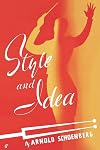
A collection of music-related essays from the late 19th and early 20th centuries. Included are essays on twelve-tone music by composers such as Brahms and Mahler. Schoenberg's style is not only understandable and appealing, but it also communicates significant details about the nature of modern music.
One of the most important compilations of musical essays ever released, Schoenberg's Style and Idea, has long been out of print. Only a small portion of Schoenberg's literary output was show more represented by the volume's few essays when it first came out. Leonard Stein, Schoenberg's assistant and editor of his theory and composition books, examined Schoenberg's entire body of work for this new edition and selected a significant number of essays to go with the reprint of the original papers. show less
One of the most important compilations of musical essays ever released, Schoenberg's Style and Idea, has long been out of print. Only a small portion of Schoenberg's literary output was show more represented by the volume's few essays when it first came out. Leonard Stein, Schoenberg's assistant and editor of his theory and composition books, examined Schoenberg's entire body of work for this new edition and selected a significant number of essays to go with the reprint of the original papers. show less
Awards


You May Also Like


Associated Authors
Statistics
- Works
- 664
- Also by
- 10
- Members
- 2,437
- Popularity
- #10,528
- Rating
- 4.1
- Reviews
- 85
- ISBNs
- 159
- Languages
- 11
- Favorited
- 3


