
Dale Pendell (1947–2018)
Author of Pharmako/Poeia: Plant Powers, Poisons, and Herbcraft
About the Author
Dale Pendell is a poet, software engineer & a longtime student of ethnobotany. (Bowker Author Biography)
Series
Works by Dale Pendell
Pharmako/Dynamis, Revised and Updated: Stimulating Plants, Potions, and Herbcraft (2002) 293 copies, 1 review
City Limits Blues 1 copy
Swirling 1 copy
Leaf Songs 1 copy
Physics for the Heart 1 copy
Chasing the Cranes 1 copy
Tagged
Common Knowledge
- Canonical name
- Pendell, Dale
- Legal name
- Pendell, Dale Alexander
- Birthdate
- 1947-04-14
- Date of death
- 2018-01-13
- Gender
- male
- Education
- University of California, Santa Cruz
- Occupations
- poet
ethnobotanist
novelist
software engineer - Organizations
- Imagen Technologies
Phoenix Technologies
Adobe Systems - Awards and honors
- Firecracker Alternative Book Award (1996)
- Cause of death
- cancer
- Nationality
- USA
- Places of residence
- Penn Valley, California, USA
Santa Cruz, California, USA - Associated Place (for map)
- California, USA
Members
Reviews
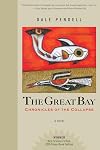
There are three different reasons post-apocalypse novels get written: warnings about some impending danger, describing some better world that comes about after destroying ours, or appreciating our world by fictionally dissecting its corpse. This book mostly falls in the first two categories.
The danger, as Pendell sees it, is corporatism, the God of Hoarding - it says so right on p. 40. Corporations lead to wage slavery and worship of money and government thuggery to enforce corporate show more interests. In the year 2021, this escalates into a massive dieoff via bioweapons released in a war for oil in Central Asia. Even with billions dead and industrial civilization at an end, manmade global warming continues with the seas eventually rising 160 feet. The few survivors can't maintain civilization's infrastructure. Literacy declines. Technology is more scavenged than created. It's not all bad, though. Humans, at least the ones in California, have developed a suspicion of central government and the idea of property beyond chattels that can be carried on the body. We members of the "pre-cle" (pre-Collapse) set eventually become a subject of awe, wonder, and contempt.
Now how seriously you want to take Pendell's diagnosis of contemporary ills and their remedies is a personal matter. (Not very seriously is the answer for me.) However, plenty of post-apocalypse stories are entertaining and thoughtful despite absurd or questionable starting premises.
Pendell's novel covers 16,000 years of time and reminded me of several fine post-apocalypse works. I've always had a fond spot for novels made up of fake documents whether letters, government reports, journals, oral and narrative histories. This book, with the exception of the omniscient third person Panoptic sections, uses that technique. In that, it reminded me of Whitley Streiber and James Kunetka's classic post-nuclear war novel Warday. Its pastoralism and humanity's inability to hold on to its learning and technology reminded me of George R. Stewart's Earth Abides while its dabbling with new, collectivist orders after the convenient killing off of millions reminded me of William Morris' commie utopia News From Nowhere.
However, this book is nowhere near as good as any of those. Pendell is at his best in the opening chapter, and he does bring some nice understatement to individual tragedies usually glimpsed through the lens of a distant historian. He even manages to work in a future homage to Otzi, the famous Iceman. And his maps showing California's new coastline are neat. But he never really creates unique voices for all the many people who tell us their stories in oral histories and diaries. They all sound very similar in tone and style and cadence and vocabulary. And, sometimes, those Panoptic sections aren't much more than a description of altered coastlines elsewhere in the world. Why not give us some more maps instead?
So the entertainment value isn't all it could be. As for thoughtfulness ... Well Pendell doesn't turn a blind eye to the problems of his new societies. The survivors mostly swear off the sins of corporatism but they have plenty of other shortcomings. I do think he is overly optimistic in his speculations as to how long certain technologies could be maintained. On the other hand, I think he is fairly realistic in eschewing the cyclical story of Walter Miller, Jr.'s classic A Canticle for Leibowitz. In Pendell's novel, there is no distant return to our level of technology and civilization.
In short, this one is not in the top tiers of post-apocalypse fiction but an obsessive fan - or citizen of California - might want to give it a look. And it's short enough that a reader not in those categories might not consider it a waste of time. show less
The danger, as Pendell sees it, is corporatism, the God of Hoarding - it says so right on p. 40. Corporations lead to wage slavery and worship of money and government thuggery to enforce corporate show more interests. In the year 2021, this escalates into a massive dieoff via bioweapons released in a war for oil in Central Asia. Even with billions dead and industrial civilization at an end, manmade global warming continues with the seas eventually rising 160 feet. The few survivors can't maintain civilization's infrastructure. Literacy declines. Technology is more scavenged than created. It's not all bad, though. Humans, at least the ones in California, have developed a suspicion of central government and the idea of property beyond chattels that can be carried on the body. We members of the "pre-cle" (pre-Collapse) set eventually become a subject of awe, wonder, and contempt.
Now how seriously you want to take Pendell's diagnosis of contemporary ills and their remedies is a personal matter. (Not very seriously is the answer for me.) However, plenty of post-apocalypse stories are entertaining and thoughtful despite absurd or questionable starting premises.
Pendell's novel covers 16,000 years of time and reminded me of several fine post-apocalypse works. I've always had a fond spot for novels made up of fake documents whether letters, government reports, journals, oral and narrative histories. This book, with the exception of the omniscient third person Panoptic sections, uses that technique. In that, it reminded me of Whitley Streiber and James Kunetka's classic post-nuclear war novel Warday. Its pastoralism and humanity's inability to hold on to its learning and technology reminded me of George R. Stewart's Earth Abides while its dabbling with new, collectivist orders after the convenient killing off of millions reminded me of William Morris' commie utopia News From Nowhere.
However, this book is nowhere near as good as any of those. Pendell is at his best in the opening chapter, and he does bring some nice understatement to individual tragedies usually glimpsed through the lens of a distant historian. He even manages to work in a future homage to Otzi, the famous Iceman. And his maps showing California's new coastline are neat. But he never really creates unique voices for all the many people who tell us their stories in oral histories and diaries. They all sound very similar in tone and style and cadence and vocabulary. And, sometimes, those Panoptic sections aren't much more than a description of altered coastlines elsewhere in the world. Why not give us some more maps instead?
So the entertainment value isn't all it could be. As for thoughtfulness ... Well Pendell doesn't turn a blind eye to the problems of his new societies. The survivors mostly swear off the sins of corporatism but they have plenty of other shortcomings. I do think he is overly optimistic in his speculations as to how long certain technologies could be maintained. On the other hand, I think he is fairly realistic in eschewing the cyclical story of Walter Miller, Jr.'s classic A Canticle for Leibowitz. In Pendell's novel, there is no distant return to our level of technology and civilization.
In short, this one is not in the top tiers of post-apocalypse fiction but an obsessive fan - or citizen of California - might want to give it a look. And it's short enough that a reader not in those categories might not consider it a waste of time. show less
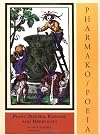
First of three books in the Pharmako series. What a wonderfully bizarre book. I don't even know where to start. Technically it's non-fiction. At its core it's a book on plants/herbs; specifically, ones that have interesting effects on human physiology. Unlike most non-fiction books, this one is written in a prose style and filled with fascinating quotes from scientists, poets and philosophers. It's also filled with classical botanical drawings and medieval wood-cuts.
It's a really great show more read -- one part history lesson, one part poetry, one part witchcraft. Besides the usual suspects: alcohol (yeast), cannabis, tobacco and opium; there are scores of other plants most people know nothing about: Salvia Divinorum, Kava, Wormwood and more. Books like this could easily be bloodless, dry and tedious, but Pendell's presentation is thought-provoking, well researched and beautiful (the artwork) -- even humorous. Pendell has a really wry wit. He covers how various plants were used in folk medicine, ritual, and how they work into our mythology and continue to effect our social systems. Also included are: growing tips, preparation, recipes, dosage, and dangers.
Here's one area I don't often comment on: the layout. The way this book is designed makes it a pleasure to read AND allows easy-to-find access to topics should you choose to use it as a manual or recipe book. It also includes an extensive glossary, index, and resources. show less
It's a really great show more read -- one part history lesson, one part poetry, one part witchcraft. Besides the usual suspects: alcohol (yeast), cannabis, tobacco and opium; there are scores of other plants most people know nothing about: Salvia Divinorum, Kava, Wormwood and more. Books like this could easily be bloodless, dry and tedious, but Pendell's presentation is thought-provoking, well researched and beautiful (the artwork) -- even humorous. Pendell has a really wry wit. He covers how various plants were used in folk medicine, ritual, and how they work into our mythology and continue to effect our social systems. Also included are: growing tips, preparation, recipes, dosage, and dangers.
Here's one area I don't often comment on: the layout. The way this book is designed makes it a pleasure to read AND allows easy-to-find access to topics should you choose to use it as a manual or recipe book. It also includes an extensive glossary, index, and resources. show less
A strange but beautiful book. It reminds me of midnight reading and uncovering secrets one should be initiated into. I took a underground shortcut. Plants and how they affect the psychology, that's how you can frame the book, but you can also say it's about writers, varying intoxications and correspondances....
Because I have an inquiring mind, voracious reading habits, lots of free time, and nearly unlimited access to the collections of university libraries, I have probably read most of the major academic sources concerning the possibility of a global civilization collapse. I have followed up this interest with further research on many side issues. In addition, I have read countless popular fiction and nonfiction books on this topic. Thus, I come to Dale Pendell's book with a more in-depth show more background on this topic than most readers. That being said, I loved The Great Bay! It is a wholly original vision of a possible future after a global civilization collapse. It is not depressing; it is fascinating. It held my interest from beginning to end. It was easy to finish in one day. The Great Bay made a strong impact on my emotional brain. More important, it is a vision of the future that I will probably not forget.
In this book, Pendell envisions a collapse in which mankind devolves backwards over the span of 10,000 years then begins to evolve forwards toward a complex civilized state. By 16,000 years after the 2021 collapse, mankind is once again on the path toward primitive civilizations and the Earth has, for the most part, healed from the ravages of global warming. If you look at the first page after the table of contents, you'll see that the book actually deals with the first 20,000 years after the 2021 collapse. That page implies that by the year 20,000, mankind appears to have once again achieved a sophisticated society capable of scientific investigation. In other words, complex civilization eventually reevolved.
Current scientific evidence appears to be telling us that all systems evolve toward complexity, and that as systems gets more and more complex, they also gets more fragile--their collapse more devastating. At no time in the history of mankind have we had such a complex global civilization. The complexity of this civilization is growing exponentially. If we continue along the same path, global collapse is inevitable. The question is when and how.
In Pendell's book, he seems to be telling us that after evolving toward a complex state, a system must fall or devolve toward a basic state of stability before it can once again evolve toward complexity. I liked this idea and have not come across it before in any of my reading. Whether or not it is right, it shows a great deal of scientific creativity.
The Great Bay is an odd book. It is a collection of fictional historical primary sources organized into twelve large chronological periods. An essay informing the reader about the state of the Earth precedes each period. These essays tell us about the Earth's climate, plant, animals, ocean currents, glacial and interglacial periods, etc. The fictional primary sources within each period provide information about how mankind is living. Each one feels like a short story. Thus, as a work of fiction, The Great Bay is a visionary collection of linked short stories and essays on the theme of the fate of mankind and the planet Earth after a total global civilization collapse.
I saw much in Pendell's vision that proved that the author had done his homework. I also saw a great deal that scientists and social scientists might seriously question. But this is not the point. The point is that this book can be a real treat for those people who enjoy reading scientific and fictional accounts about a possible near-future global civilization collapse. Unfortunately, I do not think that there are large numbers of such people. This unusual, inventive, and intelligent book will struggle to find a wide and proper market. show less
In this book, Pendell envisions a collapse in which mankind devolves backwards over the span of 10,000 years then begins to evolve forwards toward a complex civilized state. By 16,000 years after the 2021 collapse, mankind is once again on the path toward primitive civilizations and the Earth has, for the most part, healed from the ravages of global warming. If you look at the first page after the table of contents, you'll see that the book actually deals with the first 20,000 years after the 2021 collapse. That page implies that by the year 20,000, mankind appears to have once again achieved a sophisticated society capable of scientific investigation. In other words, complex civilization eventually reevolved.
Current scientific evidence appears to be telling us that all systems evolve toward complexity, and that as systems gets more and more complex, they also gets more fragile--their collapse more devastating. At no time in the history of mankind have we had such a complex global civilization. The complexity of this civilization is growing exponentially. If we continue along the same path, global collapse is inevitable. The question is when and how.
In Pendell's book, he seems to be telling us that after evolving toward a complex state, a system must fall or devolve toward a basic state of stability before it can once again evolve toward complexity. I liked this idea and have not come across it before in any of my reading. Whether or not it is right, it shows a great deal of scientific creativity.
The Great Bay is an odd book. It is a collection of fictional historical primary sources organized into twelve large chronological periods. An essay informing the reader about the state of the Earth precedes each period. These essays tell us about the Earth's climate, plant, animals, ocean currents, glacial and interglacial periods, etc. The fictional primary sources within each period provide information about how mankind is living. Each one feels like a short story. Thus, as a work of fiction, The Great Bay is a visionary collection of linked short stories and essays on the theme of the fate of mankind and the planet Earth after a total global civilization collapse.
I saw much in Pendell's vision that proved that the author had done his homework. I also saw a great deal that scientists and social scientists might seriously question. But this is not the point. The point is that this book can be a real treat for those people who enjoy reading scientific and fictional accounts about a possible near-future global civilization collapse. Unfortunately, I do not think that there are large numbers of such people. This unusual, inventive, and intelligent book will struggle to find a wide and proper market. show less
Lists
To Read (1)
Awards


You May Also Like


Associated Authors
Statistics
- Works
- 32
- Members
- 1,039
- Popularity
- #24,779
- Rating
- 4.5
- Reviews
- 12
- ISBNs
- 29
- Languages
- 4
- Favorited
- 6