
Lilja Sigurðardóttir
Author of Snare
About the Author
Series
Works by Lilja Sigurðardóttir
Snövit jord 1 copy
Tagged
Common Knowledge
- Canonical name
- Sigurðardóttir, Lilja
- Birthdate
- 1972
- Gender
- female
- Map Location
- Iceland
Members
Reviews

IN A NUTSHELL
For most of the novel, it was the plot that sustained my interest. It was well constructed and went to interesting and surprising places, not by virtue of tricky plot twists, but because the motivations of the characters were not what they initially appeared to be.
I liked the examples of how Áróra’s mix of Icelandic and British culture sometimes left her feeling stranded between the two countries, feeling at home in neither.
The narrative style was initially too arms-length show more for me, but in the last third of the novel, I gained a better view inside Áróra’s head, which gave the novel some much-needed intimacy.
I’m hoping that Áróra’s character will develop in the subsequent books. I’m curious enough about her that I’ll be reading the second book, ‘Red As Blood’ (2020), later this year.
‘Cold As Blood’ is the first book of what is currently a five-book mystery series (so far, the first four have been translated into English) featuring Áróra Jónsdóttir, a self-taught financial investigator who tracks down money that people are trying to hide. Born in England to an English mother and an Icelandic father, Áróra now lives and works in Edinburgh. At her mother’s request, she travels to Iceland to find out why no one has heard from her older sister, Ísafold, for some weeks. As she investigates her sister’s disappearance, Áróra stumbles on a large-scale fraud that could earn her a substantial fee if she can find where the money is being held. This book uses a murder mystery plot to introduce Áróra and her complicated family history and to describe the challenges of being a dual national from a family with close ties in both countries.
I had mixed emotions about this book. By the end, I was glad that I’d read it and I’m invested enough in Áróra that I want to read the next book in the series. Initially, I struggled with the narrative style.
Even though the story was told from multiple points of view and those points of view were skillfully interwoven to hook my curiosity and create tension, the writing felt strangely arms-length, almost like stage directions / notes to actors rather than intimate insights into the minds of the characters. I felt that the story was carrying me on curiosity rather than emotional engagement.
As the story unfolded, it reminded me of the Ann Cleeve books that I’ve read, which make excellent television because that medium retains the strength of the plot, brings the stunning scenery alive and allows the actors to add depth to the characters.
It wasn’t that the book was badly written. It was just that most of it worked in a I-don’t-have-to-listen-very-hard-to-keep-up way that I didn’t find satisfying.
The passages that I liked least were the ones handling the mild lust/romance between Áróra and the he’s-not-really-my-uncle-and-I-don’t-care-that-he’s-fifteen-years-older-than-me policeman who helps her look for her sister. I thought the quality of the prose dropped, delivering a set of going-through-the-motions clichés with no individuality to them.
The passages that I liked the most were the ones where I finally got inside Áróra’s head and shared her memories of the often stressful, sometimes wonderful times that she’d spent with her sister. These passages punctuated the exposition, giving it context and adding emotional texture. I’d like to have seen more of them.
I thought the mystery was a solid one. I was given multiple plausible candidates for the murderer and couldn’t choose between them. The mix of Icelandic and British culture was cleverly used to develop Áróra’s character, create a stronger sense of place and explain things about Iceland that foreigners would not know.
What I liked most about the plot was that it went in directions that surprised me, especially as these surprises arose not from authorial sleight-of-hand, but from the complex and often unexpected motivations of the characters.
I was disappointed in the details of Áróra’s financial investigations. They seemed naive to me. The first problem was how Áróra got access to a Swiss Bank Account by copying a password. Even in 2015, Swiss banks had much better password security than the book describes. In addition to a password, there would always be a link. Certainly not a single, unchanging password that you could copy and reuse. The money laundering scheme was also a little lame. Agatha Christie used the same money laundering trick in ‘At The Bertram’s Hotel’ in 1965. It may still work, but it stretches plausibility for a woman who tracks money for a living to need to have this trick explained
What I liked most about Áróra was that she was complicated and sometimes conflicted. She had a strong sense of self, but she recognises that she doesn’t feel fully at home either in Edinburgh or Reykjavík. Her behaviour when she stumbles across a fraud that could deliver her a significant profit is both unethical and illegal, but she’s doing what comes naturally to her. Her relationship with her sister felt real to me: it was a deep connection that was sometimes tempestuous and difficult but was fundamentally unbreakable.
I recommend the audiobook version of ‘Cold As Hell’. Colleen Prendegast did a great job, and I found it very helpful to hear the Icelandic names and phrases rather than to read them. Click on the YouTube link below to hear a sample.
https://youtu.be/HmB7_dd-0IA?si=Fmdj79dp6GCJoIyi show less
For most of the novel, it was the plot that sustained my interest. It was well constructed and went to interesting and surprising places, not by virtue of tricky plot twists, but because the motivations of the characters were not what they initially appeared to be.
I liked the examples of how Áróra’s mix of Icelandic and British culture sometimes left her feeling stranded between the two countries, feeling at home in neither.
The narrative style was initially too arms-length show more for me, but in the last third of the novel, I gained a better view inside Áróra’s head, which gave the novel some much-needed intimacy.
I’m hoping that Áróra’s character will develop in the subsequent books. I’m curious enough about her that I’ll be reading the second book, ‘Red As Blood’ (2020), later this year.
‘Cold As Blood’ is the first book of what is currently a five-book mystery series (so far, the first four have been translated into English) featuring Áróra Jónsdóttir, a self-taught financial investigator who tracks down money that people are trying to hide. Born in England to an English mother and an Icelandic father, Áróra now lives and works in Edinburgh. At her mother’s request, she travels to Iceland to find out why no one has heard from her older sister, Ísafold, for some weeks. As she investigates her sister’s disappearance, Áróra stumbles on a large-scale fraud that could earn her a substantial fee if she can find where the money is being held. This book uses a murder mystery plot to introduce Áróra and her complicated family history and to describe the challenges of being a dual national from a family with close ties in both countries.
I had mixed emotions about this book. By the end, I was glad that I’d read it and I’m invested enough in Áróra that I want to read the next book in the series. Initially, I struggled with the narrative style.
Even though the story was told from multiple points of view and those points of view were skillfully interwoven to hook my curiosity and create tension, the writing felt strangely arms-length, almost like stage directions / notes to actors rather than intimate insights into the minds of the characters. I felt that the story was carrying me on curiosity rather than emotional engagement.
As the story unfolded, it reminded me of the Ann Cleeve books that I’ve read, which make excellent television because that medium retains the strength of the plot, brings the stunning scenery alive and allows the actors to add depth to the characters.
It wasn’t that the book was badly written. It was just that most of it worked in a I-don’t-have-to-listen-very-hard-to-keep-up way that I didn’t find satisfying.
The passages that I liked least were the ones handling the mild lust/romance between Áróra and the he’s-not-really-my-uncle-and-I-don’t-care-that-he’s-fifteen-years-older-than-me policeman who helps her look for her sister. I thought the quality of the prose dropped, delivering a set of going-through-the-motions clichés with no individuality to them.
The passages that I liked the most were the ones where I finally got inside Áróra’s head and shared her memories of the often stressful, sometimes wonderful times that she’d spent with her sister. These passages punctuated the exposition, giving it context and adding emotional texture. I’d like to have seen more of them.
I thought the mystery was a solid one. I was given multiple plausible candidates for the murderer and couldn’t choose between them. The mix of Icelandic and British culture was cleverly used to develop Áróra’s character, create a stronger sense of place and explain things about Iceland that foreigners would not know.
What I liked most about the plot was that it went in directions that surprised me, especially as these surprises arose not from authorial sleight-of-hand, but from the complex and often unexpected motivations of the characters.
I was disappointed in the details of Áróra’s financial investigations. They seemed naive to me. The first problem was how Áróra got access to a Swiss Bank Account by copying a password. Even in 2015, Swiss banks had much better password security than the book describes. In addition to a password, there would always be a link. Certainly not a single, unchanging password that you could copy and reuse. The money laundering scheme was also a little lame. Agatha Christie used the same money laundering trick in ‘At The Bertram’s Hotel’ in 1965. It may still work, but it stretches plausibility for a woman who tracks money for a living to need to have this trick explained
What I liked most about Áróra was that she was complicated and sometimes conflicted. She had a strong sense of self, but she recognises that she doesn’t feel fully at home either in Edinburgh or Reykjavík. Her behaviour when she stumbles across a fraud that could deliver her a significant profit is both unethical and illegal, but she’s doing what comes naturally to her. Her relationship with her sister felt real to me: it was a deep connection that was sometimes tempestuous and difficult but was fundamentally unbreakable.
I recommend the audiobook version of ‘Cold As Hell’. Colleen Prendegast did a great job, and I found it very helpful to hear the Icelandic names and phrases rather than to read them. Click on the YouTube link below to hear a sample.
https://youtu.be/HmB7_dd-0IA?si=Fmdj79dp6GCJoIyi show less
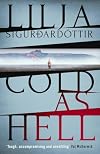
This is the first novel I’ve read by this Icelandic author, but it won’t be my last.
Áróra Jónsdóttir, a financial investigator living in Scotland, travels to Iceland at the behest of her mother Violet because Áróra’s older sister Ísafold has disappeared. Áróra suspects that Björn, Ísafold’s abusive partner, knows more than he’s admitting. Violet contacts Daníel Hansson, a police officer and the former husband of Áróra’s aunt, and he and Áróra join forces to find show more Ísafold. At the same time, Áróra meets a man whom she discovers may be guilty of fraud so she opts to also investigate his financial dealings.
Alternating points of view are presented. Although Áróra is the focus, the perspectives of other characters are presented, especially those of two residents of Ísafold’s apartment building. These include Olga, a widow who is sheltering an undocumented Syrian refugee named Omar, and Grímur, a man who is so repulsed by hair that he shaves his entire body, often more than once a day. Because they have secrets, they do not want to draw attention to themselves and so are not totally forthcoming about what they might know about Ísafold.
This is the first of a series so I was especially interested in the development of Áróra’s character. What I appreciated is that she is a complex character. Her relationship with her sister is interesting. Áróra is angry with repeatedly having to come to rescue Ísafold, only to have her return to her abusive partner. At the same time, she regrets their estrangement and feels guilty for refusing to come the last time. Áróra is intelligent and determined, but I didn’t always approve of her choices. Because she is flawed, she is believable. And authenticity is much more important that likeability.
There is considerable suspense. The multiple viewpoints give characters’ inner thoughts but also keep the reader guessing because more than one possible suspect emerges. Ísafold seems to have been friendly with both Omar and Grímur; the latter even claims that “He knew her well. Sometimes he was convinced that he knew her considerably better than [Björn].” Olga’s relationship with Omar raises questions. How well does she really know the man she has sheltered?
I loved the local colour. The descriptions of the lava fields and the lupins, and the references to Mount Keilir, Mount Esja, and the spooky lava formations near Mývatn all brought back fond memories of a June visit to Iceland a few years ago. References to the midnight sun, sulphur-smelling hot water, ten drops of coffee, and Icelandic hot dogs reminded me of experiences I had. (All I missed was a mention of skyr to which I became addicted.)
There is one aspect that irritated me. There are so many references to Áróra’s jittery belly: “a twitch of excitement in her belly” and “a flutter of anticipation in her belly” and “setting her belly fluttering.” She even “felt a burst of illogical anger towards Ísafold in her belly.” (The misplaced modifier in this sentence creates a bizarre image too.) To make matters worse, Daníel also experiences “a weird jittery feeling in his belly” and has a “desperate beast” turning “somersaults in his belly.” (Maybe it’s the word belly that is the problem?)
The novel is a quick read. The short chapters (108 of them) and the brief duration (2 weeks) create a fast pace. There are some unanswered questions so there is clearly at least one more book. It is one I will definitely be picking up.
Note: Please check out my reader's blog (https://schatjesshelves.blogspot.com/) and follow me on Twitter (@DCYakabuski). show less
Áróra Jónsdóttir, a financial investigator living in Scotland, travels to Iceland at the behest of her mother Violet because Áróra’s older sister Ísafold has disappeared. Áróra suspects that Björn, Ísafold’s abusive partner, knows more than he’s admitting. Violet contacts Daníel Hansson, a police officer and the former husband of Áróra’s aunt, and he and Áróra join forces to find show more Ísafold. At the same time, Áróra meets a man whom she discovers may be guilty of fraud so she opts to also investigate his financial dealings.
Alternating points of view are presented. Although Áróra is the focus, the perspectives of other characters are presented, especially those of two residents of Ísafold’s apartment building. These include Olga, a widow who is sheltering an undocumented Syrian refugee named Omar, and Grímur, a man who is so repulsed by hair that he shaves his entire body, often more than once a day. Because they have secrets, they do not want to draw attention to themselves and so are not totally forthcoming about what they might know about Ísafold.
This is the first of a series so I was especially interested in the development of Áróra’s character. What I appreciated is that she is a complex character. Her relationship with her sister is interesting. Áróra is angry with repeatedly having to come to rescue Ísafold, only to have her return to her abusive partner. At the same time, she regrets their estrangement and feels guilty for refusing to come the last time. Áróra is intelligent and determined, but I didn’t always approve of her choices. Because she is flawed, she is believable. And authenticity is much more important that likeability.
There is considerable suspense. The multiple viewpoints give characters’ inner thoughts but also keep the reader guessing because more than one possible suspect emerges. Ísafold seems to have been friendly with both Omar and Grímur; the latter even claims that “He knew her well. Sometimes he was convinced that he knew her considerably better than [Björn].” Olga’s relationship with Omar raises questions. How well does she really know the man she has sheltered?
I loved the local colour. The descriptions of the lava fields and the lupins, and the references to Mount Keilir, Mount Esja, and the spooky lava formations near Mývatn all brought back fond memories of a June visit to Iceland a few years ago. References to the midnight sun, sulphur-smelling hot water, ten drops of coffee, and Icelandic hot dogs reminded me of experiences I had. (All I missed was a mention of skyr to which I became addicted.)
There is one aspect that irritated me. There are so many references to Áróra’s jittery belly: “a twitch of excitement in her belly” and “a flutter of anticipation in her belly” and “setting her belly fluttering.” She even “felt a burst of illogical anger towards Ísafold in her belly.” (The misplaced modifier in this sentence creates a bizarre image too.) To make matters worse, Daníel also experiences “a weird jittery feeling in his belly” and has a “desperate beast” turning “somersaults in his belly.” (Maybe it’s the word belly that is the problem?)
The novel is a quick read. The short chapters (108 of them) and the brief duration (2 weeks) create a fast pace. There are some unanswered questions so there is clearly at least one more book. It is one I will definitely be picking up.
Note: Please check out my reader's blog (https://schatjesshelves.blogspot.com/) and follow me on Twitter (@DCYakabuski). show less
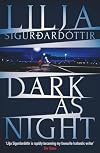
This is the fourth installment in the Áróra Investigations series. Besides crime investigation, this book has some spy thriller and speculative fiction elements.
As in the previous books, there’s more than one case to investigate. Áróra receives a phone call from a woman who claims her 3-year-old daughter Ester Lóa is the reincarnation of Ísafold, Áróra’s sister who disappeared three years earlier. Ísafold is presumed dead though no body has ever been found, but now Ester Lóa show more seems to have more information. While Áróra and her boyfriend Daníel set out to check the veracity of Ester Lóa’s claims, Lady Gúgúlú, Daníel’s drag queen tenant, leaves a goodbye note stating she is leaving the country. Daníel questions this sudden leave-taking and becomes convinced something is wrong when three threatening men pay him a visit.
I was once again totally drawn into the book so I found it difficult to put down. I enjoyed encountering Áróra and Daníel who behave consistently. Intelligent and determined but flawed Áróra remains as likeable as before. But I also enjoyed revisiting with other characters like Helena, Sirra, and Bisi from the earlier books and learning what has happened to them in the interim. Lady Gúgúlú is a favourite character and it was interesting to learn about his background which explains something mentioned in previous books that always bothered me.
There is a great deal of suspense that will definitely keep readers turning pages. Lady Gúgúlú is in obvious danger: “He didn’t doubt they would kill him if they got hold of him. . . . His biggest fear, however, was that they might try to torture him first.” Anyone who tries to find him is also in danger. Then there’s the mystery surrounding Ester Lóa: how can she possibly know what she knows? In the end, some mysteries are solved, but a new puzzle emerges.
What impressed me again is the author’s intricate plotting. Alternating points of view are presented (e.g. Áróra, Daníel, Lady Gúgúlú, Helena). This narrative structure creates suspense through dramatic irony: the reader knows where Lady Gúgúlú is, but will friend or foe find him first? I like how one chapter often elaborates on what is learned in the previous chapter.
Some of the James Bond elements bothered me since I find them unrealistic, and though I know it’s a tenet of several religions, I’m not a fan of paranormal elements like transmigration. Nonetheless I tried to be less skeptical and “to go with the flow”. And I admit to liking Lady Gúgúlú’s final comment to Daníel: “’If you believe what your senses consider to be reality is in fact reality then you haven’t understood a word I’ve said to you about the inner life of the atom.’”
This is an enjoyable and quick read. The reader’s interest is maintained throughout, and the short, snappy chapters add to the quick pace.
Note: Please check out my reader's blog (https://schatjesshelves.blogspot.com/) or substack (https://doreenyakabuski.substack.com/) for over 1,100 of my book reviews. show less
As in the previous books, there’s more than one case to investigate. Áróra receives a phone call from a woman who claims her 3-year-old daughter Ester Lóa is the reincarnation of Ísafold, Áróra’s sister who disappeared three years earlier. Ísafold is presumed dead though no body has ever been found, but now Ester Lóa show more seems to have more information. While Áróra and her boyfriend Daníel set out to check the veracity of Ester Lóa’s claims, Lady Gúgúlú, Daníel’s drag queen tenant, leaves a goodbye note stating she is leaving the country. Daníel questions this sudden leave-taking and becomes convinced something is wrong when three threatening men pay him a visit.
I was once again totally drawn into the book so I found it difficult to put down. I enjoyed encountering Áróra and Daníel who behave consistently. Intelligent and determined but flawed Áróra remains as likeable as before. But I also enjoyed revisiting with other characters like Helena, Sirra, and Bisi from the earlier books and learning what has happened to them in the interim. Lady Gúgúlú is a favourite character and it was interesting to learn about his background which explains something mentioned in previous books that always bothered me.
There is a great deal of suspense that will definitely keep readers turning pages. Lady Gúgúlú is in obvious danger: “He didn’t doubt they would kill him if they got hold of him. . . . His biggest fear, however, was that they might try to torture him first.” Anyone who tries to find him is also in danger. Then there’s the mystery surrounding Ester Lóa: how can she possibly know what she knows? In the end, some mysteries are solved, but a new puzzle emerges.
What impressed me again is the author’s intricate plotting. Alternating points of view are presented (e.g. Áróra, Daníel, Lady Gúgúlú, Helena). This narrative structure creates suspense through dramatic irony: the reader knows where Lady Gúgúlú is, but will friend or foe find him first? I like how one chapter often elaborates on what is learned in the previous chapter.
Some of the James Bond elements bothered me since I find them unrealistic, and though I know it’s a tenet of several religions, I’m not a fan of paranormal elements like transmigration. Nonetheless I tried to be less skeptical and “to go with the flow”. And I admit to liking Lady Gúgúlú’s final comment to Daníel: “’If you believe what your senses consider to be reality is in fact reality then you haven’t understood a word I’ve said to you about the inner life of the atom.’”
This is an enjoyable and quick read. The reader’s interest is maintained throughout, and the short, snappy chapters add to the quick pace.
Note: Please check out my reader's blog (https://schatjesshelves.blogspot.com/) or substack (https://doreenyakabuski.substack.com/) for over 1,100 of my book reviews. show less
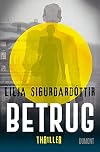
Nach zwei schwierigen Einsätzen in einem Ebolagebiet und Syrien kehrt Úrsúla zurück nach Island zu ihrem Mann und den beiden Kindern. Als man ihr interimsweise den Posten der Innenministerin anbietet, kann sie nicht ablehnen und wird schon am ersten Tag mit einem Vertuschungsfall bei der Polizei konfrontiert. Sie will ihre Arbeit besser machen als die Vorgänger, doch die Politik ist ein Haifischbecken und man hat nur auf neues Futter gewartet. Es dauert nicht lange, bis sie Drohungen an show more ihrem Auto findet, bis plötzlich der Mörder ihres Vaters auftaucht und bis ihr fragiles Privatleben gänzlich aus dem Runder zu laufen droht. Kommt die toughe Frau, die glaubte, schon alles gesehen zu haben, jetzt in ihrer beschaulichen Heimat an den Rand ihrer Grenzen?
Nach der Reykjavík Trilogie nun ein Standalone-Thriller der mit Theaterstücken bekannt gewordenen Autorin Lilja Sigurðardóttir. In „Betrug“ führt sie ihre Protagonistin in die schmutzige Welt der Politik ein, die von Korruption und Frauenfeindlichkeit geprägt ist – auch einem Land, das international eher wie alle nordischen Länder für egalitär gehalten wird. Aus ganz unterschiedlichen Richtungen scheinen die Angriffe zu kommen, wie diese zusammenhängen und wem man glauben und vertrauen kann, bleibt lange im Dunkeln. Ein spannender Fall für eine starke Frau, die auch Schwächen zeigen darf.
Úrsúla ist von Idealismus geprägt, sie zieht es in die Gebiete, wo die Lage am prekärsten ist und hat keine Angst, sich selbst auch großer Gefahr auszusetzen. Was soll dann auf Island Großes drohen? Sie übernimmt den Posten als Ministerin in der Überzeugung, etwas besser machen zu können, muss aber schnell erkennen, dass ihr Handlungsspielraum begrenzt ist. Und erleben, dass sie besonders als Frau Anfeindungen ausgesetzt ist. Es sind viele kleine Nadelstiche, die sie aushalten muss, während sie ihre Erlebnisse aus Afrika und Syrien noch nicht verarbeitet hat. Auch der brutale Tod ihres Vaters in ihrer Kindheit verfolgt sie nach wie vor.
Was mich besonders überzeugte, war, dass sie zwar zunächst noch versucht, über einen Schutzpanzer emotional nichts an sich heranzulassen, dann aber doch einsieht, dass ein Psychologe und ein offenes Gespräch ein Weg aus dem Teufelskreis sein kann. Eine starke Persönlichkeit besticht eher dadurch, dass sie durchdacht mit Problemen umgeht als dass sie als Einzelkämpfer versucht, nichts an ihrem Image kratzen zu lassen. Eine Facette, die man auch in Romanen bis dato eher selten findet.
Die politischen Verstrickungen sind clever inszeniert und lassen die Zusammenhänge nicht gleich erkennen. Die Spannung zieht sich so geschickt durch die Handlung und muss nicht unnötig durch actiongeladene Szenen aufrechterhalten werden.
Ein überzeugender Fall, der vor allem durch die Figuren und einen komplexen Fall besticht. show less
Nach der Reykjavík Trilogie nun ein Standalone-Thriller der mit Theaterstücken bekannt gewordenen Autorin Lilja Sigurðardóttir. In „Betrug“ führt sie ihre Protagonistin in die schmutzige Welt der Politik ein, die von Korruption und Frauenfeindlichkeit geprägt ist – auch einem Land, das international eher wie alle nordischen Länder für egalitär gehalten wird. Aus ganz unterschiedlichen Richtungen scheinen die Angriffe zu kommen, wie diese zusammenhängen und wem man glauben und vertrauen kann, bleibt lange im Dunkeln. Ein spannender Fall für eine starke Frau, die auch Schwächen zeigen darf.
Úrsúla ist von Idealismus geprägt, sie zieht es in die Gebiete, wo die Lage am prekärsten ist und hat keine Angst, sich selbst auch großer Gefahr auszusetzen. Was soll dann auf Island Großes drohen? Sie übernimmt den Posten als Ministerin in der Überzeugung, etwas besser machen zu können, muss aber schnell erkennen, dass ihr Handlungsspielraum begrenzt ist. Und erleben, dass sie besonders als Frau Anfeindungen ausgesetzt ist. Es sind viele kleine Nadelstiche, die sie aushalten muss, während sie ihre Erlebnisse aus Afrika und Syrien noch nicht verarbeitet hat. Auch der brutale Tod ihres Vaters in ihrer Kindheit verfolgt sie nach wie vor.
Was mich besonders überzeugte, war, dass sie zwar zunächst noch versucht, über einen Schutzpanzer emotional nichts an sich heranzulassen, dann aber doch einsieht, dass ein Psychologe und ein offenes Gespräch ein Weg aus dem Teufelskreis sein kann. Eine starke Persönlichkeit besticht eher dadurch, dass sie durchdacht mit Problemen umgeht als dass sie als Einzelkämpfer versucht, nichts an ihrem Image kratzen zu lassen. Eine Facette, die man auch in Romanen bis dato eher selten findet.
Die politischen Verstrickungen sind clever inszeniert und lassen die Zusammenhänge nicht gleich erkennen. Die Spannung zieht sich so geschickt durch die Handlung und muss nicht unnötig durch actiongeladene Szenen aufrechterhalten werden.
Ein überzeugender Fall, der vor allem durch die Figuren und einen komplexen Fall besticht. show less
Lists
Awards


You May Also Like


Associated Authors
Statistics
- Works
- 20
- Members
- 643
- Popularity
- #39,229
- Rating
- 3.7
- Reviews
- 30
- ISBNs
- 78
- Languages
- 8
- Favorited
- 2