
Elizabeth Catte
Author of What You Are Getting Wrong about Appalachia
Works by Elizabeth Catte
Associated Works
Appalachian Reckoning: A Region Responds to Hillbilly Elegy (2019) — Contributor — 186 copies, 4 reviews
Tagged
Common Knowledge
- Birthdate
- 20th Century
- Gender
- female
- Education
- Middle Tennessee State University (PhD/Public History)
- Occupations
- writer, historian, editor-at-large
- Nationality
- USA
- Places of residence
- Virginia, USA
- Map Location
- USA
Members
Reviews
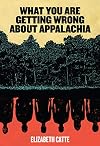
To begin with a mea culpa. Even though I knew Catte was fighting against the stereotypes, I still expected this book to be a sort of coffee table book one might find described in Stuff White People Like. A sumptuous publication in large format comprising artistic black and white photos of...weird poor people. Nice white people could talk about how awful it all is and how they wish they could do something about it. (Pass the organic vegan caviar, please.)
What did I 'know' about Appalachia show more before I read this? Image one: said black and white pictures. Image two: fiddle music. Image three: Deliverance. So yeah, not just fiddles, banjoes too.
As a consequence of this, if somebody had asked me, I would have guessed that Appalachia was small. It fits the homogeneity of the sense of the place. See? Place. Place is small. It's a thing that's clearly identifiable. Wrong word. Wrong, wrong, wrong.
One of the first things I found out, opening this small book, is that Appalachia is huge, encompassing many States and many millions of people. It would seem obvious, just from that fact, that it isn't going to be homogeneous. This book is out to fight that, explaining how it has happened so that you understand why you've been duped.
It's sort of an enraged lament, explaining the process of how we got to a particular point in US history which I hadn't heard of before I read this book. Hillbilly Elegy. On Goodreads over 60 of my friends have read it, compared with a tally of four for this volume. Let's lament just a little louder then, as we realise how many people have bought into the prejudice of Vance's best seller.
There is a book coming out soon, Unwhite: Appalachia, Race and Film by Meredith McCarroll who says “Its central argument is that Appalachian people in cinema have been portrayed as phenotypically white, but using the same tropes that have long been used to portray non-whites in film.” If only that were it, films getting it wrong. The heartbreaking point of Catte's volume is that this is a universal tendency, founded long ago, entrenched by those whose interests are served by it, and supported by the academic community which might largely hang its collective head in shame.
One of the more wrenching moments of a book which is full of them, is to find out that at Catte's alma mater, not only has Hillbilly Elegy become required reading, but it has been put together with a deal to buy one of those books of photos which maintains the false image. For Catte on Hillbilly Elegy, which will give you a taste of What You Are Getting Wrong About Appalachia go here. Eugenicists like Vance's message. It makes you wonder what sort of educational culture presides in the US of A.
This is no reference book. It's venting spleen, written in a way I assume she would not write with her historian's cap on. There are no references, but a detailed reading list for where to go next. In a short, small form, it succinctly puts the reader in the shoes of those who live in this vast area. She makes you part of the action as she describes the long history of labour fighting capitalism, of capitalism cozying up with the academic sociologists and such like, of environmentalists - that is to say, ordinary people turned into activists by their foes - fighting for the preservation of the sweetness of the mountain areas as they are destroyed by coal production, amongst other evils. You watch the pregnant woman next to you being kicked by strike breakers. You watch sociologists agreeing with capitalists who want people off their own land, that it is for their own good to take them from their homes. You watch ordinary people being literally defined as cases for forced sterilisation because it makes it a moral imperative to take them from their homes, whether that be to rip mountains apart to mine coal, or to preserve areas for rich white people to take their vacations.
If you want a nuanced, if angry, view of this exploited expanse of the US, this is an excellent place to start, and it will guide you as to where to go next. show less
What did I 'know' about Appalachia show more before I read this? Image one: said black and white pictures. Image two: fiddle music. Image three: Deliverance. So yeah, not just fiddles, banjoes too.
As a consequence of this, if somebody had asked me, I would have guessed that Appalachia was small. It fits the homogeneity of the sense of the place. See? Place. Place is small. It's a thing that's clearly identifiable. Wrong word. Wrong, wrong, wrong.
One of the first things I found out, opening this small book, is that Appalachia is huge, encompassing many States and many millions of people. It would seem obvious, just from that fact, that it isn't going to be homogeneous. This book is out to fight that, explaining how it has happened so that you understand why you've been duped.
It's sort of an enraged lament, explaining the process of how we got to a particular point in US history which I hadn't heard of before I read this book. Hillbilly Elegy. On Goodreads over 60 of my friends have read it, compared with a tally of four for this volume. Let's lament just a little louder then, as we realise how many people have bought into the prejudice of Vance's best seller.
There is a book coming out soon, Unwhite: Appalachia, Race and Film by Meredith McCarroll who says “Its central argument is that Appalachian people in cinema have been portrayed as phenotypically white, but using the same tropes that have long been used to portray non-whites in film.” If only that were it, films getting it wrong. The heartbreaking point of Catte's volume is that this is a universal tendency, founded long ago, entrenched by those whose interests are served by it, and supported by the academic community which might largely hang its collective head in shame.
One of the more wrenching moments of a book which is full of them, is to find out that at Catte's alma mater, not only has Hillbilly Elegy become required reading, but it has been put together with a deal to buy one of those books of photos which maintains the false image. For Catte on Hillbilly Elegy, which will give you a taste of What You Are Getting Wrong About Appalachia go here. Eugenicists like Vance's message. It makes you wonder what sort of educational culture presides in the US of A.
This is no reference book. It's venting spleen, written in a way I assume she would not write with her historian's cap on. There are no references, but a detailed reading list for where to go next. In a short, small form, it succinctly puts the reader in the shoes of those who live in this vast area. She makes you part of the action as she describes the long history of labour fighting capitalism, of capitalism cozying up with the academic sociologists and such like, of environmentalists - that is to say, ordinary people turned into activists by their foes - fighting for the preservation of the sweetness of the mountain areas as they are destroyed by coal production, amongst other evils. You watch the pregnant woman next to you being kicked by strike breakers. You watch sociologists agreeing with capitalists who want people off their own land, that it is for their own good to take them from their homes. You watch ordinary people being literally defined as cases for forced sterilisation because it makes it a moral imperative to take them from their homes, whether that be to rip mountains apart to mine coal, or to preserve areas for rich white people to take their vacations.
If you want a nuanced, if angry, view of this exploited expanse of the US, this is an excellent place to start, and it will guide you as to where to go next. show less
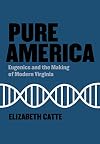
At the end of Chapter Two, Elizabeth Catte begins connecting the threads of Eugenics, the Lost Cause, and replacement theory in the way each shares an interest in preserving a group’s place in the social hierarchy by any means available. Catte writes (referring to Confederate statues but really dealing with an entire colonial mindset):
By the consequence of their mortality these leaders deferred the pleasure of instruction to
their statue, unloving but no less rooted in what they hoped show more would be a lasting articulation of
their power. Attempts to make power endure can look like repressive laws, failed science
and combustible violence. But it analso feel like a gun pointed at you on an ordinary day.
And sometimes that’s exactly what it is. (110)
the passage and the book make clear that a discussion of eugenics, or any method of using ‘purity’ as a way to keep the hierarchy intact, can’t be separated from its roots in the history, geography and economics of a country. Even more, the way in which bigotry – when it becomes insidious in one form – merely evolves under the veneer of ‘science,’ ‘reform,’ or ‘progress’ to make something indefensible look like a service on the surface.
We compartmentalize these events and pretend a sense of innocence at our own peril. Important work and important connections drawn by Elizabeth Catte. show less
By the consequence of their mortality these leaders deferred the pleasure of instruction to
their statue, unloving but no less rooted in what they hoped show more would be a lasting articulation of
their power. Attempts to make power endure can look like repressive laws, failed science
and combustible violence. But it analso feel like a gun pointed at you on an ordinary day.
And sometimes that’s exactly what it is. (110)
the passage and the book make clear that a discussion of eugenics, or any method of using ‘purity’ as a way to keep the hierarchy intact, can’t be separated from its roots in the history, geography and economics of a country. Even more, the way in which bigotry – when it becomes insidious in one form – merely evolves under the veneer of ‘science,’ ‘reform,’ or ‘progress’ to make something indefensible look like a service on the surface.
We compartmentalize these events and pretend a sense of innocence at our own peril. Important work and important connections drawn by Elizabeth Catte. show less
Having roots in Eastern Kentucky there are many stereotypes about the region that need to be shattered. The idea of the region as a homogenous Scots/Irish region, ignoring the contributions of Black, Native American and Hispanic citizens - is especially toxic in that it separates the issues surrounding the region from the issues surrounding many other places - issues of exploitation, of an extraction culture run amok, of environmental racism. The separation of people and attempts to pit low show more income people against one another is by design - a design that has been aided by extraction industries, eugenics movements, white supremacists and libertarian think tanks. A culture that was incapable of supporting itself would not require both armed and political strongmen to shut down popular ideas that had the potential to improve lives and give people back control of their land. Many know this yet it's not always put effectively into words.
Catte articulates these issues and brings the receipts. show less
Catte articulates these issues and brings the receipts. show less
A compact and powerful rebuttal to Hillbilly Elegy, a book which I uncomfortably recognise I was taken in by to a certain extent—I recognised some of the weaknesses of J.D. Vance's work, but not all of them, and I didn't know that he consorts with eugenicists. (Or, as I see after a quick search, one who coyly flirts with white nationalism. Gross.)
Unlike Vance, Elizabeth Catte isn't just of Appalachian descent but from Appalachia and a trained historian, and uses her knowledge of both the show more region and the past to neatly dismantle many of Vance's claims, and to show the flaws in many popular media appraisals of his work. However, there are points where Catte slips into a more academic style of prose, one which I know historians are trained into and which can alienate a non-academic audience, and that sits oddly alongside the more polemical portions of the book. show less
Unlike Vance, Elizabeth Catte isn't just of Appalachian descent but from Appalachia and a trained historian, and uses her knowledge of both the show more region and the past to neatly dismantle many of Vance's claims, and to show the flaws in many popular media appraisals of his work. However, there are points where Catte slips into a more academic style of prose, one which I know historians are trained into and which can alienate a non-academic audience, and that sits oddly alongside the more polemical portions of the book. show less
Lists
United States (1)
Awards


You May Also Like


Associated Authors
Statistics
- Works
- 4
- Also by
- 1
- Members
- 489
- Popularity
- #50,497
- Rating
- 3.8
- Reviews
- 14
- ISBNs
- 16
- Languages
- 1