
Zeke Peña
Author of My Papi Has a Motorcycle
About the Author
Works by Zeke Peña
Associated Works
Tales from la Vida: A Latinx Comics Anthology (Latinographix) (2018) — Contributor — 44 copies, 3 reviews
Tagged
Common Knowledge
- Legal name
- Peña, Ezequiel
- Other names
- Penya, Zeque
Peña, Zeque - Birthdate
- 1983
- Gender
- male
- Birthplace
- Las Cruces, New Mexico, USA
- Places of residence
- El Paso, Texas, USA
- Associated Place (for map)
- USA
Members
Reviews
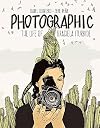
This is a poetic, rhythmic biography written as a graphic novel and including many of the photographer's black and white photos, as well as the cartoons by one of the authors. Often quoting the artist Graciela Iturbide herself, this accessible and intriguing book brings the life story of one of Mexico's award winning photographers to a wide audience of readers. The emphasis is not on dates and documentation, but on what Graciela sees through her lens and her interpretation of the images. The show more book focuses on cultures and symbolism, especially birds. There is a feeling of sadness and grief permeating the images and narration. But ultimately the book provides a sense of triumph that Graciela was able to overcome the limited life prescribed for her by her culture and is able to express herself through her photos and share her vision by exhibiting in a variety of museum collections around the world. show less
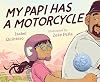
Ascreaming, bright-blue comet zooms through the streets of Corona, California, in a race against the orange setting sun.
A unicorn-decorated purple helmet can’t hide the grin of the young girl tightly gripping the waist of her carpenter father, who’s hunched over his blazing motorcycle as a comet tail of sawdust streams behind them. Basking in her father’s wordless expression of love, she watches the flash of colors zip by as familiar landmarks blend into one another. Changes loom all show more around them, from the abandoned raspado (snow cone) shop to the housing construction displacing old citrus groves. Yet love fills in the spaces between nostalgia and the daily excitement of a rich life shared with neighbors and family. Quintero’s homage to her papi and her hometown creates a vivid landscape that weaves in and out of her little-girl memory, jarring somewhat as it intersects with adult recollections. At the end, her family buys raspados from a handcart—are the vendor and defunct shop’s owner one and the same? Peña’s comic-book–style illustrations capture cultural-insider Mexican-American references, such as a book from Cathy Camper and Raúl the Third’s Lowrider series and the Indigenous jaguar mask on the protagonist’s brother’s T-shirt. Dialogue in speech bubbles incorporates both Spanish and English, and the gist of the conversation is easily followed; a fully Spanish edition releases simultaneously.
Every girl should be so lucky as to have such a papi. (Picture book. 7-11)
-Kirkus Review show less
A unicorn-decorated purple helmet can’t hide the grin of the young girl tightly gripping the waist of her carpenter father, who’s hunched over his blazing motorcycle as a comet tail of sawdust streams behind them. Basking in her father’s wordless expression of love, she watches the flash of colors zip by as familiar landmarks blend into one another. Changes loom all show more around them, from the abandoned raspado (snow cone) shop to the housing construction displacing old citrus groves. Yet love fills in the spaces between nostalgia and the daily excitement of a rich life shared with neighbors and family. Quintero’s homage to her papi and her hometown creates a vivid landscape that weaves in and out of her little-girl memory, jarring somewhat as it intersects with adult recollections. At the end, her family buys raspados from a handcart—are the vendor and defunct shop’s owner one and the same? Peña’s comic-book–style illustrations capture cultural-insider Mexican-American references, such as a book from Cathy Camper and Raúl the Third’s Lowrider series and the Indigenous jaguar mask on the protagonist’s brother’s T-shirt. Dialogue in speech bubbles incorporates both Spanish and English, and the gist of the conversation is easily followed; a fully Spanish edition releases simultaneously.
Every girl should be so lucky as to have such a papi. (Picture book. 7-11)
-Kirkus Review show less
Ascreaming, bright-blue comet zooms through the streets of Corona, California, in a race against the orange setting sun.
A unicorn-decorated purple helmet can’t hide the grin of the young girl tightly gripping the waist of her carpenter father, who’s hunched over his blazing motorcycle as a comet tail of sawdust streams behind them. Basking in her father’s wordless expression of love, she watches the flash of colors zip by as familiar landmarks blend into one another. Changes loom all show more around them, from the abandoned raspado (snow cone) shop to the housing construction displacing old citrus groves. Yet love fills in the spaces between nostalgia and the daily excitement of a rich life shared with neighbors and family. Quintero’s homage to her papi and her hometown creates a vivid landscape that weaves in and out of her little-girl memory, jarring somewhat as it intersects with adult recollections. At the end, her family buys raspados from a handcart—are the vendor and defunct shop’s owner one and the same? Peña’s comic-book–style illustrations capture cultural-insider Mexican-American references, such as a book from Cathy Camper and Raúl the Third’s Lowrider series and the Indigenous jaguar mask on the protagonist’s brother’s T-shirt. Dialogue in speech bubbles incorporates both Spanish and English, and the gist of the conversation is easily followed; a fully Spanish edition releases simultaneously.
Every girl should be so lucky as to have such a papi. (Picture book. 7-11)
-Kirkus Review show less
A unicorn-decorated purple helmet can’t hide the grin of the young girl tightly gripping the waist of her carpenter father, who’s hunched over his blazing motorcycle as a comet tail of sawdust streams behind them. Basking in her father’s wordless expression of love, she watches the flash of colors zip by as familiar landmarks blend into one another. Changes loom all show more around them, from the abandoned raspado (snow cone) shop to the housing construction displacing old citrus groves. Yet love fills in the spaces between nostalgia and the daily excitement of a rich life shared with neighbors and family. Quintero’s homage to her papi and her hometown creates a vivid landscape that weaves in and out of her little-girl memory, jarring somewhat as it intersects with adult recollections. At the end, her family buys raspados from a handcart—are the vendor and defunct shop’s owner one and the same? Peña’s comic-book–style illustrations capture cultural-insider Mexican-American references, such as a book from Cathy Camper and Raúl the Third’s Lowrider series and the Indigenous jaguar mask on the protagonist’s brother’s T-shirt. Dialogue in speech bubbles incorporates both Spanish and English, and the gist of the conversation is easily followed; a fully Spanish edition releases simultaneously.
Every girl should be so lucky as to have such a papi. (Picture book. 7-11)
-Kirkus Review show less
If you still think of graphic books as lesser, or more like comic books, this will convince you otherwise.
Not a kid's book. Not too much that is mature/ disturbing for teens, but a quick search for more related content showed me images I did not actually want to see.
I agree with the notes that Iturbide's is not surreal or magical, but very, very real. And poetic. Yes.
One thing that this bio reveals is noteworthy - Iturbide admits that she believed Mexico and India to be similar, to have a show more lot in common (perspectives, significance of traditions, focal points of land- and city-scapes, etc., iiuc)... but then she went to India and found that each country has its own magnificence. I appreciate biographies that reveal flaws or naiveties in their subjects... and that show how the subject can learn and grow.... show less
Not a kid's book. Not too much that is mature/ disturbing for teens, but a quick search for more related content showed me images I did not actually want to see.
I agree with the notes that Iturbide's is not surreal or magical, but very, very real. And poetic. Yes.
One thing that this bio reveals is noteworthy - Iturbide admits that she believed Mexico and India to be similar, to have a show more lot in common (perspectives, significance of traditions, focal points of land- and city-scapes, etc., iiuc)... but then she went to India and found that each country has its own magnificence. I appreciate biographies that reveal flaws or naiveties in their subjects... and that show how the subject can learn and grow.... show less
Lists
Awards


You May Also Like
Associated Authors
Statistics
- Works
- 2
- Also by
- 7
- Members
- 1,058
- Popularity
- #24,345
- Rating
- 4.2
- Reviews
- 119
- ISBNs
- 25
- Languages
- 1
- Favorited
- 1