
Yehuda Bauer (1926–2024)
Author of A History of the Holocaust
About the Author
Yehuda Bauer is the former director of the International Institute for Holocaust Research, Yad Vashem, Jerusalem, and now serves as its academic advisor
Image credit: Yehuda Bauer
Works by Yehuda Bauer
American Jewry and the Holocaust: The American Jewish Joint Distribution Committee, 1939-1945 (1981) 31 copies
My brother's keeper; a history of the American Jewish Joint Distribution Committee, 1929-1939 (1974) 28 copies
Associated Works
Tunnel of Hope: Escape from the Novogrudok Forced Labor Camp (2024) — Foreword, some editions — 13 copies, 9 reviews
Die Yad Vashem Enzyklopädie der Ghettos während des Holocaust (2014) — Foreword, some editions — 9 copies
Tagged
Common Knowledge
- Birthdate
- 1926-04-06
- Date of death
- 2024-10-18
- Gender
- male
- Education
- Cardiff University (Bx)
Hebrew University, Jerusalem (PhD) - Occupations
- historian
professor - Organizations
- Hebrew University of Jerusalem, Institute for Contemporary Jewry
Mapam
Journal for Holocaust and Genocide Studies (founding editor)
International Holocaust Remembrance Association (academic advisor) - Nationality
- Czechoslovakia (birth)
Israel - Birthplace
- Prague, Czechoslovakia
- Places of residence
- Prague, Czechoslovakia
Haifa, British Mandate of Palestine
Kibbutz Shoval, Israeli Negev - Associated Place (for map)
- Prague, Czechoslovakia
Members
Reviews
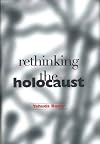
The title of this latest contribution from Bauer is slightly misleading; as valuable as it is, the volume is not really a rethinking of the Holocaust but rather a revisiting of the major problems and interpretations in Holocaust studies. Bauer, director of the International Institute for Holocaust Research at Yad Vashem in Jerusalem, begins with a short discussion of what exactly historians do. He quite rightly departs from standard practice when he asks such moral and "what if" questions as show more what could have been done? and what should have been done? Contrary to what he calls Elie Wiesel's "mystification" of the Holocaust, he insists that the catastrophe was a human invention and therefore historically and "rationally" explicable. Separate chapters deal with Jewish armed and unarmed resistance, and with rescue attempts--he examines, for instance, the case of Gisi Fleischmann, a Zionist leader who worked to get as many Jews out of Slovakia as possible, which Bauer uses to discuss issues of gender, arguing that women did not fight for the status of women separately but for collective and individual survival and for honor. Most fascinating for non-Jewish readers are the chapter on Jewish theological attempts to explain the Holocaust and Bauer's valuable synthesis and reexamination of some of the major interpretations of the Holocaust. Bauer ends by looking at how the Holocaust is related to the creation of the state of Israel in 1948 (he rejects, for instance, the notion that "a guilt complex" on the part of Western countries led them to vote for partition of British Palestine). (Jan.)Forecast: This book will become a staple of Holocaust literature and should enjoy a long, if quiet, life in print.
Paul Breines, Washington Post Book World
"Bauer's book . . . reaches beyond issues of rescue, offering a strong introduction to many of the analytic debates on Nazi genocide."
One of the world's premier historians of the Holocaust evaluates accepted views of its history and meaning in this thoughtful book. Yehuda Bauer offers his own interpretation of why the Holocaust occurred and how another could be prevented. He offers fresh opinions on topics ranging from how Jews reacted to the murder campaign against them to the relationship between the Holocaust and the establishment of Israel. show less
Paul Breines, Washington Post Book World
"Bauer's book . . . reaches beyond issues of rescue, offering a strong introduction to many of the analytic debates on Nazi genocide."
One of the world's premier historians of the Holocaust evaluates accepted views of its history and meaning in this thoughtful book. Yehuda Bauer offers his own interpretation of why the Holocaust occurred and how another could be prevented. He offers fresh opinions on topics ranging from how Jews reacted to the murder campaign against them to the relationship between the Holocaust and the establishment of Israel. show less

History of organized escape of 300,000 survivors of the Holocaust between 1944 to 1948
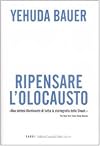
Ripensare alla genesi dell’Olocausto, alle ragioni di un evento che rappresenta un unicuum nella, comunque, tormentata storia dell’uomo è un modo per pensare, per non perdere la traccia della memoria. Yehuda Bauer è uno studioso israeliano e raccoglie, o meglio ordina, in questo saggio dei suoi contributi scritti sull’argomento nel corso degli anni. E il libro si chiude con un discorso dell’autore davanti al Parlamento tedesco tenuto il 27 gennaio del 1998. Bauer parte da un show more presupposto: l’olocausto degli ebrei perpetrato dai nazisti non va nel solco delle precedenti persecuzioni razziali, a danno degli ebrei, o delle minoranze etniche. I pogrom, la strage dei curdi, dei tutsi, gli eccidi di Pol Pot in Cambogia hanno un filo conduttore: l’eliminazione di alcune minoranze ritenute ostili; con genocidi e crimini efferati contro l’umanità. Ma l’olocausto ha una matrice diversa, la colpa degli ebrei non è imputabile a quello che hanno fatto, ad un sistema di responsabilità sociali, ad un semplice odio razziale; la loro colpa è quella di essere nati. E non basta eliminarli dalla Germania o dai territori occupati; l’obiettivo dei nazisti era quello di estirpare il male alla radice, estinguendo un popolo a titolo definitivo. Lungo questo percorso Bauer articola un’analisi approfondita che spazia dalla resistenza, o dalla desistenza, degli ebrei, per giungere all’atteggiamento che i tedeschi e gran parte degli abitanti dei territori occupati hanno avuto nei confronti degli ebrei, legittimando i crimini dei nazisti. Non sono i volenterosi carnefici di Hitler, come sostenuto da Goldhagen; ma un intero popolo contaminato dalla volontà di eseguire gli ordini di una elitè e di una burocrazia in grado di garantire efficientemente il più efferato crimine della storia dell’uomo. Lessi questo libro nel 2010, ancora non avevo compiuto 40 anni, la vita ancora non mi aveva fornito gli strumenti necessari a comprendere quanto l’odio e l’ignoranza possano deviare l’uomo. Ora ho gli strumenti; ma non riesco a farmene una ragione.
Recensione del 12 dicembre 2010
Un approccio diverso all’Olocausto. Questo l’obiettivo di Bauer in un libro che parte da lontano, per arrivare alla fondazione dello stato di Israele. I libri dell’Olocausto sono in genere fondati sui racconti, storie di dramme individuali che rappresentano la tragedia collettiva; niente più della realtà per raccontare la follia dell’Olocausto. Il libro di Bauer usa percorsi diversi, entrando nel cuore della cultura ebraica e dell’odio verso questa medesima cultura. Il libro risulta interessante e di agevole lettura, ma è evidente l’assenza di profondità. Troppo forti gli assiomi dell’autore che ne condizionano i percorsi di ricostruzione. Buono, invece, l’impianto del libro e la suddivisione in undici capitoli. Alcuni spunti sono molto interessanti e consentono di riflettere su temi fondamentali come la differenza tra l’Olocausto e gli altri genocidi. Un giudizio, complessivamente, buono ma con alcune zone d’ombra. show less
Recensione del 12 dicembre 2010
Un approccio diverso all’Olocausto. Questo l’obiettivo di Bauer in un libro che parte da lontano, per arrivare alla fondazione dello stato di Israele. I libri dell’Olocausto sono in genere fondati sui racconti, storie di dramme individuali che rappresentano la tragedia collettiva; niente più della realtà per raccontare la follia dell’Olocausto. Il libro di Bauer usa percorsi diversi, entrando nel cuore della cultura ebraica e dell’odio verso questa medesima cultura. Il libro risulta interessante e di agevole lettura, ma è evidente l’assenza di profondità. Troppo forti gli assiomi dell’autore che ne condizionano i percorsi di ricostruzione. Buono, invece, l’impianto del libro e la suddivisione in undici capitoli. Alcuni spunti sono molto interessanti e consentono di riflettere su temi fondamentali come la differenza tra l’Olocausto e gli altri genocidi. Un giudizio, complessivamente, buono ma con alcune zone d’ombra. show less

Lo scrittore esamina i numerosi drammatici tentativi da parte dei leader di organizzazioni ebraiche e sioniste di contrattare con i nazisti il rilascio di ebrei in cambio di denaro, proprietà, vantaggi politici, e affronta le questioni morali che tale genere di trattative ha sollevato. Una rassegna sconvolgente dei personaggi implicati in questa vicenda, delle loro ragioni, delle moltissime sconfitte, dei loro rari successi. (fonte: libreriauniversitaria.it)
May 5, 2020Italian
Lists
Awards

You May Also Like


Associated Authors
Statistics
- Works
- 40
- Also by
- 3
- Members
- 976
- Popularity
- #26,388
- Rating
- 3.8
- Reviews
- 5
- ISBNs
- 61
- Languages
- 6
- Favorited
- 1