
Hanne Blank
Author of Virgin: The Untouched History
About the Author
Hanne Blank is a writer, historian, and public speaker whose work has been featured everywhere from Boston magazine to Penthouse
Image credit: Hanne Blank
Works by Hanne Blank
Big Big Love: A Sourcebook on Sex for People of Size and Those Who Love Them (2000) 171 copies, 4 reviews
Sympathy 1 copy
Sauce for the Gander 1 copy
Associated Works
Our Bodies, Ourselves: A New Edition for a New Era [35th Anniversary Edition] (2005) — Contributor, some editions — 927 copies, 5 reviews
Yes Means Yes!: Visions of Female Sexual Power and A World Without Rape (2008) — Contributor — 637 copies, 12 reviews
Lilith: The Independent Jewish Women's Magazine 2001, No. 1 — Contributor — 6 copies
Tagged
Common Knowledge
- Canonical name
- Blank, Hanne
- Birthdate
- 1969-02-25
- Gender
- female
- Occupations
- historian
- Awards and honors
- George Whitfield Chadwick Medal (1991)
- Nationality
- USA
- Birthplace
- Northampton, Massachusetts, USA
- Places of residence
- Baltimore, Maryland, USA
- Associated Place (for map)
- USA
Members
Reviews
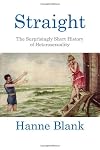
Straight takes on the – in the words of the author – surprisingly short history of heterosexuality from the 19th century to the present. While one might think that the history extends further back, Blank notes that the term was first coined in the late 19th century, was popularized by Krafft-Ebing and Freud, encompassed a number of cultural ideas and finally became part of the doxa, the generally known information. Blank starts her discussion of the limiting idea of heterosexuality by show more talking about her own relationship with her partner. Because of a variety of intersex conditions, it is hard to say that “male” and “female” are static, easily defined conditions. Are sexes determined by genes? Hormones? Socially defined gender? Then there’s the difference between sexual attractions and behavior. Heterosexuality is generally defined as “normal” sexuality, but what “abnormal” sexuality is has always differed from time and place. The idea that heterosexuality is a construct rather than a scientific fact, and that it is often quite limiting and discriminatory, is an idea that recurs frequently.
There’s less specific scientific information compared to the other Blank book I read, Virgin, but I was more familiar with the period and topics covered in this book and thought Blank’s analysis of social trends was informative. She covers the period where the term heterosexual first appeared – when the West was moving away from Catholic concepts of sin and sexual acts - not separate identities - to ideas of normal vs. deviant. The rise of the city, the popularization of scientific concepts and jargon and fears of degeneration contributed to the rise of heterosexuality. Freud had a lasting effect and Blank is obviously critical of him as seen in the way she relates his ideas. The concept of sexual identities was given more fuel by the work of Kinsey and Masters and Johnson and the push for equality by various groups in the mid-20th century.
The development of the trappings of heterosexuality is described in the next chapters. Marriage moved from an economic partnership centered around children to an (theoretically) equal partnership based on true love and personal and sexual fulfillment with children optional and planned. There was a lot of interesting information presented in this section – the development of dating culture, the rash of sexual help manuals for married couples and the gradual elevation of the orgasm as the defining measurement of sex. In the end, Blank concludes that the concept of heterosexuality cannot include all the advances in technology, biology, psychology and the overall complexity of human behavior. As examples she points to the rise of gay culture, homophobic politicians who are outed, and court cases involving transgender individuals. Blank’s ideas about the uselessness of heterosexuality might seem extreme but she nicely and succinctly covers all the limitations of the concept. I didn’t agree with her conclusion that studies on homosexuality didn’t have much use and really shouldn’t be done – even if only because prohibitions on studying something are worrisome. While I found this book to be more generalized and big-picture compared to Virgin, it was a worthwhile read. Since I’d read some books and taken classes on the subject before, much of the information wasn’t new but the analysis and examination of multiple trends and influences was helpful. The book was short and very readable as well as humorous. show less
There’s less specific scientific information compared to the other Blank book I read, Virgin, but I was more familiar with the period and topics covered in this book and thought Blank’s analysis of social trends was informative. She covers the period where the term heterosexual first appeared – when the West was moving away from Catholic concepts of sin and sexual acts - not separate identities - to ideas of normal vs. deviant. The rise of the city, the popularization of scientific concepts and jargon and fears of degeneration contributed to the rise of heterosexuality. Freud had a lasting effect and Blank is obviously critical of him as seen in the way she relates his ideas. The concept of sexual identities was given more fuel by the work of Kinsey and Masters and Johnson and the push for equality by various groups in the mid-20th century.
The development of the trappings of heterosexuality is described in the next chapters. Marriage moved from an economic partnership centered around children to an (theoretically) equal partnership based on true love and personal and sexual fulfillment with children optional and planned. There was a lot of interesting information presented in this section – the development of dating culture, the rash of sexual help manuals for married couples and the gradual elevation of the orgasm as the defining measurement of sex. In the end, Blank concludes that the concept of heterosexuality cannot include all the advances in technology, biology, psychology and the overall complexity of human behavior. As examples she points to the rise of gay culture, homophobic politicians who are outed, and court cases involving transgender individuals. Blank’s ideas about the uselessness of heterosexuality might seem extreme but she nicely and succinctly covers all the limitations of the concept. I didn’t agree with her conclusion that studies on homosexuality didn’t have much use and really shouldn’t be done – even if only because prohibitions on studying something are worrisome. While I found this book to be more generalized and big-picture compared to Virgin, it was a worthwhile read. Since I’d read some books and taken classes on the subject before, much of the information wasn’t new but the analysis and examination of multiple trends and influences was helpful. The book was short and very readable as well as humorous. show less
I picked this book up because it seemed like an interesting subject, from a female perspective. The book was indeed very interesting. It explores the concept and perception of virginity from sociological, biological and historical perspectives. What struck me over and over again is how the concept of virginity is used to control women, in one way or another. I found the parts of the book focused on modern times to be the most interesting, and I would have liked the author to explore other show more concepts, such as purity balls (the concept of which creeps me out). Very enjoyable for women or readers looking for quirky non-fiction. show less
I regularly give nonfiction three-star ratings. I don't read a lot of it. The two stars is because of how this book was written and edited. Trigger warnings for this book include but are not limited to: historical and social examinations of misogyny--lots and lots of it; the huge double standard that exists; and historical pedophilia. I don't doubt all the research she did. This book is informative, educational, a lot of it still stands, and it got me wondering a little if society or show more medicine had advanced in any other way around virginity since. I read this when it first came out. Fourteen years later, I only remembered what turned out to be a few pages. The book flows well. It starts out with medical and historical aspects, with some pop culture references. An enormous hunk of the book examines Christianity's relationship and influence on virginity and its perception, with Catholicism not far behind. Judaism is often mentioned, but Jewish attitudes towards sex are wildly different so they're not presented side-by-side. Pop culture and Western attitudes are increasingly examined as the book progresses. It was trying to be linear, and it did a good job. The author, however, makes bad puns and stupid jokes often. She was trying to break up sections that could be dry, but her choices were annoying. She contradicts herself otften without explaining why, and only sometimes acknowledges it. Her sentences are too wordy. Some, I had to read out loud three times in an attempt to figure out what was going on. In the introduction, she says there's little information. Then she says there's a lot. She says not to see her book as the sum total of research, then says there's not that many books out there. That virginity wasn't important, then that it clearly was. Make up your mind, lady.
From beginning to end, all of this book except for a few paragraphs are about straight female virginity, or just female virginity in the context of historically rooted and ever-present lesbian erasure. At times while reading this, I wondered what Blank thought of the Lonely Island song "I Just Had Sex," a lighthearted take on male virginity loss. The song came out shortly after this book was written. I wondered how she would have interpreted it in the context of her book, and to herself as a consumer of pop culture. Especially now in 2021 as of this review writing, when there are TikTok trends of playing the song upon acknowledgement of virginity loss for all genders. I watched a few that were intended as lighthearted celebration and giggled.
The conclusion doesn't feel like one. It feels like she wanted to hurry up and finish the book. Given the style of it and the poor writing, I don't blame her. I'm glad this was written. It was well-researched and brought a lot of things to light. show less
From beginning to end, all of this book except for a few paragraphs are about straight female virginity, or just female virginity in the context of historically rooted and ever-present lesbian erasure. At times while reading this, I wondered what Blank thought of the Lonely Island song "I Just Had Sex," a lighthearted take on male virginity loss. The song came out shortly after this book was written. I wondered how she would have interpreted it in the context of her book, and to herself as a consumer of pop culture. Especially now in 2021 as of this review writing, when there are TikTok trends of playing the song upon acknowledgement of virginity loss for all genders. I watched a few that were intended as lighthearted celebration and giggled.
The conclusion doesn't feel like one. It feels like she wanted to hurry up and finish the book. Given the style of it and the poor writing, I don't blame her. I'm glad this was written. It was well-researched and brought a lot of things to light. show less
A light, quick read. Like Blank's previous cultural history, Virgin, this book is full of fascinating anecdotes, some of which you're likely to know about if you've spent much time involved in gender or sexuality studies. The book combines broad strokes of history with these anecdotes and details smoothly and readable, and like Virgin, ought to be accessible to the general reader.
Like Blank, I have been in relationships that might - or might not - be definable as heterosexual, and so I have show more a personal investment in her unraveling of the term and its history. I found her eventually conclusion (is this a spoiler? can you spoil nonfiction?) - "this too shall pass" - hopeful and reassuring.
One negative note - I found some of Blank's language choices when discussing transgendered individuals strange, such as the footnote where she briefly observes that "the horrific rape and murder of Brandon Teena" demonstrates her point that "women who are perceived to be overly sexual, or too sexual in the wrong ways - meaning, especially, ways that do not focus on conventional feminine receptivity - are still likely to be shamed, ostracized, and punished." (n 27, p 179; p 143). I don't disagree that the example of Brandon Teena (whose life, as Blank notes, has been dramatized in the movie Boys Don't Cry) demonstrates the brutality that those who violate gender norms often face, or that Teena's rape and murder was due to the revelation that he was not cisgendered - that he was perceived by his murderers as a woman pretending to be a man. But Blank here seems to identify Teena as a woman, against his self-presentation.
This is a small detail, but it did mar an otherwise enjoyable read for me. show less
Like Blank, I have been in relationships that might - or might not - be definable as heterosexual, and so I have show more a personal investment in her unraveling of the term and its history. I found her eventually conclusion (is this a spoiler? can you spoil nonfiction?) - "this too shall pass" - hopeful and reassuring.
One negative note - I found some of Blank's language choices when discussing transgendered individuals strange, such as the footnote where she briefly observes that "the horrific rape and murder of Brandon Teena" demonstrates her point that "women who are perceived to be overly sexual, or too sexual in the wrong ways - meaning, especially, ways that do not focus on conventional feminine receptivity - are still likely to be shamed, ostracized, and punished." (n 27, p 179; p 143). I don't disagree that the example of Brandon Teena (whose life, as Blank notes, has been dramatized in the movie Boys Don't Cry) demonstrates the brutality that those who violate gender norms often face, or that Teena's rape and murder was due to the revelation that he was not cisgendered - that he was perceived by his murderers as a woman pretending to be a man. But Blank here seems to identify Teena as a woman, against his self-presentation.
This is a small detail, but it did mar an otherwise enjoyable read for me. show less
Lists
You May Also Like


Associated Authors
Statistics
- Works
- 12
- Also by
- 6
- Members
- 1,177
- Popularity
- #21,847
- Rating
- 4.0
- Reviews
- 27
- ISBNs
- 27
- Languages
- 1
- Favorited
- 5
