
R. O. Kwon
Author of The Incendiaries
About the Author
Image credit: R.O. Kwon speaks on a panel discussion at the National Book Festival, August 31, 2019. Photo by Kimberly T. Powell/Library of Congress. By Library of Congress Life - 20190831KP0107.jpg, CC0, https://commons.wikimedia.org/w/index.php?curid=82899184
Works by R. O. Kwon
Associated Works
Tagged
Common Knowledge
- Canonical name
- Kwon, R. O.
- Legal name
- Kwon, Reese Okyong
- Gender
- female
- Education
- Yale University
- Occupations
- author
- Awards and honors
- James Duggins, PhD Fund for Outstanding Mid-Career LGBTQ Novelists (2025)
- Nationality
- USA
- Birthplace
- Seoul, South Korea
- Places of residence
- Los Angeles, California, USA
- Associated Place (for map)
- USA
Members
Reviews
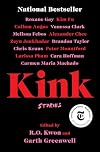
CW: non-con, under-negotiated kink, ignoring a safeword, shame, attempted/near-rape, ignoring SSC/risk-aware kink practices with abandon and ignorance. Probably more? I dunno. It was a lot. Of stories. And kink. Just. Be careful and take care of you while reading this.
*drums fingers* So. In general, I am not the biggest fan of short stories. They just tend not to be my bag. I've also been reading, very deliberately, about human sexuality, including kink, in both fiction and nonfiction, in show more both traditionally published and nontraditionally published forms, for my entire adult life. So I'd say I both was and was not the audience for this anthology of short stories all having something to do with kink. Do with that information what you will when I say that I really, really didn't care for it.
A handful of the stories here, while I might not have loved them, I thought were doing something really interesting and were successful as examples of the form. (I'll list at the end of my review which ones those were.) And I think the whole anthology suffered from the framing it was given, from being packaged in this book with this black cover with the forbidding red "Kink" as a title and from coming under a two-page introduction from the editors that makes claims of providing something needed and new in this collection ("a book like this hasn't been published in a long time") but fails to make any real argument as to why we do or to prove that we don't already have it. The introduction ignores (or worse (?), is unaware of) the vast array of kink writing in fiction that has been happening in fandom spaces, in romance, and, yes, in long-form literary fiction for... well, forever, really. The introduction, which points to the editors' desire to produce "the kind of book that could sit on artists' residencies' library shelves" and wants to push back against a perceived "flattening" and "simplification" of kink in popular culture, including popular books*, reads like the worst kind of elitist nonsense. There is so much good writing out there already about this subject. Is there room for more? Of course! Is there room for an anthology of literary short stories on this subject? Of course! Is it good to have writing on this subject in all manner of genres, including literary fiction? Of course! But this suggestion that this anthology has finally given us something that was just tragically missing before, that it has rolled in and filled some kind hole that desperately needed filling, seriously chapped my ass. (Heh.) So. Are there some stories in here that I might have been happier about if I had come across them in a magazine or a collection of an author's work or some other anthology? Yeah, maybe. 'Cause after that intro, I went in mad.
Now, as to the stories themselves. Always, always, in an anthology, some things will float your boat while others don't. For sure that was the case for me here. But I genuinely didn't *really* like any of them. And some of that is the literary-short-story-ness of them. No judgement. (Okay, mild judgement. But only mild!). This genre (it *is* a genre, with conventions and expectations and weaknesses, just like any other) just isn't the genre that really rolls down my socks. But on the whole, there's an awful lot of miscommunication and shame and obfuscation in these stories. And very little of that miscommunication and obfuscation and shame gets resolved or cleared up or transformed into self-acceptance. And, fair? I guess? I mean, it's not romance. No one promised me any happy endings. And it's not terribly fair to judge any one of these stories about miscommunication or obfuscation or shame just because it happens to be in company with fifteen others also about those things. But I was kind of chanting to myself by the end: "please, please, *please* don't let this be the first (or floggers and crosses, please not the last) thing someone first trying to figure out their kinky tendencies reads." Because I really feel that the chances of coming away from reading this anthology with negative feelings and associations about kink is really high. One might argue (even *I* might argue), that it is neither the job nor the responsibility of a short story anthology to be a steward of its readers in that way. But the introduction seems to argue that it is? Or at least that it wants to give readers an image of kink that is broad and more positive and more nuanced than the popular perception. And I'm just not sure it succeeds.
Have I just made an argument that this anthology's biggest flaw is a shitty introduction? Maybe. If you love literary short stories, you will almost certainly enjoy Kink more than I did. And if you've never read fiction about kink, I encourage you to start elsewhere.
*This is where I point out that romance, as a genre, is the most popular of all popular books, right? This is where I point out that romance consistently makes up just shy of half of all popular paperbacks sold yearly? And over a third of *all* popular fiction?
The Stories in Kink I Would Recommend
"The Cure," Melissa Febos
"Oh, Youth," Brandon Taylor
"The Lost Performance of the High Priestess of the Temple of Horror," Carmen Maria Machado
"The Voyeurs," Zeyn Joukhadar show less
*drums fingers* So. In general, I am not the biggest fan of short stories. They just tend not to be my bag. I've also been reading, very deliberately, about human sexuality, including kink, in both fiction and nonfiction, in show more both traditionally published and nontraditionally published forms, for my entire adult life. So I'd say I both was and was not the audience for this anthology of short stories all having something to do with kink. Do with that information what you will when I say that I really, really didn't care for it.
A handful of the stories here, while I might not have loved them, I thought were doing something really interesting and were successful as examples of the form. (I'll list at the end of my review which ones those were.) And I think the whole anthology suffered from the framing it was given, from being packaged in this book with this black cover with the forbidding red "Kink" as a title and from coming under a two-page introduction from the editors that makes claims of providing something needed and new in this collection ("a book like this hasn't been published in a long time") but fails to make any real argument as to why we do or to prove that we don't already have it. The introduction ignores (or worse (?), is unaware of) the vast array of kink writing in fiction that has been happening in fandom spaces, in romance, and, yes, in long-form literary fiction for... well, forever, really. The introduction, which points to the editors' desire to produce "the kind of book that could sit on artists' residencies' library shelves" and wants to push back against a perceived "flattening" and "simplification" of kink in popular culture, including popular books*, reads like the worst kind of elitist nonsense. There is so much good writing out there already about this subject. Is there room for more? Of course! Is there room for an anthology of literary short stories on this subject? Of course! Is it good to have writing on this subject in all manner of genres, including literary fiction? Of course! But this suggestion that this anthology has finally given us something that was just tragically missing before, that it has rolled in and filled some kind hole that desperately needed filling, seriously chapped my ass. (Heh.) So. Are there some stories in here that I might have been happier about if I had come across them in a magazine or a collection of an author's work or some other anthology? Yeah, maybe. 'Cause after that intro, I went in mad.
Now, as to the stories themselves. Always, always, in an anthology, some things will float your boat while others don't. For sure that was the case for me here. But I genuinely didn't *really* like any of them. And some of that is the literary-short-story-ness of them. No judgement. (Okay, mild judgement. But only mild!). This genre (it *is* a genre, with conventions and expectations and weaknesses, just like any other) just isn't the genre that really rolls down my socks. But on the whole, there's an awful lot of miscommunication and shame and obfuscation in these stories. And very little of that miscommunication and obfuscation and shame gets resolved or cleared up or transformed into self-acceptance. And, fair? I guess? I mean, it's not romance. No one promised me any happy endings. And it's not terribly fair to judge any one of these stories about miscommunication or obfuscation or shame just because it happens to be in company with fifteen others also about those things. But I was kind of chanting to myself by the end: "please, please, *please* don't let this be the first (or floggers and crosses, please not the last) thing someone first trying to figure out their kinky tendencies reads." Because I really feel that the chances of coming away from reading this anthology with negative feelings and associations about kink is really high. One might argue (even *I* might argue), that it is neither the job nor the responsibility of a short story anthology to be a steward of its readers in that way. But the introduction seems to argue that it is? Or at least that it wants to give readers an image of kink that is broad and more positive and more nuanced than the popular perception. And I'm just not sure it succeeds.
Have I just made an argument that this anthology's biggest flaw is a shitty introduction? Maybe. If you love literary short stories, you will almost certainly enjoy Kink more than I did. And if you've never read fiction about kink, I encourage you to start elsewhere.
*This is where I point out that romance, as a genre, is the most popular of all popular books, right? This is where I point out that romance consistently makes up just shy of half of all popular paperbacks sold yearly? And over a third of *all* popular fiction?
The Stories in Kink I Would Recommend
"The Cure," Melissa Febos
"Oh, Youth," Brandon Taylor
"The Lost Performance of the High Priestess of the Temple of Horror," Carmen Maria Machado
"The Voyeurs," Zeyn Joukhadar show less
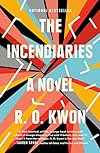
Will and Phoebe meet at fictional Edwards College on the US East Coast and form a relationship. Will has recently experienced a loss of faith. Phoebe feels responsible for her mother’s death. John Leal, who claims to have been incarcerated in a North Korean gulag, takes advantage of Phoebe’s insecurities to lure her into his cult. Will is suspicious of John and protective of Phoebe. The cult engages in increasingly bizarre and violent activities.
This writing is strong, especially for a show more debut, but the story itself is extremely disturbing, a bit too disturbing for my taste. It purports to be an examination of faith but there is little introspection. The reader wants to understand Will’s decision, but what little is provided seems inadequate. Phoebe’s gradual absorption into the cult feels more convincing but there is a problem with the narrative voice. The story is told by Will, and Will interpreting Phoebe’s views (and Will interpreting John’s views), but this robs the reader of grasping their true beliefs. We only see Phoebe and John through Will’s lens.
According to the blurb, “The Incendiaries is a fractured love story and a brilliant examination of the minds of extremist terrorists.” The problem is that it does not examine the ‘minds of extremist terrorists’ when it is written from the perspective of a non-terrorist. It did not work for me. I almost did not finish, but it is short. Content warnings include terrorism, rape, and suicide. show less
This writing is strong, especially for a show more debut, but the story itself is extremely disturbing, a bit too disturbing for my taste. It purports to be an examination of faith but there is little introspection. The reader wants to understand Will’s decision, but what little is provided seems inadequate. Phoebe’s gradual absorption into the cult feels more convincing but there is a problem with the narrative voice. The story is told by Will, and Will interpreting Phoebe’s views (and Will interpreting John’s views), but this robs the reader of grasping their true beliefs. We only see Phoebe and John through Will’s lens.
According to the blurb, “The Incendiaries is a fractured love story and a brilliant examination of the minds of extremist terrorists.” The problem is that it does not examine the ‘minds of extremist terrorists’ when it is written from the perspective of a non-terrorist. It did not work for me. I almost did not finish, but it is short. Content warnings include terrorism, rape, and suicide. show less
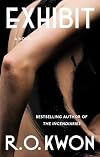
Powerhouse writing. The oblique way the story is told is a skillful manipulation of words masking ideas. Jin Han is a artist photographer who is in a bit of a slump and has a deadline looming for an exhibition. Her personal life is a little fraught as well because her husband Philip has decided he wants children after they had agreed when they married that neither did. She has also had a crisis of faith which drove her intitial success in the art world. In this context, Jin meets Lidija show more Jung, an injured professional ballet dancer recuperating in CA. She is the repository for all Jin's angst, but also transforms it back into the art she was missing. Part of this is motivated by a Korean myth of a family curse by a Kisaeng (a type of courtesan), a story she shares with Lidija, but not with Philip, and part of it is motivated by Lidija's willingness to instigate Jin's request for physical pain, something Philip cannot do. Lidija is relentless however, and the pain becomes tied up in the creative process and Jin's psyche and past mental and emotional family history, curse included. There is a lot to parse here: first, just getting the storyline takes some effort, but deeper there are issues about identity, the artistic mind, cultural history and clash, gender roles, and religion. Jin's story is interspersed with the kisaeng's - or is she creating it? and that adds power and class to the list of subtext. Not for the faint or light of heart, but great literary gymnastics that feel like a worthwhile workout. show less
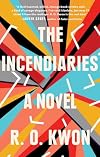
[b:The Incendiaries|36679056|The Incendiaries|R.O. Kwon|https://images.gr-assets.com/books/1512834150s/36679056.jpg|55674919] is filled with good writing, with metaphors and sentences that sing on just about every page, perhaps even getting in the way of the story. Details (food, alcohol, clothing, decor, cell phones) are stunning. The key characters are three, two men and a young Korean American woman attending a posh East Coast college. One of the men, John Leal, becomes seduced by show more religion and a pro-life cult out of North Korea, eventually ensnaring Phoebe in Jejah with their increasingly violent plans for domestic terrorism. Most of the book is told by the left-behind lover Will who commits an unforgivable transgression against Phoebe spurring her departure. Odd things pop up, like a long list of names of the infant dead noted in a graveyard. As Crystal Paul writes in the Seattle Times: She does not let her characters off the hook for their detestable behaviors, but she does not villainize them beyond human recognition either. They blow up buildings, manipulate and hurt people, sometimes navel-gaze to an eye-rolling degree. They are troubled and troubling characters and they are precisely as comprehensible and infuriating as they should be.Not an easy read, it kept my interest as do most books of masterful writing.
https://www.seattletimes.com/entertainment/books/the-incendiaries-is-beautiful-a... show less
https://www.seattletimes.com/entertainment/books/the-incendiaries-is-beautiful-a... show less
Lists
Awards


You May Also Like


Associated Authors
Statistics
- Works
- 3
- Also by
- 2
- Members
- 1,361
- Popularity
- #18,891
- Rating
- 3.4
- Reviews
- 57
- ISBNs
- 27
- Languages
- 3

