
Buffy Silverman
Author of STOP and GO, FAST and SLOW : Moving Objects in Different Ways
About the Author
Before writing this book, Buffy Silverman thought all machines were complicated. Now she knows the simple truth! Harold Pratt is a science consultant with over 40 years of experience in the field of education.
Series
Works by Buffy Silverman
Can You Tell a Frog from a Toad? (Lightning Bolt Books: Animal Look-Alikes) (2011) 54 copies, 1 review
Do You Know About Mammals? (Lightning Bolt Books: Meet the Animal Groups) (2009) 27 copies, 1 review
Can You Tell a Butterfly from a Moth? (Lightning Bolt Books: Animal Look-Alikes) (2011) 17 copies, 1 review
Can You Tell a Cricket from a Grasshopper? (Lightning Bolt Books: Animal Look-Alikes) (2012) 16 copies
Can an Old Dog Learn New Tricks?: And Other Questions About Animals (Is That a Fact?) (2010) 13 copies, 1 review
Body Parts: Double-Jointedness, Hitchhiker's Thumb, and More (Lightning Bolt Books: What Traits Are in Your Genes?) (2012) 12 copies
Exploring Dangers in Space: Asteroids, Space Junk, and More (Searchlight Books: What's Amazing about Space?) (2011) 8 copies
Can You Tell a Tyrannosaurus from an Allosaurus? (Lightning Bolt Books: Dinosaur Look-Alikes) (2013) 6 copies
Can You Tell a Stegosaurus from an Ankylosaurus? (Lightning Bolt Books: Dinosaur Look-Alikes) (2013) 5 copies
You Scratch My Back?: Interdependence and Symbiosis (Raintree Fusion: Life Processes and Living Things) (2007) 4 copies
Can You Tell a Triceratops from a Protoceratops? (Lightning Bolt Books: Dinosaur Look-Alikes) (2013) 4 copies
Can you tell a Brachiosaurus from an Apatosaurus? (Lightning Bolt Books: Animal Look-Alikes) (2013) 4 copies
Datos asombrosos acerca del sonido: The Amazing Facts About Sound (My Science Library) (Spanish Edition) (2014) 3 copies
Can You Tell a Giganotosaurus from a Spinosaurus? (Lightning Bolt Books: Dinosaur Look-Alikes) (2013) 2 copies
Associated Works
Tagged
Common Knowledge
There is no Common Knowledge data for this author yet. You can help.
Members
Reviews
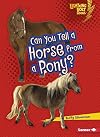
This informational book is definitely aimed towards younger children but I found that I enjoyed it. The author makes the text very short and easy to understand and I also very much enjoyed the layout. Each page in the book is a different color. I liked this because it kept me interested and I wasn't bored that every page looked the same. There were also mini facts on each page that were interesting to read and went along with the text and picture on that specific page. For example, on the show more first page there is a picture of a horse and pony and there is a caption that asks, "Can you guess which of these animals is a horse and which of these animals is a pony?" This is engaging the reader in to the book. I also liked how all of the pictures were real pictures of horses and ponies and they were all different kinds and different colors.The font in the book is also fun and exciting. There are specific pages where the font changes colors which is another detail I enjoy. This kept me interested and I like that the author switches up the color to pick out main details. show less
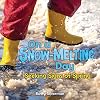
Engaging photographs slowly transform from snow-covered to melty to showing signs of spring. The format is similar to April Pulley Sayres, with one or two words per photo, creating very short rhyming sentences. Unlike Sayres, the author did not take all of her own photos - the majority are stock, but it's still quite effective.
Can an Old Dog Learn New Tricks? and other Questions about Animals (Is That a Fact?) by Buffy Silverman

You can never really have too many animal books or fact books. This entry in Lerner's Is that a fact? series combines these two most popular nonfiction subjects into a fun, fact-packed book. This collection of facts looks at old sayings about animals, devoting a spread to each old question. Questions include, "Can an alligator really live in the sewer?" "Do opossums really hang by their tails when they sleep?" and the titular "Can an old dog learn new tricks?".
There is a basic yes or no show more answer to each question, along with photographs on one page, then additional information and research on the facing page. The spread about training old dogs tell us yes, pets can be trained at any age, while the facing page explains that it takes longer to train an older dog, talks about memory and brain cells, and how research into older dogs' memory and learning abilities may help with older humans' memories and ability to learn.
The mixture of cartoons and photographs, with lots of panels and text balloons, colored text, different fonts, and backgrounds is eye-catching and will attract children who want a quick read with interesting facts and animals.
Verdict: This is a fun, if additional, series. This particular title doesn't really cover any new ground, but it's colorful and attractive and kids will enjoy reading this and other titles in the series. It's available in paperback and library bound - the paperback is more affordable, of course, but these are very slim volumes and may be lost on the shelf if you don't buy the more expensive library bound addition.
ISBN: 9780761364054; Published March 2010; Review copy provided by publisher at ALA Midwinter 2011 show less
There is a basic yes or no show more answer to each question, along with photographs on one page, then additional information and research on the facing page. The spread about training old dogs tell us yes, pets can be trained at any age, while the facing page explains that it takes longer to train an older dog, talks about memory and brain cells, and how research into older dogs' memory and learning abilities may help with older humans' memories and ability to learn.
The mixture of cartoons and photographs, with lots of panels and text balloons, colored text, different fonts, and backgrounds is eye-catching and will attract children who want a quick read with interesting facts and animals.
Verdict: This is a fun, if additional, series. This particular title doesn't really cover any new ground, but it's colorful and attractive and kids will enjoy reading this and other titles in the series. It's available in paperback and library bound - the paperback is more affordable, of course, but these are very slim volumes and may be lost on the shelf if you don't buy the more expensive library bound addition.
ISBN: 9780761364054; Published March 2010; Review copy provided by publisher at ALA Midwinter 2011 show less
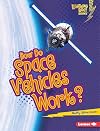
This nonfiction text explains how space travel works, using a particular spacecraft as an example. It talks about the fuel needed, the speed of the craft, etc. While I understand that it is an early reader and therefore has to keep it simple, I felt like important details were missing. Somehow, it didn't seem like the most informative book to me. However, a lot of kids are interested in space travel and this could at least serve as an introduction -- and one that even young children can read show more on their own. The book contains a number of important nonfiction components, including a table of contents, a glossary, an index, further resources, additional facts, and full-color photographs. show less
Lists
Awards


You May Also Like


Associated Authors
Statistics
- Works
- 103
- Also by
- 1
- Members
- 1,556
- Popularity
- #16,556
- Rating
- 3.8
- Reviews
- 18
- ISBNs
- 541
- Languages
- 4