
Dan Pfeiffer
Author of Yes We (Still) Can: Politics in the Age of Obama, Twitter, and Trump
About the Author
Dan Pfeiffer is the #1 New York Times bestselling author of Yes We (Still) Can and a cohost of Pod Save America. One of Barack Obama's longest-serving advisers, he was White House director of communications under President Obama (2009-2013) and senior adviser to the president (2013-2015). He show more currently lives in the Bay Area with his wife, Howli, their daughter, Kyla, and their son, Jack. show less
Works by Dan Pfeiffer
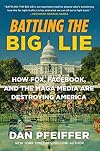
Battling the Big Lie: How Fox, Facebook, and the MAGA Media Are Destroying America (2022) 71 copies, 3 reviews
Associated Works
They Said This Day Would Never Come: Chasing the Dream on Obama's Improbable Campaign (2020) — Narrator, some editions — 23 copies
Tagged
Common Knowledge
- Birthdate
- 1975-12-24
- Gender
- male
- Occupations
- communications director
political advisor
podcaster - Organizations
- Democratic Party
Crooked Media - Nationality
- USA
- Associated Place (for map)
- USA
Members
Reviews
One of the most intellectually lazy comments or observations you could possibly make is the following: “The Republican Party is biased, but so is the Democratic Party. They both occupy their own independent realities.” Let’s call this the neutrality bias, which is one of the most annoying forms of relativism you can find.
Not everything is by default equivalent; sometimes, one group is more biased or manipulative or delusional than another. But since we love to over-correct problems, show more we’ve replaced extreme ideological bias with a pathological need to appear objective even when doing so sacrifices accuracy and honesty.
Obviously, there is plenty of bias with the Democrats (and plenty to complain about regarding their overall strategy). But only one party is the party of disinformation, conspiracy theories, religious fundamentalism, anti-science, and voter suppression. Only one party uses disinformation as a clear political strategy, and has admitted as much to those paying any attention.
And it’s clear why. Here’s everything you need to know about the Republican Party in one paragraph. As Pfeiffer wrote:
“One of the primary purposes of this disinformation strategy is to paper over a potentially fatal contradiction. The Republicans depend on a populist working-class base, but their policy agenda asks those very same working-class voters to pay for tax cuts for corporations and the wealthy. This tension is simply irreconcilable. If elections were centered on the contrasting economic positions of the party, the Republicans would get clobbered. So, they obfuscate and distract. They move the conversation to the cultural issues that unite their base and divide ours.”
Pfeiffer continues:
“If there is a fair hearing on the issues, Republicans will lose. They must defame Democrats, hide their own positions, and keep their shrinking white base fired up with a steady dose of racist agitprop.”
We need to remember that objectivity and civility only apply to interlocutors of good faith. If someone honestly and genuinely disagrees with you, they deserve to be heard. Conservative media plays off this good faith from reasonable people.
But bad faith actors, who are intentionally lying or manipulating the truth for their own benefit, do not deserve such niceties. And we don’t need to bend over backwards to create the impression that we’re covering “all sides of an issue” when one side is not intellectually respectable. It would be like a history professor devoting equal time to holocaust denial or a biology professor spending half the semester on creationism in her evolutionary biology course.
I sincerely hope that this book shakes people out of their need to prioritize appearing objective when doing so forces them to spend equal time considering bullshit ideas. The left has allowed the right to dictate the conversation for too long, playing nothing but defense as conservative media has, in Steve Bannon’s own words, “flooded the zone with shit.” This book is a critical wake-up call to what the right is actually doing, how we’ve let it happen, and what we can do about it moving forward. show less
Not everything is by default equivalent; sometimes, one group is more biased or manipulative or delusional than another. But since we love to over-correct problems, show more we’ve replaced extreme ideological bias with a pathological need to appear objective even when doing so sacrifices accuracy and honesty.
Obviously, there is plenty of bias with the Democrats (and plenty to complain about regarding their overall strategy). But only one party is the party of disinformation, conspiracy theories, religious fundamentalism, anti-science, and voter suppression. Only one party uses disinformation as a clear political strategy, and has admitted as much to those paying any attention.
And it’s clear why. Here’s everything you need to know about the Republican Party in one paragraph. As Pfeiffer wrote:
“One of the primary purposes of this disinformation strategy is to paper over a potentially fatal contradiction. The Republicans depend on a populist working-class base, but their policy agenda asks those very same working-class voters to pay for tax cuts for corporations and the wealthy. This tension is simply irreconcilable. If elections were centered on the contrasting economic positions of the party, the Republicans would get clobbered. So, they obfuscate and distract. They move the conversation to the cultural issues that unite their base and divide ours.”
Pfeiffer continues:
“If there is a fair hearing on the issues, Republicans will lose. They must defame Democrats, hide their own positions, and keep their shrinking white base fired up with a steady dose of racist agitprop.”
We need to remember that objectivity and civility only apply to interlocutors of good faith. If someone honestly and genuinely disagrees with you, they deserve to be heard. Conservative media plays off this good faith from reasonable people.
But bad faith actors, who are intentionally lying or manipulating the truth for their own benefit, do not deserve such niceties. And we don’t need to bend over backwards to create the impression that we’re covering “all sides of an issue” when one side is not intellectually respectable. It would be like a history professor devoting equal time to holocaust denial or a biology professor spending half the semester on creationism in her evolutionary biology course.
I sincerely hope that this book shakes people out of their need to prioritize appearing objective when doing so forces them to spend equal time considering bullshit ideas. The left has allowed the right to dictate the conversation for too long, playing nothing but defense as conservative media has, in Steve Bannon’s own words, “flooded the zone with shit.” This book is a critical wake-up call to what the right is actually doing, how we’ve let it happen, and what we can do about it moving forward. show less

t's probably important to know that I am a Friend of The Pod. Pod Save America is my #1 Crooked Media podcast but I subscribe to several others and the What A Day newsletter. I am not similar in any obvious way to Jon, Jon, Tommy and Dan (I'm a baby boomer - we're not all bad, Lovett). But I feel like we've been on the same emotional rollercoaster since November 9, 2016.
Dan was Obama's communications director but not a speechwriter per se. Yet this book (which I read as opposed to listening) show more felt like an extension of the podcasts and was written in an honest and compelling manner. And there are footnotes - lots of funny footnotes which made reading a little tough. Since I read on a kindle I used my kindle app to go back and forth!
There are stories but no gossip (as Dan said he's not an asshole) from the Obama years. It's obvious Dan admires Barack Obama. I enjoyed reading about his interaction with other members of the Obama team. And it was a team. Because I do this - I googled past communications directors to understand his role. President Obama had 5 directors in 8 years as president. Today -in the first 19 months in Trumpland there have been 6 directors.
If you are a Trump supporter you will not like this book so don't bother. If you are an Obama fan or someone who's unsure about their feelings about President Obama - I highly recommend it. show less
Dan was Obama's communications director but not a speechwriter per se. Yet this book (which I read as opposed to listening) show more felt like an extension of the podcasts and was written in an honest and compelling manner. And there are footnotes - lots of funny footnotes which made reading a little tough. Since I read on a kindle I used my kindle app to go back and forth!
There are stories but no gossip (as Dan said he's not an asshole) from the Obama years. It's obvious Dan admires Barack Obama. I enjoyed reading about his interaction with other members of the Obama team. And it was a team. Because I do this - I googled past communications directors to understand his role. President Obama had 5 directors in 8 years as president. Today -in the first 19 months in Trumpland there have been 6 directors.
If you are a Trump supporter you will not like this book so don't bother. If you are an Obama fan or someone who's unsure about their feelings about President Obama - I highly recommend it. show less
Dan Pfeiffer's Battling the Big Lie is a look back at how, and how effectively, the Republicans have weaponized disinformation as a key element of their strategy. This is not a new occurrence but it has been amplified in large part to the echo chambers now prevalent.
While Pfeiffer's willingness to call the GOP by the various names they have earned will irritate some readers, he backs up those claims with facts. I even saw where someone whined that this is a book full of opinions. Well, yes, show more there are a lot of opinions here, informed opinions, and they are supported by the facts. He does present facts, though some will only accept as a source a right-wing source, which obviously don't trade in facts, so they can claim, disingenuously, that "good" sources weren't cited.
What is the most important part of this book is where we learn ways to help minimize the damage. Even the most absurd lies gain credibility simply by being repeated, even if repeated in opposition. Don't spread the lies by sharing posts, use other methods.
I would recommend this to anyone who still wants a democracy in the US. In other words, while Republicans might learn a bit, they have become de facto anti-Democracy, so they will, wait for it, lie about what is in here, often without even reading it. Go figure, they love an orange menace that can barely read and has no comprehension abilities, so...
Reviewed from a copy made available by the publisher via NetGalley. show less
While Pfeiffer's willingness to call the GOP by the various names they have earned will irritate some readers, he backs up those claims with facts. I even saw where someone whined that this is a book full of opinions. Well, yes, show more there are a lot of opinions here, informed opinions, and they are supported by the facts. He does present facts, though some will only accept as a source a right-wing source, which obviously don't trade in facts, so they can claim, disingenuously, that "good" sources weren't cited.
What is the most important part of this book is where we learn ways to help minimize the damage. Even the most absurd lies gain credibility simply by being repeated, even if repeated in opposition. Don't spread the lies by sharing posts, use other methods.
I would recommend this to anyone who still wants a democracy in the US. In other words, while Republicans might learn a bit, they have become de facto anti-Democracy, so they will, wait for it, lie about what is in here, often without even reading it. Go figure, they love an orange menace that can barely read and has no comprehension abilities, so...
Reviewed from a copy made available by the publisher via NetGalley. show less

I could say this is another trump book, but it really isn't, in that it doesn't catalogue trump's crimes/history etc. Rather it views trump as the logical outcome of what the republican party has evolved into over the years, and provides a blueprint of some actions, each more or less feasible, that can be taken to make the country "democratic" again.
"Play the game against people who will do anything to win while you adhere to the rules is a losing proposition,"
I nearly abandoned this book, show more as I found the beginning of the book to be more geared toward a professional political operative than I am or want to be. But I'm glad I persevered, as I found some reasons for hope in the book. The thesis of the book is that the biggest divide in the Democratic Party is not between the center (moderate) and left (progressive), but between those who believe that trump is an accident or aberration and that when he is gone we will return to normal, and those who have come to terms with what the Republican Party actually is.
Very briefly, here are a few of the suggestions for actions the country can take so that a "trump" doesn't happen again. As noted, some are more feasible than others, and the author does make the point that though democrats need to play "tougher" they cannot become as "bad" as some of the republican tactics are.
1. Expand the vote: automatic voter registration; same day registration; vote by mail; expand early voting; consider making voting mandatory, as in Australia; consider allowing 16 year olds to vote; hammer the message to people that "the republican party is trying to stop you from voting!"
2. Fix the Senate-by 2040, 70% of the population will reside in just 16 states, but the remaining 30% of the population will control 68% of the Senate seats. Ways to remedy this lopsided control include: eliminate the filibuster; create more states--make D.C. a state; make Puerto Rico a state; divide California into 2 or more states (why do we need 2 Dakotas?)
3. Eliminate the Electoral College, so that the person who wins the majority popular vote wins. Since this would require a constitutional amendment (very difficult) work for the National Popular Vote Interstate Compact, which so far 15 states and D.C. have joined--requires the state to give its electoral votes to the winner of the national popular vote.
4. Build a nationwide liberal infrastructure similar to that developed by the Koch Brothers et. al. over the years.
5. Get rid of Citizens United--difficult because it will require either the Supreme Court to overturn the case or a constitutional amendment.
6. Strengthen the FEC to give teeth to penalties for election law violations.
7. Require nonprofits to disclose their political fundraising and spending (no more dark money). Possibly go to public financing for all campaigns.
8. Judicial Reform--Add Justices to the Supreme Court. Nine Justices is not required by the Constitution, and changing the number of justices is not unprecedented. It only got a bad reputation (as court packing) when FDR floated the idea. After Bush v. Gore, and the Merrick Garland fiasco, it can no longer be said that the Supreme Court is not a political entity. Another possibility might be to place term limits on the Justices--the Constitution doesn't specifically require that the appointments be for life, only that they can only be removed for cause.
8. Strengthen unions. Also if corporations are "people," make them act decently.
9. Put some restrictions on presidential power--Repeal the authorization for use of military force and allow no more wars without congressional authorization; repeal National Emergencies Act, which allowed trump to divert funds to his wall, for example
10. Since trump has shown us we cannot depend on an intrinsic morality or sense of shame in our presidents, we must turn some of our prior norms into law. For example, require presidential candidates to release tax returns; require a president to divest himself of his private businesses; strengthen the Hatch Act; no more get out of jail for free card, since the only basis for the rule that a president can't be prosecuted is a DOJ opinion from the Watergate era, and as we have seen impeachment as a remedy for a rogue president is not viable when one party has lost its mind.
Overall, I found a lot of interesting ideas in this book.
3 stars show less
"Play the game against people who will do anything to win while you adhere to the rules is a losing proposition,"
I nearly abandoned this book, show more as I found the beginning of the book to be more geared toward a professional political operative than I am or want to be. But I'm glad I persevered, as I found some reasons for hope in the book. The thesis of the book is that the biggest divide in the Democratic Party is not between the center (moderate) and left (progressive), but between those who believe that trump is an accident or aberration and that when he is gone we will return to normal, and those who have come to terms with what the Republican Party actually is.
Very briefly, here are a few of the suggestions for actions the country can take so that a "trump" doesn't happen again. As noted, some are more feasible than others, and the author does make the point that though democrats need to play "tougher" they cannot become as "bad" as some of the republican tactics are.
1. Expand the vote: automatic voter registration; same day registration; vote by mail; expand early voting; consider making voting mandatory, as in Australia; consider allowing 16 year olds to vote; hammer the message to people that "the republican party is trying to stop you from voting!"
2. Fix the Senate-by 2040, 70% of the population will reside in just 16 states, but the remaining 30% of the population will control 68% of the Senate seats. Ways to remedy this lopsided control include: eliminate the filibuster; create more states--make D.C. a state; make Puerto Rico a state; divide California into 2 or more states (why do we need 2 Dakotas?)
3. Eliminate the Electoral College, so that the person who wins the majority popular vote wins. Since this would require a constitutional amendment (very difficult) work for the National Popular Vote Interstate Compact, which so far 15 states and D.C. have joined--requires the state to give its electoral votes to the winner of the national popular vote.
4. Build a nationwide liberal infrastructure similar to that developed by the Koch Brothers et. al. over the years.
5. Get rid of Citizens United--difficult because it will require either the Supreme Court to overturn the case or a constitutional amendment.
6. Strengthen the FEC to give teeth to penalties for election law violations.
7. Require nonprofits to disclose their political fundraising and spending (no more dark money). Possibly go to public financing for all campaigns.
8. Judicial Reform--Add Justices to the Supreme Court. Nine Justices is not required by the Constitution, and changing the number of justices is not unprecedented. It only got a bad reputation (as court packing) when FDR floated the idea. After Bush v. Gore, and the Merrick Garland fiasco, it can no longer be said that the Supreme Court is not a political entity. Another possibility might be to place term limits on the Justices--the Constitution doesn't specifically require that the appointments be for life, only that they can only be removed for cause.
8. Strengthen unions. Also if corporations are "people," make them act decently.
9. Put some restrictions on presidential power--Repeal the authorization for use of military force and allow no more wars without congressional authorization; repeal National Emergencies Act, which allowed trump to divert funds to his wall, for example
10. Since trump has shown us we cannot depend on an intrinsic morality or sense of shame in our presidents, we must turn some of our prior norms into law. For example, require presidential candidates to release tax returns; require a president to divest himself of his private businesses; strengthen the Hatch Act; no more get out of jail for free card, since the only basis for the rule that a president can't be prosecuted is a DOJ opinion from the Watergate era, and as we have seen impeachment as a remedy for a rogue president is not viable when one party has lost its mind.
Overall, I found a lot of interesting ideas in this book.
3 stars show less
Lists
Awards

You May Also Like


Statistics
- Works
- 3
- Also by
- 1
- Members
- 503
- Popularity
- #49,234
- Rating
- 4.0
- Reviews
- 20
- ISBNs
- 29