

Nora Okja Keller
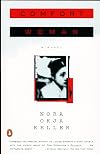
Author of Comfort Woman
About the Author
Nora Okja Keller lives in Hawaii with her husband and two daughters.
Image credit: Nora Okja Keller
Works by Nora Okja Keller
Intersecting Circles: The Voices of Hapa Women in Poetry and Prose (Bamboo Ridge, No. 76) (1999) — Editor — 18 copies
The Brilliance of Diamonds 1 copy
HIJA DEL BAMBÚ 1 copy
Associated Works
YELL-Oh Girls! Emerging Voices Explore Culture, Identity, and Growing Up Asian American (2001) — Contributor — 255 copies, 2 reviews
Charlie Chan Is Dead 2: At Home in the World: An Anthology of Contemporary Asian-American Fiction (2004) — Contributor — 97 copies, 1 review
Tagged
Common Knowledge
- Canonical name
- Keller, Nora Okja
- Birthdate
- 1965-12-22
- Gender
- female
- Education
- University of Hawaii
University of California, Santa Cruz (Ph.D. | American literature) - Agent
- Susan Bergholz Literary Services
- Birthplace
- Seoul, South Korea
- Places of residence
- Seoul, South Korea (birth)
Hawaii, USA - Associated Place (for map)
- Seoul, South Korea
Members
Reviews
I really enjoyed this book a lot and how it represented trauma. The book starts out very well and does not waste time talking about what women had to endure during Japanese occupation during WW2. There is no word that can describe the horrors and absolutely disgusting things that Japan has done during WW2 and this book explores what Korean women (and men too at some point in the book) had to go through. I liked the psychosis/spiritual aspect of the book too, I liked how Akiko (the show more mother/victim of Japanese crimes) is written and expressed through here eyes in here chapters and how Beccah (her daughter who is the result, I think rape birth, of the crimes) sees her mother and also starts to understand why her mother is the way she is at the end of the book. This book does a great job and does what it says it does. Informs those blind to the horrors other humans have done to other humans. 2/22/26 show less
I've already written about how difficult this book was to read because of how deep Keller takes the reader into trauma. Also because we rarely get an Asian/Asian-American perspective of history, so it's hard to stomach that the snapshot we get in this text minimalizes some of the tragedies we are familiar with in our own histories (from the perspective of privilege, of course).
In these ways, this novel provides a dark chapter of history on Imperial Japan's occupation of Korea and the horrors show more enacted by its soldiers - such as the construction of "comfort stations" in its occupied territories. The story of one woman who endured life as a "comfort woman" shows the generational affects of trauma while detailing a beautifully complicated relationship between a mother and daughter who can only understand each other through their shared history.
The novel is incredibly well-written. The Characters are deep and relatable and the story brings to life a part of history that Japan still won't openly admit happened. I highly recommend this read - just make sure you have a box of tissues handy! show less
In these ways, this novel provides a dark chapter of history on Imperial Japan's occupation of Korea and the horrors show more enacted by its soldiers - such as the construction of "comfort stations" in its occupied territories. The story of one woman who endured life as a "comfort woman" shows the generational affects of trauma while detailing a beautifully complicated relationship between a mother and daughter who can only understand each other through their shared history.
The novel is incredibly well-written. The Characters are deep and relatable and the story brings to life a part of history that Japan still won't openly admit happened. I highly recommend this read - just make sure you have a box of tissues handy! show less
Kim Soon Hyo, the mother in Nora Okja Keller’s Comfort Woman, is not sure how to share her own story of being a comfort woman with her daughter, Beccah Bradley. In fact, in some ways Akiko, as she was known in the comfort stations, is not sure whether to share her story at all. This uncertainty, bound and tangled with motherly love, compels both Beccah and Akiko to form their identities in the fluid space between them.
Comfort women, kept in imprisoned prostitutes in Japanese camps during show more World War II, are a story of history that are not often brought to light (and are, in fact, denied by many to have even happened). The fact that Keller devotes this novel to their stories, as presented by a woman and her daughter, is something that cannot be dismissed, in whatever form, but Keller manages to present a story that is well-written and delicately told.
Beccah’s childhood dreams of fitting into American culture surrounded by Marie Osmond and blue-eyed dolls, and Akiko’s own strained relationship with Beccah’s father, an American missionary, find common ground in the unspoken ties that unite mother and daughter.
The motif of language is one that is of interesting focus in the story. Akiko, who spoke to own her mother in a sort of secret language (17), employs a similar method to “speak” to the comfort women. “I would sing to the women,” she relates. “When I hummed certain sections, the women knew to take those unsung words for a message” (20). A definite note of strength is found in this: As comfort women ravaged by the soldiers, the aspect of physicality, the sense of touch, would have been all too real for these women. Akiko, however, is able to use this physicality in a different way, to communicate in a way that avoids “useless words.” She watches her husband teach their daughter how to speak German, English, and Japanese, and worries about her confusion.
As her mother’s stories begin to emerge about the horrors these women faced, Beccah learns that naming - the other main theme of the book - is important as an aspect of identity, and the calling out of a true name acts as the affirmation and celebration of a life. False names only act as more of that spoken, dissecting language. One of the character’s final pronouncements of naming is an affirmation of the life she lived before being owned by the Japanese: “I am Korea, I am a woman, I am alive. I am seventeen, I had a family just like you do, I am a daughter, I am a sister” (20).
Taking a difficult subject and rendering it with compassion and the right amount of sympathy is not always easy, and while it has a rocky start, Keller manages to do this quite well, and with vivid memorable imagery and characters. It is obviously not the easiest read for numerous reasons, but it is well worth the effort. show less
Comfort women, kept in imprisoned prostitutes in Japanese camps during show more World War II, are a story of history that are not often brought to light (and are, in fact, denied by many to have even happened). The fact that Keller devotes this novel to their stories, as presented by a woman and her daughter, is something that cannot be dismissed, in whatever form, but Keller manages to present a story that is well-written and delicately told.
Beccah’s childhood dreams of fitting into American culture surrounded by Marie Osmond and blue-eyed dolls, and Akiko’s own strained relationship with Beccah’s father, an American missionary, find common ground in the unspoken ties that unite mother and daughter.
The motif of language is one that is of interesting focus in the story. Akiko, who spoke to own her mother in a sort of secret language (17), employs a similar method to “speak” to the comfort women. “I would sing to the women,” she relates. “When I hummed certain sections, the women knew to take those unsung words for a message” (20). A definite note of strength is found in this: As comfort women ravaged by the soldiers, the aspect of physicality, the sense of touch, would have been all too real for these women. Akiko, however, is able to use this physicality in a different way, to communicate in a way that avoids “useless words.” She watches her husband teach their daughter how to speak German, English, and Japanese, and worries about her confusion.
As her mother’s stories begin to emerge about the horrors these women faced, Beccah learns that naming - the other main theme of the book - is important as an aspect of identity, and the calling out of a true name acts as the affirmation and celebration of a life. False names only act as more of that spoken, dissecting language. One of the character’s final pronouncements of naming is an affirmation of the life she lived before being owned by the Japanese: “I am Korea, I am a woman, I am alive. I am seventeen, I had a family just like you do, I am a daughter, I am a sister” (20).
Taking a difficult subject and rendering it with compassion and the right amount of sympathy is not always easy, and while it has a rocky start, Keller manages to do this quite well, and with vivid memorable imagery and characters. It is obviously not the easiest read for numerous reasons, but it is well worth the effort. show less
Though Comfort Woman was Ms. Keller’s first published novel it is written with great expertise. The story is told from two points of view: the Mother, Soon Hyo / Akiko and the daughter, Beccah. The author weaves a circular web of Korean culture threaded with the ravages of war and tendrils of missionaries. Each character, including Auntie Reno, has a unique voice that wraps you in its cocoon until your understanding emerges imbued with knowledge. The complex relationships of mothers and show more daughters are explored through different life cycles. Protectiveness, embarrassment, and abandonment are steady themes throughout the narrative with hope and joy juxtaposed against doubt and fear. Emotions pour from the page and spirits rustle the paper. Explicit language and many graphic scenes in the book are necessary to accomplish the task of telling the buried truths. My heart and mind were ripped apart by this poignant tale of atrocity. Haunting, yet luring, this tale urged me on through the end to find closure. show less
Awards


You May Also Like


Associated Authors
Statistics
- Works
- 5
- Also by
- 6
- Members
- 598
- Popularity
- #42,015
- Rating
- 3.5
- Reviews
- 17
- ISBNs
- 23
- Languages
- 4