
Barbara Wright (1) (1951–)
Author of Crow
For other authors named Barbara Wright, see the disambiguation page.
Works by Barbara Wright
Tagged
Common Knowledge
- Canonical name
- Wright, Barbara
- Birthdate
- 1951-11-18
- Gender
- female
- Occupations
- author
fact-checker - Short biography
- BARBARA WRIGHT grew up in North Carolina, and has lived all over the world, from France, to Korea, to El Salvador. She has worked as a fact-checker for Esquire and as a screenwriter.
- Nationality
- USA
- Places of residence
- North Carolina, USA
- Associated Place (for map)
- North Carolina, USA
Members
Reviews
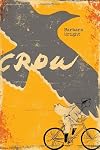
This is a fictional depiction of actual events in 1898 in Wilmington, North Carolina. As the story opens, Moses Thomas has just finished the fifth grade. He is helping his grandmother, “Boo Nanny,” with the wash, when she dives over him to prevent the shadow of a buzzard from crossing over him:
"‘Buzzard’s shadow,’ Boo Nanny said, rolling off me and struggling to her feet. ‘That old thing tag you, means you happiness done dead.
‘Did he get me?’ I asked, worried. ‘Did you show more see?’
‘I don’t know. If he do, a mess of trouble be headed to our door,’ she said.”
Truer bad omens were never encountered, for 1898 was the year when Democratic white supremacists illegally seized power from an elected government (which included blacks) in Wilmington, running officials out of the city, and killing many blacks in widespread attacks.
At the time of the riot, Wilmington in Cape Fear was the largest city in North Carolina. Moreover, having a large black majority, it boasted large numbers of African American businessmen. Not only were many shops and restaurants owned by blacks, but Wilmington's newspaper "The Daily Record" was the only black daily newspaper in the country. Political offices, however, were mostly held by whites. When white Populists joined black Republicans to challenge this political hegemony, the white Democrats had had enough. The self-proclaimed 'party of white supremacy' launched a campaign of racist appeals and political violence to eliminate the possibility of continued black power in the city and to turn back the inroads into equality that had already been forged. 'We will not live under these intolerable conditions,' Colonel Alfred Waddell, soon to become mayor of Wilmington, told a crowd of cheering Democrats. 'We will never surrender to a ragged raffle of negroes, even if we have to choke the current of the Cape Fear with carcasses.'"
Even after threats against blacks enabled Waddell to win the election, he and the rabble he had whipped up were not satisfied. Two days after the election, armed groups of whites seized the city by force. They burned the Daily Record's printing press, and then took rifles and rapid-fire guns into the black neighborhoods, leaving a trail of dead black bodies. No one knows the actual body count, since some 1400 blacks fled the city. Some were forcibly banished with their property confiscated.
[The events of 1898 became a source of great pride to the Democratic Party in North Carolina, and the next five governors of the state were all selected from among participants of the white supremacy crusade.]
Moses, who narrates, interprets the events leading up to the massacre through a child’s eyes, and I think the author does a wonderful job with this. (Although Moses is pretty naïve by today’s standards, I don’t think his ideation is inappropriate for his time.) As he wanders through town over the summer, he sees the ways in which the blacks of Wilmington are increasingly marginalized and disfranchised. At one point, he hears [an authentic] speech given by Colonel Waddell to a rowdy white crowd, who he exhorts:
"You are Anglo-Saxons! You are armed and prepared, and you will do your duty. Be ready at a moment’s notice. If you find the Negro out voting, tell him to leave the polls, and if he refuses, kill him, shoot him down in his tracks. We shall win this election, even if we have to do it with guns.”
While Moses’ mother and grandmother perform work for wealthy whites, Moses’ father Jack is a reporter for the Daily Record, and also one of four black aldermen in town. [This aspect of the book was a little problematic, given that Jack Thomas, who is fictional, is given such a prominent role in the events related to the otherwise accurately documented massacre.] But this plot devise enables Moses to see first-hand the destruction of the Daily Record press and building on November 10, and also gives a compelling reason to report what happened to black elected officials. It also enables the author to show the disconnect between the educated official Jack, who believed in reason and the Constitution, and the average poor black citizens, one of whom resisted going to the polls because “The Constitution don’t mean nothing when I be laying there, cemetery dead.”
After the press is destroyed and the killing starts, Moses is caught out in the open, and he must find a way back to his family, and his family must find a way to protect themselves from the marauding bands of whites.
Discussion: While this review focuses on the massacre itself, there is much more to this book. Moses and his father have a wonderful relationship, with much mutual respect and love. Similarly, Moses and his grandmother are very close. Moses’ dad Jack puts all his faith in education, but Boo Nanny pooh-poohs book-learning; she knows plenty Jack doesn’t, which she has learned from experience. Moses feels divided loyalty, and has to figure out who is “right” and how to adjust to it.
Moses’s father also lectures Moses on the importance of “rule of law.” It was so poignant how fervently he believed in democratic institutions, and how those same institutions were made a mockery of by hate. This is yet another issue Moses grapples with: is it better to obey the law even when not everyone else does? What happens when laws are only obeyed selectively?
Another issue that concerns Moses is the question of status among his friends. Social class enters in, as does race. But even within his own race, he finds that status can be determined by being darker or lighter skinned. He wants badly to have the respect of his friends, and learns a hard lesson in what friendship really means as the atmosphere in the town heats up.
Evaluation: In spite of the seriousness of the subject matter, this excellent book provides a warm look at a loving black family in the face of very adverse circumstances. Crow is also a good way to learn that prior to the Civil Rights movement in the 1960’s, the situation of blacks in the South was far more troubled than many people are aware of (or than is depicted by books like The Help), and to that end the author directs readers to more information in a Note at the end of the book. On her web site, she also has posted pictures taken during the Massacre.
There are so many important and timeless issues that come up in this book about family and friendship and learning and law, that this would make a great book for adults and kids to read together and discuss. show less
"‘Buzzard’s shadow,’ Boo Nanny said, rolling off me and struggling to her feet. ‘That old thing tag you, means you happiness done dead.
‘Did he get me?’ I asked, worried. ‘Did you show more see?’
‘I don’t know. If he do, a mess of trouble be headed to our door,’ she said.”
Truer bad omens were never encountered, for 1898 was the year when Democratic white supremacists illegally seized power from an elected government (which included blacks) in Wilmington, running officials out of the city, and killing many blacks in widespread attacks.
At the time of the riot, Wilmington in Cape Fear was the largest city in North Carolina. Moreover, having a large black majority, it boasted large numbers of African American businessmen. Not only were many shops and restaurants owned by blacks, but Wilmington's newspaper "The Daily Record" was the only black daily newspaper in the country. Political offices, however, were mostly held by whites. When white Populists joined black Republicans to challenge this political hegemony, the white Democrats had had enough. The self-proclaimed 'party of white supremacy' launched a campaign of racist appeals and political violence to eliminate the possibility of continued black power in the city and to turn back the inroads into equality that had already been forged. 'We will not live under these intolerable conditions,' Colonel Alfred Waddell, soon to become mayor of Wilmington, told a crowd of cheering Democrats. 'We will never surrender to a ragged raffle of negroes, even if we have to choke the current of the Cape Fear with carcasses.'"
Even after threats against blacks enabled Waddell to win the election, he and the rabble he had whipped up were not satisfied. Two days after the election, armed groups of whites seized the city by force. They burned the Daily Record's printing press, and then took rifles and rapid-fire guns into the black neighborhoods, leaving a trail of dead black bodies. No one knows the actual body count, since some 1400 blacks fled the city. Some were forcibly banished with their property confiscated.
[The events of 1898 became a source of great pride to the Democratic Party in North Carolina, and the next five governors of the state were all selected from among participants of the white supremacy crusade.]
Moses, who narrates, interprets the events leading up to the massacre through a child’s eyes, and I think the author does a wonderful job with this. (Although Moses is pretty naïve by today’s standards, I don’t think his ideation is inappropriate for his time.) As he wanders through town over the summer, he sees the ways in which the blacks of Wilmington are increasingly marginalized and disfranchised. At one point, he hears [an authentic] speech given by Colonel Waddell to a rowdy white crowd, who he exhorts:
"You are Anglo-Saxons! You are armed and prepared, and you will do your duty. Be ready at a moment’s notice. If you find the Negro out voting, tell him to leave the polls, and if he refuses, kill him, shoot him down in his tracks. We shall win this election, even if we have to do it with guns.”
While Moses’ mother and grandmother perform work for wealthy whites, Moses’ father Jack is a reporter for the Daily Record, and also one of four black aldermen in town. [This aspect of the book was a little problematic, given that Jack Thomas, who is fictional, is given such a prominent role in the events related to the otherwise accurately documented massacre.] But this plot devise enables Moses to see first-hand the destruction of the Daily Record press and building on November 10, and also gives a compelling reason to report what happened to black elected officials. It also enables the author to show the disconnect between the educated official Jack, who believed in reason and the Constitution, and the average poor black citizens, one of whom resisted going to the polls because “The Constitution don’t mean nothing when I be laying there, cemetery dead.”
After the press is destroyed and the killing starts, Moses is caught out in the open, and he must find a way back to his family, and his family must find a way to protect themselves from the marauding bands of whites.
Discussion: While this review focuses on the massacre itself, there is much more to this book. Moses and his father have a wonderful relationship, with much mutual respect and love. Similarly, Moses and his grandmother are very close. Moses’ dad Jack puts all his faith in education, but Boo Nanny pooh-poohs book-learning; she knows plenty Jack doesn’t, which she has learned from experience. Moses feels divided loyalty, and has to figure out who is “right” and how to adjust to it.
Moses’s father also lectures Moses on the importance of “rule of law.” It was so poignant how fervently he believed in democratic institutions, and how those same institutions were made a mockery of by hate. This is yet another issue Moses grapples with: is it better to obey the law even when not everyone else does? What happens when laws are only obeyed selectively?
Another issue that concerns Moses is the question of status among his friends. Social class enters in, as does race. But even within his own race, he finds that status can be determined by being darker or lighter skinned. He wants badly to have the respect of his friends, and learns a hard lesson in what friendship really means as the atmosphere in the town heats up.
Evaluation: In spite of the seriousness of the subject matter, this excellent book provides a warm look at a loving black family in the face of very adverse circumstances. Crow is also a good way to learn that prior to the Civil Rights movement in the 1960’s, the situation of blacks in the South was far more troubled than many people are aware of (or than is depicted by books like The Help), and to that end the author directs readers to more information in a Note at the end of the book. On her web site, she also has posted pictures taken during the Massacre.
There are so many important and timeless issues that come up in this book about family and friendship and learning and law, that this would make a great book for adults and kids to read together and discuss. show less
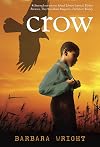
Moses Thomas is a 12-yaer-old black boy living in Wilmington, North Carolina, in 1898. In these few years, post Civil War, the South is in the Reconstruction phase, trying to figure out how blacks and whites will live together. There has been progress. Moses' father is an elected city alderman. One of his friends' father owns a successful business.
The book begins with a light, sometimes funny tone, as Moses tells about events of his life with his family and friends. But the ominous overtones show more of racism creep further and further in, until all humor is gone. The book recounts, as good historical fiction usually does, a real tale through the eyes of a fictional character. In 1898 Wilmington underwent a riot/massacre, when hundreds of frightened white men joined into a mob, killing some blacks, burning the homes and businesses of others, and running many more out of town. Moses witnesses much of this and relates the events through the eyes of a boy on the cusp of becoming a young adult.
Excellent writing. I'm surprised this one didn't win a few awards. show less
The book begins with a light, sometimes funny tone, as Moses tells about events of his life with his family and friends. But the ominous overtones show more of racism creep further and further in, until all humor is gone. The book recounts, as good historical fiction usually does, a real tale through the eyes of a fictional character. In 1898 Wilmington underwent a riot/massacre, when hundreds of frightened white men joined into a mob, killing some blacks, burning the homes and businesses of others, and running many more out of town. Moses witnesses much of this and relates the events through the eyes of a boy on the cusp of becoming a young adult.
Excellent writing. I'm surprised this one didn't win a few awards. show less

Anny Thackeray Ritchie. Who was she? This book helps us to understand who she was and why we should care.
It certainly could not have been easy being a women with literary aspirations in the nineteenth century. Standing in the shadow of your famous father, William Thackeray, author of the literary hit, Vanity Fair, could be no less challenging. Most young women of that period were being groomed for marriage and child-rearing. Yet, William found his clever and inquisitive elder daughter to be show more an excellent writing partner and imparted his love for writing to her. With his wife permanently committed to a care facility, William relies on Anny to manage the home and help rear her younger sister. William passes away at the tender age of 52 leaving Anny to care and provide for her sister. When her sister, Minny marries, the groom moves into their home which offers some new challenges. The question, ever present, is whether Anny will ever find her own partner and thus a shared joy in life.
Ms. Wright has done a spectacular job of bringing this often overlooked woman of some fame to our notice. Her research into Anny's life is deep thus delivering a beautifully crafted story to us readers. The prose is rich and lovely and the scene settings rich and cinematic. The secondary characters read like the Who's Who of the nineteenth century British literary and artistic world. Ms. Wright's empathy for Anny comes through clearly and we become perhaps a bit less judgmental of a woman who bravely steps out of society's expectation of respectability. I very much enjoyed this story and look forward to reading more by Ms. Wright.
I am grateful to Onslow Square Books for having provided a complimentary copy of this book through LibraryThing Early Reviewers. Their generosity, however, has not influenced this review - the words of which are mine alone.
Publisher: Onslow Square Books
Publication Date: June 18, 2024
Number of Pages: 302
ISBN-13: 979-8990403604 show less
It certainly could not have been easy being a women with literary aspirations in the nineteenth century. Standing in the shadow of your famous father, William Thackeray, author of the literary hit, Vanity Fair, could be no less challenging. Most young women of that period were being groomed for marriage and child-rearing. Yet, William found his clever and inquisitive elder daughter to be show more an excellent writing partner and imparted his love for writing to her. With his wife permanently committed to a care facility, William relies on Anny to manage the home and help rear her younger sister. William passes away at the tender age of 52 leaving Anny to care and provide for her sister. When her sister, Minny marries, the groom moves into their home which offers some new challenges. The question, ever present, is whether Anny will ever find her own partner and thus a shared joy in life.
Ms. Wright has done a spectacular job of bringing this often overlooked woman of some fame to our notice. Her research into Anny's life is deep thus delivering a beautifully crafted story to us readers. The prose is rich and lovely and the scene settings rich and cinematic. The secondary characters read like the Who's Who of the nineteenth century British literary and artistic world. Ms. Wright's empathy for Anny comes through clearly and we become perhaps a bit less judgmental of a woman who bravely steps out of society's expectation of respectability. I very much enjoyed this story and look forward to reading more by Ms. Wright.
I am grateful to Onslow Square Books for having provided a complimentary copy of this book through LibraryThing Early Reviewers. Their generosity, however, has not influenced this review - the words of which are mine alone.
Publisher: Onslow Square Books
Publication Date: June 18, 2024
Number of Pages: 302
ISBN-13: 979-8990403604 show less
 This review was written for LibraryThing Early Reviewers.
Twelve-year-old Moses Jackson is pushed hurriedly onto the porch of his Wilmington, North Carolina, home by his stooped old grandmother. It’s 1898, she grew up a slave and has clear insight into the omens and augurs of the spirit world, and sure doesn’t want the shadow of a crow to cross her grandson. As she feared, she doesn’t handle the job quite in time, and bad things happen to Moses and to the other black citizens of Wilmington.
In a little-known and little-appreciated chapter in show more American history, the duly-elected government of Wilmington, North Carolina, was overthrown by the white minority in the fall of 1898, at considerable loss of life. Democrats had just won county and statewide elections that reinforced white supremacy that November, but in the city election wasn’t to take place until the following spring. Some white citizens of Wilmington, angered by an editorial in the Record, the only black-owned newspaper in the South, took matters into their own hands.
Barbara Wright’s “Crow,” a fictionalized account of these unfortunate events, comes to us from the point of view of Moses, whose father is a reporter for the Record and an elected alderman. The point of view seems to have made the publisher Random House consider this young adult fiction, but certainly it resonates with any adult fortunate enough to take it up. The point of view also gives us a little distance from the deadly menace and hatred that find vent here, but Moses can’t stay a child for this whole story. In fact, the language, the opinions, and concerns of this boy ring so very true, and Ms. Wright’s handling of them is resounding, flawless. It’s one of the reasons to pick up this fine book.
Another reason: the fictional subtleties have to be presented by a narrator who cannot be aware of them. As the shadow of a crow passes over the Jacksons’ back yard, pointing to trouble, so does the shadow of Jim Crow stretch its pernicious darkness in the wake of the riot. Two boys from opposite sides of the racial divide, explore together in the pitch black of a tunnel after their lantern breaks. Color is invisible, trust is necessary, and friendship is possible. As with any fiction worthy of the name, the human element is here, even if its violent outlet is too ugly and threatening to countenance.
For me this book a remarkably serendipitous find. Its background events a matter of public record, Ms. Wright gives us a perfectly clear and convincing glimpse into its human cost. Don’t be fooled by the publisher’s arbitrary categorization; its readership should be wide and encompass all ages. An important story in our history, told clearly, and with a commendable and subtle intelligence.
http://bassoprofundo1.blogspot.com/2012/02/crow-by-barbara-wright.html show less
In a little-known and little-appreciated chapter in show more American history, the duly-elected government of Wilmington, North Carolina, was overthrown by the white minority in the fall of 1898, at considerable loss of life. Democrats had just won county and statewide elections that reinforced white supremacy that November, but in the city election wasn’t to take place until the following spring. Some white citizens of Wilmington, angered by an editorial in the Record, the only black-owned newspaper in the South, took matters into their own hands.
Barbara Wright’s “Crow,” a fictionalized account of these unfortunate events, comes to us from the point of view of Moses, whose father is a reporter for the Record and an elected alderman. The point of view seems to have made the publisher Random House consider this young adult fiction, but certainly it resonates with any adult fortunate enough to take it up. The point of view also gives us a little distance from the deadly menace and hatred that find vent here, but Moses can’t stay a child for this whole story. In fact, the language, the opinions, and concerns of this boy ring so very true, and Ms. Wright’s handling of them is resounding, flawless. It’s one of the reasons to pick up this fine book.
Another reason: the fictional subtleties have to be presented by a narrator who cannot be aware of them. As the shadow of a crow passes over the Jacksons’ back yard, pointing to trouble, so does the shadow of Jim Crow stretch its pernicious darkness in the wake of the riot. Two boys from opposite sides of the racial divide, explore together in the pitch black of a tunnel after their lantern breaks. Color is invisible, trust is necessary, and friendship is possible. As with any fiction worthy of the name, the human element is here, even if its violent outlet is too ugly and threatening to countenance.
For me this book a remarkably serendipitous find. Its background events a matter of public record, Ms. Wright gives us a perfectly clear and convincing glimpse into its human cost. Don’t be fooled by the publisher’s arbitrary categorization; its readership should be wide and encompass all ages. An important story in our history, told clearly, and with a commendable and subtle intelligence.
http://bassoprofundo1.blogspot.com/2012/02/crow-by-barbara-wright.html show less
Awards


You May Also Like


Statistics
- Works
- 2
- Members
- 307
- Popularity
- #76,699
- Rating
- 4.0
- Reviews
- 22
- ISBNs
- 28
- Languages
- 2

