
Timothy Mason (1) (1950–)
Author of The Darwin Affair
For other authors named Timothy Mason, see the disambiguation page.
About the Author
Image credit: photo by David Kelley
Works by Timothy Mason
Associated Works
Tagged
Common Knowledge
- Birthdate
- 1950-02-14
- Gender
- male
- Nationality
- USA
- Birthplace
- Sioux Falls, South Dakota, USA
- Associated Place (for map)
- South Dakota, USA
Members
Reviews
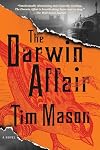
The year 1859 witnesses an event that shakes England — and the Western world — to the core: the publication of Charles Darwin’s Origin of Species. Mason’s ingenious, exquisitely plotted, and atmospherically rich thriller supposes that the uproar over Darwin’s theory and an attempt to assassinate Queen Victoria has a nefarious connection.
Further, Mason takes Charles Field, a real-life historical figure, as the detective who uncovers the connection, what it means, and who’s behind show more it: men in high places. Naturally, practically no one believes Field’s conspiracy theory, though one person willing to entertain the notion — however fanciful — is Prince Albert, Victoria’s consort, and, by the by, a Darwin supporter.
Charles Field was Charles Dickens’s model for Mr. Bucket of the Detective, a character in Bleak House, among the first such fictional figures. It’s a brilliant conceit to build a novel around Field, but Mason goes one better.
Field hates his fame as Bucket’s alter ego, and the surest way to inflame this bad-tempered detective is to call him Bucket or taunt him by suggesting that his fictional shadow would have solved the case before now. The Darwin Affair therefore begins with both feet in the shifting sands of mythic allusion versus deadly reality, and whether a person is who he is or what others take him for. From there, things get even more complex.
Field’s nemesis styles himself the Chorister, and an evil piece of work he is. I usually avoid suspense narratives with sociopaths, because the story’s thoroughly gruesome, and I can’t stand it when an outwardly decent citizen is suddenly unmasked as a raving lunatic responsible for multiple murders. But here, you know the Chorister’s a bad one from the get-go, and the plot revolves around stopping him when so many people fail to realize the danger he poses, a classic device in thrillerdom.
Once again, however, Mason goes one better. The Chorister has handlers who think themselves righteous, which shows their utter hypocrisy; and they believe they can control him, about which they’re dreadfully wrong. Rest assured, plenty of tension results. In a final stroke, the psychological source of the Chorister’s bloodlust is revealed, and plausibly, which raises him yet another notch above a mere device.
I admire how Mason imbues his narrative with history as inhabited background. I don’t mean the presence of historical figures like the royals, Darwin, Dickens, Thomas Huxley, or Karl Marx, though Mason handles them all beautifully. (Field’s confrontation with Marx is a real hoot.) Rather, I mean going beyond the People magazine fascination with name recognition to grapple with the era’s ethics, passions, and preoccupations, and to render the everyday, even at the palace.
Albert’s perpetually cold because the queen hates central heating, and candles and oil lamps are the order of the day because she finds gaslight too modern. The author can’t resist a witticism, and I’m glad of that, because otherwise, we’d have done without this gem from Albert about his better half: “And, to be frank, Victoria would not approve of any assassination attempt in which she was not the target.”
Fittingly, Darwin’s theory takes center stage in this rendering of midcentury Victoriana. As everyone knows, the church objects, but the conflict feels broader than that. Evolution has subversive implications for the social hierarchy, which also seems obvious in retrospect, but has somehow faded from sight.
If we share a common ancestry, and random chance happeneth to us all, who’s to say that the peer deserves his peerage, and the laundress her bleached, burning fingers? That question will never go out of style.
Interestingly, Field himself reads The Origin of Species, a struggle because he hasn’t had much education, yet he derives a great deal from it.
Make no mistake, The Darwin Affair is a gory book. But it’s also a gripping thriller, so if you don’t mind the blood and mutilation, you’ll be well rewarded. show less
Further, Mason takes Charles Field, a real-life historical figure, as the detective who uncovers the connection, what it means, and who’s behind show more it: men in high places. Naturally, practically no one believes Field’s conspiracy theory, though one person willing to entertain the notion — however fanciful — is Prince Albert, Victoria’s consort, and, by the by, a Darwin supporter.
Charles Field was Charles Dickens’s model for Mr. Bucket of the Detective, a character in Bleak House, among the first such fictional figures. It’s a brilliant conceit to build a novel around Field, but Mason goes one better.
Field hates his fame as Bucket’s alter ego, and the surest way to inflame this bad-tempered detective is to call him Bucket or taunt him by suggesting that his fictional shadow would have solved the case before now. The Darwin Affair therefore begins with both feet in the shifting sands of mythic allusion versus deadly reality, and whether a person is who he is or what others take him for. From there, things get even more complex.
Field’s nemesis styles himself the Chorister, and an evil piece of work he is. I usually avoid suspense narratives with sociopaths, because the story’s thoroughly gruesome, and I can’t stand it when an outwardly decent citizen is suddenly unmasked as a raving lunatic responsible for multiple murders. But here, you know the Chorister’s a bad one from the get-go, and the plot revolves around stopping him when so many people fail to realize the danger he poses, a classic device in thrillerdom.
Once again, however, Mason goes one better. The Chorister has handlers who think themselves righteous, which shows their utter hypocrisy; and they believe they can control him, about which they’re dreadfully wrong. Rest assured, plenty of tension results. In a final stroke, the psychological source of the Chorister’s bloodlust is revealed, and plausibly, which raises him yet another notch above a mere device.
I admire how Mason imbues his narrative with history as inhabited background. I don’t mean the presence of historical figures like the royals, Darwin, Dickens, Thomas Huxley, or Karl Marx, though Mason handles them all beautifully. (Field’s confrontation with Marx is a real hoot.) Rather, I mean going beyond the People magazine fascination with name recognition to grapple with the era’s ethics, passions, and preoccupations, and to render the everyday, even at the palace.
Albert’s perpetually cold because the queen hates central heating, and candles and oil lamps are the order of the day because she finds gaslight too modern. The author can’t resist a witticism, and I’m glad of that, because otherwise, we’d have done without this gem from Albert about his better half: “And, to be frank, Victoria would not approve of any assassination attempt in which she was not the target.”
Fittingly, Darwin’s theory takes center stage in this rendering of midcentury Victoriana. As everyone knows, the church objects, but the conflict feels broader than that. Evolution has subversive implications for the social hierarchy, which also seems obvious in retrospect, but has somehow faded from sight.
If we share a common ancestry, and random chance happeneth to us all, who’s to say that the peer deserves his peerage, and the laundress her bleached, burning fingers? That question will never go out of style.
Interestingly, Field himself reads The Origin of Species, a struggle because he hasn’t had much education, yet he derives a great deal from it.
Make no mistake, The Darwin Affair is a gory book. But it’s also a gripping thriller, so if you don’t mind the blood and mutilation, you’ll be well rewarded. show less
Words cannot accurately describe how much fun I had reading this book. I can liken the experience to discovering a delightful British series on PBS and losing an entire weekend curled up on the couch. I wasn’t quite sure what to expect, but I was pleasantly surprised.
This book reads like a movie and I wasn’t at all shocked to find out that the author is a playwright. The moment you turn that first page you’re drawn in, and the frenetic energy just pushes you through until the very show more end. It contains all the elements of Victorian England, gloomy and gritty, cold and pungent, but brightened by rich characters and perpetual wit. Throughout the novel are little bites of historical Easter Eggs, from Typhoid Mary, royal family trivia, references to Charles Dickens, and so much more.
Each vivid scene of this of this classic British comedy was filled with action, suspense, hilarious physical slapstick, and just a touch of well-placed lewdness that more than once made me laugh out loud. This would make a perfect BBC series with Hugh Laurie, Martin Freeman, and Bill Nighy in starring roles.
I wish I could read this book for the first time all over again.
Thank you to NetGalley and Algonquin Publishing for a complementary copy of this book in exchange for an honest review. show less
This book reads like a movie and I wasn’t at all shocked to find out that the author is a playwright. The moment you turn that first page you’re drawn in, and the frenetic energy just pushes you through until the very show more end. It contains all the elements of Victorian England, gloomy and gritty, cold and pungent, but brightened by rich characters and perpetual wit. Throughout the novel are little bites of historical Easter Eggs, from Typhoid Mary, royal family trivia, references to Charles Dickens, and so much more.
Each vivid scene of this of this classic British comedy was filled with action, suspense, hilarious physical slapstick, and just a touch of well-placed lewdness that more than once made me laugh out loud. This would make a perfect BBC series with Hugh Laurie, Martin Freeman, and Bill Nighy in starring roles.
I wish I could read this book for the first time all over again.
Thank you to NetGalley and Algonquin Publishing for a complementary copy of this book in exchange for an honest review. show less
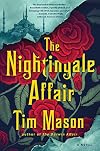
I love Victorian Age novels. And The Nightingale Affair is filled with personalities and history from the age, and reads more Victorian than contemporary.
Inspector Charles Field was known as the inspiration for Charles Dicken’s character Inspector Bucket. Everyone understands the connection, and fame is a tiresome burden. During the Crimean War, he was sent to the Crimea to investigate a serial killer who left a calling card of an embroidered red rose. Florence Nightingale and her nurses show more were in danger. Now, Field is now a private investigator asked to aid with the investigation into a new series of murders with all the hallmarks of the Beast of the Crimea. The man accused of the murders in the Crimea is dead–Field saw his death. Either he had the wrong man then, or there is a copy cat killer in London.
The London murderer has chosen his victims with a purpose: they are bluestocking ladies and men who support women’s suffrage. Florence Nightingale may be a well-off society lady, now retired from the world, but as a nurse she stood up to the male dominated medical profession to promote practices that forever changed how the ill and wounded were cared for, concerned with cleanliness and healthy food and palliative care for the dying. Field married one of Nightingale’s nurses and they have two adopted children. They are, like Nightingale, all at risk. The threat becomes very personal.
The novel takes us back to the Crimea for the back story, then forward to Field’s new investigation. It is a complicated, serpentine path to the truth.
I enjoyed this mystery for it’s atmosphere and how it is peopled with characters including Prime Minister Disraeli, philosopher and member of Parliament John Stuart Mill, and Wilkie Collins, Dicken’s friend and author of The Moonstone and Woman in White. Those in the know will love references such as Field getting his start as Mr. Fielding’s Bow Street Runners, a group began by Henry Fielding, author of The History of Tom Jones, A Foundling, and his brother John. The Bow Street Runners are known as the first professional police force.
I found it fairly quick reading and an enjoyable, atmospheric mystery.
Thanks to Algonquin Books for a free book. show less
Inspector Charles Field was known as the inspiration for Charles Dicken’s character Inspector Bucket. Everyone understands the connection, and fame is a tiresome burden. During the Crimean War, he was sent to the Crimea to investigate a serial killer who left a calling card of an embroidered red rose. Florence Nightingale and her nurses show more were in danger. Now, Field is now a private investigator asked to aid with the investigation into a new series of murders with all the hallmarks of the Beast of the Crimea. The man accused of the murders in the Crimea is dead–Field saw his death. Either he had the wrong man then, or there is a copy cat killer in London.
The London murderer has chosen his victims with a purpose: they are bluestocking ladies and men who support women’s suffrage. Florence Nightingale may be a well-off society lady, now retired from the world, but as a nurse she stood up to the male dominated medical profession to promote practices that forever changed how the ill and wounded were cared for, concerned with cleanliness and healthy food and palliative care for the dying. Field married one of Nightingale’s nurses and they have two adopted children. They are, like Nightingale, all at risk. The threat becomes very personal.
The novel takes us back to the Crimea for the back story, then forward to Field’s new investigation. It is a complicated, serpentine path to the truth.
I enjoyed this mystery for it’s atmosphere and how it is peopled with characters including Prime Minister Disraeli, philosopher and member of Parliament John Stuart Mill, and Wilkie Collins, Dicken’s friend and author of The Moonstone and Woman in White. Those in the know will love references such as Field getting his start as Mr. Fielding’s Bow Street Runners, a group began by Henry Fielding, author of The History of Tom Jones, A Foundling, and his brother John. The Bow Street Runners are known as the first professional police force.
I found it fairly quick reading and an enjoyable, atmospheric mystery.
Thanks to Algonquin Books for a free book. show less
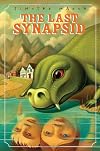
From the cover, I expected a twee little story about a puppy-sized dinosaur and the children who befriend him. That would have been fine.
Instead, what I read was an adventuresome, compelling, surprising tale about two tweens who befriend a small synapsid (which isn't a dinosaur at all) and learn they must help him save the fate of the human race.
I don't want to say much about the plot, other than there are some dark elements, which I love finding in a children's novel, there are some great show more lines (I bugged my husband by reading them aloud), and there are a few brilliant and indisputable dismissals of creationism. I cheered when I read them. Hooray for science, especially from a book that takes a few liberties with it. show less
Instead, what I read was an adventuresome, compelling, surprising tale about two tweens who befriend a small synapsid (which isn't a dinosaur at all) and learn they must help him save the fate of the human race.
I don't want to say much about the plot, other than there are some dark elements, which I love finding in a children's novel, there are some great show more lines (I bugged my husband by reading them aloud), and there are a few brilliant and indisputable dismissals of creationism. I cheered when I read them. Hooray for science, especially from a book that takes a few liberties with it. show less
Lists
Awards


You May Also Like
Associated Authors
Statistics
- Works
- 14
- Also by
- 1
- Members
- 591
- Popularity
- #42,465
- Rating
- 3.5
- Reviews
- 32
- ISBNs
- 27
