
Andrew D. Blechman
Author of Pigeons: The Fascinating Saga of the World's Most Revered and Reviled Bird
About the Author
Works by Andrew D. Blechman
Pigeons: The Fascinating Saga of the World's Most Revered and Reviled Bird (2006) 361 copies, 20 reviews
Associated Works
The Soul of an Octopus: A Surprising Exploration into the Wonder of Consciousness (2015) — Editor, some editions — 3,141 copies, 133 reviews
Tagged
Common Knowledge
- Gender
- male
Members
Reviews
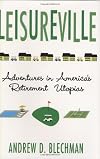
Andrew Blechman’s Leisureville: Adventures in a World Without Children was first published in 2009 — long before the presidency of Donald J. Trump was ever dreamed of. But the book was prescient in ways that I don’t think Blechman himself realized at the time.
What Blechman chronicles is the increasing tendency of the well-to-do to push off community obligations that were honored for themselves. People whose children benefited from good public schools, well-funded libraries, pensions, show more free college and a social safety net repeatedly say, “I’ve paid enough taxes!” and want to deny new generations the same. Blechman writes about the growth of retirement communities in which 50-, 60- and 70-somethings want to play golf, drink and (remarkably) have casual sex while ignoring the greater world. What he’s really exposing is a generational war in which those who benefited from the New Deal, government spending and the G.I. Bill now want to starve the generations that come after to keep their taxes low enough that they can live in luxury. I was appalled at the indifference and lack of empathy.
And won’t those chickens come home to roost when the ensuing generations increase enough in numbers to treat Social Security the way these oldsters did education funding? When you live in a bubble — built by local newspapers owned by the retirement community’s developer and constant prattling from Fox News — these questions don’t get raised. Read Leisureville for its eye-opening window into the Sun Cities and The Villages of this world, but, even more importantly, as an insight into class warfare. show less
What Blechman chronicles is the increasing tendency of the well-to-do to push off community obligations that were honored for themselves. People whose children benefited from good public schools, well-funded libraries, pensions, show more free college and a social safety net repeatedly say, “I’ve paid enough taxes!” and want to deny new generations the same. Blechman writes about the growth of retirement communities in which 50-, 60- and 70-somethings want to play golf, drink and (remarkably) have casual sex while ignoring the greater world. What he’s really exposing is a generational war in which those who benefited from the New Deal, government spending and the G.I. Bill now want to starve the generations that come after to keep their taxes low enough that they can live in luxury. I was appalled at the indifference and lack of empathy.
And won’t those chickens come home to roost when the ensuing generations increase enough in numbers to treat Social Security the way these oldsters did education funding? When you live in a bubble — built by local newspapers owned by the retirement community’s developer and constant prattling from Fox News — these questions don’t get raised. Read Leisureville for its eye-opening window into the Sun Cities and The Villages of this world, but, even more importantly, as an insight into class warfare. show less
Documents the journey of the author from casual observer of pigeons to advocate for their ethical treatment, a short text covering a wide range of experiences and insights that happened in the course of a year spent living with a prize-winning pigeon-racer. It focuses primarily on the many different ways that people relate to the birds, how different "fringes" mold their lives around our feathered frenemies: be it to pet them, race them, shoot them, "shoo" them, endorse them or feed them show more with shopping carts full of seed, feed on them, the list goes on. It contextualizes these people with how the rock dove affected society historically, namely the importance of homing pigeons from antiquity up to the 1st World War, as well as with the surprisingly quick- evolving tragic tale of the passenger pigeon. And of course there's an interview with Mike Tyson, how could you go without it? His bizarrely stoic tantrum is a clear highlight of the journey.
So it's informative, but beyond that it's also exciting and an unlikely document, certainly favored by the author's background. I really need to commend his composure when tackling the subject, both in how he didn't and did allow his experiences to resonate with him. Many a time he would traverse heaven and hell to reach the stem of a story. Several of the interviewees were extremely private people, with reason or without, and the tales of how he'd get the right connections to vouch for him so he could get even a chance to speak to these enigmas, those alone were a rollercoaster and a half. And the added danger of him interviewing some people in one chapter and potentially their mortal enemies in the next, some of whom lived out in the desert, with several guns at the ready... As a kid I shuddered at the realization that the Americans in Borat weren't actors. The feeling that this book gave was similar, but with more added awe. Blechman is a fine journalist.
So he'd reach the stem of a story, and then he'd wring the story out of that stem at all costs. He manifested his willpower when repressing his biases. Even talking to utter jerks prideful of deplorable deeds, he would assume the persona that would further the wringing, the Andrew Blechman to which they'd readily confide their most private sentiments. About pigeons of course. Although the book is far from impartial, it separates Blechman's viewpoint from those of the interviewees, and their perspective appears to be accurately represented. As people confided, you can see some of them dig even deeper holes for themselves, while others grabbed onto redemption like a vine over quicksand. That's how the book was strengthened by the author's ability to distance himself from the subjects in question, it broadened the journey in a way that personal investment wouldn't have allowed.
And now to how the book was strengthened by the author's personal investment into the subject in question. This is something that's left as a surprise of sorts at the end of the book, but it recontextualizes all that you had been reading up to that point: you don't know Blechman advocates for the ethical treatment of pigeons up until the epilogue. All in one go it is revealed that Blechman wasn't an impartial observer all along, he was actually being affected by what he learned, this wasn't an exercise in "these people are weird. Look at how weird these weirdos are", the writing of Pigeons... was inadvertently a journey of enlightenment. And the implication there is that it can be a journey of
enlightenment for you too as you read it.
I didn't really think of pigeons as disease-addled skyrats before reading the book, so I don't guarantee that it would make you view these fascinating creatures in a different light, especially considering that there's probably books about how rats aren't just disease-addled groundpigeons as well. But I can assure you that in the fast, cut-throat world of Dove Lit this book rises above the rest. show less
So it's informative, but beyond that it's also exciting and an unlikely document, certainly favored by the author's background. I really need to commend his composure when tackling the subject, both in how he didn't and did allow his experiences to resonate with him. Many a time he would traverse heaven and hell to reach the stem of a story. Several of the interviewees were extremely private people, with reason or without, and the tales of how he'd get the right connections to vouch for him so he could get even a chance to speak to these enigmas, those alone were a rollercoaster and a half. And the added danger of him interviewing some people in one chapter and potentially their mortal enemies in the next, some of whom lived out in the desert, with several guns at the ready... As a kid I shuddered at the realization that the Americans in Borat weren't actors. The feeling that this book gave was similar, but with more added awe. Blechman is a fine journalist.
So he'd reach the stem of a story, and then he'd wring the story out of that stem at all costs. He manifested his willpower when repressing his biases. Even talking to utter jerks prideful of deplorable deeds, he would assume the persona that would further the wringing, the Andrew Blechman to which they'd readily confide their most private sentiments. About pigeons of course. Although the book is far from impartial, it separates Blechman's viewpoint from those of the interviewees, and their perspective appears to be accurately represented. As people confided, you can see some of them dig even deeper holes for themselves, while others grabbed onto redemption like a vine over quicksand. That's how the book was strengthened by the author's ability to distance himself from the subjects in question, it broadened the journey in a way that personal investment wouldn't have allowed.
And now to how the book was strengthened by the author's personal investment into the subject in question. This is something that's left as a surprise of sorts at the end of the book, but it recontextualizes all that you had been reading up to that point: you don't know Blechman advocates for the ethical treatment of pigeons up until the epilogue. All in one go it is revealed that Blechman wasn't an impartial observer all along, he was actually being affected by what he learned, this wasn't an exercise in "these people are weird. Look at how weird these weirdos are", the writing of Pigeons... was inadvertently a journey of enlightenment. And the implication there is that it can be a journey of
enlightenment for you too as you read it.
I didn't really think of pigeons as disease-addled skyrats before reading the book, so I don't guarantee that it would make you view these fascinating creatures in a different light, especially considering that there's probably books about how rats aren't just disease-addled groundpigeons as well. But I can assure you that in the fast, cut-throat world of Dove Lit this book rises above the rest. show less
This really is a "fascinating" book. It looks at many aspects of the relationship of humans with pigeons, including a historical perspective (especially interesting is their use for communication in war and commerce) and information on racing pigeons, showing pigeons, shooting pigeons, dining on pigeons, and fights to exterminate and to save pigeons. They really are remarkable birds and have only come to be detested in recent years, as their large city populations have caused the nuisance of show more lots of pigeon droppings.
Reading this book made me look around my city and wonder where all the pigeons have gone. I fear some dire fate has befallen them, because I do not see them around sidewalks and parking decks anymore. It took this book to make me notice that and miss them. I'll have to look into it...
The one thing I think is missing from this book is illustrations. Photos and/or drawings would have supplemented the author's descriptions of various birds and breeds. But overall, it is a worthy read. show less
Reading this book made me look around my city and wonder where all the pigeons have gone. I fear some dire fate has befallen them, because I do not see them around sidewalks and parking decks anymore. It took this book to make me notice that and miss them. I'll have to look into it...
The one thing I think is missing from this book is illustrations. Photos and/or drawings would have supplemented the author's descriptions of various birds and breeds. But overall, it is a worthy read. show less
I have to admit to a fondness for pigeons. While I don't feed them, I do keep a birdbath that the pigeons, the pigeons called doves, and lots of other birds use frequently. Pigeons are actually quite fun to watch and quite beautiful, so I wanted to learn more.
Be careful of what you wish for. It took me quite a long time to read this book because I couldn't handle more than a little at a time. It's incomprehensible what we've done to this maligned bird. Even those who profess to love them, show more but breed for their own visions of beauty and uniqueness, even those who race them, can be incredibly cruel.
Some of the fancy breeds have been so modified they can't eat normally or feed their babies, the babes can't even peck their ways out of their shells. “They certainly wouldn't survive in the wild, but then again, they're not bred to live in the wild. They're bred to be pretty to look at.” There are pigeons that roll while flying. One of the fanciers, when asked why they roll, says, “Because they're retarded, that's why. If it was a kid, you'd put a helmet on him and stick him in a padded room.”
There are the pigeon shoots, and the feral pigeons baited and netted to provide the shoots. The organizer of one of the shoots states, “It's not that we hate pigeons. We treat them well...until they get shot.” Right. And if one of the shot pigeons manages to live, it get stuffed in a garbage bag with the dead ones. The ones that fly farther are left to die a slower death.
These cruel acts involve a fewer number of birds than plain old urban warfare on them. The favored method seems to be poisoning them, and as a side effect, poison non-targeted creatures. It is only a short term semi-solution to the problem, and there are humane ways of controlling the pigeon population when it gets out of hand. But that isn't profitable for those whose wages depend on poisoning.
I've only touched on what all this informative book contains, and I do recommend reading it. But if you have a soul, some of it will make you wonder about humanity. show less
Be careful of what you wish for. It took me quite a long time to read this book because I couldn't handle more than a little at a time. It's incomprehensible what we've done to this maligned bird. Even those who profess to love them, show more but breed for their own visions of beauty and uniqueness, even those who race them, can be incredibly cruel.
Some of the fancy breeds have been so modified they can't eat normally or feed their babies, the babes can't even peck their ways out of their shells. “They certainly wouldn't survive in the wild, but then again, they're not bred to live in the wild. They're bred to be pretty to look at.” There are pigeons that roll while flying. One of the fanciers, when asked why they roll, says, “Because they're retarded, that's why. If it was a kid, you'd put a helmet on him and stick him in a padded room.”
There are the pigeon shoots, and the feral pigeons baited and netted to provide the shoots. The organizer of one of the shoots states, “It's not that we hate pigeons. We treat them well...until they get shot.” Right. And if one of the shot pigeons manages to live, it get stuffed in a garbage bag with the dead ones. The ones that fly farther are left to die a slower death.
These cruel acts involve a fewer number of birds than plain old urban warfare on them. The favored method seems to be poisoning them, and as a side effect, poison non-targeted creatures. It is only a short term semi-solution to the problem, and there are humane ways of controlling the pigeon population when it gets out of hand. But that isn't profitable for those whose wages depend on poisoning.
I've only touched on what all this informative book contains, and I do recommend reading it. But if you have a soul, some of it will make you wonder about humanity. show less
Awards

You May Also Like


Associated Authors
Statistics
- Works
- 2
- Also by
- 1
- Members
- 494
- Popularity
- #50,037
- Rating
- 3.8
- Reviews
- 27
- ISBNs
- 11