
James I. Robertson (1930–2019)
Author of Stonewall Jackson : The Man, The Soldier, The Legend
About the Author
James I. Robertson Jr. is currently the Alumni Distinguished Professor and Executive Director of the Virginia Center for Civil War Studies at Virginia Tech in Blacksburg
Image credit: Diane Goff
Works by James I. Robertson
After the Civil War: The Heroes, Villains, Soldiers, and Civilians Who Changed America (2015) 87 copies, 1 review
Soldier Of Southwestern Virginia: The Civil War Letters Of Captain John Preston Sheffey (2004) — Editor — 26 copies
Robert E. Lee: A Reference Guide to His Life and Works (Significant Figures in World History) (2018) 5 copies
Civil War Echoes, Voices from Virginia 1860-1891, A Virginia Sesquicentennial Signature Publication (2016) 3 copies
Stonewall Jackson, Vol 2 2 copies
Stonewall Jackson, Vol 1 2 copies
Civil War Times illustrated Magazine (May 1972) (Stonewall Jackson Valley Campaign) (Volume XI, No. 2) (1972) 1 copy
Soldiers 1 copy
Associated Works
Hearts Touched by Fire: The Best of Battles and Leaders of the Civil War (Modern Library) (2011) — Contributor — 110 copies, 2 reviews
Tagged
Common Knowledge
- Legal name
- Robertson, James Irvin Jr
- Other names
- Dr. Bud (known as)
- Birthdate
- 1930-07-18
- Date of death
- 2019-11-02
- Gender
- male
- Education
- Emory University (MA - History, PhD - History)
Randolph-Macon College (BA)
George Washington High School (Danville, Virgina) - Occupations
- historian
professor (History) - Organizations
- Virginia Tech University
United States Air Force (Korean War)
United States Civil War Centennial Commission (Executive Director)
University of Iowa
George Washington University
University of Montana - Nationality
- USA
- Birthplace
- Danville, Virginia, USA
- Place of death
- Richmond, Virginia, USA
- Associated Place (for map)
- Virginia, USA
Members
Reviews

Sometimes, half a great book is still a pretty good book. And sometimes, it's really disappointing. I fear this is one of the latter.
To clarify: This is a book about the Virginia regiments in the Civil War that were originally under the command of Thomas J. Jackson, and they and he both received the nickname "Stonewall" at the First Battle of Bull Run. Jackson went on to great fame, success, and death -- and, for the most part, so did the brigade, which saw so much hard fighting that it had show more only a few hundred survivors by 1865. Hence this book.
Author Robertson considers it the most successful and most famous brigade in Robert E. Lee's army. I'm not sure that's true -- I think most people would consider Hood's Texas Brigade the greatest of all Army of Northern Virginia units, and the two were at least close in terms of fame -- but certainly the Stonewall Brigade was one of the most noteworthy. It deserves a unit history.
But a unit history needs some historical background. This book has a lot of information about the men and officers in the brigade, making it very valuable in that regard. But it lacks context. There are several examples of this; I'll offer what I consider the last.
At the beginning of 1864, the Stonewall Brigade was under the command of Brigadier General James A. Walker. It was one of the brigades of Edward Johnson's division. Johnson's was one of three divisions in Richard S. Ewell's Second Corps, the other two being the divisions of Jubal A. Early and Robert Rodes. Then came the Battle of the Wilderness, and then the Battle of Spotsylvania. At Spotsylvania, Walker was wounded in the elbow. Killed, wounded, disabled? Page 225 doesn't tell us; it only tells us that he was wounded. (As it turns out, he survived, but his arm was crippled, and he and the brigade never reunited.) The brigade, already depleted, was ruined at Spotsylvania, and Johnson captured; at about the same time, Ewell was found too weak for field command and went to a less stressful post. So Early rose to corps command, and John B. Gordon took over... some division. Early's? Johnson's? Page 228 says that Gordon recommended that William Terry have command of the Stonewall Brigade, but Gordon had been a brigadier in Early's division, not Johnson's. As a matter of fact, a lot of reorganizing had gone on to try to keep the Second Corps effective despite its losses, and that reorganizing dramatically affected the Stonewall Brigade (which eventually was combined with two others). But you can't learn that from this book; you need something like Freeman's Lee's Lieutenants. And you really can't understand the history of the Stonewall Brigade without that.
So: This is a good, useful supplement if you have a better structural history of Lee's army; you can find out what life was actually like to be in the Stonewall Brigade during its long and distinguished service. But if you want to know what the Stonewall Brigade actually did, you'll need something more. And that's truly sad, because this book wouldn't have had to be too much longer to supply that little bit of additional detail. show less
To clarify: This is a book about the Virginia regiments in the Civil War that were originally under the command of Thomas J. Jackson, and they and he both received the nickname "Stonewall" at the First Battle of Bull Run. Jackson went on to great fame, success, and death -- and, for the most part, so did the brigade, which saw so much hard fighting that it had show more only a few hundred survivors by 1865. Hence this book.
Author Robertson considers it the most successful and most famous brigade in Robert E. Lee's army. I'm not sure that's true -- I think most people would consider Hood's Texas Brigade the greatest of all Army of Northern Virginia units, and the two were at least close in terms of fame -- but certainly the Stonewall Brigade was one of the most noteworthy. It deserves a unit history.
But a unit history needs some historical background. This book has a lot of information about the men and officers in the brigade, making it very valuable in that regard. But it lacks context. There are several examples of this; I'll offer what I consider the last.
At the beginning of 1864, the Stonewall Brigade was under the command of Brigadier General James A. Walker. It was one of the brigades of Edward Johnson's division. Johnson's was one of three divisions in Richard S. Ewell's Second Corps, the other two being the divisions of Jubal A. Early and Robert Rodes. Then came the Battle of the Wilderness, and then the Battle of Spotsylvania. At Spotsylvania, Walker was wounded in the elbow. Killed, wounded, disabled? Page 225 doesn't tell us; it only tells us that he was wounded. (As it turns out, he survived, but his arm was crippled, and he and the brigade never reunited.) The brigade, already depleted, was ruined at Spotsylvania, and Johnson captured; at about the same time, Ewell was found too weak for field command and went to a less stressful post. So Early rose to corps command, and John B. Gordon took over... some division. Early's? Johnson's? Page 228 says that Gordon recommended that William Terry have command of the Stonewall Brigade, but Gordon had been a brigadier in Early's division, not Johnson's. As a matter of fact, a lot of reorganizing had gone on to try to keep the Second Corps effective despite its losses, and that reorganizing dramatically affected the Stonewall Brigade (which eventually was combined with two others). But you can't learn that from this book; you need something like Freeman's Lee's Lieutenants. And you really can't understand the history of the Stonewall Brigade without that.
So: This is a good, useful supplement if you have a better structural history of Lee's army; you can find out what life was actually like to be in the Stonewall Brigade during its long and distinguished service. But if you want to know what the Stonewall Brigade actually did, you'll need something more. And that's truly sad, because this book wouldn't have had to be too much longer to supply that little bit of additional detail. show less
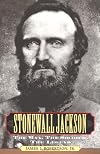
Stonewall Jackson was the most compelling figure of the Civil War. James Robertson has found, and accepted, the key to understanding Stonewall: his profound Christian Faith and his steadfast duty to doing the will of God. Without understanding this, Stonewall is just an eccentric genius. Robertson imports this understanding of Stonewall‘s faith primarily through devout passages from letters to his wife Anna. We truly are brought to know the man Stonewall through anecdotes on every page. show more There is also cogent military analysis of his campaigns, all within the context of Stonewall being a Soldier of God.
This is no hagiography, though. Certain myths are dispelled, and Stonewall’s difficult relations with subordinates, especially AP Hill, is detailed. His reticence in sharing his plans with subordinates and how that at times hampered the Army is also addressed.
I can’t imagine a more powerful biography of a more compelling military figure. show less
This is no hagiography, though. Certain myths are dispelled, and Stonewall’s difficult relations with subordinates, especially AP Hill, is detailed. His reticence in sharing his plans with subordinates and how that at times hampered the Army is also addressed.
I can’t imagine a more powerful biography of a more compelling military figure. show less
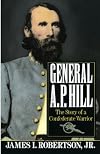
Straightforward biography of one of Lee’s division and corps commanders. A. P. Hill figured in the last words of both Lee (“Tell Hill he must come up. Strike the tent.”) and Jackson (“Order A.P. Hill to prepare for action! Pass the infantry to the front rapidly! Tell Major Hawks… Let us cross over the river, and rest under the shade of the trees.”) Hill himself didn’t have much chance for last words, as he was shot through the heart will reconnoitering at Five Forks.
Hill’s show more pre-Civil War career had not be terribly distinguished – he fought the Mexicans, the Seminoles, and served as an Army liaison to the Coast Survey. When the war started, he quickly rose, acquiring a reputation as a fighting general – sometimes with the Union, sometimes with his own superiors, as he had long-standing feuds with both Jackson (although he cradled Jackson in his arms after Jackson took his fatal wound at Chancellorsville) and Longstreet (once challenging Longstreet to a duel). Lee had to intervene a couple of times to calm things down. His aggressiveness was a mixed blessing; at Antietam he came up and deployed without any reconnaissance and saved the day, but did something similar at Bristoe Station and got chopped up by a Union ambush. Author James Robertson doesn’t make the direct comparison but Hill might possibly be the Confederate counterpart of Ambrose Burnside (even sharing a first name); both were estimably competent division commanders but somewhat overmatched when promoted.
Robertson is clearly a southern sympathizer, and also clearly sympathetic to his subject even at the expense of other Southern heroes (notably Jackson). However, he doesn’t shy away from criticizing Hill for his loses, and also doesn’t mind presenting a fact that would earlier authors would have suppressed as tarnishing Southern honor: Hill contracted venereal disease as cadet at West Point – “while on furlough in New York City”, according to the surgeon’s report. Well, I expect that still happens, but in 1844 it was considerably more of a medical problem if no less a moral one. Untreated (well, futilely treated) gonorrhea caused Hill lifelong pain, causing urinary tract strictures and eventually developing into prostatitis and (according to Robertson) uremia, which eventually would have been fatal even if Hill hadn’t taken a bullet at Five Forks. Robertson blames some of Hill’s poor judgment and quiescence in later battles on increasing debility; noting that several of his officers commented on Hill’s increasing ill-health. (Robertson seems interested in medical problems, as he also suggests Robert E. Lee’s poor performance at Gettysburg was due to a developing cardiac condition. Not unreasonable but I’ve never heard anyone else suggest it).
Well done for this sort of thing; the pro-Southern attitude is noticeable but not obstreperous. Fine maps and adequate notes and bibliography. show less
Hill’s show more pre-Civil War career had not be terribly distinguished – he fought the Mexicans, the Seminoles, and served as an Army liaison to the Coast Survey. When the war started, he quickly rose, acquiring a reputation as a fighting general – sometimes with the Union, sometimes with his own superiors, as he had long-standing feuds with both Jackson (although he cradled Jackson in his arms after Jackson took his fatal wound at Chancellorsville) and Longstreet (once challenging Longstreet to a duel). Lee had to intervene a couple of times to calm things down. His aggressiveness was a mixed blessing; at Antietam he came up and deployed without any reconnaissance and saved the day, but did something similar at Bristoe Station and got chopped up by a Union ambush. Author James Robertson doesn’t make the direct comparison but Hill might possibly be the Confederate counterpart of Ambrose Burnside (even sharing a first name); both were estimably competent division commanders but somewhat overmatched when promoted.
Robertson is clearly a southern sympathizer, and also clearly sympathetic to his subject even at the expense of other Southern heroes (notably Jackson). However, he doesn’t shy away from criticizing Hill for his loses, and also doesn’t mind presenting a fact that would earlier authors would have suppressed as tarnishing Southern honor: Hill contracted venereal disease as cadet at West Point – “while on furlough in New York City”, according to the surgeon’s report. Well, I expect that still happens, but in 1844 it was considerably more of a medical problem if no less a moral one. Untreated (well, futilely treated) gonorrhea caused Hill lifelong pain, causing urinary tract strictures and eventually developing into prostatitis and (according to Robertson) uremia, which eventually would have been fatal even if Hill hadn’t taken a bullet at Five Forks. Robertson blames some of Hill’s poor judgment and quiescence in later battles on increasing debility; noting that several of his officers commented on Hill’s increasing ill-health. (Robertson seems interested in medical problems, as he also suggests Robert E. Lee’s poor performance at Gettysburg was due to a developing cardiac condition. Not unreasonable but I’ve never heard anyone else suggest it).
Well done for this sort of thing; the pro-Southern attitude is noticeable but not obstreperous. Fine maps and adequate notes and bibliography. show less
One of the finest biographies I've read, and I've read a bunch of them. This is a monster of a book. Over 700 pages of text. If you're really interested in Jackson, it is a must read. If not, it might weigh you down with so much information. It also presents a great deal about the war, both North and South. Jackson's life is shown very well amidst and in context of the time in which he lived. Highly recommend for Civil War enthusiasts.
Lists
Awards


You May Also Like


Associated Authors
Statistics
- Works
- 57
- Also by
- 6
- Members
- 3,361
- Popularity
- #7,587
- Rating
- 4.0
- Reviews
- 24
- ISBNs
- 88
- Favorited
- 1
