
Lee Stringer
Author of Grand Central Winter
About the Author
Lee Stringer: For three years in the mid-1990s Stringer served as a senior editor of Street News, eventually becoming editor-in-chief. In 1996, he sought treatment and recovery for drug addiction at Project Renewal. His recent writing has appeared in The Nation and the New York Times among other show more publications, and in collections. Stringer's commentaries can be heard on NPR's All Things Considered. He currently serves on three nonprofit boards: Project Renewal in New York City, the Friends of the Mamaroneck Library, and the Youth Shelter Program of Westchester. He lives in Mamaroneck, New York, where he grew up show less
Works by Lee Stringer
Associated Works
The Man with the Golden Arm: 50th Anniversary Critical Edition (1999) — Contributor — 462 copies, 8 reviews
Tagged
Common Knowledge
- Canonical name
- Stringer, Lee
- Birthdate
- 20th Century
- Gender
- male
- Occupations
- homeless
workless
writer - Nationality
- USA
- Places of residence
- New York, New York, USA
- Associated Place (for map)
- New York, USA
Members
Reviews

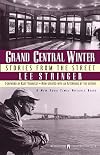
This is another book from my to-read shelf, a book I've owned for years and years but never read. Until last night, home from an unusually busy and tiring day of work, having recently spent a lot of time thinking about homelessness, especially being homeless in Michigan in the winter, this book jumped out at me.
I read the entire book in a single evening.
This isn't the kind of book that is going to give a lot of Answers. It doesn't explain why people are homeless or what being homeless is show more like, but it does tell the story of one man who was homeless and addicted to crack for a long stretch in the eighties and early nineties. He is processed through shelters, arrested several times for vagrancy and other minor offenses, is sentenced to community service, sleeps in subway ramps, witnesses crimes and commits a few (mostly trespassing, vagrancy, drug possession.) He also writes, becomes the senior editor for Street News, intervenes in a mugging, appears on Geraldo, and survives years of homelessness with wit and dignity intact.
Stringer is a good writer. There are shades here of Vonnegut (one of his earliest, most vocal supporters), London, Bukowski. But in the end his voice is all his own. He succeeds in humanizing homelessness, and also in showing us that most of the ways we respond to homelessness, both as a society and individually, are pretty crap. Shelters that scam various systems, teaching the homelessness to become scammers themselves, laws that penalize the powerless on behalf of the powerful, and the misguided, self-involved, and sometimes downright mean ways people behave.
This is a book to expand your horizons. show less
I read the entire book in a single evening.
This isn't the kind of book that is going to give a lot of Answers. It doesn't explain why people are homeless or what being homeless is show more like, but it does tell the story of one man who was homeless and addicted to crack for a long stretch in the eighties and early nineties. He is processed through shelters, arrested several times for vagrancy and other minor offenses, is sentenced to community service, sleeps in subway ramps, witnesses crimes and commits a few (mostly trespassing, vagrancy, drug possession.) He also writes, becomes the senior editor for Street News, intervenes in a mugging, appears on Geraldo, and survives years of homelessness with wit and dignity intact.
Stringer is a good writer. There are shades here of Vonnegut (one of his earliest, most vocal supporters), London, Bukowski. But in the end his voice is all his own. He succeeds in humanizing homelessness, and also in showing us that most of the ways we respond to homelessness, both as a society and individually, are pretty crap. Shelters that scam various systems, teaching the homelessness to become scammers themselves, laws that penalize the powerless on behalf of the powerful, and the misguided, self-involved, and sometimes downright mean ways people behave.
This is a book to expand your horizons. show less

Lee Stringer suffered the death of his business partner and then his brother—the first a bump in the road, the second a mind-numbing grief that led him to heavy drinking, then crack cocaine. Nine months after being introduced to crack, he had smoked up one hundred thousand dollars and was on the street. He felt relief at not having to worry about rent; his daily goal was to sell enough cans or newspapers to feed his addiction and get a meal, in that order. Everything else was secondary.
Two show more things, in particular, grabbed my attention, causing me to enter into his life as it was, accepting him and his friends just as they were. The first is his total lack of sentimentality in telling his story; the second is that he has been drug-free for years.
Stringer writes about the politics of homelessness, why some things work and others don’t, about the all-or-nothing addictive personality, and the morality and humanity of addicts. Along the way he drops a few kernels of wisdom: “I do not know anyone who considers himself a hardworking, moral, churchgoing, nonaddicted American who would go to the lengths to which recovering addicts and alcoholics go for the sake of spiritual growth. The urgency is just not there. . . . As they say in the rooms of AA, religion is for people who are afraid of going to hell, spirituality is for those who have already been there.”
Stringer is a writer by gift and a philosopher by experience. He had no formal education for either, but driven by life events and native intelligence, he qualifies as both. show less
Two show more things, in particular, grabbed my attention, causing me to enter into his life as it was, accepting him and his friends just as they were. The first is his total lack of sentimentality in telling his story; the second is that he has been drug-free for years.
Stringer writes about the politics of homelessness, why some things work and others don’t, about the all-or-nothing addictive personality, and the morality and humanity of addicts. Along the way he drops a few kernels of wisdom: “I do not know anyone who considers himself a hardworking, moral, churchgoing, nonaddicted American who would go to the lengths to which recovering addicts and alcoholics go for the sake of spiritual growth. The urgency is just not there. . . . As they say in the rooms of AA, religion is for people who are afraid of going to hell, spirituality is for those who have already been there.”
Stringer is a writer by gift and a philosopher by experience. He had no formal education for either, but driven by life events and native intelligence, he qualifies as both. show less
Journal entry 2 by SKingList from New York, New York USA on Wednesday, March 16, 2005
I really loved this book. I grew up in NY in the 80s and 90s, so I knew the surface of what Stringer was talking about and remember reading about all the programs to "fix" the homeless problems. It was interesting to read about them from the other side of the issue.
I really loved this book. I grew up in NY in the 80s and 90s, so I knew the surface of what Stringer was talking about and remember reading about all the programs to "fix" the homeless problems. It was interesting to read about them from the other side of the issue.
Quite good acccount of pulling out of New York homelessness. I wonder what became of the author.
Lists
Awards

You May Also Like


Associated Authors
Statistics
- Works
- 7
- Also by
- 3
- Members
- 359
- Popularity
- #66,804
- Rating
- 3.8
- Reviews
- 4
- ISBNs
- 29
- Languages
- 8