
T. H. Watkins (1936–2000)
Author of The Great Depression: America in the 1930s
About the Author
T.H. Watkins, who wrote numerous books, was best known as the author of "Righteous Pilgrim," winner of the "Los Angeles Times" Book Prize for Biography & a finalist for the National Book Award & the National Book Critics Circle Award. (Bowker Author Biography)
Series
Works by T. H. Watkins
The Hungry Years: A Narrative History of the Great Depression in America (1999) 164 copies, 1 review
The Redrock Chronicles: Saving Wild Utah (Center Books on Space, Place, and Time) (2000) 5 copies, 1 review
California in color;: An essay on the paradox of plenty and descriptive texts (Profiles of America) (1970) 4 copies
"A Heritage Preserved: Fort Adobe," 3 copies
Boston-Birth and Rebirth 1 copy
California. 1 copy
Gold and Silver in the Wset 1 copy
Associated Works
America's Hidden Treasures: Exploring Our Little-Known National Parks (1992) — Foreword — 153 copies
Tagged
Common Knowledge
- Legal name
- Watkins, Thomas Henry
- Birthdate
- 1936
- Date of death
- 2000-02-23
- Gender
- male
- Education
- San Francisco State University
Redlands University
San Bernardino Valley College - Occupations
- editor
historian - Agent
- Carl Brandt
- Nationality
- USA
- Birthplace
- Loma Linda, California, USA
- Places of residence
- Washington, D.C., USA
San Bernardino, California, USA
San Francisco, California, USA
New York, New York, USA - Place of death
- Bozeman, Montana, USA
- Associated Place (for map)
- USA
Members
Reviews

There is no denying that the Depression that began in 1929 was a convulsive episode in the history of the USA. One President has been vilified for not being inventive enough to deal with it and another has been glorified; yet neither definition fits well. Watkins presents evidence that many in our nation dealt with the time 1929 to 1939 in a straight forward way while other Americans demanded the government do something. Unlike the recession (depression?) of 2008 to ?, the main thrust of FDR show more was to put people to work as a means to get them back on their feet. Some of the government programs were brilliant; others not so much -- but at least the thrust was to restore work. It is inconceivable that FDR would have tried to close down the coal industry as a means to get people back to work. Did World War II end the 1929 Depression or was it the avalanche of government programs? One thing is certain, from 1929 through 1939, the USA made an irreversible turn to a greater, more intrusive Federal Government.
One cannot, however, when discussing cause and effect ignore the plight of so many people which was downright miserable. I think Watkins does an excellent job describing what happened to us. One might even go so far as to ask, would the USA of the 1920's been able to deal with WWII as well as the USA of the 1930's subsequently did. We went to war in 1917 as the savior of democracy; we went to war in 1941 because we had to. One would never prescribe the period of 1929 through 1939 simply to toughen a people but it certainly had that effect. show less
One cannot, however, when discussing cause and effect ignore the plight of so many people which was downright miserable. I think Watkins does an excellent job describing what happened to us. One might even go so far as to ask, would the USA of the 1920's been able to deal with WWII as well as the USA of the 1930's subsequently did. We went to war in 1917 as the savior of democracy; we went to war in 1941 because we had to. One would never prescribe the period of 1929 through 1939 simply to toughen a people but it certainly had that effect. show less

5622. The Hungry Years A Narrative History of the Great Depression in America, by T. H. Watkins (read 26 Apr 2019) This book was published in 1999, which should mean that the author would have some perspective on the events related, but I found the author often told of his source and it seemed clear that that named source was what he was telling and that he had made little effort to relate the events covering a broader outlook. . In other words, the author did not seem interested in telling show more of events with the benefit of the study that has been done over the years that had elapsed since the events occurred. Often the author's view coincided with mine but sometimes his judgment I thought flawed. Often his relation of the events--the rise of the CIO, the development of the TVA, e.g., --was of great interest. But i think an account which showed greater analysis of the study that must have been performed would have been more persuasive. show less
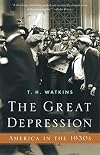
Very informative and well-written. I love the stories and anecdotes. I love the pictures. My only comment was that the author already assumes that you already know certain things such as the emergency banking act and the CCC and he doesn't try to explain it in detail anymore. Nevertheless, I highly recommend this book!
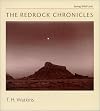
In this last book written by T.H. Watkins http://www.hcn.org/issues/174/5625 the environmental writer and historian provides an overview of the physical and cultural geography of southern Utah, reminding readers of the region's unique geology. This sets up the basis for arguing why this beautiful and fragile region needs to be strongly protected. Watkins, selected as the first Wallace Stegner Distinguished Professor of Western American Studies at Montana State University-Bozeman, details the show more history of the battles for Utah wilderness in this beautiful book with an important message. Read an online article by Watkins: One Man's Recreation Is Another's Desecration (1998). http://home.off-road.com/~pantra/One%20Man%27s%20Recreation%20Is%20Another%27s%2... (lj) show less
Awards


You May Also Like


Associated Authors
Statistics
- Works
- 49
- Also by
- 3
- Members
- 1,004
- Popularity
- #25,689
- Rating
- 4.2
- Reviews
- 7
- ISBNs
- 42
- Languages
- 1