
Dawn Quigley
Author of Jo Jo Makoons : the used-to-be best friend
About the Author
Image credit: via author's website
Series
Works by Dawn Quigley
Associated Works
Tagged
Common Knowledge
There is no Common Knowledge data for this author yet. You can help.
Members
Reviews
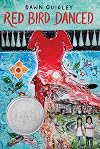
In this novel in verse, two urban Indigenous children persevere despite sorrow.
Eleven-year-old Ariel’s Auntie Bineshiinh has gone missing, leaving the Turtle Mountain Ojibwe girl unable to pursue the ballet lessons she loves; the family needs the money to search for her aunt. Twelve-year-old Tomah, who lives in the same Intertribal Housing Complex as Ariel, uses humor to mask insecurities about his struggles at school. Years ago, Auntie Bineshiinh babysat Ariel and Tomah; she taught them show more to “see / past / what / others might / see,” and both children now confront their problems with sensitivity and perceptiveness. Ariel decides to do a school project on the crisis of Missing and Murdered Indigenous Women, and as Tomah’s grandmother teaches Ariel to perform the Jingle dance, she learns that the dance can help heal both her and her community. Meanwhile, Tomah finds inspiration in observing the nearby birds and realizes that while he may have a reading disability, he’s a gifted storyteller nevertheless. Quigley (Turtle Mountain Band of Ojibwe) employs ample white space and inspired formatting as her potent, eloquent words dance across the page. She makes deft use of imagery: A bird motif underscores Auntie Bineshiinh’s absence (indeed, her name is Ojibwe for bird), while Tomah uses a red dress, a symbol for missing Native women and girls, to raise awareness. The protagonists’ dual perspectives convey a mix of hurt and optimism; above all, the power of community comes through.
A captivating, exquisitely penned story of hope and survival. (Ojibwe glossary, author’s note, information on Missing and Murdered Indigenous Women and jingle dancing, note from author and Heartdrum curator Cynthia Leitich Smith) (Verse novel. 10-16)
-Kirkus Review show less
Eleven-year-old Ariel’s Auntie Bineshiinh has gone missing, leaving the Turtle Mountain Ojibwe girl unable to pursue the ballet lessons she loves; the family needs the money to search for her aunt. Twelve-year-old Tomah, who lives in the same Intertribal Housing Complex as Ariel, uses humor to mask insecurities about his struggles at school. Years ago, Auntie Bineshiinh babysat Ariel and Tomah; she taught them show more to “see / past / what / others might / see,” and both children now confront their problems with sensitivity and perceptiveness. Ariel decides to do a school project on the crisis of Missing and Murdered Indigenous Women, and as Tomah’s grandmother teaches Ariel to perform the Jingle dance, she learns that the dance can help heal both her and her community. Meanwhile, Tomah finds inspiration in observing the nearby birds and realizes that while he may have a reading disability, he’s a gifted storyteller nevertheless. Quigley (Turtle Mountain Band of Ojibwe) employs ample white space and inspired formatting as her potent, eloquent words dance across the page. She makes deft use of imagery: A bird motif underscores Auntie Bineshiinh’s absence (indeed, her name is Ojibwe for bird), while Tomah uses a red dress, a symbol for missing Native women and girls, to raise awareness. The protagonists’ dual perspectives convey a mix of hurt and optimism; above all, the power of community comes through.
A captivating, exquisitely penned story of hope and survival. (Ojibwe glossary, author’s note, information on Missing and Murdered Indigenous Women and jingle dancing, note from author and Heartdrum curator Cynthia Leitich Smith) (Verse novel. 10-16)
-Kirkus Review show less
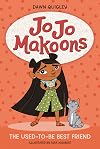
This silly chapter book features a funny Ojibwe girl protagonist.
Set on a fictional reservation known as the Pembina Ojibwe, this story introduces Jo Jo, an intelligent and charismatic first grader who is fretting over two big problems in this series opener. Her first worry concerns her home best friend, Mimi the cat, who she fears may deflate when she gets vaccinated. Her second concern is that her school best friend, Fern, has begun to ignore her at lunchtime. From Jo Jo’s difficulties show more with language arts to her attempts to save Mimi, hijinks emerge. Through it all, cultural information about Jo Jo’s Ojibwe way of life is shared in a way that suggests her pride for her people, traditions, and family. Young readers will revel in the humor this chapter book offers: the wordplay, the nicknames, and Jo Jo’s irrepressible narrative voice. But it is the friendships at her school, where her teacher is White and her classmates are multicultural, that will linger with readers. Even though it is in a border town, the school Jo Jo attends respects her cultural traditions, and the effect is heartwarming. Quigley (Turtle Mountain Band of Ojibwe) provides a glossary of Ojibwe and Michif words that enhances the experience. Audibert (of Wolastoqey and French heritage) supplies plentiful grayscale illustrations that depict Jo Jo and her friends with big, pretty eyes and expressive faces.
A joyful book about growing up Native in a loving community—not to be missed. (Fiction. 6-10)
-Kirkus Review show less
Set on a fictional reservation known as the Pembina Ojibwe, this story introduces Jo Jo, an intelligent and charismatic first grader who is fretting over two big problems in this series opener. Her first worry concerns her home best friend, Mimi the cat, who she fears may deflate when she gets vaccinated. Her second concern is that her school best friend, Fern, has begun to ignore her at lunchtime. From Jo Jo’s difficulties show more with language arts to her attempts to save Mimi, hijinks emerge. Through it all, cultural information about Jo Jo’s Ojibwe way of life is shared in a way that suggests her pride for her people, traditions, and family. Young readers will revel in the humor this chapter book offers: the wordplay, the nicknames, and Jo Jo’s irrepressible narrative voice. But it is the friendships at her school, where her teacher is White and her classmates are multicultural, that will linger with readers. Even though it is in a border town, the school Jo Jo attends respects her cultural traditions, and the effect is heartwarming. Quigley (Turtle Mountain Band of Ojibwe) provides a glossary of Ojibwe and Michif words that enhances the experience. Audibert (of Wolastoqey and French heritage) supplies plentiful grayscale illustrations that depict Jo Jo and her friends with big, pretty eyes and expressive faces.
A joyful book about growing up Native in a loving community—not to be missed. (Fiction. 6-10)
-Kirkus Review show less
Two children are neighbors in a large housing complex specifically for indigenous folks, and they each have secret pains. Twelve-year-old Tomah has already been held back once in school and hides the fact that he struggles to read the words on the page, even though he is a gifted storyteller and smart child who loves nature -- particularly the birds he sees in the community courtyard. Ariel, her mother, and her baby brother live together nearby, but they also used to live with Ariel's auntie show more who has gone missing. With her auntie gone, Ariel's ballet lessons are no longer possible but her mother encourages her to try jingle dress dancing instead. With the spring powwow on the horizon offering the opportunity for Ariel to jingle dance and Tomah to read his poetry, both children think through their concerns.
This novel in verse is short but somehow covers a lot of ground, including multiple seasons. It alternates between Ariel's and Tomah's points of view in beautiful, lyrical poetry. Yet, it's also very accessible to children by not relying exclusively or too heavily on metaphors and other literary devices at the expense of storytelling. That being said, the repeated imagery of birds is masterfully crafted.
The book also introduces young readers in an age-appropriate way to the very serious problem of missing indigenous women. Backmatter gives more details and statistics. Tomah's storyline about having a reading disability (likely dyslexia but never explicitly stated) is also handled well. However, the subplot where Tomah has an enlarged heart that requires surgery felt abrupt in both its arrival and departure. It felt a little unnecessary to me because there was already enough going on in this story and this area wasn't as fully formed.
All in all though, I thought this was a beautiful book that talked about tough topics in meaningful ways. It also embraced the beauty and power of family, friendship, and community to bring about healing. As the author says in her note at the end, "Winter will come, yet spring is a promise we can always look to for a renewal of life." show less
This novel in verse is short but somehow covers a lot of ground, including multiple seasons. It alternates between Ariel's and Tomah's points of view in beautiful, lyrical poetry. Yet, it's also very accessible to children by not relying exclusively or too heavily on metaphors and other literary devices at the expense of storytelling. That being said, the repeated imagery of birds is masterfully crafted.
The book also introduces young readers in an age-appropriate way to the very serious problem of missing indigenous women. Backmatter gives more details and statistics. Tomah's storyline about having a reading disability (likely dyslexia but never explicitly stated) is also handled well. However, the subplot where Tomah has an enlarged heart that requires surgery felt abrupt in both its arrival and departure. It felt a little unnecessary to me because there was already enough going on in this story and this area wasn't as fully formed.
All in all though, I thought this was a beautiful book that talked about tough topics in meaningful ways. It also embraced the beauty and power of family, friendship, and community to bring about healing. As the author says in her note at the end, "Winter will come, yet spring is a promise we can always look to for a renewal of life." show less

Seven-year-old Ojibwe first-grader Jo Jo Makoons has a best friend at home - her cat, Mimi - and a "school best friend," Fern. But Jo Jo is worried that Fern doesn't want to be her school best friend anymore.
This familiar quandary is presented through Jo Jo's quirky perspective, as well as through her cultural lens; for example, her interactions with her white teacher (the school is on a fictional Ojibwe reservation) frequently result in confusion on both sides.
This transitional reader has show more eight chapters, with black-and-white illustrations by Tara Audibert on every other page.Back matter includes a glossary and an author's note.
"Teacher tries to use our Ojibwe words every morning. It sounds more like he's choking on a bunch of marbles. His words don't sound like the way elders say them. Teacher isn't Native American. He didn't grow up hearing or speaking our language. But he's trying. I would give him a C+ for trying. And maybe a smiley face." (14) show less
This familiar quandary is presented through Jo Jo's quirky perspective, as well as through her cultural lens; for example, her interactions with her white teacher (the school is on a fictional Ojibwe reservation) frequently result in confusion on both sides.
This transitional reader has show more eight chapters, with black-and-white illustrations by Tara Audibert on every other page.Back matter includes a glossary and an author's note.
"Teacher tries to use our Ojibwe words every morning. It sounds more like he's choking on a bunch of marbles. His words don't sound like the way elders say them. Teacher isn't Native American. He didn't grow up hearing or speaking our language. But he's trying. I would give him a C+ for trying. And maybe a smiley face." (14) show less
Lists
Awards


You May Also Like


Associated Authors
Statistics
- Works
- 9
- Also by
- 1
- Members
- 710
- Popularity
- #35,708
- Rating
- 3.9
- Reviews
- 16
- ISBNs
- 58