
Kim Smejkal
Author of Ink in the Blood
Series
Works by Kim Smejkal
Tagged
Common Knowledge
- Gender
- female
Members
Reviews
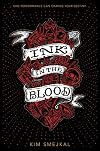
Tattoo magic, people!!!! Magic ink!!
OMG, I loved Ink in the Blood by Kim Smejkal so much. I loved it so much I read it in one day. That hasn’t happened to me in YEARS. I am actually afraid to pick up my next book because I know it is going to disappoint me as only any book following an excellent book does.
It is not just the tattoo magic that made me fall in love with Ink in the Blood. I adore any story that is critical of organized religions, and Ink in the Blood is particularly brutal in show more that area. What makes the criticism particularly satisfying is the fact that in the story, a deity does exist. Faith has actual substance, and yet the organized part of the religion remains corrupt and anything but pious – something Celia and Anya know from experience. And before a reader complains about the fact that the Profeta tortures children, let’s not ignore the Catholic Church’s history of torture and mutilation in the name of God.
The other aspect of Ink in the Blood I adore is Ms. Smejkal’s use of gender fluidity. Children who don’t get names until they choose one for themselves, the use of He, She, and They, the auras that allow people to identify fluctuating genders – to me, everything about this is revolutionary but feels so right. There is a matter-of-factness about gender identity and allowing children to self-identify that is respectful and yet proves a point that such things do not have to be complex or confusing. As this is the first novel wherein the author used “they” as a pronoun to identify one person, I loved every time I came across its use.
Every individual aspect of a story could be good, but unless the writing is equally good, the story could be a failure. Thankfully, this is not the case with Ink in the Blood. Fantastic pacing, great supporting characters, and seamless world-building round out this amazing tale. The story itself is dark and desperate. In fact, the author added a trigger warning on GoodReads because some of the subject matter is disturbing. You know that I love dark and disturbing, so this only enhanced my love of it. To me, it shows that Ms. Smejkal is not afraid to take chances. Plus there is tattoo magic. If that doesn’t get you excited, I don’t know what will! 😀 show less
OMG, I loved Ink in the Blood by Kim Smejkal so much. I loved it so much I read it in one day. That hasn’t happened to me in YEARS. I am actually afraid to pick up my next book because I know it is going to disappoint me as only any book following an excellent book does.
It is not just the tattoo magic that made me fall in love with Ink in the Blood. I adore any story that is critical of organized religions, and Ink in the Blood is particularly brutal in show more that area. What makes the criticism particularly satisfying is the fact that in the story, a deity does exist. Faith has actual substance, and yet the organized part of the religion remains corrupt and anything but pious – something Celia and Anya know from experience. And before a reader complains about the fact that the Profeta tortures children, let’s not ignore the Catholic Church’s history of torture and mutilation in the name of God.
The other aspect of Ink in the Blood I adore is Ms. Smejkal’s use of gender fluidity. Children who don’t get names until they choose one for themselves, the use of He, She, and They, the auras that allow people to identify fluctuating genders – to me, everything about this is revolutionary but feels so right. There is a matter-of-factness about gender identity and allowing children to self-identify that is respectful and yet proves a point that such things do not have to be complex or confusing. As this is the first novel wherein the author used “they” as a pronoun to identify one person, I loved every time I came across its use.
Every individual aspect of a story could be good, but unless the writing is equally good, the story could be a failure. Thankfully, this is not the case with Ink in the Blood. Fantastic pacing, great supporting characters, and seamless world-building round out this amazing tale. The story itself is dark and desperate. In fact, the author added a trigger warning on GoodReads because some of the subject matter is disturbing. You know that I love dark and disturbing, so this only enhanced my love of it. To me, it shows that Ms. Smejkal is not afraid to take chances. Plus there is tattoo magic. If that doesn’t get you excited, I don’t know what will! 😀 show less
A little bit The Night Circus, a little bit The Golden Compass, and a little bit Daughter of Smoke and Bone, but ultimately forging its own path through some well-loved fantasy tropes, this novel is one of the best I’ve delved into in a long time. Smejkal throws us into a world ruled by prophetic tattoos and the goddess behind them, which is quickly turned upside down as we follow paired Inklings Celia and Anya as they make a bid for freedom from the Divine Profeta and their constricted show more lives. Celia and Anya’s protection comes in the form of the Rabble Mob of Minos, a travelling performance troupe made up of whimsical and strange characters who are some of the few outside the overt influence of the Divine’s religious cult. The pair are quick and independent thinkers (hence their resistance to playing along with the dictations of Profeta) and are soon engulfed in the Mob’s performances and antics through a clever use of the inking abilities they acquired at the Temple. Of course, escape can’t be quite that simple, and the game comes afoot when the Divine herself tracks them down and turns their performance into a new means of spreading her cult of believers – something the girls are loath to do, and must devise a way to escape once and for all. Smejkal’s artful use of language and wonderfully crafted scene setting can’t help but draw us into Celia and Anya’s story, but it is the intricacies of the story’s many twists and turns that keep us glued to the very final page and finale performance. Definitely drawing from the mode of dark fantasy, Smejkal doesn’t shy away from darkening the plot at several points either, making it clear that the stakes are high in the fight that Celia and Anya must make to free themselves in this dangerous world. As the book closes, we are left with a world on the brink of a new performance, which would have been satisfying enough, but there’s a second book out so I guess we’ll see what Celia’s second act holds. show less
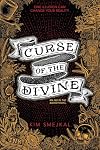
With more ink on my skin than my husband, I am a sucker for fantasy books that revolve around magic tattoos. Granted, they haven’t been the greatest stories I have ever read, but that doesn’t stop me from reading them. Kim Smejkal’s Ink in the Blood rewarded me for my interest, so I was really looking forward to the story’s finale, Curse of the Divine. Sadly, everything I loved about the first book failed to impress me this time around.
What impressed me so much about the first novel show more was Ms. Smejkal’s critique of organized religion, her use of auras – visible to everyone – to identify gender fluidity, and the idea of magic tattoos. In Curse of the Divine, we get away from two of the three elements, and the story suffers. For one, Celia destroyed the existing organized religion in the first book, so there can be no criticism of it. Instead, Celia must deal with the one person who may be able to save her friends from a terrible fate, one that has nothing to do with religion. For me, dealing with someone who has delusions of grandeur is not as enjoyable as criticizing organized religion in any form.
At the same time, Curse of the Divine moves away from magic tattoos and instead focuses on the actual ink Celia used in the magic tattoos. Rather than sending secret messages, she learns that one can use the ink to manipulate the corporeal world. While impressive and more than a little foreboding, it is a much more serious consequence of using the ink. No matter how dark the first novel got, there was still a feeling of whimsy at the idea that Celia could use her ink to send messages to friends whenever she wanted. Now that Celia uses the ink to change the world around her, that whimsy disappears, making the story something entirely different and not, in my opinion, in a good way.
Plus, the origins of the ink, something we find out in the novel, are disappointing. I don’t know exactly what I was expecting, but I was expecting something much more earth-shattering than the information we obtain. It is a bit as if Ms. Smejkal used all her allotted creativity for the first story and had to rely on old standby explanations for the sequel.
Thankfully, Ms. Smejkal does still include gender-identifying auras and their infinite nuances. In fact, Celia ruminates on the beauty of gender fluidity and the freedom to change whenever you desire. She describes the auras as something so beautiful, it makes me wish they were real. Not only would it end the confusion over designated gender versus biological sex, but it would also remind people that we are beautiful no matter how we express ourselves.
I find that Curse of the Divine is four hundred pages of Celia dealing with the trauma she faced at the end of the first book followed by fifty pages of acceptance, forgiveness, and understanding so that Celia can obtain closure. While that closure is satisfying in its way, the journey to get there is less creative than in the first novel. There is less bite, less social critique, and a whole lot more hand-wringing, something I never thought I would see in Celia’s character. show less
What impressed me so much about the first novel show more was Ms. Smejkal’s critique of organized religion, her use of auras – visible to everyone – to identify gender fluidity, and the idea of magic tattoos. In Curse of the Divine, we get away from two of the three elements, and the story suffers. For one, Celia destroyed the existing organized religion in the first book, so there can be no criticism of it. Instead, Celia must deal with the one person who may be able to save her friends from a terrible fate, one that has nothing to do with religion. For me, dealing with someone who has delusions of grandeur is not as enjoyable as criticizing organized religion in any form.
At the same time, Curse of the Divine moves away from magic tattoos and instead focuses on the actual ink Celia used in the magic tattoos. Rather than sending secret messages, she learns that one can use the ink to manipulate the corporeal world. While impressive and more than a little foreboding, it is a much more serious consequence of using the ink. No matter how dark the first novel got, there was still a feeling of whimsy at the idea that Celia could use her ink to send messages to friends whenever she wanted. Now that Celia uses the ink to change the world around her, that whimsy disappears, making the story something entirely different and not, in my opinion, in a good way.
Plus, the origins of the ink, something we find out in the novel, are disappointing. I don’t know exactly what I was expecting, but I was expecting something much more earth-shattering than the information we obtain. It is a bit as if Ms. Smejkal used all her allotted creativity for the first story and had to rely on old standby explanations for the sequel.
Thankfully, Ms. Smejkal does still include gender-identifying auras and their infinite nuances. In fact, Celia ruminates on the beauty of gender fluidity and the freedom to change whenever you desire. She describes the auras as something so beautiful, it makes me wish they were real. Not only would it end the confusion over designated gender versus biological sex, but it would also remind people that we are beautiful no matter how we express ourselves.
I find that Curse of the Divine is four hundred pages of Celia dealing with the trauma she faced at the end of the first book followed by fifty pages of acceptance, forgiveness, and understanding so that Celia can obtain closure. While that closure is satisfying in its way, the journey to get there is less creative than in the first novel. There is less bite, less social critique, and a whole lot more hand-wringing, something I never thought I would see in Celia’s character. show less
The first book in the Ink in the Blood duology was perfection, and after finishing the second book I hate to have to say it, but I feel like it would have been better as a stand-alone novel. In the first book we leave Celia standing over Anya’s body, having successfully taken down the controlling religion that gripped the nation, but her story continues when Diavala possesses the body of her beloved Plague Doctor, Griffin. If Celia was willing to take down Profeta for the good of everyone, show more you’d best believe she’s willing to fight tooth and nail to find a cure for Griffin and banish the demon-esque Diavala once and for all. To do so she goes in search of the fabled Halcyon, the only person to survive Diavala’s touch, but what she and Griffin find is definitely not as they expect. Like the stagecraft that wove through the first novel, Smejkal draws an even bigger stage upon which her players can act out their roles - but this time, it’s the entire town of Wisteria that’s being co-opted by a manipulating playwright with magical powers. Turning the story upside down more than once as the action plays out, Smejkal does an excellent job of building character and scenery throughout, but this second act doesn’t hit quite as successfully as the first does. Yes, we still have players on a stage, but a masked stage doesn’t hold the same intrigue and duality as the active Rabble Mob, and the visuals don’t spark quite the same way. Halcyon and Diavala’s true nature are definitely the selling point of the novel instead, and while the themes drawn out from here are intriguing they just don’t quite do it for me in the end. At least Celia and Griffin are left with a happy ending by the final pages, so we can see them off on their undoubtedly exciting next adventures. show less
Awards

You May Also Like


Associated Authors
Statistics
- Works
- 3
- Members
- 370
- Popularity
- #65,127
- Rating
- 3.4
- Reviews
- 9
- ISBNs
- 21
- Languages
- 1