
Corinne Bailey Rae
Author of Corinne Bailey Rae
About the Author
Image credit: Credit: William Cates, 2007,
"Used Bookstore Cafe", New York City
"Used Bookstore Cafe", New York City
Works by Corinne Bailey Rae
Live In London & New York 1 copy
Associated Works
Tagged
Common Knowledge
- Canonical name
- Bailey Rae, Corinne
- Legal name
- Bailey Rae, Corinne Jacqueline
- Birthdate
- 1979-02-26
- Gender
- female
- Occupations
- singer-songwriter
guitarist
producer - Nationality
- UK
- Birthplace
- Leeds, West Yorkshire, England, UK
- Map Location
- England, UK
Members
Reviews
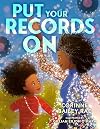
In this literary debut from a Grammy-winning hitmaker, a girl’s great-aunt introduces her to the magic of classic pop music.
This work from Rae, best known for a song that shares the book’s name, centers on Bea, a Black girl with Caribbean ancestry. During one of Bea’s weekly visits to her great-aunt Portia, the girl announces that she wants to do something she’s “never done before.” So Portia leads her to a room that contains objects that Bea can’t identify (“What are show more these?”): Portia’s record collection. Bea selects one with “a smiling man on the cover,” and the pair groove their way through the song and three others by different artists, sparking Portia’s observations about music’s salvific aspect (“Finding a song you love is like finding a new friend who shares your feelings”). Though the tone is uplifting, some readers may wish that the book had more of a plot; they may also wonder if another music medium might elicit the same emotions as records. (Another medium can, but why kill the book’s winning retro vibe by acknowledging this?) Portia never tells Bea what they’re listening to, but keen-eyed readers will spot each song’s corresponding record jacket (among them Henry Mancini’s “Baby Elephant Walk” and Bob Marley’s “Three Little Birds”) floating around the room, as if carried by sound waves. While images can’t capture a song’s vibrations, O’Mara comes close with her digitally tweaked fairy light–accented paintings in lava lamp colors.
A feel-good hymn to fine music and intergenerational bonds. (author’s note) (Picture book. 4-8)
-Kirkus Review show less
This work from Rae, best known for a song that shares the book’s name, centers on Bea, a Black girl with Caribbean ancestry. During one of Bea’s weekly visits to her great-aunt Portia, the girl announces that she wants to do something she’s “never done before.” So Portia leads her to a room that contains objects that Bea can’t identify (“What are show more these?”): Portia’s record collection. Bea selects one with “a smiling man on the cover,” and the pair groove their way through the song and three others by different artists, sparking Portia’s observations about music’s salvific aspect (“Finding a song you love is like finding a new friend who shares your feelings”). Though the tone is uplifting, some readers may wish that the book had more of a plot; they may also wonder if another music medium might elicit the same emotions as records. (Another medium can, but why kill the book’s winning retro vibe by acknowledging this?) Portia never tells Bea what they’re listening to, but keen-eyed readers will spot each song’s corresponding record jacket (among them Henry Mancini’s “Baby Elephant Walk” and Bob Marley’s “Three Little Birds”) floating around the room, as if carried by sound waves. While images can’t capture a song’s vibrations, O’Mara comes close with her digitally tweaked fairy light–accented paintings in lava lamp colors.
A feel-good hymn to fine music and intergenerational bonds. (author’s note) (Picture book. 4-8)
-Kirkus Review show less
You May Also Like
Associated Authors
Statistics
- Works
- 9
- Also by
- 1
- Members
- 94
- Popularity
- #199,201
- Rating
- 3.3
- Reviews
- 1
- ISBNs
- 13