
James Carroll (1) (1943–)
Author of Constantine's Sword: The Church and the Jews -- A History
For other authors named James Carroll, see the disambiguation page.
About the Author
James Carroll is the author of nine novels & the memoir "An American Requiem," which won the National Book Award. His essays on culture & politics appear weekly in the "Boston Globe." He wrote "Constantine's Sword" while on fellowships at Harvard University. Before becoming a writer, Carroll was a show more Catholic priest. He lives in Boston, Massachusetts. (Bowker Author Biography) show less
Image credit: Patricia Pingree
Works by James Carroll
Contemplation; liberating the ghost of the Church: churching the ghost of liberation (1972) 13 copies
Prayer from where we are; suggestions about the possibility and practice of prayer today (1970) 8 copies
Growing in faith together 1 copy
Marriage Boot Camp 1 copy
Feed My Lambs 1 copy
Constantine's Sword: The Church and the Jews; A History — Author — 1 copy
Associated Works
War No More: Three Centuries of American Antiwar and Peace Writing (2016) — Foreword — 108 copies, 2 reviews
Genesis as It Is Written: Contemporary Writers on Our First Stories (1996) — Contributor — 69 copies
Tagged
Common Knowledge
- Canonical name
- Carroll, James
- Other names
- Carroll, James P.
- Birthdate
- 1943-01-22
- Gender
- male
- Education
- St. Paul's College (BA|MA)
Georgetown University - Occupations
- novelist
poet
essayist
historian
journalist
chaplain - Organizations
- The Boston Globe
Boston University
Roman Catholic Church (ordained 1969) - Awards and honors
- James Parks Morton Interfaith Award
American Academy of Arts & Sciences (Fellow, 1998)
Thomas Merton Award (1972) - Relationships
- Marshall, Alexandra (wife)
- Nationality
- USA
- Birthplace
- Chicago, Illinois, USA
- Places of residence
- Washington, D.C., USA
Boston, Massachusetts, USA
Germany - Associated Place (for map)
- USA
Members
Reviews
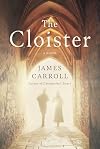
Carroll uses France's medieval Abelard and Heloise story to show how the Church feeling threatened by change, used religion as a political tool to discredit intelligent, gifted priests proposing and teaching new ideas of thinking about G-d. Short-sighted clergy and church administrators maligned men like Peter Abelard and Thomas of Aquinas as heretics because their rational, humanistic approach to Catholicism was proving popular among regular people.
Additionally, Abelard tried protecting show more the Jewish population from Church-sanctioned mass killings by saying G-d loved all his creations. This is the key reason generations later, before and during WWII the brilliant French Jewish scholar Saul Vedette and his daughter Rachel studied long hidden manuscripts of Abelard’s. They hoped to use Abelard’s thoughts and words about G-d and the Jews as a foundation to publish a major work to stop the egregious hate, violence and mass murder of Europe’s Jews.
In New York Father Michael Kavanaugh searches for a former schoolmate and friend and ends up meeting Rachel, a Jewish docent in the Cloisters. Through brief awkward conversations she helps Kavanaugh learn that he has accepted the Church’s judgement of Abelard. Once he starts his own research, he recognizes other life-changing misconceptions he believed because of what the Church taught him. About Catholic history of violence toward the Jews, and the truth about his friend. Kavanaugh helps Rachel reason through her pain and guilt.
Carroll does an amazing job with dialogue; capturing the life-like nuances and emotions in play within many settings and time periods. And clearly illustrates the Church’s role and culpability in instigating intolerance, hatred, violence and murder of Jews throughout history. show less
Additionally, Abelard tried protecting show more the Jewish population from Church-sanctioned mass killings by saying G-d loved all his creations. This is the key reason generations later, before and during WWII the brilliant French Jewish scholar Saul Vedette and his daughter Rachel studied long hidden manuscripts of Abelard’s. They hoped to use Abelard’s thoughts and words about G-d and the Jews as a foundation to publish a major work to stop the egregious hate, violence and mass murder of Europe’s Jews.
In New York Father Michael Kavanaugh searches for a former schoolmate and friend and ends up meeting Rachel, a Jewish docent in the Cloisters. Through brief awkward conversations she helps Kavanaugh learn that he has accepted the Church’s judgement of Abelard. Once he starts his own research, he recognizes other life-changing misconceptions he believed because of what the Church taught him. About Catholic history of violence toward the Jews, and the truth about his friend. Kavanaugh helps Rachel reason through her pain and guilt.
Carroll does an amazing job with dialogue; capturing the life-like nuances and emotions in play within many settings and time periods. And clearly illustrates the Church’s role and culpability in instigating intolerance, hatred, violence and murder of Jews throughout history. show less
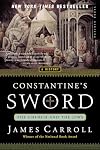
A National Book Award deservedly went to this work by James Carroll. A former Roman Catholic priest, he deals at length and in depth with anti-Semitism in the European Catholic, and later Protestant, tradition. He is caught between the horror of centuries of horrific oppression of Jews in Europe and his love of his Church. The author's honesty is palpable on each page as he resolutely lays bare the depth and implications of anti-Semitism in the long history of the western Catholic church. show more It's a history that must be faced by all Christians, because significant Christian teachings have been and continue to be soaked with anti-Jewish attitudes. I( personally know that even in the most liberal towns in the US, there are Jews who fear to appear on the streets during Holy Week--the week preceding Easter Sunday.) The author also provides some useful insight into how this anti-Semitism could have arisen within Christian memory and tradition. show less
I received this book from the publisher via Netgalley.
A stunning book, beautifully written. Carroll brings to life the story of Abelard and Heloise, but not to focus on the tragic nature of their romance, which resulted in Abelard's brutal castration. No, he depicts the love that arises when two brilliant people come together, each feeding the other's brilliance. The result of that love echoes through the centuries to change the lives of two people in New York City in the aftermath of World show more War II: a Catholic priest, left staggered by the return of a friend from his youth, as he realizes his own poignant isolation in the clergy; and a young woman, a Jew from France whose father studied the texts of Abelard, and essentially died for it during the war.
There are layers upon layers here. This book is not a melodrama. It's about nuance. It's about people being people. It's about surviving, at great cost. It's about losing God, and finding him again. It's about the history of Catholicism and Judaism, and how churches--like people--have a difficult time realizing their errors or making an effort to correct them.
This is a book that will haunt me, in the best sort of way. I am left with a profound need to not only read more about Abelard and Heloise, but to look for more of James Carroll's work. show less
A stunning book, beautifully written. Carroll brings to life the story of Abelard and Heloise, but not to focus on the tragic nature of their romance, which resulted in Abelard's brutal castration. No, he depicts the love that arises when two brilliant people come together, each feeding the other's brilliance. The result of that love echoes through the centuries to change the lives of two people in New York City in the aftermath of World show more War II: a Catholic priest, left staggered by the return of a friend from his youth, as he realizes his own poignant isolation in the clergy; and a young woman, a Jew from France whose father studied the texts of Abelard, and essentially died for it during the war.
There are layers upon layers here. This book is not a melodrama. It's about nuance. It's about people being people. It's about surviving, at great cost. It's about losing God, and finding him again. It's about the history of Catholicism and Judaism, and how churches--like people--have a difficult time realizing their errors or making an effort to correct them.
This is a book that will haunt me, in the best sort of way. I am left with a profound need to not only read more about Abelard and Heloise, but to look for more of James Carroll's work. show less
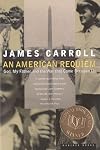
I enjoyed this book immensely! The author is a few years older than me, but we share the same memories of our teenage years: the Kennedys, MLK, desegregation, and Vietnam. I felt the same anguish as I move from unquestioned belief in my country's military to the sad realization that we were on the wrong path. Carroll describes these feelings superbly, as he recounts his time studying for, and entering the priesthood and his subsequent return to a lay life. Oddly enough, I was studying at show more Boston University during the tie he was assigned as chaplain, but as I was a part-time evening student, our paths never crossed. I wish they had! show less
Lists
Judaism & Israel (1)
Economix (1)
Awards


You May Also Like


Associated Authors
Statistics
- Works
- 40
- Also by
- 5
- Members
- 4,347
- Popularity
- #5,768
- Rating
- 3.9
- Reviews
- 58
- ISBNs
- 153
- Languages
- 3
- Favorited
- 1