
Daniel L. Akin
Author of A Theology for the Church
About the Author
Daniel L. Akin is the president of Southeastern Baptist Theological Seminary in Wake Forest, North Carolina. He holds a Ph.D. in Humanities from the University of Texas at Arlington and is the author or editor of numerous books and Bible commentaries including A Theology for the Church and the New show more American Commentary on 1, 2, and 3 John. show less
Image credit: .
Works by Daniel L. Akin
Pastoral Theology: Theological Foundations for Who a Pastor is and What He Does (2017) 149 copies, 1 review
Christ-Centered Exposition 46 copies
Still Not Professionals: Ten Pleas for Today's Pastors — Contributor — 33 copies
10 Women Who Changed the World: Inspiring Female Missionaries Who Fulfilled the Great Commission (2024) 18 copies, 1 review
Perspectives on Church Government 7 copies
I AM GOING, Second Edition 5 copies
Unseen, but Certain: The Spiritual Reality of Angels, Satan, Demons, Hell and Heaven, Participant Book (2014) 4 copies
Exalting Jesus in Philippians 3 copies
Exalting Jesus in Proverbs — Author — 2 copies
Christian Theology, 11 Vols. 1 copy
Family Life Seminar 1 copy
The Bible and Sexuality 1 copy
Who Changed The World 1 copy
Happily Ever After 1 copy
Ecclesiastes, Songs of Songs 1 copy
Survey of New Testament 1 copy
Associated Works
God, Marriage, and Family: Rebuilding the Biblical Foundation (2004) — Foreword, some editions — 1,272 copies, 1 review
Tagged
Common Knowledge
- Birthdate
- 1957-01-02
- Gender
- male
- Education
- Criswell College (1980)
Southwestern Baptist Theological Seminary (1983)
University of Texas, Arlington (1987) - Occupations
- pastor
- Organizations
- Southeastern Baptist Theological Seminary
Southern Baptist Convention - Nationality
- USA
- Places of residence
- Wake Forest, North Carolina, USA
- Associated Place (for map)
- North Carolina, USA
Members
Reviews
10 Women Who Changed the World: Inspiring Female Missionaries Who Fulfilled the Great Commission by Daniel L. Akin
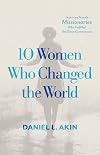
I don’t often pick up biographies, but that is something I’m trying to include in my reading diet more. When I saw this one coming up, I was immediately interested. What could be better than bite-sized biographies about women I’ve never heard about before? I love missionary stories, so this sounded like it would be right down my alley…and it was. Oh, was it ever good!
This is the kind of book I love to slow down and savor. I enjoyed the way these ladies’ stories were told—mostly show more in facts, but with enough description and nuances (and letters! I loved those parts of the stories!) that it brought them to life for me. Their love for God is palpable in these pages, and I found their stories both encouraging and deeply challenging. Some of them faced unimaginably tough times, and the way they kept their faith in God despite their difficulties inspired me.
I also enjoyed the devotional aspect of this book. While the transition from biography to devotional felt a little stilted at times, it did work fairly well, and I appreciated the Biblical truths brought out in this book. It was done in a faith-building way, without dragging down the stories as a whole.
This book quickly became a favorite of mine, and I hope I’ll be able to get a physical copy one day. I’ve also thought of several friends who would likely appreciate getting to read it—it’s a gem! Highly recommended.
I was given a complimentary copy of this book, and this is my honest opinion of it. show less
This is the kind of book I love to slow down and savor. I enjoyed the way these ladies’ stories were told—mostly show more in facts, but with enough description and nuances (and letters! I loved those parts of the stories!) that it brought them to life for me. Their love for God is palpable in these pages, and I found their stories both encouraging and deeply challenging. Some of them faced unimaginably tough times, and the way they kept their faith in God despite their difficulties inspired me.
I also enjoyed the devotional aspect of this book. While the transition from biography to devotional felt a little stilted at times, it did work fairly well, and I appreciated the Biblical truths brought out in this book. It was done in a faith-building way, without dragging down the stories as a whole.
This book quickly became a favorite of mine, and I hope I’ll be able to get a physical copy one day. I’ve also thought of several friends who would likely appreciate getting to read it—it’s a gem! Highly recommended.
I was given a complimentary copy of this book, and this is my honest opinion of it. show less
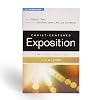
First sentence: Christianity stands or falls on the person and work of Jesus Christ. It succeeds or fails on whether or not a true and genuine incarnation actually took place in space and time. The options as to who Jesus is and what Jesus did can basically be reduced to four. He could have been a liar--someone who simply was not who he claimed to be and knew it. He could have been a lunatic--someone who thought he was somebody, but in fact he was not. He could have been a legend--someone show more who was not who others later imagined him to be. Or He could be the Lord--He is who He said He is, and His birth, life, death, and resurrection prove it to be true.
What you see is what you get. This commentary is part of the Christ-Centered Exposition series by Holman Bible Publishers. It is a commentary of 1 John, 2 John, 3 John.
The book is well-organized. It is clear, easy to understand, easy to follow. It isn't so incredibly scholarly that you feel overwhelmed having to look up words every few sentences. It is not as casual and conversational as say J. Vernon McGee, but it isn't dense or dull. I really LOVED some of the quotes Daniel Akin uses in the book.
Each chapter features discussion questions. I think this one would be good for Bible study or Sunday School.
Quotes:
This is the stumbling block of the incarnation--when God becomes a man, he strips away every pretense of man to be God.
We must receive Jesus--the Word of life, the eternal life, the Son of God--not as we imagine Him to be, or as we like to think of Him, or as someone else believes Him to be. We do not truly receive Jesus if we do not accept Him as He defines Himself. We know that we are Christians and have received God's salvation when we humbly accept the Word of life, which means to believe in Jesus Christ, the Son of God, who appeared in our flesh, was crucified to take our punishment from our sin, was raised from the grave three days later for our justification with God, and is coming again to bring the fullness of God's kingdom. Is that the Jesus you have received? ~ Thabiti Anyabwile show less
What you see is what you get. This commentary is part of the Christ-Centered Exposition series by Holman Bible Publishers. It is a commentary of 1 John, 2 John, 3 John.
The book is well-organized. It is clear, easy to understand, easy to follow. It isn't so incredibly scholarly that you feel overwhelmed having to look up words every few sentences. It is not as casual and conversational as say J. Vernon McGee, but it isn't dense or dull. I really LOVED some of the quotes Daniel Akin uses in the book.
Each chapter features discussion questions. I think this one would be good for Bible study or Sunday School.
Quotes:
This is the stumbling block of the incarnation--when God becomes a man, he strips away every pretense of man to be God.
We must receive Jesus--the Word of life, the eternal life, the Son of God--not as we imagine Him to be, or as we like to think of Him, or as someone else believes Him to be. We do not truly receive Jesus if we do not accept Him as He defines Himself. We know that we are Christians and have received God's salvation when we humbly accept the Word of life, which means to believe in Jesus Christ, the Son of God, who appeared in our flesh, was crucified to take our punishment from our sin, was raised from the grave three days later for our justification with God, and is coming again to bring the fullness of God's kingdom. Is that the Jesus you have received? ~ Thabiti Anyabwile show less
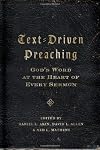
It may not be proper book summary etiquette, but I was beyond thrilled to find Text-Driven Preaching listed in the syllabus. It had been on my “Amazon Wish-List” for a while, but now I had an excuse to buy of which my wife would approve! Dr. Daniel Akin is one of my favorite authors, as well as the president of a stellar seminary, Southeastern Baptist Theological in Wake Forest, North Carolina. Dr. David Allen has become one of my favorite professors, and it has always been a privilege show more to hear him preach the Word. He is one of the professors of preaching here at Southwestern Baptist Theological Seminary and it is a privilege to know him. I was not immediately familiar with Ned Mathews, but when I finally got the book and opened it up, I was blown away by what I found. It was a collection of essays from some of the greatest expositors of the Word! From Shaddix to York to Vines, it is a veritable “who’s who” of expositors and I just knew it would be an extremely helpful read. Long story short, I was right.
Book Synopsis
Text-Driven Preaching is a timely response to the sickness of anemia Dr. Allen diagnoses in the American Church. This book is made up of essays written by some of the greatest practitioners of expository preaching from across the country and is a clarion call for pastors to remain or become faithful in preaching true expository sermons, straight from the text, reclaiming our pulpits. The writing is fresh, timely, and has a sense of urgency in tone. Each contributor writes from their area of expertise, offering the Biblical alternative to the “pop psychology” flowing from many pulpits across the land.
Broken up into three sections, Text-Driven Preaching covers expository preaching from just about any direction imaginable; historical, preparation, delivery, genre considerations, and so forth, between sections on the preacher, on preparation, and on preaching. The authors continue to drive home that a text-driven sermon is “a sermon that develops a text by explaining, illustrating, and applying its meaning,” which Allen writes in the introduction, by exhorting us to stay glued to the text from our preparation to our preaching, allowing the text to be in the driver’s seat of our sermons.
It provides the reader with just about every topic imaginable, moving from the historical aspects of expository preaching to the practical aspect of tying it all together in the pulpit. Each part contains three to four chapters (written as essays) by eleven different preachers, each with their own style and from their own background. One of the editors, Ned Mathews, ends the book with a powerful question and answer, “In our day, much has been made of the need for churches to be purpose driven. But the term “purpose driven” is elastic in the application. Whose purpose is to drive our churches?” His answer? “The kind and scope of text-driven preaching that is described in this book.”
Personal Interaction
If I could describe the flow of the four essays in the first section on “The Preacher and Text-Driven Preaching,” it would be we find the secrets and disciplines of expository preaching by learning from the history of it, moving from what we learn from Aristotle’s Art of Rhetoric into how we follow that line into the task of preaching. Which, as Dr. Patterson writes on page 35, “to be used of God must be borne along on the zephyr winds of the Holy Spirit.” I found this helpful. For no matter how we prepare or how well we preach unless the Spirit moves in and through us, we would be wasting our time. Therefore, as I read through the history of the section on preparation, I was continually reminded of the importance of the Spirit’s work, from beginning to end. I even wrote in the margin of page 57 on Bill Bennett’s chapter on the “Secret of Preaching with Power,” “Do I genuinely seek the Spirit’s power in my preaching?” I confess that this chapter was the most convicting of the book as I sometimes take His work for granted.
I found the second section on “Preparation and Text-Driven Preaching” to almost be information overload, but nevertheless practical. Dr. Allen’s “12 Steps in Preparing a Text-Driven Sermon” on pages 119-120. It’s long but has worked almost as a checklist for me in my preparation to make sure I’m following the path I should for the text. Vogel’s essay on genres was also helpful as I continue my craft as a preacher. I didn’t take a lot of time on the genre before but now find its importance homiletically. Genre clearly matters and needs to be considered for there to be faithful exposition and variety in our preaching, as he concludes (191).
Finally, the third second on the actual preaching of our sermons tied the essays together at the pulpit. I tend to get leery with writing on communication styles or delivery, because of the propensity to act or become someone we are not. It was nevertheless clear and ended on an even stronger note with Dr. Akin’s chapter on the application. To apply the Word faithfully, Akin says “we must know the Scriptures and the culture, the world of the Bible and the world in which we find ourselves.”
Conclusion
To conclude, Text-Driven Preaching will be a helpful resource for me now and into the future because it is practical, timely, and clear. Each author brings his own expertise to the table and delivers a powerful defense of and an example for true, faithful, and beneficial expository preaching. I commend it highly and am always encouraged when a book is convicting and motivating to continue to improve, develop, and expand my call to preach the Word. show less
Book Synopsis
Text-Driven Preaching is a timely response to the sickness of anemia Dr. Allen diagnoses in the American Church. This book is made up of essays written by some of the greatest practitioners of expository preaching from across the country and is a clarion call for pastors to remain or become faithful in preaching true expository sermons, straight from the text, reclaiming our pulpits. The writing is fresh, timely, and has a sense of urgency in tone. Each contributor writes from their area of expertise, offering the Biblical alternative to the “pop psychology” flowing from many pulpits across the land.
Broken up into three sections, Text-Driven Preaching covers expository preaching from just about any direction imaginable; historical, preparation, delivery, genre considerations, and so forth, between sections on the preacher, on preparation, and on preaching. The authors continue to drive home that a text-driven sermon is “a sermon that develops a text by explaining, illustrating, and applying its meaning,” which Allen writes in the introduction, by exhorting us to stay glued to the text from our preparation to our preaching, allowing the text to be in the driver’s seat of our sermons.
It provides the reader with just about every topic imaginable, moving from the historical aspects of expository preaching to the practical aspect of tying it all together in the pulpit. Each part contains three to four chapters (written as essays) by eleven different preachers, each with their own style and from their own background. One of the editors, Ned Mathews, ends the book with a powerful question and answer, “In our day, much has been made of the need for churches to be purpose driven. But the term “purpose driven” is elastic in the application. Whose purpose is to drive our churches?” His answer? “The kind and scope of text-driven preaching that is described in this book.”
Personal Interaction
If I could describe the flow of the four essays in the first section on “The Preacher and Text-Driven Preaching,” it would be we find the secrets and disciplines of expository preaching by learning from the history of it, moving from what we learn from Aristotle’s Art of Rhetoric into how we follow that line into the task of preaching. Which, as Dr. Patterson writes on page 35, “to be used of God must be borne along on the zephyr winds of the Holy Spirit.” I found this helpful. For no matter how we prepare or how well we preach unless the Spirit moves in and through us, we would be wasting our time. Therefore, as I read through the history of the section on preparation, I was continually reminded of the importance of the Spirit’s work, from beginning to end. I even wrote in the margin of page 57 on Bill Bennett’s chapter on the “Secret of Preaching with Power,” “Do I genuinely seek the Spirit’s power in my preaching?” I confess that this chapter was the most convicting of the book as I sometimes take His work for granted.
I found the second section on “Preparation and Text-Driven Preaching” to almost be information overload, but nevertheless practical. Dr. Allen’s “12 Steps in Preparing a Text-Driven Sermon” on pages 119-120. It’s long but has worked almost as a checklist for me in my preparation to make sure I’m following the path I should for the text. Vogel’s essay on genres was also helpful as I continue my craft as a preacher. I didn’t take a lot of time on the genre before but now find its importance homiletically. Genre clearly matters and needs to be considered for there to be faithful exposition and variety in our preaching, as he concludes (191).
Finally, the third second on the actual preaching of our sermons tied the essays together at the pulpit. I tend to get leery with writing on communication styles or delivery, because of the propensity to act or become someone we are not. It was nevertheless clear and ended on an even stronger note with Dr. Akin’s chapter on the application. To apply the Word faithfully, Akin says “we must know the Scriptures and the culture, the world of the Bible and the world in which we find ourselves.”
Conclusion
To conclude, Text-Driven Preaching will be a helpful resource for me now and into the future because it is practical, timely, and clear. Each author brings his own expertise to the table and delivers a powerful defense of and an example for true, faithful, and beneficial expository preaching. I commend it highly and am always encouraged when a book is convicting and motivating to continue to improve, develop, and expand my call to preach the Word. show less
Text-Driven Preaching, edited by Akin, Allen, and Mathews, presents a much-needed way forward for those responsible for communicating God’s Word. In it, various contributors demonstrate the need and method of preaching text-driven sermon – that is, “a sermon that develops a text by explaining, illustrating, and applying its meaning” (8). It is more than biblical preaching which strives to communicate a biblical truth. It is more than expository preaching which seeks to reveal show more (expose) the meaning of the text. Text-driven preaching accomplishes these goals, but does so by being wedded to the text, allowing the very Word and words of God to provide the scope, structure, and meaning of the sermon.
Allen argues that there is a biblical and theological foundation for such exposition: “God has spoken. God is not silent. He has revealed Himself in Jesus, who is the living Word, and in Scripture, which is the written Word. Therefore, the theological foundation for text-driven preaching is the fact that God has spoken!” (3).
Critique
There is much to commend in the book. Allen’s 12-step sermon preparation method serves young and experienced preachers alike – instructing the former and challenging the latter to examine their own practices. Hamilton’s chapter reveals the vast importance of studying Biblical theology for preachers who are called to preach the entire counsel of God, rather than just the gospel accounts, epistles, and a few psalms. Akin expertly provides the reader with the importance of application, and assists the reader by instructing him with its preparation.
However, one may find it peculiar that a book instructing preachers to be faithful to the text by allowing the text to speak for itself begins not with a chapter on the prophetic lineage of preaching found in the text, but rather one that focuses, “on the three famous rhetorical means of persuasion provided by Aristotle in his Art of Rhetoric”: ethos, logos, and pathos (17). One quickly discerns that the goal of preaching, according to many of the book’s contributors, is persuasion, for, “the objective of ancient rhetoric was to persuade” (15). This appears to be Allen’s objective as well, who writes that the text-driven preacher should attempt to affect the mind, the emotions, and the will (115).
Following this conviction – that the goal of the preacher is to affect or persuade the hearer – one discovers that when Bennett writes, “God accomplishes His purposes in the believer’s life by two instruments: the Word and the Spirit,” he means through the unctioned preacher, not necessarily the Holy Spirit’s action through the preached Word (60). This leads the reader to understand that the goal of text-driven preaching is to affect the hearer through the Holy Spirit empowered preacher who preaches a text-driven sermon. Sadly, this does not appear to be the impetus for the book, or even the desired message of the book, but stands as the cumulative instruction therein.
At the center of text-driven preaching should be the text itself, not the preacher or the hearer. They are necessary for the text to be preached, but too many books have been written that fail to acknowledge the prominence of the text in the preaching act. York stands alone as the contributor who provides an alternative goal of preaching: “communicating what God has spoken in the most accurate and compelling way possible” (232). York’s definition places the preacher’s concern on his own faithfulness to the text. Grudem writes, “The Holy Spirit speaks through the gospel message as it is effectively proclaimed to people’s hearts.” [1] The preacher has no power whatsoever over the hearts and actions of his hearers. Akin quotes Rick Warren stating the same even more emphatically, “You [the preacher] do not change people’s minds; the Word of God applied by the Holy Spirit does” (279).
This assurance – that it is not the persuasive power of the preacher, but the Holy Spirit who is at work affecting the hearers through the preaching of his inspired Word – provides the foundation for genuine text-driven preaching. No longer enslaved by Aristotle’s rhetorical triad – no longer shackled by the need for creativity to inspire and motivate – the preacher is freed to be transformed by the renewing of his mind (Rom 12:2) through thorough exegesis and study, to stand before his congregation confident that the Holy Spirit will overcome the failures and faults of such a brittle mouthpiece, and the preacher presses the text for its scope, structure, and meaning, for “faith comes from hearing, and hearing through the word of Christ” (Rom 10:17). This is text-driven preaching. May God convict us to pursue this task. show less
Allen argues that there is a biblical and theological foundation for such exposition: “God has spoken. God is not silent. He has revealed Himself in Jesus, who is the living Word, and in Scripture, which is the written Word. Therefore, the theological foundation for text-driven preaching is the fact that God has spoken!” (3).
Critique
There is much to commend in the book. Allen’s 12-step sermon preparation method serves young and experienced preachers alike – instructing the former and challenging the latter to examine their own practices. Hamilton’s chapter reveals the vast importance of studying Biblical theology for preachers who are called to preach the entire counsel of God, rather than just the gospel accounts, epistles, and a few psalms. Akin expertly provides the reader with the importance of application, and assists the reader by instructing him with its preparation.
However, one may find it peculiar that a book instructing preachers to be faithful to the text by allowing the text to speak for itself begins not with a chapter on the prophetic lineage of preaching found in the text, but rather one that focuses, “on the three famous rhetorical means of persuasion provided by Aristotle in his Art of Rhetoric”: ethos, logos, and pathos (17). One quickly discerns that the goal of preaching, according to many of the book’s contributors, is persuasion, for, “the objective of ancient rhetoric was to persuade” (15). This appears to be Allen’s objective as well, who writes that the text-driven preacher should attempt to affect the mind, the emotions, and the will (115).
Following this conviction – that the goal of the preacher is to affect or persuade the hearer – one discovers that when Bennett writes, “God accomplishes His purposes in the believer’s life by two instruments: the Word and the Spirit,” he means through the unctioned preacher, not necessarily the Holy Spirit’s action through the preached Word (60). This leads the reader to understand that the goal of text-driven preaching is to affect the hearer through the Holy Spirit empowered preacher who preaches a text-driven sermon. Sadly, this does not appear to be the impetus for the book, or even the desired message of the book, but stands as the cumulative instruction therein.
At the center of text-driven preaching should be the text itself, not the preacher or the hearer. They are necessary for the text to be preached, but too many books have been written that fail to acknowledge the prominence of the text in the preaching act. York stands alone as the contributor who provides an alternative goal of preaching: “communicating what God has spoken in the most accurate and compelling way possible” (232). York’s definition places the preacher’s concern on his own faithfulness to the text. Grudem writes, “The Holy Spirit speaks through the gospel message as it is effectively proclaimed to people’s hearts.” [1] The preacher has no power whatsoever over the hearts and actions of his hearers. Akin quotes Rick Warren stating the same even more emphatically, “You [the preacher] do not change people’s minds; the Word of God applied by the Holy Spirit does” (279).
This assurance – that it is not the persuasive power of the preacher, but the Holy Spirit who is at work affecting the hearers through the preaching of his inspired Word – provides the foundation for genuine text-driven preaching. No longer enslaved by Aristotle’s rhetorical triad – no longer shackled by the need for creativity to inspire and motivate – the preacher is freed to be transformed by the renewing of his mind (Rom 12:2) through thorough exegesis and study, to stand before his congregation confident that the Holy Spirit will overcome the failures and faults of such a brittle mouthpiece, and the preacher presses the text for its scope, structure, and meaning, for “faith comes from hearing, and hearing through the word of Christ” (Rom 10:17). This is text-driven preaching. May God convict us to pursue this task. show less
Lists
You May Also Like


Associated Authors
Statistics
- Works
- 64
- Also by
- 1
- Members
- 5,241
- Popularity
- #4,755
- Rating
- 4.1
- Reviews
- 10
- ISBNs
- 70
- Languages
- 1
- Favorited
- 1