
Lucy Jones (1) (1955–)
Author of The Big Ones: How Natural Disasters Have Shaped Us (and What We Can Do About Them)
For other authors named Lucy Jones, see the disambiguation page.
Works by Lucy Jones
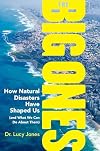
The Big Ones: How Natural Disasters Have Shaped Us (and What We Can Do About Them) (2018) 198 copies, 7 reviews
Associated Works
The Anthropocene: The Human Era and How It Shapes Our Planet (2010) — Translator, some editions — 34 copies, 1 review
Tagged
Common Knowledge
- Legal name
- Jones, Lucile M.
- Birthdate
- 1955
- Gender
- female
- Education
- Massachusetts Institute of Technology (PhD, geophysics)
Brown University (BA, Chinese Language) - Occupations
- seismologist
- Nationality
- USA
- Places of residence
- Pasadena, California, USA
- Associated Place (for map)
- California, USA
Members
Reviews

Contrary to the title, The Big Ones does not necessarily cover the most intense natural disasters. For example, the earthquakes covered include Lisbon 1755, Kanto 1923, and Tangshan 1976, but not Chile 1960 or Alaska 1964.
Instead the author, formerly a seismologist with the USGS, focuses on events that impacted large populations. For each of the 11 events described here, the narrative emphasizes the human response. There are stories of great heroism, but all too often minority communities show more have been scapegoated for "causing" these natural disasters.
The book is dedicated to urban planners, and it ends with a call to develop resilient communities that can survive the forces of nature we cannot control. show less
Instead the author, formerly a seismologist with the USGS, focuses on events that impacted large populations. For each of the 11 events described here, the narrative emphasizes the human response. There are stories of great heroism, but all too often minority communities show more have been scapegoated for "causing" these natural disasters.
The book is dedicated to urban planners, and it ends with a call to develop resilient communities that can survive the forces of nature we cannot control. show less
Fire and Ice by Robert Frost
Some say the world will end in fire,
Some say in ice.
From what I’ve tasted of desire
I hold with those who favor fire.
But if it had to perish twice,
I think I know enough of hate
To say that for destruction ice
Is also great
And would suffice.
Undoubtedly, The Voice of New England had the deeds of his fellow humans in mind, rather than so-called Acts of God, when he penned the above rumination in rhyme about a possible apocalypse. Nevertheless, his thought provoking show more short verse seems particularly apt when we contemplate the effects of volcanoes, earthquakes, and floods on our species and the structures we have built, often in the least advisable locations.
In this equally thought provoking volume, Dr. Lucy Stone, who spent three decades of her career as a seismologist with the United States Geological Survey, outlines the many ways our race has suffered by the hand of Mother Nature. Part scientific treatise, part history lesson and part memoir, she lays out a series of case studies that examines such monumental events as the earthquake that struck Lisbon, Portugal in 1755 and the Mississippi River flood in 1927. Both heartbreaking and hopeful, Jones describes how humankind sets itself up for failure by congregating on floodplains and fissures in the earth, either through ignorance or folly. On the other hand, knowledge is power, and with what we now know of plate tectonics and fluid mechanics, we can now avoid some of the mistakes of the past. With a minimum of technical jargon, she explains the physical processes that move earth, air and water, often to our detriment. Not only does she demystify some of the theories underlying the many “ologies” at work studying this ball of rock and brine that we inhabit, but she also sprinkles anecdotes and stories of those who seek and have sought to unlock nature’s secrets. Most of us are familiar with the name of Charles Richter, who developed the well-known scale used to estimate the intensity of earthquakes. More obscure, but no less important is John Milne, the English Victorian geologist that moved to Japan to study this phenomenon and is now considered one of the founding fathers of seismology. His is just one of several fascinating vignettes presented within these pages.
Clearly written and well-illustrated with maps and diagrams, this engaging book will be of interest not only to the armchair geologist but to any curious reader who would like to know more about living with our living planet. show less
Some say the world will end in fire,
Some say in ice.
From what I’ve tasted of desire
I hold with those who favor fire.
But if it had to perish twice,
I think I know enough of hate
To say that for destruction ice
Is also great
And would suffice.
Undoubtedly, The Voice of New England had the deeds of his fellow humans in mind, rather than so-called Acts of God, when he penned the above rumination in rhyme about a possible apocalypse. Nevertheless, his thought provoking show more short verse seems particularly apt when we contemplate the effects of volcanoes, earthquakes, and floods on our species and the structures we have built, often in the least advisable locations.
In this equally thought provoking volume, Dr. Lucy Stone, who spent three decades of her career as a seismologist with the United States Geological Survey, outlines the many ways our race has suffered by the hand of Mother Nature. Part scientific treatise, part history lesson and part memoir, she lays out a series of case studies that examines such monumental events as the earthquake that struck Lisbon, Portugal in 1755 and the Mississippi River flood in 1927. Both heartbreaking and hopeful, Jones describes how humankind sets itself up for failure by congregating on floodplains and fissures in the earth, either through ignorance or folly. On the other hand, knowledge is power, and with what we now know of plate tectonics and fluid mechanics, we can now avoid some of the mistakes of the past. With a minimum of technical jargon, she explains the physical processes that move earth, air and water, often to our detriment. Not only does she demystify some of the theories underlying the many “ologies” at work studying this ball of rock and brine that we inhabit, but she also sprinkles anecdotes and stories of those who seek and have sought to unlock nature’s secrets. Most of us are familiar with the name of Charles Richter, who developed the well-known scale used to estimate the intensity of earthquakes. More obscure, but no less important is John Milne, the English Victorian geologist that moved to Japan to study this phenomenon and is now considered one of the founding fathers of seismology. His is just one of several fascinating vignettes presented within these pages.
Clearly written and well-illustrated with maps and diagrams, this engaging book will be of interest not only to the armchair geologist but to any curious reader who would like to know more about living with our living planet. show less
The Big Ones, by Dr. Lucy Jones is a wonderful accounting of many of the largest and most devastating natural disasters that have shaped our history. Dr. Jones lays out a compelling narrative about the role that natural disasters have played in advancing scientific thought and research, politics, and social norms. While Dr. Jones is a geologist (seismologist) by training, her recounting of natural disasters don't solely focus on geologic hazards, and often points out how human decisions (or show more lack thereof) not only help create, but often times exacerbate, a natural disaster and turns an event into a catastrophe. She explores the volcanic eruption of Pompeii, devastating floods in California in 1862 and the disastrous 1927 Mississippi River floods. The great earthquakes of Lisbon, Portugal in 1755 and Tokyo in 1923, as well as the earthquakes and tsunami that created wide destruction in the Indian Ocean in 2004 and East Japan in 2011. The range of disasters that she covers span not only recorded human history, but covers the range of geologic and meteorologic disasters.
I loved the history that Dr. Jones provides for each of the events, recounting the details of the disasters from personal accounts written at the time. And while these details are fascinating, and provide a human voice to the narrative, what I really enjoyed was the assessment and interpretation of the events and how these disasters helped shape our modern society. From transitioning from the beliefs that natural disasters were created by angry, vengeful, or just callous deities to our reliance on modern scientific theories. What really struck a chord with me was the focus on science communication, and how communication of the risks and probabilities of any single disaster can result in tragic consequences, or have a profound impact on bettering our society. How even into the modern era (the 20th and 21st centuries) a reliance to stick to old, outdated belief systems (even if backed by science) often lead to a greater catastrophe when a disaster does strike.
I highly recommend The Big Ones to anybody interested in science history. Dr. Jones' narrative is easy to follow, and she clearly conveys the knowledge and experience that she has gained over several decades working in the field. I listened to the audio version of the book, narrated by the author, and she does a great job. Her fluency in Chinese is evident when she tells of the earthquakes in China in the 1970s - one predicted, one not, and she displays her skill as a science communicator. show less
I loved the history that Dr. Jones provides for each of the events, recounting the details of the disasters from personal accounts written at the time. And while these details are fascinating, and provide a human voice to the narrative, what I really enjoyed was the assessment and interpretation of the events and how these disasters helped shape our modern society. From transitioning from the beliefs that natural disasters were created by angry, vengeful, or just callous deities to our reliance on modern scientific theories. What really struck a chord with me was the focus on science communication, and how communication of the risks and probabilities of any single disaster can result in tragic consequences, or have a profound impact on bettering our society. How even into the modern era (the 20th and 21st centuries) a reliance to stick to old, outdated belief systems (even if backed by science) often lead to a greater catastrophe when a disaster does strike.
I highly recommend The Big Ones to anybody interested in science history. Dr. Jones' narrative is easy to follow, and she clearly conveys the knowledge and experience that she has gained over several decades working in the field. I listened to the audio version of the book, narrated by the author, and she does a great job. Her fluency in Chinese is evident when she tells of the earthquakes in China in the 1970s - one predicted, one not, and she displays her skill as a science communicator. show less
An exploration of notable natural disasters in human history, the development of scientific inquiry to better understand them, and the kinds of lessons that can be learned from their aftermath.
The author is the authority regarding earthquakes and their effects in Southern California. She has investigated all sorts of natural disasters, from Mount Vesuvius' destruction of Pompeii in 79 CE to the Tohoku earthquake and tsunami 0f 2011, with all kinds of events in between: earthquakes, show more volcanoes, hurricanes, etc. The author attempts to show the developments in the ways humans respond to these events in terms of attribution of cause and how it leads them to respond.
To me the most important aspect of this work is the author's insistence on looking at natural disasters not just in terms of the event itself but also in terms of its aftermath. It's not just about living through the moment of crisis; it's also about making sure life can continue afterward: yes, making sure needed supplies get through and effective rebuilding, but ideally, better preparation so that fewer buildings need to be condemned and quality of life is not catastrophically lost when it doesn't have to be.
All of this has special relevance for Southern California, obviously, but in a changing world we are seeing disasters happening everywhere. Not the most pleasant of reading, for obvious reasons, but worth exploring. show less
The author is the authority regarding earthquakes and their effects in Southern California. She has investigated all sorts of natural disasters, from Mount Vesuvius' destruction of Pompeii in 79 CE to the Tohoku earthquake and tsunami 0f 2011, with all kinds of events in between: earthquakes, show more volcanoes, hurricanes, etc. The author attempts to show the developments in the ways humans respond to these events in terms of attribution of cause and how it leads them to respond.
To me the most important aspect of this work is the author's insistence on looking at natural disasters not just in terms of the event itself but also in terms of its aftermath. It's not just about living through the moment of crisis; it's also about making sure life can continue afterward: yes, making sure needed supplies get through and effective rebuilding, but ideally, better preparation so that fewer buildings need to be condemned and quality of life is not catastrophically lost when it doesn't have to be.
All of this has special relevance for Southern California, obviously, but in a changing world we are seeing disasters happening everywhere. Not the most pleasant of reading, for obvious reasons, but worth exploring. show less
Lists
Awards


You May Also Like


Statistics
- Works
- 1
- Also by
- 1
- Members
- 198
- Popularity
- #110,928
- Rating
- 3.8
- Reviews
- 7
- ISBNs
- 63
- Languages
- 4