
Works by Henry Fountain
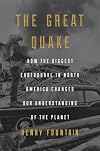
The Great Quake: How the Biggest Earthquake in North America Changed Our Understanding of the Planet (2017) 317 copies, 21 reviews
Tagged
Common Knowledge
- Gender
- male
- Organizations
- The New York Times
Members
Reviews
The Great Quake: How the Biggest Earthquake in North America Changed Our Understanding of the Planet by Henry Fountain
This is an excellent book describing the events of March 27, 1964 in south central Alaska, from multiple points of view. The author does a great job of setting the stage for what life was like in several of the locations that were severely impacted by the 9.2 magnitude earthquake, introducing a number of individuals that were involved. Not only does he describe the quake and resulting tsunami, but the aftermath not only to the communities and people, but to our understanding of what caused show more the event.
The multiple threads of the story, going back to the initial proposal of "continental drift," make each chapter a new adventure and voyage of discovery, culminating in a summary of what we understand today, and the status of some of the places and individuals, fifty plus years later.
I experienced the 1964 earthquake personally, 285 nautical miles due north of the epicenter in Fairbanks, having just turned 13 the day before. Trees swayed, pipes rattled, and the extended shaking told us it was something big. But it took a few hours before reports by radio came in to relay the magnitude of the event and devastation. This book allows one to zoom into the specific places that were impacted and get a ring-side-seat view of what happened. It also, however, zooms out and in a hard to put down fashion, tells the bigger story of how the event helped advance our understanding of earth building processes.
My thanks to Henry Fountain for sharing this story with us! show less
The multiple threads of the story, going back to the initial proposal of "continental drift," make each chapter a new adventure and voyage of discovery, culminating in a summary of what we understand today, and the status of some of the places and individuals, fifty plus years later.
I experienced the 1964 earthquake personally, 285 nautical miles due north of the epicenter in Fairbanks, having just turned 13 the day before. Trees swayed, pipes rattled, and the extended shaking told us it was something big. But it took a few hours before reports by radio came in to relay the magnitude of the event and devastation. This book allows one to zoom into the specific places that were impacted and get a ring-side-seat view of what happened. It also, however, zooms out and in a hard to put down fashion, tells the bigger story of how the event helped advance our understanding of earth building processes.
My thanks to Henry Fountain for sharing this story with us! show less
The Great Quake: How the Biggest Earthquake in North America Changed Our Understanding of the Planet by Henry Fountain
My brother was serving in the Army in Anchorage, Alaska when the Good Friday earthquake hit. It was a horrifying experience for him and for the rest of his life, he refused to travel to earthquake-prone places, never wanting to risk anything like that again. Remembering his stories of the quake, I was eager to read New York Times climate journalist Henry Fountain’s The Great Quake.
Fountain examines how the Alaska earthquake changed our understanding of plate tectonics, continental drift, show more and what our planet is getting itself up to while we’re not looking. Well, really, how imperceptibly, but inexorably, the surface of the planet is always moving and shifting, responding to unseen forces deep in the earth’s core.
This is a journalistic book, well-organized to create the setting, the action, and the aftermath. It benefits from that clarity that journalism excels, taking theory and explaining it clearly and simply. Fountain knows that personal stories are important to engaging readers on topics they might never look at otherwise. He has that personal approach that powerfully brings home the devastation of the earthquake – not just by listing the buildings damaged and lives lost, but in the achingly painful moment of a father seeing a wave carrying his daughter away, her frightened cry “Dad!” the final word he ever hears from her.
He also makes the science interesting and finds the odd details that make the story remarkable, such as how barnacles, those wee crustaceans were important to understanding the quake.
It is disconcerting to read this while Puerto Rico is devastated by Hurricane Maria. In 1964 we were able to send help and supplies to remote Alaskan villages within twenty-four hours while we cannot do that in eight days to an island off our shores. I don’t think it’s because our transportation technology is so much less, what has changed is our commitment to each other.
Living as I do in the Cascadia subduction zone, right where “The Big One” is expected to come, this is more than idle interest. It’s odd, though, living here. We all know it will happen, but since earthquakes are not seasonal like hurricanes, blizzards, or other natural disasters, we just assume it will not happen for a long, long time. However, for all I know, it could happen this evening. If it does, I hope Fountain will write the story.
I received a copy of The Great Quake from the publisher through Blogging for Books.
The Great Quake at Penguin Random House
Henry Fountain author site
https://tonstantweaderreviews.wordpress.com/2017/10/01/9781101904060/ show less
Fountain examines how the Alaska earthquake changed our understanding of plate tectonics, continental drift, show more and what our planet is getting itself up to while we’re not looking. Well, really, how imperceptibly, but inexorably, the surface of the planet is always moving and shifting, responding to unseen forces deep in the earth’s core.
This is a journalistic book, well-organized to create the setting, the action, and the aftermath. It benefits from that clarity that journalism excels, taking theory and explaining it clearly and simply. Fountain knows that personal stories are important to engaging readers on topics they might never look at otherwise. He has that personal approach that powerfully brings home the devastation of the earthquake – not just by listing the buildings damaged and lives lost, but in the achingly painful moment of a father seeing a wave carrying his daughter away, her frightened cry “Dad!” the final word he ever hears from her.
He also makes the science interesting and finds the odd details that make the story remarkable, such as how barnacles, those wee crustaceans were important to understanding the quake.
It is disconcerting to read this while Puerto Rico is devastated by Hurricane Maria. In 1964 we were able to send help and supplies to remote Alaskan villages within twenty-four hours while we cannot do that in eight days to an island off our shores. I don’t think it’s because our transportation technology is so much less, what has changed is our commitment to each other.
Living as I do in the Cascadia subduction zone, right where “The Big One” is expected to come, this is more than idle interest. It’s odd, though, living here. We all know it will happen, but since earthquakes are not seasonal like hurricanes, blizzards, or other natural disasters, we just assume it will not happen for a long, long time. However, for all I know, it could happen this evening. If it does, I hope Fountain will write the story.
I received a copy of The Great Quake from the publisher through Blogging for Books.
The Great Quake at Penguin Random House
Henry Fountain author site
https://tonstantweaderreviews.wordpress.com/2017/10/01/9781101904060/ show less
The Great Quake: How the Biggest Earthquake in North America Changed Our Understanding of the Planet by Henry Fountain
I'm not sure when I first heard about the Great Alaska Earthquake, but it could have potentially been in real time, since my oldest public memory is of JFK's funeral. Be that as it may, I've always had a passing interest in learning about just what happened, so this book looked like a good opportunity.
That said, the narrative structure is a little roundabout, as Fountain starts with the arrival on the scene of an emergency team of US government scientists sent to assess the scale of the show more disaster in its immediate aftermath, including one George Plafker. Plafker was a humble field geologist who eventually becomes very central to this story.
From there though, Fountain gives you a history of the concept of we now refer to as Plate Tectonics, an examination of the Alaska scene in the early days of statehood, and spends a good bit of time on a particular Inuit village where one of his informants (then Kris Madsen) was a school teacher. One begins to wonder a little as to what is the point.
This turns out to be set-up for the day of disaster, as while Alaskans were no strangers to earthquakes, the 1964 event was truly traumatic, changing the topography of the state itself, destroying much of the state's built-up areas, and leaving over a hundred people dead, mostly in the tsunami-events generated by the earthquake. Fountain's account is as gripping as you'd like.
From there, Fountain's sub-title comes into play, and one learns the real importance of George Plafker. As his field work wound up making him a respected expert in his field, as he was able to tie his data into the debate about whether continental drift as a real phenomena, changing the theoretical basis of geology.
Much of the rest of the book is devoted to the long epilogue of how Alaska recovered from this disaster; helped by the intervention of the federal government and lots of oil money, though there are lots of people who still mourn that day. Going back to my original thought, I found it poignant that people who were children in the village of Chenega could all remember in interviews that they had been watching the show "Fireball XL-5" at the time of the event (the village basically had one TV set). This was a moment of nostalgia, as I too watched that show when I was a child; you never know what is going to be a point of connection. show less
That said, the narrative structure is a little roundabout, as Fountain starts with the arrival on the scene of an emergency team of US government scientists sent to assess the scale of the show more disaster in its immediate aftermath, including one George Plafker. Plafker was a humble field geologist who eventually becomes very central to this story.
From there though, Fountain gives you a history of the concept of we now refer to as Plate Tectonics, an examination of the Alaska scene in the early days of statehood, and spends a good bit of time on a particular Inuit village where one of his informants (then Kris Madsen) was a school teacher. One begins to wonder a little as to what is the point.
This turns out to be set-up for the day of disaster, as while Alaskans were no strangers to earthquakes, the 1964 event was truly traumatic, changing the topography of the state itself, destroying much of the state's built-up areas, and leaving over a hundred people dead, mostly in the tsunami-events generated by the earthquake. Fountain's account is as gripping as you'd like.
From there, Fountain's sub-title comes into play, and one learns the real importance of George Plafker. As his field work wound up making him a respected expert in his field, as he was able to tie his data into the debate about whether continental drift as a real phenomena, changing the theoretical basis of geology.
Much of the rest of the book is devoted to the long epilogue of how Alaska recovered from this disaster; helped by the intervention of the federal government and lots of oil money, though there are lots of people who still mourn that day. Going back to my original thought, I found it poignant that people who were children in the village of Chenega could all remember in interviews that they had been watching the show "Fireball XL-5" at the time of the event (the village basically had one TV set). This was a moment of nostalgia, as I too watched that show when I was a child; you never know what is going to be a point of connection. show less
The Great Quake: How the Biggest Earthquake in North America Changed Our Understanding of the Planet by Henry Fountain
Ralph Waldo Emerson once said "We learn geology the morning after the earthquake."
For many years scientists had been arguing about the geology behind earthquakes - how and why they happen and why the damage is more severe or different in different locations. In 1912 one theory was put forward by a meteorologist named Alfred Wegener, that the earth's crust was made up of different sections, or plates, that moved against each other. Unfortunately, Wegener was laughed to scorn by the show more scientific community. It would take a 9.2 earthquake in the southern part of Alaska on the afternoon of March 27, 1964 and a dedicated field geologist named George Plafker to figure out the mechanism by which the theory of plate tectonics came to be better understood and accepted.
Henry Fountain has written a very readable and interesting book telling the history of that earthquake. He explains a good amount of the geology behind earthquakes and their effects, but never to the point of putting his less-knowledgeable readers to sleep. He intersperses it with the history of the region and many of the people who were there and experienced the devastating earthquake, and it's a fascinating story. Most prominent among these characters is Plafker, and his struggles to understand the dynamics of the earth's movement and the results - and it wasn't just the earth shaking but the tsunamis that resulted that caused so much damage. It reminded me of earthquakes I've felt, including the aftershocks of the 1994 Northridge quake (the biggest aftershock I felt was about 5.0 - I can't imagine a 9.2). Very interesting and recommended. show less
For many years scientists had been arguing about the geology behind earthquakes - how and why they happen and why the damage is more severe or different in different locations. In 1912 one theory was put forward by a meteorologist named Alfred Wegener, that the earth's crust was made up of different sections, or plates, that moved against each other. Unfortunately, Wegener was laughed to scorn by the show more scientific community. It would take a 9.2 earthquake in the southern part of Alaska on the afternoon of March 27, 1964 and a dedicated field geologist named George Plafker to figure out the mechanism by which the theory of plate tectonics came to be better understood and accepted.
Henry Fountain has written a very readable and interesting book telling the history of that earthquake. He explains a good amount of the geology behind earthquakes and their effects, but never to the point of putting his less-knowledgeable readers to sleep. He intersperses it with the history of the region and many of the people who were there and experienced the devastating earthquake, and it's a fascinating story. Most prominent among these characters is Plafker, and his struggles to understand the dynamics of the earth's movement and the results - and it wasn't just the earth shaking but the tsunamis that resulted that caused so much damage. It reminded me of earthquakes I've felt, including the aftershocks of the 1994 Northridge quake (the biggest aftershock I felt was about 5.0 - I can't imagine a 9.2). Very interesting and recommended. show less
Lists
Awards

You May Also Like


Statistics
- Works
- 3
- Members
- 371
- Popularity
- #64,991
- Rating
- 3.8
- Reviews
- 21
- ISBNs
- 8