
Steve Olson (1) (1956–)
Author of Mapping Human History: Genes, Race, and Our Common Origins
For other authors named Steve Olson, see the disambiguation page.
About the Author
Steve Olson is the author of Mapping Human History (a finalist for the National Book Award) and Count Down, among other books. He lives in Seattle, Washington.
Works by Steve Olson
Count Down: The Race for Beautiful Solutions at the International Mathematical Olympiad (2004) 146 copies, 3 reviews
Tagged
Common Knowledge
Members
Reviews
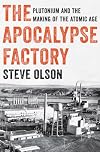
In THE APOCALYPSE FACTORY, by Steve Olson, the age of plutonium and nuclear weaponization is looked at from it's raw and untested beginnings and brings the reader all the way to the present. The reader sees how the discovery of plutonium extraction, that can eventually become a nuclear weapon, quickly went from scientific experimentation to creating a town in a barren section in eastern Washington state for the sole purpose of developing and creating the components that become a nuclear show more bomb. Olson covers the dropping of those initial bombs in Japan, particularly the one in Nagasaki, and its after effects on the Japanese population not just from a health perspective, but looking at economic and diplomatic effects as well. As the book continues past World War II, the nuclear arms race becomes a political hot button and Olson considers all sides in the diplomatic negotiations that continue well into the 1980's and are still happening today.
Olson does an excellent job of describing all of the science behind everything nuclear in a way that is easy to understand and very accessible. While recounted the major decisions and events around the Atomic Age, facts are presented with little political color or judgment, but the reader can't help but share in Olson's feeling of awe that bleeds through the text that it was truly astonishing that United States was able to create nuclear weapons so fast and without "blowing themselves up".
THE APOCALYPSE FACTORY does what only the best non-fiction books do; it tells a story, full of anticipation, success, and failure. The story just happens to be true. Olson also has a cinematic way of describing things so that the reader can really picture in their head what is going on. A pleasure to read.
Thank you to W. W. Norton & Company, Steve Olson, and Netgalley for a copy of this book in exchange for an honest review! show less
Olson does an excellent job of describing all of the science behind everything nuclear in a way that is easy to understand and very accessible. While recounted the major decisions and events around the Atomic Age, facts are presented with little political color or judgment, but the reader can't help but share in Olson's feeling of awe that bleeds through the text that it was truly astonishing that United States was able to create nuclear weapons so fast and without "blowing themselves up".
THE APOCALYPSE FACTORY does what only the best non-fiction books do; it tells a story, full of anticipation, success, and failure. The story just happens to be true. Olson also has a cinematic way of describing things so that the reader can really picture in their head what is going on. A pleasure to read.
Thank you to W. W. Norton & Company, Steve Olson, and Netgalley for a copy of this book in exchange for an honest review! show less
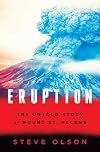
Fifty seven people died during the 1980 eruption of Mount St Helens. That’s a statistic. The question Steve Olson tackles in his new book Eruption might be summed up this way: what were they doing there? Didn’t they know the dangers? Weren’t there roadblocks? The answers are complicated. Not all scientists came to the conclusion that an explosive eruption was imminent and Washington’s governor (a scientist herself) was reluctant to redraw the map of danger zones which were already show more butting up against logging operations. Even the press was getting bored with the volcano that had quieted for a few weeks after awakening with such bluster. People were dangerously close to Mount St Helens because of politics, economic pressures, grave underestimations of what might happen, and a little impatience on the part of some people wanting to resume their normal lives.
Despite its title and cover, Eruption is a book more about people than geology. For a short time in the early chapters we wondered if we had the wrong book. A long discussion of Frederick Weyerhaeuser and the founding of his company seemed only mildly and indirectly relevant to a geologic disaster to come 80 years later. But Olson eventually got the story underway and proved that the company’s story was indeed a factor (one of many) in placing people in the harm’s way that sunny May morning.
Olson follows the movements of geologists as they took gas samples and examined seismic charts. Even those knowing the science best set up observation points that were, in hindsight, too close to danger. The author pins some blame on Dixy Lee Ray, Washington’s governor who had the power to keep more people away by expanding the “red zone” but didn’t. And with all the warnings about an active volcano muted by the governor and the press, dozens of people wandered in and out of the area each day. Some worked to earn a paycheck; some were fishing and camping in the woods as they had done many times before. Those people become the principal actors in Eruption. Their stories, before and during the disaster, make the most interesting parts of the book. Olson highlights the fates of more than a dozen people simply living their lives in what they assumed to be safe zones. He tells about their whereabouts and activities before and during the eruption. Some made it out. Some did not. We were amazed at the heroic survival skills of people like Clyde Croft, and the dedication of pilots and rescuer workers while the eruption was still underway. With the advantage of hindsight, modern readers can understand how people’s decisions influenced their fates. It wasn’t quite so obvious in 1980.
Shelf Appeal: The eruption of Mt St Helens was a major historical event for the Northwest so this book may be interesting to many people who weren’t in Washington (or alive yet) in 1980. It’s a good account of the eight weeks of surprise, curiosity, caution, impatience, and disaster that hit the area. Fans of the survivor genre may enjoy parts 4 and 5, but those sections may be too brief to satisfy.
-- I wrote this review for the Books section of the Washington state website: http://www.WA-List.com show less
Despite its title and cover, Eruption is a book more about people than geology. For a short time in the early chapters we wondered if we had the wrong book. A long discussion of Frederick Weyerhaeuser and the founding of his company seemed only mildly and indirectly relevant to a geologic disaster to come 80 years later. But Olson eventually got the story underway and proved that the company’s story was indeed a factor (one of many) in placing people in the harm’s way that sunny May morning.
Olson follows the movements of geologists as they took gas samples and examined seismic charts. Even those knowing the science best set up observation points that were, in hindsight, too close to danger. The author pins some blame on Dixy Lee Ray, Washington’s governor who had the power to keep more people away by expanding the “red zone” but didn’t. And with all the warnings about an active volcano muted by the governor and the press, dozens of people wandered in and out of the area each day. Some worked to earn a paycheck; some were fishing and camping in the woods as they had done many times before. Those people become the principal actors in Eruption. Their stories, before and during the disaster, make the most interesting parts of the book. Olson highlights the fates of more than a dozen people simply living their lives in what they assumed to be safe zones. He tells about their whereabouts and activities before and during the eruption. Some made it out. Some did not. We were amazed at the heroic survival skills of people like Clyde Croft, and the dedication of pilots and rescuer workers while the eruption was still underway. With the advantage of hindsight, modern readers can understand how people’s decisions influenced their fates. It wasn’t quite so obvious in 1980.
Shelf Appeal: The eruption of Mt St Helens was a major historical event for the Northwest so this book may be interesting to many people who weren’t in Washington (or alive yet) in 1980. It’s a good account of the eight weeks of surprise, curiosity, caution, impatience, and disaster that hit the area. Fans of the survivor genre may enjoy parts 4 and 5, but those sections may be too brief to satisfy.
-- I wrote this review for the Books section of the Washington state website: http://www.WA-List.com show less
In ERUPTION, Olson picks apart the various elements responsible for the loss of life in the Mt. St. Helens explosion of May 1980. This disaster has factors in common with many others, both natural and man-made—greed, stupidity and ignorance. Despite these failings and the sheer magnitude of the eruption, surprisingly few lives were lost—only fifty-seven. Corporate greed on the part of the Weyerhaeuser Company was instrumental because the company refused to curtail logging operations on show more and adjacent to a mountain that clearly was showing signs of blowing up. Governmental incompetence combined to delineate a much too small exclusion zone, primarily so that it did not encroach on Weyerhaeuser land. This was compounded by an inability to even enforce this woefully inadequate zone by permitting exceptions—the most egregious being to allow the octogenarian, Harry Truman to remain at Spirit Lake—abetted by a network of open logging roads providing easy access by just about anyone with a vehicle. Limitations in our understanding of volcanology at the time notwithstanding, the failure to sense the danger of a lateral blast in the face of a huge and rapidly growing bulge on the side of the mountain seems to lack common sense. In the face of this, it seems remarkable that Governor Ray and President Carter could blame the victims for willingly placing themselves in danger.
The most compelling part of Olson’s book is his description of the eruption itself from the accounts of people flying over the crater, climbing neighboring Mt. Adams, or on the ground in the blast zone. Although descriptions of those who did not survive were, of necessity, speculative; those of the survivors were gripping enough to convey what it was like to be there on that day.
As a person who visited the blast zone just a few years after the eruption, I can never forget what I saw and felt. The mood was one of danger that surprisingly still existed at that time. Driving a one lane road, intermittently adorned by horns mounted on poles with signs warning to leave immediately if horns sounded, I was struck by the image of miles of giant trees on the ground all aligned as if a giant comb was used on them; by a thick layer of ash everywhere; by a car with its tires and paint burned away; and of course the formerly classical mountain peak disfigured almost beyond recognition.
The story seems to have a happy ending however—at least until St. Helens or one of its neighbors erupts once again—because environmentalists have managed to preserve the site for research and education. show less
The most compelling part of Olson’s book is his description of the eruption itself from the accounts of people flying over the crater, climbing neighboring Mt. Adams, or on the ground in the blast zone. Although descriptions of those who did not survive were, of necessity, speculative; those of the survivors were gripping enough to convey what it was like to be there on that day.
As a person who visited the blast zone just a few years after the eruption, I can never forget what I saw and felt. The mood was one of danger that surprisingly still existed at that time. Driving a one lane road, intermittently adorned by horns mounted on poles with signs warning to leave immediately if horns sounded, I was struck by the image of miles of giant trees on the ground all aligned as if a giant comb was used on them; by a thick layer of ash everywhere; by a car with its tires and paint burned away; and of course the formerly classical mountain peak disfigured almost beyond recognition.
The story seems to have a happy ending however—at least until St. Helens or one of its neighbors erupts once again—because environmentalists have managed to preserve the site for research and education. show less
When I actually got around to picking up this book, I wasn't sure that it was really something I wanted to read. What I was mostly looking for was an examination of the Manhattan Project as an industrial adventure. I was afraid that I had just another generic overview of the start of the Atomic Age. Olson actually managed to satisfy my intentions, but what he is really about is looking at the second act of the First Atomic War, as Nagasaki tends to get somewhat slighted as compared to show more coverage of Hiroshima. It also means that there is a focus on Glenn Seaborg, the point man in the discovery of Plutonium, the element that really made atomic weapons a relatively practical industrial product.
Besides that, there is quite a bit of an elegiac tone to this history. This is since Olson originally hails from the general vicinity of Hanford, and uses this history as an opportunity to muse over whether Humanity can get its act together enough to overcome the ever looming prospect of nuclear war, among surviving other aspects of industrial civilization; there being no "externalities" in a closed system. Finally, Olson dedicates this book to the memory of John Hersey, who was an important teacher for him.
Recommended. show less
Besides that, there is quite a bit of an elegiac tone to this history. This is since Olson originally hails from the general vicinity of Hanford, and uses this history as an opportunity to muse over whether Humanity can get its act together enough to overcome the ever looming prospect of nuclear war, among surviving other aspects of industrial civilization; there being no "externalities" in a closed system. Finally, Olson dedicates this book to the memory of John Hersey, who was an important teacher for him.
Recommended. show less
Lists
Awards


You May Also Like


Statistics
- Works
- 11
- Members
- 1,475
- Popularity
- #17,414
- Rating
- 3.8
- Reviews
- 34
- ISBNs
- 83
- Languages
- 6